
Martin M. Miles' photos with the keyword: Provincia di Nuoro
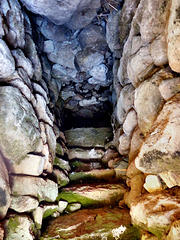
Silanus - Santa Sabina
| 11 May 2016 |
|
|
This place just south of Silanus, named "Santa Sabina" (aka "Santa Sarbana"), seems to be "Sardinia in a nutshell". Here are a nuraghe, a "byzantine" church, a holy well, two "Tombs of the Giants" and foundations of a prehistoric village. And somehow all these structures seem "interconnected".
This is the entrance to the "pozzo sacro", the holy well named "Cherchizzu", about 400m north of the Byzantine rotunda and the nurhage (previous uploads) - and once part of the Bronze Age settlement.
The well was dicovered in 1881, but soon after forgotten and abandoned for many decades. Meanwhile excavations have been undertaken and the monument is dated to 12th to 10th century bC.
The well is completely beneath the ground. The corridor, that runs down is about 5 m long. It looked very narrow - and so I did not dare to enter the tholos down below.
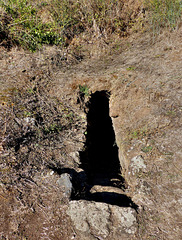
Silanus - Santa Sabina
| 10 May 2016 |
|
This place just south of Silanus, named "Santa Sabina" (aka "Santa Sarbana"), seems to be "Sardinia in a nutshell". Here are a nuraghe, a "byzantine" church, a holy well, two "Tombs of the Giants" and foundations of a prehistoric village. And somehow all these structures seem "interconnected".
This is the entrance to the "pozzo sacro", the holy well named "Cherchizzu", about 400m north of the Byzantine rotunda and the nurhage (previous uploads) - and once part of the Bronze Age settlement.
The well was dicovered in 1881, but soon after forgotten and abandoned for many decades. Meanwhile excavations have been undertaken and the monument is dated to 12th to 10th century bC.
The well is completely beneath the ground.

Silanus - Santa Sabina
| 10 May 2016 |
|
|
This place just south of Silanus, named "Santa Sabina" (aka "Santa Sarbana"), seems to be "Sardinia in a nutshell". Here are a nuraghe, a "byzantine" church, a holy well, two "Tombs of the Giants" and foundations of a prehistoric village. And somehow all these structures seem "interconnected".
"Santa Sabina" is a rotunda with two added side chapels, erected between the 10th and the 12th century. Standing under the dome.

Silanus - Santa Sabina
| 10 May 2016 |
|
|
|
This place just south of Silanus, named "Santa Sabina" (aka "Santa Sarbana"), seems to be "Sardinia in a nutshell". Here are a nuraghe, a "byzantine" church, a holy well, two "Tombs of the Giants" and foundations of a prehistoric village. And somehow all these structures seem "interconnected".
Inside "Santa Sabina", a rotunda with two added side chapels, erected between the 10th and the 12th century.

Silanus - Santa Sabina
| 10 May 2016 |
|
|
This place just south of Silanus, named "Santa Sabina" (aka "Santa Sarbana"), seems to be "Sardinia in a nutshell". Here are a nuraghe, a "byzantine" church, a holy well, two "Tombs of the Giants" and foundations of a prehistoric village. And somehow all these structures seem "interconnected".
"Santa Sabina", a rotunda with two added side chapels, was erected between the 10th and the 12th century. To the left a part of the neighbouring nurhage can be seen.
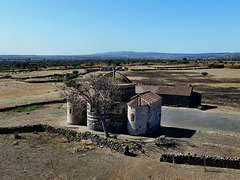
Silanus - Santa Sabina
| 09 May 2016 |
|
|
|
This place just south of Silanus, named "Santa Sabina" (aka "Santa Sarbana"), seems to be "Sardinia in a nutshell". Here are a nuraghe, a "byzantine" church, a holy well, two "Tombs of the Giants" and foundations of a prehistoric village. And somehow all these structures seem "interconnected".
Seen here from the top of the nuraghe is "Santa Sabina", a rotunda with two added side chapels. The church was erected between the 10th and the 12th century.

Silanus - Santa Sabina
| 09 May 2016 |
|
|
|
This place just south of Silanus, named "Santa Sabina" (aka "Santa Sarbana"), seems to be "Sardinia in a nutshell". Here are a nuraghe, a "byzantine" church, a holy well, two "Tombs of the Giants" and foundations of a prehistoric village. And somehow all these structures seem "interconnected".
The nuraghe has a diameter of 12,60m and is, though the top part is obviously demolished, still about 8,60m high. It was erected during the Bronze Age (1600-100 bC). The stairs are inside the tower.

Silanus - Santa Sabina
| 09 May 2016 |
|
This place just south of Silanus, named "Santa Sabina" (aka "Santa Sarbana"), seems to be "Sardinia in a nutshell". Here are a nuraghe, a "byzantine" church, a holy well, two "Tombs of the Giants" and foundations of a prehistoric village. And somehow all these structures seem "interconnected".
The nuraghe has a diameter of 12,60m and is, though the top part is obviously demolished, still about 8,60m high. Erected during the Bronze Age (1600-1000 bC). It was the center of a settlement once.

Silanus - Santa Sabina
| 09 May 2016 |
|
|
This place just south of Silanus, named "Santa Sabina" (aka "Santa Sarbana"), seems to be "Sardinia in a nutshell". Here are a nuraghe, a "byzantine" church, a holy well, two "Tombs of the Giants" and foundations of a prehistoric village. And somehow all these structures seem "interconnected".
The nuraghe has a diameter of 12,60m and is still more than 8m high. Erected during the Bronze Age (1600-1000 bC).
The church "Santa Sabina", a rotunda with two added side chapels, was erected between the 10th and the 12th century.
Ottana - San Nicola
| 09 May 2016 |
|
|
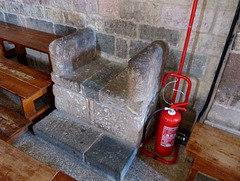
Ottana was the center of a diocese between 1112 and 1503. San Nicola, now a parish church, was a cathedral once.
The church, placed on a hill, was erected on foundations of an older byzantine structure within the first half 12th century from black trachyt slabs. San Nicola was built on a "Tau Cross" floor plan.
In 1912 a parchment was found, hidden under the main altar, describing and dating the consecration performed by "Zacharias Episcopus" in 1160.
A cathedra, the bishop's seat, was (and still is) essential for a cathedral. All such chairs I found sofar were "thrones" - so this chair is probably not Zacharias Episcopus´ cathedra, though it looks as old as the church itself.
Ottana - San Nicola
| 09 May 2016 |
|
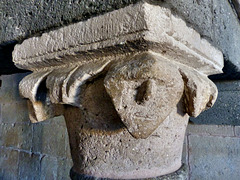
Ottana was the center of a diocese between 1112 and 1503. San Nicola, now a parish church, was a cathedral once.
The church, placed on a hill, was erected on foundations of an older byzantine structure within the first half 12th century from black trachyt slabs. San Nicola was built on a "Tau Cross" floor plan. The pulpit of the cathedral is on the right side of the nave - and below the pulpit is this face.
In 1912 a parchment was found, hidden under the main altar, describing and dating the consecration performed by "Zacharias Episcopus" in 1160.
Ottana - San Nicola
| 08 May 2016 |
|
|
|
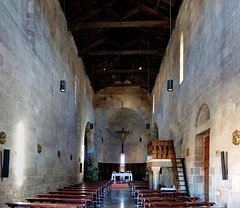
Ottana was the center of a diocese between 1112 and 1503. San Nicola, now a parish church, was a cathedral once.
The church, placed on a hill, was erected on foundations of an older byzantine structure within the first half 12th century from black trachyt slabs. San Nicola was built on a "Tau Cross" floor plan. It is a single nave church, uncommon for a cathedral.
In 1912 a parchment was found, hidden under the main altar, describing and dating the consecration performed by "Zacharias Episcopus" in 1160.

Ottana - San Nicola
| 04 May 2016 |
|
|
Ottana was the center of a diocese between 1112 and 1503. San Nicola, now a parish church, was a cathedral once.
The church, placed on a hill, was erected on foundations of an older byzantine structure within the first half 12th century from black trachyt slabs. San Nicola was built on a "Tau Cross" floor plan, so seen here to the right is the transept-arm.
In 1912 a parchment was found, hidden under the main altar, describing and dating the consecration performed by "Zacharias Episcopus" in 1160.
Ottana - San Nicola
| 04 May 2016 |
|
|
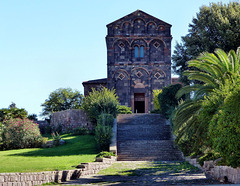
Ottana was the center of a diocese between 1112 and 1503. San Nicola, now a parish church, was a cathedral once.
The church, placed on a little hill, was erected on foundations of an older byzantine structure within the first half 12th century from black trachyt slabs. In 1912 a parchment was found, hidden under the main altar, describing and dating the consecration performed by "Zacharias Episcopus" in 1160.

Ottana - San Nicola
| 04 May 2016 |
|
|
Ottana was the center of a diocese between 1112 and 1503. San Nicola, now a parish church, was a cathedral once.
The church, placed on a little hill, was erected on foundations of an older byzantine structure within the first half 12th century from black trachyt slabs. In 1912 a parchment was found, hidden under the main altar, describing and dating the consecration performed by "Zacharias Episcopus" in 1160.
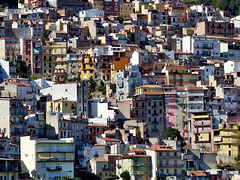
Lanusei
| 03 May 2016 |
|
The mountains are quite high and the road leading inland from the coast takes many hairpin turns to reach the colourful town of Lanusei.
Jump to top
RSS feed- Martin M. Miles' latest photos with "Provincia di Nuoro" - Photos
- ipernity © 2007-2026
- Help & Contact
|
Club news
|
About ipernity
|
History |
ipernity Club & Prices |
Guide of good conduct
Donate | Group guidelines | Privacy policy | Terms of use | Statutes | In memoria -
Facebook
X
