

Martin M. Miles' photos with the keyword: Dauphiné
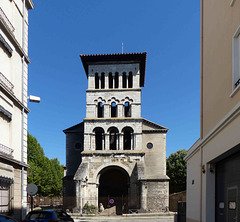
Vienne - Musée archéologique Saint-Pierre de Vienn…
| 24 Apr 2023 |
|
|
The oppidum of the Celtic Alobroges became a Roman colony about 47 BC under Julius Caesar, but the Allobroges managed to expel the Romans. The exiles moved north and founded the colony of Lugdunum (today's Lyon). During the early Empire, Vienna regained all its former privileges as a Roman colony. The city flourished and became the second capital of southern Gaul during the Roman Empire.
The first Christians lived in Vienne around 100 AD. In the 3rd century, the city became a bishopric. After the death of the childless last Burgundian king Rudolf III. Vienne fell in 1032 to the German king Conrad II and thus to the Holy Roman Empire. In the 12th century, Vienne became the capital of the Dauphiné. In the 15th and 16th centuries, Vienne experienced an economic boom, numerous houses were built in the half-timbered style of the time, and the cathedral was completed. During the Wars of Religion, the city was fought over and frequently looted.
Founded in the 5th century by Bishop Mamert, the Saint-Pierre church became an abbey in the 6th century. It served as a funerary basilica until the 13th century and was then the privileged burial place of the bishops of Vienne. It is claimed that this church is one of the oldest in France. The church has retained its original basilica plan and structured nave, to which a bell tower and porch were added in the 12th century.
Monastic life ended with the French Revolution. In 1806, the city took possession of the church and set up the first municipal museum there in 1809,
A restoration campaign was carried out around 1860 and the classical stucco decoration was removed. A few years later, excavations in the nave led to the discovery of 124 sarcophagi and remains of the liturgical furnishings.

Vienne - Coin Laundry
| 22 Apr 2023 |
|
The oppidum of the Celtic Alobroges became a Roman colony about 47 BC under Julius Caesar, but the Allobroges managed to expel the Romans. The exiles moved north and founded the colony of Lugdunum (today's Lyon). During the early Empire, Vienna regained all its former privileges as a Roman colony. The city flourished and became the second capital of southern Gaul during the Roman Empire.
The first Christians lived in Vienne around 100 AD. In the 3rd century, the city became a bishopric. After the death of the childless last Burgundian king Rudolf III. Vienne fell in 1032 to the German king Conrad II and thus to the Holy Roman Empire. In the 12th century, Vienne became the capital of the Dauphiné. In the 15th and 16th centuries, Vienne experienced an economic boom, numerous houses were built in the half-timbered style of the time, and the cathedral was completed. During the Wars of Religion, the city was fought over and frequently looted.
Once a coin laundry - now no hope.

Vienne - Maxi Laverie
| 22 Apr 2023 |
|
|
The oppidum of the Celtic Alobroges became a Roman colony about 47 BC under Julius Caesar, but the Allobroges managed to expel the Romans. The exiles moved north and founded the colony of Lugdunum (today's Lyon). During the early Empire, Vienna regained all its former privileges as a Roman colony. The city flourished and became the second capital of southern Gaul during the Roman Empire.
The first Christians lived in Vienne around 100 AD. In the 3rd century, the city became a bishopric. After the death of the childless last Burgundian king Rudolf III. Vienne fell in 1032 to the German king Conrad II and thus to the Holy Roman Empire. In the 12th century, Vienne became the capital of the Dauphiné. In the 15th and 16th centuries, Vienne experienced an economic boom, numerous houses were built in the half-timbered style of the time, and the cathedral was completed. During the Wars of Religion, the city was fought over and frequently looted.
Maxi Laverie

Vienne
| 22 Apr 2023 |
|
The oppidum of the Celtic Alobroges became a Roman colony about 47 BC under Julius Caesar, but the Allobroges managed to expel the Romans. The exiles moved north and founded the colony of Lugdunum (today's Lyon). During the early Empire, Vienna regained all its former privileges as a Roman colony. The city flourished and became the second capital of southern Gaul during the Roman Empire.
The first Christians lived in Vienne around 100 AD. In the 3rd century, the city became a bishopric. After the death of the childless last Burgundian king Rudolf III. Vienne fell in 1032 to the German king Conrad II and thus to the Holy Roman Empire. In the 12th century, Vienne became the capital of the Dauphiné. In the 15th and 16th centuries, Vienne experienced an economic boom, numerous houses were built in the half-timbered style of the time, and the cathedral was completed. During the Wars of Religion, the city was fought over and frequently looted.
Just selling hats

Vienne - Le Danube
| 22 Apr 2023 |
|
|
The oppidum of the Celtic Alobroges became a Roman colony about 47 BC under Julius Caesar, but the Allobroges managed to expel the Romans. The exiles moved north and founded the colony of Lugdunum (today's Lyon). During the early Empire, Vienna regained all its former privileges as a Roman colony. The city flourished and became the second capital of southern Gaul during the Roman Empire.
The first Christians lived in Vienne around 100 AD. In the 3rd century, the city became a bishopric. After the death of the childless last Burgundian king Rudolf III. Vienne fell in 1032 to the German king Conrad II and thus to the Holy Roman Empire. In the 12th century, Vienne became the capital of the Dauphiné. In the 15th and 16th centuries, Vienne experienced an economic boom, numerous houses were built in the half-timbered style of the time, and the cathedral was completed. During the Wars of Religion, the city was fought over and frequently looted.
Unlike Vienna in Austria, "Le Danube" has dried up in Vienne.

Vienne - Boucherie - Triperie
| 22 Apr 2023 |
|
The oppidum of the Celtic Alobroges became a Roman colony about 47 BC under Julius Caesar, but the Allobroges managed to expel the Romans. The exiles moved north and founded the colony of Lugdunum (today's Lyon). During the early Empire, Vienna regained all its former privileges as a Roman colony. The city flourished and became the second capital of southern Gaul during the Roman Empire.
The first Christians lived in Vienne around 100 AD. In the 3rd century, the city became a bishopric. After the death of the childless last Burgundian king Rudolf III. Vienne fell in 1032 to the German king Conrad II and thus to the Holy Roman Empire. In the 12th century, Vienne became the capital of the Dauphiné. In the 15th and 16th centuries, Vienne experienced an economic boom, numerous houses were built in the half-timbered style of the time, and the cathedral was completed. During the Wars of Religion, the city was fought over and frequently looted.
Vienne has a Lidl supermarket just a few hundred meters from the city center. The traces of such a development are visible.

Vienne - Temple of Augustus and Livia
| 22 Apr 2023 |
|
|
The oppidum of the Celtic Alobroges became a Roman colony about 47 BC under Julius Caesar, but the Allobroges managed to expel the Romans. The exiles moved north and founded the colony of Lugdunum (today's Lyon). During the early Empire, Vienna regained all its former privileges as a Roman colony. The city flourished and became the second capital of southern Gaul during the Roman Empire.
The first Christians lived in Vienne around 100 AD. In the 3rd century, the city became a bishopric. After the death of the childless last Burgundian king Rudolf III. Vienne fell in 1032 to the German king Conrad II and thus to the Holy Roman Empire. In the 12th century, Vienne became the capital of the Dauphiné. In the 15th and 16th centuries, Vienne experienced an economic boom, numerous houses were built in the half-timbered style of the time, and the cathedral was completed. During the Wars of Religion, the city was fought over and frequently looted.
The Roman temple was dedicated to the imperial cult, to honor Emperor Augustus and his wife Livia. It has two states of construction. The original building was built in the last quarter of the 1st century BC. Following the scholars, a partial reconstruction would have taken place a few decades later and the capitals were carved around the middle of the 1st century.
With the fall of the Western Roman Empire and the Christianization, the temple became the parish church of Sainte-Marie-la-Vieille then Notre-Dame-de-la-Vie until the French Revolution. From 1792, the church became the temple of Reason, then the commercial court of Vienne, then the museum and the library of Vienne (until 1852), and finally, after 28 years of work, the building regained its original aspect of a Roman temple.
Vienne - Abbaye de Saint-André-le-Bas
| 22 Apr 2023 |
|
The oppidum of the Celtic Alobroges became a Roman colony about 47 BC under Julius Caesar, but the Allobroges managed to expel the Romans. The exiles moved north and founded the colony of Lugdunum (today's Lyon). During the early Empire, Vienna regained all its former privileges as a Roman colony. The city flourished and became the second capital of southern Gaul during the Roman Empire.
The first Christians lived in Vienne around 100 AD. In the 3rd century, the city became a bishopric. After the death of the childless last Burgundian king Rudolf III. Vienne fell in 1032 to the German king Conrad II and thus to the Holy Roman Empire. In the 12th century, Vienne became the capital of the Dauphiné. In the 15th and 16th centuries, Vienne experienced an economic boom, numerous houses were built in the half-timbered style of the time, and the cathedral was completed. During the Wars of Religion, the city was fought over and frequently looted.
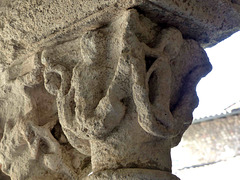
The abbey was founded in the 8th century. The monastery church became the palace chapel of the kings of Burgundy at the end of the 9th century. The monastery adopted the Benedictine rule probably at the end of the 10th century. The convent failed to recover from the Wars of Religion and the monastic life ended on the eve of the Revolution. The abbey church becomes parochial and the convent buildings are sold and partially dismantled.
The cloister survived the times. Here are some weathered mermaids.
Vienne - Abbaye de Saint-André-le-Bas
| 21 Apr 2023 |
|
|
|
The oppidum of the Celtic Alobroges became a Roman colony about 47 BC under Julius Caesar, but the Allobroges managed to expel the Romans. The exiles moved north and founded the colony of Lugdunum (today's Lyon). During the early Empire, Vienna regained all its former privileges as a Roman colony. The city flourished and became the second capital of southern Gaul during the Roman Empire.
The first Christians lived in Vienne around 100 AD. In the 3rd century, the city became a bishopric. After the death of the childless last Burgundian king Rudolf III. Vienne fell in 1032 to the German king Conrad II and thus to the Holy Roman Empire. In the 12th century, Vienne became the capital of the Dauphiné. In the 15th and 16th centuries, Vienne experienced an economic boom, numerous houses were built in the half-timbered style of the time, and the cathedral was completed. During the Wars of Religion, the city was fought over and frequently looted.
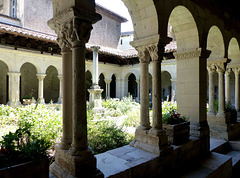
The abbey was founded in the 8th century. The monastery church became the palace chapel of the kings of Burgundy at the end of the 9th century. The monastery adopted the Benedictine rule probably at the end of the 10th century. The convent failed to recover from the Wars of Religion and the monastic life ended on the eve of the Revolution. The abbey church becomes parochial and the convent buildings are sold and partially dismantled.
The cloister survived the times.

Vienne - Abbaye de Saint-André-le-Bas
| 21 Apr 2023 |
|
|
The oppidum of the Celtic Alobroges became a Roman colony about 47 BC under Julius Caesar, but the Allobroges managed to expel the Romans. The exiles moved north and founded the colony of Lugdunum (today's Lyon). During the early Empire, Vienna regained all its former privileges as a Roman colony. The city flourished and became the second capital of southern Gaul during the Roman Empire.
The first Christians lived in Vienne around 100 AD. In the 3rd century, the city became a bishopric. After the death of the childless last Burgundian king Rudolf III. Vienne fell in 1032 to the German king Conrad II and thus to the Holy Roman Empire. In the 12th century, Vienne became the capital of the Dauphiné. In the 15th and 16th centuries, Vienne experienced an economic boom, numerous houses were built in the half-timbered style of the time, and the cathedral was completed. During the Wars of Religion, the city was fought over and frequently looted.
The abbey was founded in the 8th century. The monastery church became the palace chapel of the kings of Burgundy at the end of the 9th century. The monastery adopted the Benedictine rule probably at the end of the 10th century. The convent failed to recover from the Wars of Religion and the monastic life ended on the eve of the Revolution. The abbey church becomes parochial and the convent buildings are sold and partially dismantled.
The Saint-André-le-Bas church was built on an artificial Roman platform.
Jump to top
RSS feed- Martin M. Miles' latest photos with "Dauphiné" - Photos
- ipernity © 2007-2026
- Help & Contact
|
Club news
|
About ipernity
|
History |
ipernity Club & Prices |
Guide of good conduct
Donate | Group guidelines | Privacy policy | Terms of use | Statutes | In memoria -
Facebook
X
