

Martin M. Miles' photos with the keyword: Mayeul de Cluny
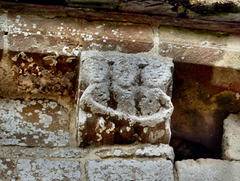
Tamerville - Notre-Dame-de-l'Assomption
| 21 Sep 2018 |
|
|
The parish church "Notre-Dame-de-l'Assomption" in the center of Tamerville has a remarkable Romanesque tower. The erecttion of the church (and the tower) started in 1070 and was completed mid 12th century, but later the church got enlarged and altered a couple of times. The church was dedicated to Saint Mayeul (aka "Mayeul de Cluny", "Majolus of Cluny"). Saint Mayeul, important abbot of Cluny, built Cluny II. There must have been a connection to the Burgundy in the early times.
I had been here five years ago and already uploaded many photos. Now I will add only very few.
Two persons / couples can often be seen on the corbels under the roof, but three persons are very rare. Triplets?
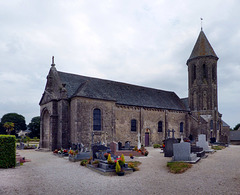
Tamerville - Notre-Dame-de-l'Assomption
| 20 Sep 2018 |
|
|
The parish church "Notre-Dame-de-l'Assomption" in the center of Tamerville has a remarkable Romanesque tower. The erecttion of the church (and the tower) started in 1070 and was completed mid 12th century, but later the church got enlarged and altered a couple of times. The church was dedicated to Saint Mayeul (aka "Mayeul de Cluny", "Majolus of Cluny"). Saint Mayeul, important abbot of Cluny, built Cluny II. There must have been a connection to the Burgundy in the early times.
I had been here five years ago and already uploaded many photos. Now I will add only very few.
Souvigny - Prieuré Saint-Pierre-et-Saint-Paul
| 15 May 2017 |
|
In 915 Aymar de Bourbon, ancestor of the House of Bourbon, gave land in Souvigny to the Cluny Abbey for the construction of a monastery. At that time the "Abbaye de Cluny" was just 5 years old, as it had been founded 910 by William I, Duke of Aquitaine, (aka "William the Pious").
Souvigny was one of the first priories, dependent from the Cluny Abbey, so it was known later as "one of the five eldest daughters of Cluny".
Cluny developed into the most powerful abbey in the Middle Ages, when the Cluniac Reforms changed the monastic life in Europe. German historian Dr. Joachim Wollasch ("Cluny, Licht der Welt"), estimates that in its haydays, more than 10.000 monks were parts of this network´, that stretched all over Europe. The pelerinage to Santiago de Compostella was one of the great "themes", developed and strongly supported by Cluny.
The priory in Souvigny was such an important convent, that two of the powerful abbots of Cluny, Majolus (+ 994) and Odilo (+ 1049) died here. Their graves were a place of pilgrimage site soon after. To cope with the growing number of pilgrims, the priory´s church got enlarged already within the 10th century.
Mayeul (= Majolus) was the 4th, Odilon (= Odilo) was the 5th abbot of the Abbey of Cluny. Odilo "invented" and established the "All Souls' Day" (2. November), that was adopted in the whole Western church.
The church, probably built after the model of Cluny III, with five aisles structure and two transepts, crumbled, when the times got tougher in the next centuries.
In 1793 French revolutionists raged through the priory, they desacrated the tombs of the saints as well as that of the nobility, damaged and decapitulated most of the statues and destroyed whatever they found. The left a ruined place.
When the rubble got excavated later many warosk of art were found, that can now be seen in the adjoining museum.
The "Colonne du Zodiaque" is probably the most spectacular. The octagonal column was originally probably 3, 80 meters high, but only the upper part remains. It is dated to the end of the 12th century.
Depicted are the signs of the zodiac, the "labors of the months", "strange" people and exotic/mythic animals.
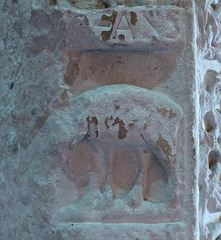
A closer look onto the elephant, that unfortunately is rather damaged.
"Romanesque" elephants are a very rare species. Only three elephants have been in Europe in medieval times, only one, before this elephant was carved (end of 12th century).
- "Abul Abbas" (+810) owned by Charlemagne, a present from Harun al-Rashid.
- The "Cremona-elephant" owned by Frederik II in 1229, a present from Al-Kamil al-Malik.
- The elephant brought to France by Louis IX in 1255 returning from the cruisade, presented to Henry III. This elephant died in London 1258.
Interesting, that within a 130kms radius, are three more elephants: Vezelay, Châtel-Montagne and Perrecy-les-Forges.
Souvigny - Prieuré Saint-Pierre-et-Saint-Paul
| 15 May 2017 |
|
|
In 915 Aymar de Bourbon, ancestor of the House of Bourbon, gave land in Souvigny to the Cluny Abbey for the construction of a monastery. At that time the "Abbaye de Cluny" was just 5 years old, as it had been founded 910 by William I, Duke of Aquitaine, (aka "William the Pious").
Souvigny was one of the first priories, dependent from the Cluny Abbey, so it was known later as "one of the five eldest daughters of Cluny".
Cluny developed into the most powerful abbey in the Middle Ages, when the Cluniac Reforms changed the monastic life in Europe. German historian Dr. Joachim Wollasch ("Cluny, Licht der Welt"), estimates that in its haydays, more than 10.000 monks were parts of this network´, that stretched all over Europe. The pelerinage to Santiago de Compostella was one of the great "themes", developed and strongly supported by Cluny.
The priory in Souvigny was such an important convent, that two of the powerful abbots of Cluny, Majolus (+ 994) and Odilo (+ 1049) died here. Their graves were a place of pilgrimage site soon after. To cope with the growing number of pilgrims, the priory´s church got enlarged already within the 10th century.
Mayeul (= Majolus) was the 4th, Odilon (= Odilo) was the 5th abbot of the Abbey of Cluny. Odilo "invented" and established the "All Souls' Day" (2. November), that was adopted in the whole Western church.
The church, probably built after the model of Cluny III, with five aisles structure and two transepts, crumbled, when the times got tougher in the next centuries.
In 1793 French revolutionists raged through the priory, they desacrated the tombs of the saints as well as that of the nobility, damaged and decapitulated most of the statues and destroyed whatever they found. The left a ruined place.
When the rubble got excavated later many warosk of art were found, that can now be seen in the adjoining museum.
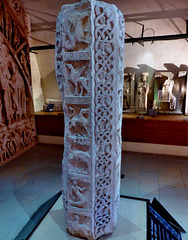
The "Colonne du Zodiaque" is probably the most spectacular. The octagonal column was originally probably 3, 80 meters high, but only the upper part remains. It is dated to the end of the 12th century.
Depicted are the signs of the zodiac, the "labors of the months", "strange" people and exotic/mythic animals.
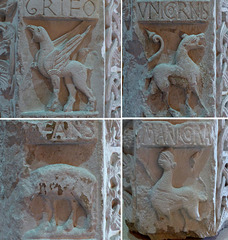
Four of the mythical animals (see previous upload).
A griffin, a unicorn, an elephant and a manticore.
Souvigny - Prieuré Saint-Pierre-et-Saint-Paul
| 14 May 2017 |
|
|
In 915 Aymar de Bourbon, ancestor of the House of Bourbon, gave land in Souvigny to the Cluny Abbey for the construction of a monastery. At that time the "Abbaye de Cluny" was just 5 years old, as it had been founded 910 by William I, Duke of Aquitaine, (aka "William the Pious").
Souvigny was one of the first priories, dependent from the Cluny Abbey, so it was known later as "one of the five eldest daughters of Cluny".
Cluny developed into the most powerful abbey in the Middle Ages, when the Cluniac Reforms changed the monastic life in Europe. German historian Dr. Joachim Wollasch ("Cluny, Licht der Welt"), estimates that in its haydays, more than 10.000 monks were parts of this network´, that stretched all over Europe. The pelerinage to Santiago de Compostella was one of the great "themes", developed and strongly supported by Cluny.
The priory in Souvigny was such an important convent, that two of the powerful abbots of Cluny, Majolus (+ 994) and Odilo (+ 1049) died here. Their graves were a place of pilgrimage site soon after. To cope with the growing number of pilgrims, the priory´s church got enlarged already within the 10th century.
Mayeul (= Majolus) was the 4th, Odilon (= Odilo) was the 5th abbot of the Abbey of Cluny. Odilo "invented" and established the "All Souls' Day" (2. November), that was adopted in the whole Western church.
The church, probably built after the model of Cluny III, with five aisles structure and two transepts, crumbled, when the times got tougher in the next centuries.
In 1793 French revolutionists raged through the priory, they desacrated the tombs of the saints as well as that of the nobility, damaged and decapitulated most of the statues and destroyed whatever they found. The left a ruined place.
When the rubble got excavated later many warosk of art were found, that can now be seen in the adjoining museum.
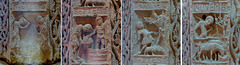
The "Colonne du Zodiaque" is probably the most spectacular. The octagonal column was originally probably 3, 80 meters high, but only the upper part remains. It is dated to the end of the 12th century.
Depicted are the signs of the zodiac, the "labors of the months", "strange" people and exotic/mythic animals.
Depicted on this side are mythic animals.
4th from top, between a unicorn and a mermaid
is - an elephant!
Souvigny - Prieuré Saint-Pierre-et-Saint-Paul
| 14 May 2017 |
|
|
In 915 Aymar de Bourbon, ancestor of the House of Bourbon, gave land in Souvigny to the Cluny Abbey for the construction of a monastery. At that time the "Abbaye de Cluny" was just 5 years old, as it had been founded 910 by William I, Duke of Aquitaine, (aka "William the Pious").
Souvigny was one of the first priories, dependent from the Cluny Abbey, so it was known later as "one of the five eldest daughters of Cluny".
Cluny developed into the most powerful abbey in the Middle Ages, when the Cluniac Reforms changed the monastic life in Europe. German historian Dr. Joachim Wollasch ("Cluny, Licht der Welt"), estimates that in its haydays, more than 10.000 monks were parts of this network´, that stretched all over Europe. The pelerinage to Santiago de Compostella was one of the great "themes", developed and strongly supported by Cluny.
The priory in Souvigny was such an important convent, that two of the powerful abbots of Cluny, Majolus (+ 994) and Odilo (+ 1049) died here. Their graves were a place of pilgrimage site soon after. To cope with the growing number of pilgrims, the priory´s church got enlarged already within the 10th century.
Mayeul (= Majolus) was the 4th, Odilon (= Odilo) was the 5th abbot of the Abbey of Cluny. Odilo "invented" and established the "All Souls' Day" (2. November), that was adopted in the whole Western church.
The church, probably built after the model of Cluny III, with five aisles structure and two transepts, crumbled, when the times got tougher in the next centuries.
In 1793 French revolutionists raged through the priory, they desacrated the tombs of the saints as well as that of the nobility, damaged and decapitulated most of the statues and destroyed whatever they found. The left a ruined place.
When the rubble got excavated later many warosk of art were found, that can now be seen in the adjoining museum.
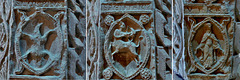
The "Colonne du Zodiaque" is probably the most spectacular. The octagonal column was originally probably 3, 80 meters high, but only the upper part remains. It is dated to the end of the 12th century.
Depicted are the signs of the zodiac, the "labors of the months", "strange" people and exotic/mythic animals.
Here are the "labors of the months".
Augustus - Septemb(er) - Oktober - Novemb(er)
Souvigny - Prieuré Saint-Pierre-et-Saint-Paul
| 14 May 2017 |
|
In 915 Aymar de Bourbon, ancestor of the House of Bourbon, gave land in Souvigny to the Cluny Abbey for the construction of a monastery. At that time the "Abbaye de Cluny" was just 5 years old, as it had been founded 910 by William I, Duke of Aquitaine, (aka "William the Pious").
Souvigny was one of the first priories, dependent from the Cluny Abbey, so it was known later as "one of the five eldest daughters of Cluny".
Cluny developed into the most powerful abbey in the Middle Ages, when the Cluniac Reforms changed the monastic life in Europe. German historian Dr. Joachim Wollasch ("Cluny, Licht der Welt"), estimates that in its haydays, more than 10.000 monks were parts of this network´, that stretched all over Europe. The pelerinage to Santiago de Compostella was one of the great "themes", developed and strongly supported by Cluny.
The priory in Souvigny was such an important convent, that two of the powerful abbots of Cluny, Majolus (+ 994) and Odilo (+ 1049) died here. Their graves were a place of pilgrimage site soon after. To cope with the growing number of pilgrims, the priory´s church got enlarged already within the 10th century.
Mayeul (= Majolus) was the 4th, Odilon (= Odilo) was the 5th abbot of the Abbey of Cluny. Odilo "invented" and established the "All Souls' Day" (2. November), that was adopted in the whole Western church.
The church, probably built after the model of Cluny III, with five aisles structure and two transepts, crumbled, when the times got tougher in the next centuries.
In 1793 French revolutionists raged through the priory, they desacrated the tombs of the saints as well as that of the nobility, damaged and decapitulated most of the statues and destroyed whatever they found. The left a ruined place.
When the rubble got excavated later many warosk of art were found, that can now be seen in the adjoining museum.
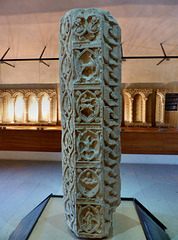
The "Colonne du Zodiaque" is probably the most spectacular. The octagonal column was originally probably 3, 80 meters high, but only the upper part remains. It is dated to the end of the 12th century.
Depicted are the signs of the zodiac, the "labors of the months", "strange" people and exotic/mythic animals.
Here are
"Scorpius" - "Sagitari(us)" - "Virgo"
Souvigny - Prieuré Saint-Pierre-et-Saint-Paul
| 14 May 2017 |
|
In 915 Aymar de Bourbon, ancestor of the House of Bourbon, gave land in Souvigny to the Cluny Abbey for the construction of a monastery. At that time the "Abbaye de Cluny" was just 5 years old, as it had been founded 910 by William I, Duke of Aquitaine, (aka "William the Pious").
Souvigny was one of the first priories, dependent from the Cluny Abbey, so it was known later as "one of the five eldest daughters of Cluny".
Cluny developed into the most powerful abbey in the Middle Ages, when the Cluniac Reforms changed the monastic life in Europe. German historian Dr. Joachim Wollasch ("Cluny, Licht der Welt"), estimates that in its haydays, more than 10.000 monks were parts of this network´, that stretched all over Europe. The pelerinage to Santiago de Compostella was one of the great "themes", developed and strongly supported by Cluny.
The priory in Souvigny was such an important convent, that two of the powerful abbots of Cluny, Majolus (+ 994) and Odilo (+ 1049) died here. Their graves were a place of pilgrimage site soon after. To cope with the growing number of pilgrims, the priory´s church got enlarged already within the 10th century.
Mayeul (= Majolus) was the 4th, Odilon (= Odilo) was the 5th abbot of the Abbey of Cluny. Odilo "invented" and established the "All Souls' Day" (2. November), that was adopted in the whole Western church.
The church, probably built after the model of Cluny III, with five aisles structure and two transepts, crumbled, when the times got tougher in the next centuries.
In 1793 French revolutionists raged through the priory, they desacrated the tombs of the saints as well as that of the nobility, damaged and decapitulated most of the statues and destroyed whatever they found. The left a ruined place.
When the rubble got excavated later many warosk of art were found, that can now be seen in the adjoining museum.
The "Colonne du Zodiaque" is probably the most spectacular. The octagonal column was originally probably 3, 80 meters high, but only the upper part remains. It is dated to the end of the 12th century.
Depicted are the signs of the zodiac, the "labors of the months", "strange" people and exotic/mythic animals.
Here are (from top)
"Capricornus", "Sagitari(us)", "Scorpius", "Libra" and "Virgo".
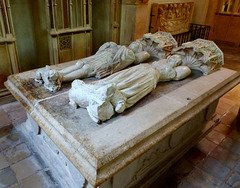
Souvigny - Prieuré Saint-Pierre-et-Saint-Paul
| 14 May 2017 |
|
In 915 Aymar de Bourbon, ancestor of the House of Bourbon, gave land in Souvigny to the Cluny Abbey for the construction of a monastery. At that time the "Abbaye de Cluny" was just 5 years old, as it had been founded 910 by William I, Duke of Aquitaine, (aka "William the Pious").
Souvigny was one of the first priories, dependent from the Cluny Abbey, so it was known later as "one of the five eldest daughters of Cluny".
Cluny developed into the most powerful abbey in the Middle Ages, when the Cluniac Reforms changed the monastic life in Europe. German historian Dr. Joachim Wollasch ("Cluny, Licht der Welt"), estimates that in its haydays, more than 10.000 monks were parts of this network´, that stretched all over Europe. The pelerinage to Santiago de Compostella was one of the great "themes", developed and strongly supported by Cluny.
The priory in Souvigny, located about 130kms west of Cluny, was such an important convent, that two of the powerful abbots of Cluny, Majolus (+ 994) and Odilo (+ 1049) died here. Their graves were a place of pilgrimage site soon after. To cope with the growing number of pilgrims, the priory´s church got enlarged already within the 10th century.
Mayeul (= Majolus) was the 4th, Odilon (= Odilo) was the 5th abbot of the Abbey of Cluny. Odilo "invented" and established the "All Souls' Day" (2. November), that was adopted in the whole Western church.
The church, probably built after the model of Cluny III, with five aisles structure and two transepts, crumbled, when the times got tougher in the next centuries. A renovation was done in the 15th century, but the interior structure is still "clearly" Romanesque. It got recently renovated.
In 1375 Louis II de Bourbon (aka "le bon duc"), who had spent 13 years in captivity in England after the Battle of Poitiers (1356), had a funeral chapel built into the existing southern arm of the transept.
Of course the French revolutionaries destroyed the tombs in 1793, but meanwhile they got reconstructed from the bits and pieces found.
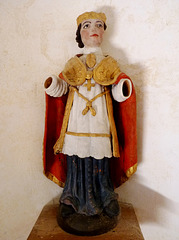
Tamerville - Notre-Dame-de-l'Assomption
| 18 Sep 2014 |
|
The parish church "Notre-Dame-de-l'Assomption" in the center of Tamerville has a remarkable Romanesque tower. The church (and the tower) were erected mid 12th century, but the church got enlarged and altered over the time. The church was dedicated to Saint Mayeul (aka "Mayeul de Cluny", "Majolus of Cluny"). Saint Mayeul, important abbot of Cluny, built Cluny II. There must have been a connection to the Burgundy in the early times.
The two chapels, that were added to the church, are dedicated to Saint Jacques and Saint Sulpice. The statue, seen here, may depict Saint Sulpice, who in real life had two arms and never used mascara and lipstick. He was a Bishop!
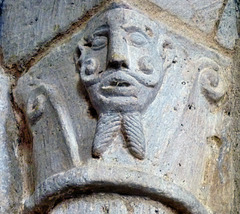
Tamerville - Notre-Dame-de-l'Assomption
| 18 Sep 2014 |
|
The parish church "Notre-Dame-de-l'Assomption" in the center of Tamerville has a remarkable Romanesque tower. The church (and the tower) were erected mid 12th century, but the church got enlarged and altered over the time. The church was dedicated to Saint Mayeul (aka "Mayeul de Cluny", "Majolus of Cluny"). Saint Mayeul, important abbot of Cluny, built Cluny II. There must have been a connection to the Burgundy in the early times.
A gentleman with an extraordinary beard. An Anglo-Saxon warrior? A twin of the weathered beard puller under the roof) Another "Sweyn Forkbeard"?
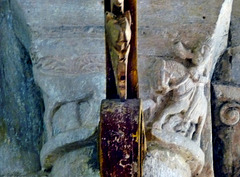
Tamerville - Notre-Dame-de-l'Assomption
| 18 Sep 2014 |
|
The parish church "Notre-Dame-de-l'Assomption" in the center of Tamerville has a remarkable Romanesque tower. The church (and the tower) were erected mid 12th century, but the church got enlarged and altered over the time. The church was dedicated to Saint Mayeul (aka "Mayeul de Cluny", "Majolus of Cluny"). Saint Mayeul, important abbot of Cluny, built Cluny II. There must have been a connection to the Burgundy in the early times.
The capital is cut into halves by the "Baroque" decoration (see previous upload). To the right a hunter on a horse, blowing his horn. He chases a stag (left).
Tamerville - Notre-Dame-de-l'Assomption
| 18 Sep 2014 |
|
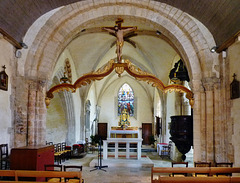
The parish church "Notre-Dame-de-l'Assomption" in the center of Tamerville has a remarkable Romanesque tower. The church (and the tower) were erected mid 12th century, but the church got enlarged and altered over the time. The church was dedicated to Saint Mayeul (aka "Mayeul de Cluny", "Majolus of Cluny"). Saint Mayeul, important abbot of Cluny, built Cluny II. There must have been a connection to the Burgundy in the early times.
The arch in the center of "Notre-Dame-de-l'Assomption" is Romanesque. The wooden, curved "Baroque" decoration was very popular within the 19th century. It was installed, before the Romanesque capitals were respected, so the capitals got damaged. Two chapels were added to the church. The right one is hidden by the pulpit.
Tamerville - Notre-Dame-de-l'Assomption
| 17 Sep 2014 |
|
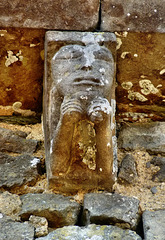
The parish church "Notre-Dame-de-l'Assomption" in the center of Tamerville has a remarkable Romanesque tower. The church (and the tower) were erected mid 12th century, but the church got enlarged and altered over the time. The church was dedicated to Saint Mayeul (aka "Mayeul de Cluny", "Majolus of Cluny"). Saint Mayeul, important abbot of Cluny, built Cluny II. There must have been a connection to the Burgundy in the early times.
Many corbels are under the roof of the Romanesque tower and all along the nave. Here is a "beard puller".
Tamerville - Notre-Dame-de-l'Assomption
| 17 Sep 2014 |
|
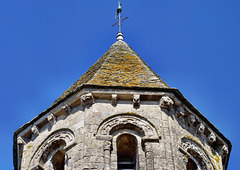
The parish church "Notre-Dame-de-l'Assomption" in the center of Tamerville has a remarkable Romanesque tower. The church (and the tower) were erected mid 12th century, but the church got enlarged and altered over the time. The church was dedicated to Saint Mayeul (aka "Mayeul de Cluny", "Majolus of Cluny"). Saint Mayeul, important abbot of Cluny, built Cluny II. There must have been a connection to the Burgundy in the early times.
Corbels are under the roof of the Romanesque tower.
Tamerville - Notre-Dame-de-l'Assomption
| 17 Sep 2014 |
|
|
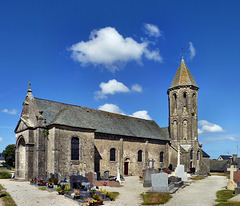
The parish church "Notre-Dame-de-l'Assomption" in the center of Tamerville has a remarkable Romanesque tower. The church (and the tower) were erected mid 12th century, but the church got enlarged and altered over the time. The church was dedicated to Saint Mayeul (aka "Mayeul de Cluny", "Majolus of Cluny"). Saint Mayeul, important abbot of Cluny, built Cluny II. There must have been a connection to the Burgundy in the early times.
Jump to top
RSS feed- Martin M. Miles' latest photos with "Mayeul de Cluny" - Photos
- ipernity © 2007-2026
- Help & Contact
|
Club news
|
About ipernity
|
History |
ipernity Club & Prices |
Guide of good conduct
Donate | Group guidelines | Privacy policy | Terms of use | Statutes | In memoria -
Facebook
X
