

Martin M. Miles' photos with the keyword: Calvinist

Dendermonde - Onze Lieve Vrouwekerk
| 01 Sep 2025 |
|
Towards the end of the Frankish period, a settlement was established here, later another followed in the shadow of a castle built by Emperor Otto II in the second half of the 10th century. The name Dendermonde is first mentioned in a document from 1087. In 1223, a Cistercian abbey was founded, and in 1233, Robrecht van Bethune granted Dendermonde city rights. As early as the 13th century, Dendermonde was a walled and ramparted city.
It is believed that Ringoot II, Lord of Dendermonde, had the church built in the 11th century. Numerous alterations were made from the 13th to the 16th centuries. The most important parts are built in the Scheldt Gothic style. The octagonal tower at the crossing dates from 1388.
After its destruction during the Calvinist period (1578-1584), new furniture was installed. In the 19th and early 20th centuries, various parts of the church were rebuilt, some in the Neo-Gothic style.
Bicycles are highly valued in the Netherlands and here in Belgium. They are an important cultural asset

Dendermonde - Onze Lieve Vrouwekerk
| 01 Sep 2025 |
|
Towards the end of the Frankish period, a settlement was established here, later another followed in the shadow of a castle built by Emperor Otto II in the second half of the 10th century. The name Dendermonde is first mentioned in a document from 1087. In 1223, a Cistercian abbey was founded, and in 1233, Robrecht van Bethune granted Dendermonde city rights. As early as the 13th century, Dendermonde was a walled and ramparted city.
It is believed that Ringoot II, Lord of Dendermonde, had the church built in the 11th century. Numerous alterations were made from the 13th to the 16th centuries. The most important parts are built in the Scheldt Gothic style. The octagonal tower at the crossing dates from 1388.
After its destruction during the Calvinist period (1578-1584), new furniture was installed. In the 19th and early 20th centuries, various parts of the church were rebuilt, some in the Neo-Gothic style.
Mise au tombeau
The baroque putti in the foreground hold the "Arma Christi"

Dendermonde - Onze Lieve Vrouwekerk
| 01 Sep 2025 |
|
Towards the end of the Frankish period, a settlement was established here, later another followed in the shadow of a castle built by Emperor Otto II in the second half of the 10th century. The name Dendermonde is first mentioned in a document from 1087. In 1223, a Cistercian abbey was founded, and in 1233, Robrecht van Bethune granted Dendermonde city rights. As early as the 13th century, Dendermonde was a walled and ramparted city.
It is believed that Ringoot II, Lord of Dendermonde, had the church built in the 11th century. Numerous alterations were made from the 13th to the 16th centuries. The most important parts are built in the Scheldt Gothic style. The octagonal tower at the crossing dates from 1388.
After its destruction during the Calvinist period (1578-1584), new furniture was installed. In the 19th and early 20th centuries, various parts of the church were rebuilt, some in the Neo-Gothic style.

Dendermonde - Onze Lieve Vrouwekerk
| 01 Sep 2025 |
|
Towards the end of the Frankish period, a settlement was established here, later another followed in the shadow of a castle built by Emperor Otto II in the second half of the 10th century. The name Dendermonde is first mentioned in a document from 1087. In 1223, a Cistercian abbey was founded, and in 1233, Robrecht van Bethune granted Dendermonde city rights. As early as the 13th century, Dendermonde was a walled and ramparted city.
It is believed that Ringoot II, Lord of Dendermonde, had the church built in the 11th century. Numerous alterations were made from the 13th to the 16th centuries. The most important parts are built in the Scheldt Gothic style. The octagonal tower at the crossing dates from 1388.
After its destruction during the Calvinist period (1578-1584), new furniture was installed. In the 19th and early 20th centuries, various parts of the church were rebuilt, some in the Neo-Gothic style.
The baptismal font in Dendermonde dates from the second half of the 12th century and originates from the predecessor building of the present church. It is one of the finest examples of the fonts, that were made in Tournai during the 12th and early 13th centuries.
This frieze depicts the "Conversion of Paul the Apostle". To the right Petrus (key) and behind him the "New Jerusalem".

Dendermonde - Onze Lieve Vrouwekerk
| 31 Aug 2025 |
|
Towards the end of the Frankish period, a settlement was established here, later another followed in the shadow of a castle built by Emperor Otto II in the second half of the 10th century. The name Dendermonde is first mentioned in a document from 1087. In 1223, a Cistercian abbey was founded, and in 1233, Robrecht van Bethune granted Dendermonde city rights. As early as the 13th century, Dendermonde was a walled and ramparted city.
It is believed that Ringoot II, Lord of Dendermonde, had the church built in the 11th century. Numerous alterations were made from the 13th to the 16th centuries. The most important parts are built in the Scheldt Gothic style. The octagonal tower at the crossing dates from 1388.
After its destruction during the Calvinist period (1578-1584), new furniture was installed. In the 19th and early 20th centuries, various parts of the church were rebuilt, some in the Neo-Gothic style.
The baptismal font in Dendermonde dates from the second half of the 12th century and originates from the predecessor building of the present church. It is one of the finest examples of the fonts, that were made in Tournai during the 12th and early 13th centuries.
The Lamb of God flanked by doves symbolize good

Dendermonde - Onze Lieve Vrouwekerk
| 31 Aug 2025 |
|
Towards the end of the Frankish period, a settlement was established here, later another followed in the shadow of a castle built by Emperor Otto II in the second half of the 10th century. The name Dendermonde is first mentioned in a document from 1087. In 1223, a Cistercian abbey was founded, and in 1233, Robrecht van Bethune granted Dendermonde city rights. As early as the 13th century, Dendermonde was a walled and ramparted city.
It is believed that Ringoot II, Lord of Dendermonde, had the church built in the 11th century. Numerous alterations were made from the 13th to the 16th centuries. The most important parts are built in the Scheldt Gothic style. The octagonal tower at the crossing dates from 1388.
After its destruction during the Calvinist period (1578-1584), new furniture was installed. In the 19th and early 20th centuries, various parts of the church were rebuilt, some in the Neo-Gothic style.
The baptismal font in Dendermonde dates from the second half of the 12th century and originates from the predecessor building of the present church. It is one of the finest examples of the fonts, that were made in Tournai during the 12th and early 13th centuries.
Three teeth-baring griffins symbolize evil.
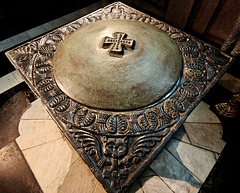
Dendermonde - Onze Lieve Vrouwekerk
| 31 Aug 2025 |
|
Towards the end of the Frankish period, a settlement was established here, later another followed in the shadow of a castle built by Emperor Otto II in the second half of the 10th century. The name Dendermonde is first mentioned in a document from 1087. In 1223, a Cistercian abbey was founded, and in 1233, Robrecht van Bethune granted Dendermonde city rights. As early as the 13th century, Dendermonde was a walled and ramparted city.
It is believed that Ringoot II, Lord of Dendermonde, had the church built in the 11th century. Numerous alterations were made from the 13th to the 16th centuries. The most important parts are built in the Scheldt Gothic style. The octagonal tower at the crossing dates from 1388.
After its destruction during the Calvinist period (1578-1584), new furniture was installed. In the 19th and early 20th centuries, various parts of the church were rebuilt, some in the Neo-Gothic style.
The baptismal font in Dendermonde dates from the second half of the 12th century and originates from the predecessor building of the present church. It is one of the finest examples of the fonts, that were made in Tournai during the 12th and early 13th centuries.
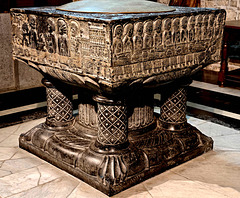
Dendermonde - Onze Lieve Vrouwekerk
| 30 Aug 2025 |
|
|
Towards the end of the Frankish period, a settlement was established here, later another followed in the shadow of a castle built by Emperor Otto II in the second half of the 10th century. The name Dendermonde is first mentioned in a document from 1087. In 1223, a Cistercian abbey was founded, and in 1233, Robrecht van Bethune granted Dendermonde city rights. As early as the 13th century, Dendermonde was a walled and ramparted city.
It is believed that Ringoot II, Lord of Dendermonde, had the church built in the 11th century. Numerous alterations were made from the 13th to the 16th centuries. The most important parts are built in the Scheldt Gothic style. The octagonal tower at the crossing dates from 1388.
After its destruction during the Calvinist period (1578-1584), new furniture was installed. In the 19th and early 20th centuries, various parts of the church were rebuilt, some in the Neo-Gothic style.
The baptismal font in Dendermonde dates from the second half of the 12th century and originates from the predecessor building of the present church. It is one of the finest examples of the fonts, that were made in Tournai during the 12th and early 13th centuries.

Dendermonde - Onze Lieve Vrouwekerk
| 30 Aug 2025 |
|
|
|
Towards the end of the Frankish period, a settlement was established here, later another followed in the shadow of a castle built by Emperor Otto II in the second half of the 10th century. The name Dendermonde is first mentioned in a document from 1087. In 1223, a Cistercian abbey was founded, and in 1233, Robrecht van Bethune granted Dendermonde city rights. As early as the 13th century, Dendermonde was a walled and ramparted city.
It is believed that Ringoot II, Lord of Dendermonde, had the church built in the 11th century. Numerous alterations were made from the 13th to the 16th centuries. The most important parts are built in the Scheldt Gothic style. The octagonal tower at the crossing dates from 1388.
After its destruction during the Calvinist period (1578-1584), new furniture was installed. In the 19th and early 20th centuries, various parts of the church were rebuilt, some in the Neo-Gothic style.
Étampes - Notre-Dame-du-Fort
| 19 Mar 2015 |
|
Since the times of Hugh Capet, the first King of the Franks of the House of Capet, Étampes was an important place. It was a crown domain between Paris and Orleans. Hugh´s son Robert II (aka "Robert the Pious") built a stronghold here and founded a collegiate here in the 11th century.
The former collegiate church Notre-Dame-du-Fort was erected within the 12th century in (traditional) Romanesque and (modern) Gothic style. Only the crypt dates back to the earlier 10th century-church. Here the relics of the martyrs Cantius, Cantianus, and Cantianilla were kept. The popular saints were orphaned siblings beheaded during Diocletian's persecution. "Robert the Pious" had transferred the relics to Étampes from Milano.
Since the 19th century Notre-Dame-du-Fort serves the parish. In 1562, during the first War of Religions, the Calvinist troops raided, ransacked and vandalized the church. Whatever was spared outside the church, it got smashed during the French Revolution.
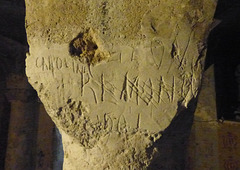
The crypt is the oldest part of Notre-Dame-du-Fort, as this goes back to the church of the early 11th century, commissioned by Robert the Pious. This is a "hall crypt", with six pillars and a little apse. Obviously this capital, near to the stairs, got lost and the plaster was a perfect place to carve in graffiti.
Étampes - Notre-Dame-du-Fort
| 19 Mar 2015 |
|
Since the times of Hugh Capet, the first King of the Franks of the House of Capet, Étampes was an important place. It was a crown domain between Paris and Orleans. Hugh´s son Robert II (aka "Robert the Pious") built a stronghold here and founded a collegiate here in the 11th century.
The former collegiate church Notre-Dame-du-Fort was erected within the 12th century in (traditional) Romanesque and (modern) Gothic style. Only the crypt dates back to the earlier 10th century-church. Here the relics of the martyrs Cantius, Cantianus, and Cantianilla were kept. The popular saints were orphaned siblings beheaded during Diocletian's persecution. "Robert the Pious" had transferred the relics to Étampes from Milano.
Since the 19th century Notre-Dame-du-Fort serves the parish. In 1562, during the first War of Religions, the Calvinist troops raided, ransacked and vandalized the church. Whatever was spared outside the church, it got smashed during the French Revolution.
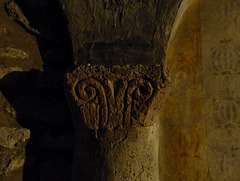
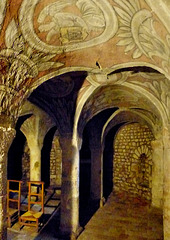
The crypt is the oldest part of Notre-Dame-du-Fort, as this goes back to the church of the early 11th century, commissioned by Robert the Pious. This is a "hall crypt", with six pillars and a little apse.The capitals of the pillars are sculpted with spirals and crosses.
Étampes - Notre-Dame-du-Fort
| 19 Mar 2015 |
|
|
Since the times of Hugh Capet, the first King of the Franks of the House of Capet, Étampes was an important place. It was a crown domain between Paris and Orleans. Hugh´s son Robert II (aka "Robert the Pious") built a stronghold here and founded a collegiate here in the 11th century.
The former collegiate church Notre-Dame-du-Fort was erected within the 12th century in (traditional) Romanesque and (modern) Gothic style. Only the crypt dates back to the earlier 10th century-church. Here the relics of the martyrs Cantius, Cantianus, and Cantianilla were kept. The popular saints were orphaned siblings beheaded during Diocletian's persecution. "Robert the Pious" had transferred the relics to Étampes from Milano.
Since the 19th century Notre-Dame-du-Fort serves the parish. In 1562, during the first War of Religions, the Calvinist troops raided, ransacked and vandalized the church. Whatever was spared outside the church, it got smashed during the French Revolution.
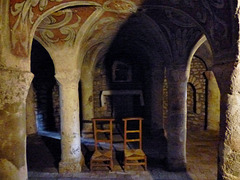
The crypt under the choir is the oldest part of Notre-Dame-du-Fort, as this goes back to the church of the early 11th century, commissioned by Robert the Pious. This is a "hall crypt", with six pillars and a little apse at the end of the central nave. It probably outlines the choir of the first church. The frescoes seen here were added in the 16th century.
Étampes - Notre-Dame-du-Fort
| 19 Mar 2015 |
|
Since the times of Hugh Capet, the first King of the Franks of the House of Capet, Étampes was an important place. It was a crown domain between Paris and Orleans. Hugh´s son Robert II (aka "Robert the Pious") built a stronghold here and founded a collegiate here in the 11th century.
The former collegiate church Notre-Dame-du-Fort was erected within the 12th century in (traditional) Romanesque and (modern) Gothic style. Only the crypt dates back to the earlier 10th century-church. Here the relics of the martyrs Cantius, Cantianus, and Cantianilla were kept. The popular saints were orphaned siblings beheaded during Diocletian's persecution. "Robert the Pious" had transferred the relics to Étampes from Milano.
Since the 19th century Notre-Dame-du-Fort serves the parish. In 1562, during the first War of Religions, the Calvinist troops raided, ransacked and vandalized the church. Whatever was spared outside the church, it got smashed during the French Revolution.
The crypt under the choir is the oldest part of Notre-Dame-du-Fort, as this goes back to the church of the early 11th century, commissioned by Robert the Pious. This is a "hall crypt", with six pillars and a little apse at the end of the central nave. It probably outlines the choir of the first church. The frescoes seen here were added in the 16th century.

Étampes - Notre-Dame-du-Fort
| 19 Mar 2015 |
|
Since the times of Hugh Capet, the first King of the Franks of the House of Capet, Étampes was an important place. It was a crown domain between Paris and Orleans. Hugh´s son Robert II (aka "Robert the Pious") built a stronghold here and founded a collegiate here in the 11th century.
The former collegiate church Notre-Dame-du-Fort was erected within the 12th century in (traditional) Romanesque and (modern) Gothic style. Only the crypt dates back to the earlier 10th century-church. Here the relics of the martyrs Cantius, Cantianus, and Cantianilla were kept. The popular saints were orphaned siblings beheaded during Diocletian's persecution. "Robert the Pious" had transferred the relics to Étampes from Milano.
Since the 19th century Notre-Dame-du-Fort serves the parish. In 1562, during the first War of Religions, the Calvinist troops raided, ransacked and vandalized the church. Whatever was spared outside the church, it got smashed during the French Revolution.
Today there are six headless jamb statues at the the southern portal. Once there were eight. These two statues were moved inside. They look complete, but during the Revolution they suffered from vandalism as well.
The heads, seen here, are modern reconstructions.
These jamb from statues are sometimes compared with their famous colleagues from Chartres (50kms east). Anne Prache ("Ile de France Romane") considers, that one workshop may have worked on both places.

Étampes - Notre-Dame-du-Fort
| 18 Mar 2015 |
|
Since the times of Hugh Capet, the first King of the Franks of the House of Capet, Étampes was an important place. It was a crown domain between Paris and Orleans. Hugh´s son Robert II (aka "Robert the Pious") built a stronghold here and founded a collegiate here in the 11th century.
The former collegiate church Notre-Dame-du-Fort was erected within the 12th century in (traditional) Romanesque and (modern) Gothic style. Only the crypt dates back to the earlier 10th century-church. Here the relics of the martyrs Cantius, Cantianus, and Cantianilla were kept. The popular saints were orphaned siblings beheaded during Diocletian's persecution. "Robert the Pious" had transferred the relics to Étampes from Milano.
Since the 19th century Notre-Dame-du-Fort serves the parish. In 1562, during the first War of Religions, the Calvinist troops raided, ransacked and vandalized the church. Whatever was spared outside the church, it got smashed during the French Revolution.
Compared to the vandalized but delicate carvings of the southern portal the Romanesque capitals inside the church are pretty rough.
Seen here the "Foot Washing".
John 13:1-11
"Before the Festival of Passover, Jesus knew that his time had come to leave this world and go to the Father. Having loved his own who were in the world, he loved them fully.
Jesus and his disciples were sharing the evening meal. The devil had already provoked Judas, Simon Iscariot’s son, to betray Jesus. Jesus knew the Father had given everything into his hands and that he had come from God and was returning to God. So he got up from the table and took off his robes. Picking up a linen towel, he tied it around his waist. Then he poured water into a washbasin and began to wash the disciples’ feet, drying them with the towel he was wearing. When Jesus came to Simon Peter, Peter said to him, “Lord, are you going to wash my feet?”
Jesus replied, “You don’t understand what I’m doing now, but you will understand later.”
“No!” Peter said. “You will never wash my feet!”
Jesus replied, “Unless I wash you, you won’t have a place with me.”
Simon Peter said, “Lord, not only my feet but also my hands and my head!”
Jesus responded, “Those who have bathed need only to have their feet washed, because they are completely clean. You disciples are clean, but not every one of you.” 11 He knew who would betray him. That’s why he said, “Not every one of you is clean.”

Étampes - Notre-Dame-du-Fort
| 18 Mar 2015 |
|
Since the times of Hugh Capet, the first King of the Franks of the House of Capet, Étampes was an important place. It was a crown domain between Paris and Orleans. Hugh´s son Robert II (aka "Robert the Pious") built a stronghold here and founded a collegiate here in the 11th century.
The former collegiate church Notre-Dame-du-Fort was erected within the 12th century in (traditional) Romanesque and (modern) Gothic style. Only the crypt dates back to the earlier 10th century-church. Here the relics of the martyrs Cantius, Cantianus, and Cantianilla were kept. The popular saints were orphaned siblings beheaded during Diocletian's persecution. "Robert the Pious" had transferred the relics to Étampes from Milano.
Since the 19th century Notre-Dame-du-Fort serves the parish. In 1562, during the first War of Religions, the Calvinist troops raided, ransacked and vandalized the church. Whatever was spared outside the church, it got smashed during the French Revolution.
Compared to the (vandalized) delicate carvings of the southern portal the Romanesque capitals inside the church are pretty rough.

Étampes - Notre-Dame-du-Fort
| 18 Mar 2015 |
|
Since the times of Hugh Capet, the first King of the Franks of the House of Capet, Étampes was an important place. It was a crown domain between Paris and Orleans. Hugh´s son Robert II (aka "Robert the Pious") built a stronghold here and founded a collegiate here in the 11th century.
The former collegiate church Notre-Dame-du-Fort was erected within the 12th century in (traditional) Romanesque and (modern) Gothic style. Only the crypt dates back to the earlier 10th century-church. Here the relics of the martyrs Cantius, Cantianus, and Cantianilla were kept. The popular saints were orphaned siblings beheaded during Diocletian's persecution. "Robert the Pious" had transferred the relics to Étampes from Milano.
Since the 19th century Notre-Dame-du-Fort serves the parish. In 1562, during the first War of Religions, the Calvinist troops raided, ransacked and vandalized the church. Whatever was spared outside the church, it got smashed during the French Revolution.
Standing in the nave, facing to the choir. The vaulting got reconstructed in the 19th century. The Romanesque capitals may have been too high, to get destroyed by the vandals.
Étampes - Notre-Dame-du-Fort
| 18 Mar 2015 |
|
|
Since the times of Hugh Capet, the first King of the Franks of the House of Capet, Étampes was an important place. It was a crown domain between Paris and Orleans. Hugh´s son Robert II (aka "Robert the Pious") built a stronghold here and founded a collegiate here in the 11th century.
The former collegiate church Notre-Dame-du-Fort was erected within the 12th century in (traditional) Romanesque and (modern) Gothic style. Only the crypt dates back to the earlier 10th century-church. Here the relics of the martyrs Cantius, Cantianus, and Cantianilla were kept. The popular saints were orphaned siblings beheaded during Diocletian's persecution. "Robert the Pious" had transferred the relics to Étampes from Milano.
Meanwhile Notre-Dame-du-Fort serves the parish. In 1562, during the first War of Religions, the Calvinist troops raided, ransacked and vandalized the church. In case something was spared, it got smashed during the French Revolution.
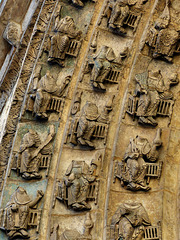
Nothing stopped the furious vandals in their rage. They wrecked the complete portal. Even the heads of the "Elders of the Apocalypse" populating the archivolts of the slightly pointed southern portal were not spared out. All of them lost their heads.
Jump to top
RSS feed- Martin M. Miles' latest photos with "Calvinist" - Photos
- ipernity © 2007-2026
- Help & Contact
|
Club news
|
About ipernity
|
History |
ipernity Club & Prices |
Guide of good conduct
Donate | Group guidelines | Privacy policy | Terms of use | Statutes | In memoria -
Facebook
X
