

Martin M. Miles' photos with the keyword: Pericles
Athens - Acropolis
| 06 Jun 2025 |
|
|
Athens, the southernmost capital on the European mainland, is one of the world's oldest cities, with its recorded history spanning over 3,400 years. According to Greek mythology the city was named after Athena, the ancient Greek goddess of wisdom. Classical Athens was one of the most powerful city-states in ancient Greece. It was a centre for democracy, the arts, education and philosophy, and was highly influential throughout the European continent, particularly in Ancient Rome. For this reason it is often regarded as the cradle of Western civilisation and the birthplace of democracy.
The acropolis is located on a flat rock that rises 150 m above sea level and covers an area of around 3 hectares. It has probably been inhabited since the 6th millennium BC.
In Mycenaean times, it was the seat of the king from the 14th century BC. A defensive wall was later built in the 13th century BC, which also included access to a spring to maintain the water supply in the event of a siege. Later, in democratic Athens, it was extended as a temple precinct and lost its defensive function. After the victory over the Persians, Athens became the center of the Hellenic world from 448 BC under Pericles as the supreme power of the Attic League. This power and the wealth associated with it were also to be demonstrated through buildings. The Acropolis was completely redesigned by the master builders Iktinos, Mnesikles and Kallikrates under the direction of the ingenious sculptor Phidias.
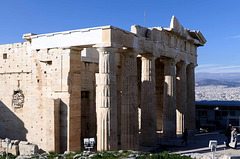
The Propylaia (= "gates"), built between 437 and 432 BC, functioned as the monumental gateway to the Acropolis.
As early as the end of the 6th century BC, the first gate system was constructed to provide access through the Mycenaean fortress walls. The structure was destroyed by the Persians in 480 BC.
The changes to the Propylaea during the Classical period were minor. The most significant was the construction of a monumental staircase, probably built during the reign of Claudius. This included a central, inclined plane along which sacrificial animals could be led, as well as a small, curved staircase leading to the Temple of Athena Nike.
In its post-Classical history, the Propylaea regained a military function in the late 3rd century AD. Sometime during the early Byzantine period, the south wing was converted into a chapel. The central section of the Propylaea was converted into a church in the 10th century AD. During the Crusader occupation, the complex was converted into a fortified residence, similar in form to other castles in the Levant. Later, the Propylaea served as the ducal palace of the Florentine Acciaioli family.
Under the Ottomans, the Propylaea served as both a powder magazine and a battery emplacement, and suffered significant damage as a result. From 1834 onwards, the medieval and Turkish extensions of the Propylaea were demolished.
Athens - Acropolis
| 06 Jun 2025 |
|
Athens, the southernmost capital on the European mainland, is one of the world's oldest cities, with its recorded history spanning over 3,400 years. According to Greek mythology the city was named after Athena, the ancient Greek goddess of wisdom. Classical Athens was one of the most powerful city-states in ancient Greece. It was a centre for democracy, the arts, education and philosophy, and was highly influential throughout the European continent, particularly in Ancient Rome. For this reason it is often regarded as the cradle of Western civilisation and the birthplace of democracy.
The acropolis is located on a flat rock that rises 150 m above sea level and covers an area of around 3 hectares. It has probably been inhabited since the 6th millennium BC.
In Mycenaean times, it was the seat of the king from the 14th century BC. A defensive wall was later built in the 13th century BC, which also included access to a spring to maintain the water supply in the event of a siege. Later, in democratic Athens, it was extended as a temple precinct and lost its defensive function. After the victory over the Persians, Athens became the center of the Hellenic world from 448 BC under Pericles as the supreme power of the Attic League. This power and the wealth associated with it were also to be demonstrated through buildings. The Acropolis was completely redesigned by the master builders Iktinos, Mnesikles and Kallikrates under the direction of the ingenious sculptor Phidias.
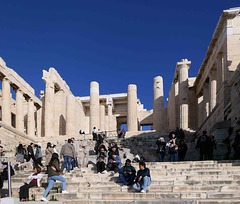
The Propylaia (= "gates"), built between 437 and 432 BC, functioned as the monumental gateway to the Acropolis.
As early as the end of the 6th century BC, the first gate system was constructed to provide access through the Mycenaean fortress walls. The structure was destroyed by the Persians in 480 BC.
The changes to the Propylaea during the Classical period were minor. The most significant was the construction of a monumental staircase, probably built during the reign of Claudius. This included a central, inclined plane along which sacrificial animals could be led, as well as a small, curved staircase leading to the Temple of Athena Nike.
In its post-Classical history, the Propylaea regained a military function in the late 3rd century AD. Sometime during the early Byzantine period, the south wing was converted into a chapel. The central section of the Propylaea was converted into a church in the 10th century AD. During the Crusader occupation, the complex was converted into a fortified residence, similar in form to other castles in the Levant. Later, the Propylaea served as the ducal palace of the Florentine Acciaioli family.
Under the Ottomans, the Propylaea served as both a powder magazine and a battery emplacement, and suffered significant damage as a result. From 1834 onwards, the medieval and Turkish extensions of the Propylaea were demolished.
Athens - Acropolis
| 06 Jun 2025 |
|
|
Athens, the southernmost capital on the European mainland, is one of the world's oldest cities, with its recorded history spanning over 3,400 years. According to Greek mythology the city was named after Athena, the ancient Greek goddess of wisdom. Classical Athens was one of the most powerful city-states in ancient Greece. It was a centre for democracy, the arts, education and philosophy, and was highly influential throughout the European continent, particularly in Ancient Rome. For this reason it is often regarded as the cradle of Western civilisation and the birthplace of democracy.
The acropolis is located on a flat rock that rises 150 m above sea level and covers an area of around 3 hectares. It has probably been inhabited since the 6th millennium BC.
In Mycenaean times, it was the seat of the king from the 14th century BC. A defensive wall was later built in the 13th century BC, which also included access to a spring to maintain the water supply in the event of a siege. Later, in democratic Athens, it was extended as a temple precinct and lost its defensive function. After the victory over the Persians, Athens became the center of the Hellenic world from 448 BC under Pericles as the supreme power of the Attic League. This power and the wealth associated with it were also to be demonstrated through buildings. The Acropolis was completely redesigned by the master builders Iktinos, Mnesikles and Kallikrates under the direction of the ingenious sculptor Phidias.
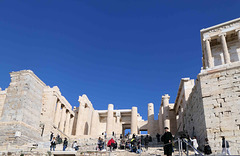
The Propylaia (= "gates"), built between 437 and 432 BC, functioned as the monumental gateway to the Acropolis.
As early as the end of the 6th century BC, the first gate system was constructed to provide access through the Mycenaean fortress walls. The structure was destroyed by the Persians in 480 BC.
The changes to the Propylaea during the Classical period were minor. The most significant was the construction of a monumental staircase, probably built during the reign of Claudius. This included a central, inclined plane along which sacrificial animals could be led, as well as a small, curved staircase leading to the Temple of Athena Nike.
In its post-Classical history, the Propylaea regained a military function in the late 3rd century AD. Sometime during the early Byzantine period, the south wing was converted into a chapel. The central section of the Propylaea was converted into a church in the 10th century AD. During the Crusader occupation, the complex was converted into a fortified residence, similar in form to other castles in the Levant. Later, the Propylaea served as the ducal palace of the Florentine Acciaioli family.
Under the Ottomans, the Propylaea served as both a powder magazine and a battery emplacement, and suffered significant damage as a result. From 1834 onwards, the medieval and Turkish extensions of the Propylaea were demolished.
Athens - Acropolis
| 06 Jun 2025 |
|
|
Athens, the southernmost capital on the European mainland, is one of the world's oldest cities, with its recorded history spanning over 3,400 years. According to Greek mythology the city was named after Athena, the ancient Greek goddess of wisdom. Classical Athens was one of the most powerful city-states in ancient Greece. It was a centre for democracy, the arts, education and philosophy, and was highly influential throughout the European continent, particularly in Ancient Rome. For this reason it is often regarded as the cradle of Western civilisation and the birthplace of democracy.
The acropolis is located on a flat rock that rises 150 m above sea level and covers an area of around 3 hectares. It has probably been inhabited since the 6th millennium BC.
In Mycenaean times, it was the seat of the king from the 14th century BC. A defensive wall was later built in the 13th century BC, which also included access to a spring to maintain the water supply in the event of a siege. Later, in democratic Athens, it was extended as a temple precinct and lost its defensive function. After the victory over the Persians, Athens became the center of the Hellenic world from 448 BC under Pericles as the supreme power of the Attic League. This power and the wealth associated with it were also to be demonstrated through buildings. The Acropolis was completely redesigned by the master builders Iktinos, Mnesikles and Kallikrates under the direction of the ingenious sculptor Phidias.
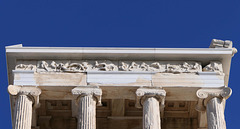
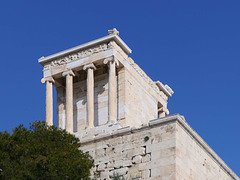
The Temple of Athena Nike was built around 420 BC. It has a prominent position on a steep bastion at the south west corner of the Acropolis. The temple replaced a previous building destroyed during the Persian occupation of the Acropolis in 480 BC. Nike was the goddess of victory in Greek mythology, and Athena was worshipped in this form, representative of being victorious in war.
In the 16th century, the temple was converted into a powder magazine under the Ottomans, and large quantities of powder were buried beneath the floor. In 1687, the Ottomans demolished the temple to use its stones to reinforce the Acropolis's defenses against the Venetians. The material was used between the Pinacoteca and the bastion. Parts of the Nike balustrade were also incorporated into this section of the bastion.
After the liberation of Greece, the components of the bastion were salvaged, and the temple was rebuilt in 1836. By the early 20th century, research on the temple had already advanced considerably and so the Greek Antiquities Service decided to relocate and rebuild the building.
The temple was once again completely reconstructed starting in 1998, using more contemporary means and methods and incorporating additional parts that had since been identified as belonging to the temple.
Athens - Acropolis
| 06 Jun 2025 |
|
Athens, the southernmost capital on the European mainland, is one of the world's oldest cities, with its recorded history spanning over 3,400 years. According to Greek mythology the city was named after Athena, the ancient Greek goddess of wisdom. Classical Athens was one of the most powerful city-states in ancient Greece. It was a centre for democracy, the arts, education and philosophy, and was highly influential throughout the European continent, particularly in Ancient Rome. For this reason it is often regarded as the cradle of Western civilisation and the birthplace of democracy.
The acropolis is located on a flat rock that rises 150 m above sea level and covers an area of around 3 hectares. It has probably been inhabited since the 6th millennium BC.
In Mycenaean times, it was the seat of the king from the 14th century BC. A defensive wall was later built in the 13th century BC, which also included access to a spring to maintain the water supply in the event of a siege. Later, in democratic Athens, it was extended as a temple precinct and lost its defensive function. After the victory over the Persians, Athens became the center of the Hellenic world from 448 BC under Pericles as the supreme power of the Attic League. This power and the wealth associated with it were also to be demonstrated through buildings. The Acropolis was completely redesigned by the master builders Iktinos, Mnesikles and Kallikrates under the direction of the ingenious sculptor Phidias.
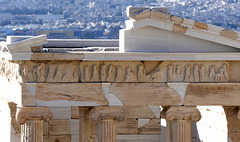
The Temple of Athena Nike was built around 420 BC. It has a prominent position on a steep bastion at the south west corner of the Acropolis. The temple replaced a previous building destroyed during the Persian occupation of the Acropolis in 480 BC. Nike was the goddess of victory in Greek mythology, and Athena was worshipped in this form, representative of being victorious in war.
In the 16th century, the temple was converted into a powder magazine under the Ottomans, and large quantities of powder were buried beneath the floor. In 1687, the Ottomans demolished the temple to use its stones to reinforce the Acropolis's defenses against the Venetians. The material was used between the Pinacoteca and the bastion. Parts of the Nike balustrade were also incorporated into this section of the bastion.
After the liberation of Greece, the components of the bastion were salvaged, and the temple was rebuilt in 1836. By the early 20th century, research on the temple had already advanced considerably and so the Greek Antiquities Service decided to relocate and rebuild the building.
The temple was once again completely reconstructed starting in 1998, using more contemporary means and methods and incorporating additional parts that had since been identified as belonging to the temple.
Athens - Acropolis
| 06 Jun 2025 |
|
Athens, the southernmost capital on the European mainland, is one of the world's oldest cities, with its recorded history spanning over 3,400 years. According to Greek mythology the city was named after Athena, the ancient Greek goddess of wisdom. Classical Athens was one of the most powerful city-states in ancient Greece. It was a centre for democracy, the arts, education and philosophy, and was highly influential throughout the European continent, particularly in Ancient Rome. For this reason it is often regarded as the cradle of Western civilisation and the birthplace of democracy.
The acropolis is located on a flat rock that rises 150 m above sea level and covers an area of around 3 hectares. It has probably been inhabited since the 6th millennium BC.
In Mycenaean times, it was the seat of the king from the 14th century BC. A defensive wall was later built in the 13th century BC, which also included access to a spring to maintain the water supply in the event of a siege. Later, in democratic Athens, it was extended as a temple precinct and lost its defensive function. After the victory over the Persians, Athens became the center of the Hellenic world from 448 BC under Pericles as the supreme power of the Attic League. This power and the wealth associated with it were also to be demonstrated through buildings. The Acropolis was completely redesigned by the master builders Iktinos, Mnesikles and Kallikrates under the direction of the ingenious sculptor Phidias.
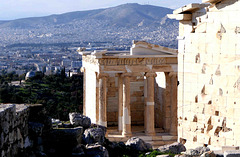
The Temple of Athena Nike was built around 420 BC. It has a prominent position on a steep bastion at the south west corner of the Acropolis. The temple replaced a previous building destroyed during the Persian occupation of the Acropolis in 480 BC. Nike was the goddess of victory in Greek mythology, and Athena was worshipped in this form, representative of being victorious in war.
In the 16th century, the temple was converted into a powder magazine under the Ottomans, and large quantities of powder were buried beneath the floor. In 1687, the Ottomans demolished the temple to use its stones to reinforce the Acropolis's defenses against the Venetians. The material was used between the Pinacoteca and the bastion. Parts of the Nike balustrade were also incorporated into this section of the bastion.
After the liberation of Greece, the components of the bastion were salvaged, and the temple was rebuilt in 1836. By the early 20th century, research on the temple had already advanced considerably and so the Greek Antiquities Service decided to relocate and rebuild the building.
The temple was once again completely reconstructed starting in 1998, using more contemporary means and methods and incorporating additional parts that had since been identified as belonging to the temple.
Athens - Acropolis
| 06 Jun 2025 |
|
Athens, the southernmost capital on the European mainland, is one of the world's oldest cities, with its recorded history spanning over 3,400 years. According to Greek mythology the city was named after Athena, the ancient Greek goddess of wisdom. Classical Athens was one of the most powerful city-states in ancient Greece. It was a centre for democracy, the arts, education and philosophy, and was highly influential throughout the European continent, particularly in Ancient Rome. For this reason it is often regarded as the cradle of Western civilisation and the birthplace of democracy.
The acropolis is located on a flat rock that rises 150 m above sea level and covers an area of around 3 hectares. It has probably been inhabited since the 6th millennium BC.
In Mycenaean times, it was the seat of the king from the 14th century BC. A defensive wall was later built in the 13th century BC, which also included access to a spring to maintain the water supply in the event of a siege. Later, in democratic Athens, it was extended as a temple precinct and lost its defensive function. After the victory over the Persians, Athens became the center of the Hellenic world from 448 BC under Pericles as the supreme power of the Attic League. This power and the wealth associated with it were also to be demonstrated through buildings. The Acropolis was completely redesigned by the master builders Iktinos, Mnesikles and Kallikrates under the direction of the ingenious sculptor Phidias.
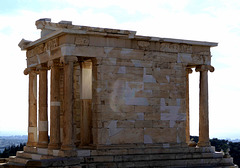
The Temple of Athena Nike was built around 420 BC. It has a prominent position on a steep bastion at the south west corner of the Acropolis. The temple replaced a previous building destroyed during the Persian occupation of the Acropolis in 480 BC. Nike was the goddess of victory in Greek mythology, and Athena was worshipped in this form, representative of being victorious in war.
In the 16th century, the temple was converted into a powder magazine under the Ottomans, and large quantities of powder were buried beneath the floor. In 1687, the Ottomans demolished the temple to use its stones to reinforce the Acropolis's defenses against the Venetians. The material was used between the Pinacoteca and the bastion. Parts of the Nike balustrade were also incorporated into this section of the bastion.
After the liberation of Greece, the components of the bastion were salvaged, and the temple was rebuilt in 1836. By the early 20th century, research on the temple had already advanced considerably and so the Greek Antiquities Service decided to relocate and rebuild the building.
The temple was once again completely reconstructed starting in 1998, using more contemporary means and methods and incorporating additional parts that had since been identified as belonging to the temple.
Athens - Acropolis
| 05 Jun 2025 |
|
|
|
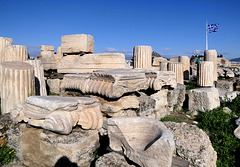
Athens, the southernmost capital on the European mainland, is one of the world's oldest cities, with its recorded history spanning over 3,400 years. According to Greek mythology the city was named after Athena, the ancient Greek goddess of wisdom. Classical Athens was one of the most powerful city-states in ancient Greece. It was a centre for democracy, the arts, education and philosophy, and was highly influential throughout the European continent, particularly in Ancient Rome. For this reason it is often regarded as the cradle of Western civilisation and the birthplace of democracy.
The acropolis is located on a flat rock that rises 150 m above sea level and covers an area of around 3 hectares. It has probably been inhabited since the 6th millennium BC.
In Mycenaean times, it was the seat of the king from the 14th century BC. A defensive wall was later built in the 13th century BC, which also included access to a spring to maintain the water supply in the event of a siege. Later, in democratic Athens, it was extended as a temple precinct and lost its defensive function. After the victory over the Persians, Athens became the center of the Hellenic world from 448 BC under Pericles as the supreme power of the Attic League. This power and the wealth associated with it were also to be demonstrated through buildings. The Acropolis was completely redesigned by the master builders Iktinos, Mnesikles and Kallikrates under the direction of the ingenious sculptor Phidias.
The Temple of Athena Nike was built around 420 BC. It has a prominent position on a steep bastion at the south west corner of the Acropolis. The temple replaced a previous building destroyed during the Persian occupation of the Acropolis in 480 BC. Nike was the goddess of victory in Greek mythology, and Athena was worshipped in this form, representative of being victorious in war.
In the 16th century, the temple was converted into a powder magazine under the Ottomans, and large quantities of powder were buried beneath the floor. In 1687, the Ottomans demolished the temple to use its stones to reinforce the Acropolis's defenses against the Venetians. The material was used between the Pinacoteca and the bastion. Parts of the Nike balustrade were also incorporated into this section of the bastion.
After the liberation of Greece, the components of the bastion were salvaged, and the temple was rebuilt in 1836. By the early 20th century, research on the temple had already advanced considerably and so the Greek Antiquities Service decided to relocate and rebuild the building.
The temple was once again completely reconstructed starting in 1998, using more contemporary means and methods and incorporating additional parts that had since been identified as belonging to the temple.
Athens - Acropolis
| 05 Jun 2025 |
|
Athens, the southernmost capital on the European mainland, is one of the world's oldest cities, with its recorded history spanning over 3,400 years. According to Greek mythology the city was named after Athena, the ancient Greek goddess of wisdom. Classical Athens was one of the most powerful city-states in ancient Greece. It was a centre for democracy, the arts, education and philosophy, and was highly influential throughout the European continent, particularly in Ancient Rome. For this reason it is often regarded as the cradle of Western civilisation and the birthplace of democracy.
The acropolis is located on a flat rock that rises 150 m above sea level and covers an area of around 3 hectares. It has probably been inhabited since the 6th millennium BC.
In Mycenaean times, it was the seat of the king from the 14th century BC. A defensive wall was later built in the 13th century BC, which also included access to a spring to maintain the water supply in the event of a siege. Later, in democratic Athens, it was extended as a temple precinct and lost its defensive function. After the victory over the Persians, Athens became the center of the Hellenic world from 448 BC under Pericles as the supreme power of the Attic League. This power and the wealth associated with it were also to be demonstrated through buildings. The Acropolis was completely redesigned by the master builders Iktinos, Mnesikles and Kallikrates under the direction of the ingenious sculptor Phidias.
Athens - Acropolis
| 05 Jun 2025 |
|
Athens, the southernmost capital on the European mainland, is one of the world's oldest cities, with its recorded history spanning over 3,400 years. According to Greek mythology the city was named after Athena, the ancient Greek goddess of wisdom. Classical Athens was one of the most powerful city-states in ancient Greece. It was a centre for democracy, the arts, education and philosophy, and was highly influential throughout the European continent, particularly in Ancient Rome. For this reason it is often regarded as the cradle of Western civilisation and the birthplace of democracy.
The acropolis is located on a flat rock that rises 150 m above sea level and covers an area of around 3 hectares. It has probably been inhabited since the 6th millennium BC.
In Mycenaean times, it was the seat of the king from the 14th century BC. A defensive wall was later built in the 13th century BC, which also included access to a spring to maintain the water supply in the event of a siege. Later, in democratic Athens, it was extended as a temple precinct and lost its defensive function. After the victory over the Persians, Athens became the center of the Hellenic world from 448 BC under Pericles as the supreme power of the Attic League. This power and the wealth associated with it were also to be demonstrated through buildings. The Acropolis was completely redesigned by the master builders Iktinos, Mnesikles and Kallikrates under the direction of the ingenious sculptor Phidias.
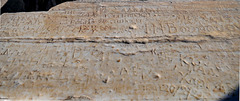
Over the centuries, hundreds of tourists have carved graffiti into the stones.
Athens - Acropolis
| 05 Jun 2025 |
|
Athens, the southernmost capital on the European mainland, is one of the world's oldest cities, with its recorded history spanning over 3,400 years. According to Greek mythology the city was named after Athena, the ancient Greek goddess of wisdom. Classical Athens was one of the most powerful city-states in ancient Greece. It was a centre for democracy, the arts, education and philosophy, and was highly influential throughout the European continent, particularly in Ancient Rome. For this reason it is often regarded as the cradle of Western civilisation and the birthplace of democracy.
The acropolis is located on a flat rock that rises 150 m above sea level and covers an area of around 3 hectares. It has probably been inhabited since the 6th millennium BC.
In Mycenaean times, it was the seat of the king from the 14th century BC. A defensive wall was later built in the 13th century BC, which also included access to a spring to maintain the water supply in the event of a siege. Later, in democratic Athens, it was extended as a temple precinct and lost its defensive function. After the victory over the Persians, Athens became the center of the Hellenic world from 448 BC under Pericles as the supreme power of the Attic League. This power and the wealth associated with it were also to be demonstrated through buildings. The Acropolis was completely redesigned by the master builders Iktinos, Mnesikles and Kallikrates under the direction of the ingenious sculptor Phidias.
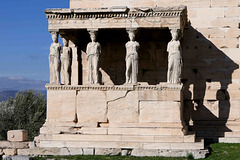
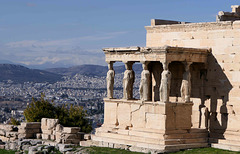
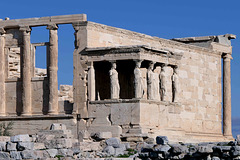
The Erechtheion is a temple in the Ionic architectural style built between approximately 420 and 406 BC.
The Erechtheion stands on the site of the original palace of the mythical King Erichthonius (Erechtheus I). The temple incorporated several ancient cults for a total of 13 deities and heroes into a complex architectural form. It contained the the wooden cult image of the goddess Athena, supposedly fallen from the sky, which was redecorated annually at the Panathenaic festival.
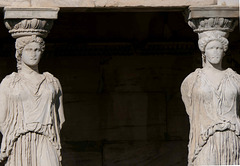
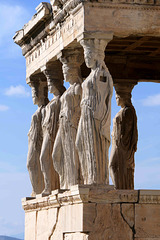
The Erechtheion is best known for its vestibule, which, instead of columns, is supported by six larger-than-life figures of girls (korai). They are also called caryatids, however, it is not certain who they represent.
Over the course of its history, the building has been used for various purposes, often damaging its original form. In the 7th century, it was converted into a Byzantine Christian church.
One of the six Koren was brought to Great Britain by Lord Elgin in 1811 and is now in the British Museum. The remaining five were replaced by replicas at the end of the 20th century to prevent further damage from the elements.
Athens - Acropolis
| 05 Jun 2025 |
|
Athens, the southernmost capital on the European mainland, is one of the world's oldest cities, with its recorded history spanning over 3,400 years. According to Greek mythology the city was named after Athena, the ancient Greek goddess of wisdom. Classical Athens was one of the most powerful city-states in ancient Greece. It was a centre for democracy, the arts, education and philosophy, and was highly influential throughout the European continent, particularly in Ancient Rome. For this reason it is often regarded as the cradle of Western civilisation and the birthplace of democracy.
The acropolis is located on a flat rock that rises 150 m above sea level and covers an area of around 3 hectares. It has probably been inhabited since the 6th millennium BC.
In Mycenaean times, it was the seat of the king from the 14th century BC. A defensive wall was later built in the 13th century BC, which also included access to a spring to maintain the water supply in the event of a siege. Later, in democratic Athens, it was extended as a temple precinct and lost its defensive function. After the victory over the Persians, Athens became the center of the Hellenic world from 448 BC under Pericles as the supreme power of the Attic League. This power and the wealth associated with it were also to be demonstrated through buildings. The Acropolis was completely redesigned by the master builders Iktinos, Mnesikles and Kallikrates under the direction of the ingenious sculptor Phidias.
The Erechtheion is a temple in the Ionic architectural style built between approximately 420 and 406 BC.
The Erechtheion stands on the site of the original palace of the mythical King Erichthonius (Erechtheus I). The temple incorporated several ancient cults for a total of 13 deities and heroes into a complex architectural form. It contained the the wooden cult image of the goddess Athena, supposedly fallen from the sky, which was redecorated annually at the Panathenaic festival.
The Erechtheion is best known for its vestibule, which, instead of columns, is supported by six larger-than-life figures of girls (korai). They are also called caryatids, however, it is not certain who they represent.
Over the course of its history, the building has been used for various purposes, often damaging its original form. In the 7th century, it was converted into a Byzantine Christian church.
One of the six Koren was brought to Great Britain by Lord Elgin in 1811 and is now in the British Museum. The remaining five were replaced by replicas at the end of the 20th century to prevent further damage from the elements.
Athens - Acropolis
| 04 Jun 2025 |
|
|
Athens, the southernmost capital on the European mainland, is one of the world's oldest cities, with its recorded history spanning over 3,400 years. According to Greek mythology the city was named after Athena, the ancient Greek goddess of wisdom. Classical Athens was one of the most powerful city-states in ancient Greece. It was a centre for democracy, the arts, education and philosophy, and was highly influential throughout the European continent, particularly in Ancient Rome. For this reason it is often regarded as the cradle of Western civilisation and the birthplace of democracy.
The acropolis is located on a flat rock that rises 150 m above sea level and covers an area of around 3 hectares. It has probably been inhabited since the 6th millennium BC.
In Mycenaean times, it was the seat of the king from the 14th century BC. A defensive wall was later built in the 13th century BC, which also included access to a spring to maintain the water supply in the event of a siege. Later, in democratic Athens, it was extended as a temple precinct and lost its defensive function. After the victory over the Persians, Athens became the center of the Hellenic world from 448 BC under Pericles as the supreme power of the Attic League. This power and the wealth associated with it were also to be demonstrated through buildings. The Acropolis was completely redesigned by the master builders Iktinos, Mnesikles and Kallikrates under the direction of the ingenious sculptor Phidias.
The Erechtheion is a temple in the Ionic architectural style built between approximately 420 and 406 BC.
The Erechtheion stands on the site of the original palace of the mythical King Erichthonius (Erechtheus I). The temple incorporated several ancient cults for a total of 13 deities and heroes into a complex architectural form. It contained the the wooden cult image of the goddess Athena, supposedly fallen from the sky, which was redecorated annually at the Panathenaic festival.
The Erechtheion is best known for its vestibule, which, instead of columns, is supported by six larger-than-life figures of girls (korai). They are also called caryatids, however, it is not certain who they represent.
Over the course of its history, the building has been used for various purposes, often damaging its original form. In the 7th century, it was converted into a Byzantine Christian church.
One of the six Koren was brought to Great Britain by Lord Elgin in 1811 and is now in the British Museum. The remaining five were replaced by replicas at the end of the 20th century to prevent further damage from the elements.
Athens - Acropolis
| 04 Jun 2025 |
|
|
Athens, the southernmost capital on the European mainland, is one of the world's oldest cities, with its recorded history spanning over 3,400 years. According to Greek mythology the city was named after Athena, the ancient Greek goddess of wisdom. Classical Athens was one of the most powerful city-states in ancient Greece. It was a centre for democracy, the arts, education and philosophy, and was highly influential throughout the European continent, particularly in Ancient Rome. For this reason it is often regarded as the cradle of Western civilisation and the birthplace of democracy.
The acropolis is located on a flat rock that rises 150 m above sea level and covers an area of around 3 hectares. It has probably been inhabited since the 6th millennium BC.
In Mycenaean times, it was the seat of the king from the 14th century BC. A defensive wall was later built in the 13th century BC, which also included access to a spring to maintain the water supply in the event of a siege. Later, in democratic Athens, it was extended as a temple precinct and lost its defensive function. After the victory over the Persians, Athens became the center of the Hellenic world from 448 BC under Pericles as the supreme power of the Attic League. This power and the wealth associated with it were also to be demonstrated through buildings. The Acropolis was completely redesigned by the master builders Iktinos, Mnesikles and Kallikrates under the direction of the ingenious sculptor Phidias.
The Erechtheion is a temple in the Ionic architectural style built between approximately 420 and 406 BC.
The Erechtheion stands on the site of the original palace of the mythical King Erichthonius (Erechtheus I). The temple incorporated several ancient cults for a total of 13 deities and heroes into a complex architectural form. It contained the the wooden cult image of the goddess Athena, supposedly fallen from the sky, which was redecorated annually at the Panathenaic festival.
The Erechtheion is best known for its vestibule, which, instead of columns, is supported by six larger-than-life figures of girls (korai). They are also called caryatids, however, it is not certain who they represent.
Over the course of its history, the building has been used for various purposes, often damaging its original form. In the 7th century, it was converted into a Byzantine Christian church.
One of the six Koren was brought to Great Britain by Lord Elgin in 1811 and is now in the British Museum. The remaining five were replaced by replicas at the end of the 20th century to prevent further damage from the elements.
Athens - Acropolis
| 04 Jun 2025 |
|
Athens, the southernmost capital on the European mainland, is one of the world's oldest cities, with its recorded history spanning over 3,400 years. According to Greek mythology the city was named after Athena, the ancient Greek goddess of wisdom. Classical Athens was one of the most powerful city-states in ancient Greece. It was a centre for democracy, the arts, education and philosophy, and was highly influential throughout the European continent, particularly in Ancient Rome. For this reason it is often regarded as the cradle of Western civilisation and the birthplace of democracy.
The acropolis is located on a flat rock that rises 150 m above sea level and covers an area of around 3 hectares. It has probably been inhabited since the 6th millennium BC.
In Mycenaean times, it was the seat of the king from the 14th century BC. A defensive wall was later built in the 13th century BC, which also included access to a spring to maintain the water supply in the event of a siege. Later, in democratic Athens, it was extended as a temple precinct and lost its defensive function. After the victory over the Persians, Athens became the center of the Hellenic world from 448 BC under Pericles as the supreme power of the Attic League. This power and the wealth associated with it were also to be demonstrated through buildings. The Acropolis was completely redesigned by the master builders Iktinos, Mnesikles and Kallikrates under the direction of the ingenious sculptor Phidias.
The Erechtheion is a temple in the Ionic architectural style built between approximately 420 and 406 BC.
The Erechtheion stands on the site of the original palace of the mythical King Erichthonius (Erechtheus I). The temple incorporated several ancient cults for a total of 13 deities and heroes into a complex architectural form. It contained the the wooden cult image of the goddess Athena, supposedly fallen from the sky, which was redecorated annually at the Panathenaic festival.
The Erechtheion is best known for its vestibule, which, instead of columns, is supported by six larger-than-life figures of girls (korai). They are also called caryatids, however, it is not certain who they represent.
Over the course of its history, the building has been used for various purposes, often damaging its original form. In the 7th century, it was converted into a Byzantine Christian church.
One of the six Koren was brought to Great Britain by Lord Elgin in 1811 and is now in the British Museum. The remaining five were replaced by replicas at the end of the 20th century to prevent further damage from the elements.

Athens - Acropolis
| 04 Jun 2025 |
|
Athens, the southernmost capital on the European mainland, is one of the world's oldest cities, with its recorded history spanning over 3,400 years. According to Greek mythology the city was named after Athena, the ancient Greek goddess of wisdom. Classical Athens was one of the most powerful city-states in ancient Greece. It was a centre for democracy, the arts, education and philosophy, and was highly influential throughout the European continent, particularly in Ancient Rome. For this reason it is often regarded as the cradle of Western civilisation and the birthplace of democracy.
The acropolis is located on a flat rock that rises 150 m above sea level and covers an area of around 3 hectares. It has probably been inhabited since the 6th millennium BC.
In Mycenaean times, it was the seat of the king from the 14th century BC. A defensive wall was later built in the 13th century BC, which also included access to a spring to maintain the water supply in the event of a siege. Later, in democratic Athens, it was extended as a temple precinct and lost its defensive function. After the victory over the Persians, Athens became the center of the Hellenic world from 448 BC under Pericles as the supreme power of the Attic League. This power and the wealth associated with it were also to be demonstrated through buildings. The Acropolis was completely redesigned by the master builders Iktinos, Mnesikles and Kallikrates under the direction of the ingenious sculptor Phidias.
The Parthenon is the temple for the city goddess Pallas Athena Parthenos. It replaced an older temple of Athena, which had been destroyed during the Persian conquest of Athens in 480 BC.
It was built, on the initiative of Pericles, to thank the goddess for saving the Athenians and Greeks after the last Persian War. The construction, supervised by the sculptor Phidias, began in 447 BC and ended in 438 BC, but work on the building decoration continued until at least 433 BC. Throughout Greece's history, the building has also served as the treasury of the Attic League. The Parthenon is one of the most famous surviving monuments of ancient Greece and one of the best-known buildings in the world. Under the Byzantines Parthenon was converted to the Church of the Virgin Mary. It continued to fulfill this function after the Crusader conquest in the 13th century, only under Catholic auspices. After the Ottoman conquest in 1456, the Parthenon was converted into a mosque. Until well into the 17th century, the ancient monuments were largely intact. The catastrophe came in 1687 with the siege by the Venetians, who shelled the Parthenon. The explosion of the Turkish powder magazine there severely damaged the temple, as well as surrounding buildings.
Only a small number of the original sculptures remain in situ. Extensive parts of the Parthenon´s architectural decoration were stolen by Lord Elgin in 1801 and taken to London. The dispute over the return of these so-called “Elgin Marbles” continues to this day.

Athens - Acropolis
| 04 Jun 2025 |
|
Athens, the southernmost capital on the European mainland, is one of the world's oldest cities, with its recorded history spanning over 3,400 years. According to Greek mythology the city was named after Athena, the ancient Greek goddess of wisdom. Classical Athens was one of the most powerful city-states in ancient Greece. It was a centre for democracy, the arts, education and philosophy, and was highly influential throughout the European continent, particularly in Ancient Rome. For this reason it is often regarded as the cradle of Western civilisation and the birthplace of democracy.
The acropolis is located on a flat rock that rises 150 m above sea level and covers an area of around 3 hectares. It has probably been inhabited since the 6th millennium BC.
In Mycenaean times, it was the seat of the king from the 14th century BC. A defensive wall was later built in the 13th century BC, which also included access to a spring to maintain the water supply in the event of a siege. Later, in democratic Athens, it was extended as a temple precinct and lost its defensive function. After the victory over the Persians, Athens became the center of the Hellenic world from 448 BC under Pericles as the supreme power of the Attic League. This power and the wealth associated with it were also to be demonstrated through buildings. The Acropolis was completely redesigned by the master builders Iktinos, Mnesikles and Kallikrates under the direction of the ingenious sculptor Phidias.
The Parthenon is the temple for the city goddess Pallas Athena Parthenos. It replaced an older temple of Athena, which had been destroyed during the Persian conquest of Athens in 480 BC.
It was built, on the initiative of Pericles, to thank the goddess for saving the Athenians and Greeks after the last Persian War. The construction, supervised by the sculptor Phidias, began in 447 BC and ended in 438 BC, but work on the building decoration continued until at least 433 BC. Throughout Greece's history, the building has also served as the treasury of the Attic League. The Parthenon is one of the most famous surviving monuments of ancient Greece and one of the best-known buildings in the world. Under the Byzantines Parthenon was converted to the Church of the Virgin Mary. It continued to fulfill this function after the Crusader conquest in the 13th century, only under Catholic auspices. After the Ottoman conquest in 1456, the Parthenon was converted into a mosque. Until well into the 17th century, the ancient monuments were largely intact. The catastrophe came in 1687 with the siege by the Venetians, who shelled the Parthenon. The explosion of the Turkish powder magazine there severely damaged the temple, as well as surrounding buildings.
Only a small number of the original sculptures remain in situ. Extensive parts of the Parthenon´s architectural decoration were stolen by Lord Elgin in 1801 and taken to London. The dispute over the return of these so-called “Elgin Marbles” continues to this day.

Athens - Acropolis
| 04 Jun 2025 |
|
|
|
Athens, the southernmost capital on the European mainland, is one of the world's oldest cities, with its recorded history spanning over 3,400 years. According to Greek mythology the city was named after Athena, the ancient Greek goddess of wisdom. Classical Athens was one of the most powerful city-states in ancient Greece. It was a centre for democracy, the arts, education and philosophy, and was highly influential throughout the European continent, particularly in Ancient Rome. For this reason it is often regarded as the cradle of Western civilisation and the birthplace of democracy.
The acropolis is located on a flat rock that rises 150 m above sea level and covers an area of around 3 hectares. It has probably been inhabited since the 6th millennium BC.
In Mycenaean times, it was the seat of the king from the 14th century BC. A defensive wall was later built in the 13th century BC, which also included access to a spring to maintain the water supply in the event of a siege. Later, in democratic Athens, it was extended as a temple precinct and lost its defensive function. After the victory over the Persians, Athens became the center of the Hellenic world from 448 BC under Pericles as the supreme power of the Attic League. This power and the wealth associated with it were also to be demonstrated through buildings. The Acropolis was completely redesigned by the master builders Iktinos, Mnesikles and Kallikrates under the direction of the ingenious sculptor Phidias.
The Parthenon is the temple for the city goddess Pallas Athena Parthenos. It replaced an older temple of Athena, which had been destroyed during the Persian conquest of Athens in 480 BC.
It was built, on the initiative of Pericles, to thank the goddess for saving the Athenians and Greeks after the last Persian War. The construction, supervised by the sculptor Phidias, began in 447 BC and ended in 438 BC, but work on the building decoration continued until at least 433 BC. Throughout Greece's history, the building has also served as the treasury of the Attic League. The Parthenon is one of the most famous surviving monuments of ancient Greece and one of the best-known buildings in the world. Under the Byzantines Parthenon was converted to the Church of the Virgin Mary. It continued to fulfill this function after the Crusader conquest in the 13th century, only under Catholic auspices. After the Ottoman conquest in 1456, the Parthenon was converted into a mosque. Until well into the 17th century, the ancient monuments were largely intact. The catastrophe came in 1687 with the siege by the Venetians, who shelled the Parthenon. The explosion of the Turkish powder magazine there severely damaged the temple, as well as surrounding buildings.
Only a small number of the original sculptures remain in situ. Extensive parts of the Parthenon´s architectural decoration were stolen by Lord Elgin in 1801 and taken to London. The dispute over the return of these so-called “Elgin Marbles” continues to this day.
Jump to top
RSS feed- Martin M. Miles' latest photos with "Pericles" - Photos
- ipernity © 2007-2026
- Help & Contact
|
Club news
|
About ipernity
|
History |
ipernity Club & Prices |
Guide of good conduct
Donate | Group guidelines | Privacy policy | Terms of use | Statutes | In memoria -
Facebook
X
