

Martin M. Miles' photos with the keyword: Malia

Malia - Laundry
| 12 Jun 2026 |
|
|
Malia is first mentioned in 1390. The very first hotel to be built here dates back to the early 1960s. Since then, tourism has boomed, with Malia attracting mainly young tourists, particularly British holidaymakers aged between 18 and 30 who are looking for a holiday combining partying and relaxation
What is now known as the "Malia Strip" therefore bears a strong resemblance to Agia Napa on Cyprus – and just like there, everything is in hibernation in January.
This laundry, located in the village stays open over the winter. Not really the long ours of the summer season, but at least from 9 - 12 and from 15 - 20.

Malia - Ford Consul Classic
| 12 Jun 2026 |
|
|
The Ford Consul Classic was built by Ford UK from 1961 to 1963.
As the car was complex and expensive to produce it was already replaced in October 1963 by the Ford Corsair.
Only 111,225 Classics were produced, here is one of the survivors.

Malia - Ford Consul Classic
| 12 Jun 2026 |
|
|
The Ford Consul Classic was built by Ford UK from 1961 to 1963.
As the car was complex and expensive to produce it was already replaced in October 1963 by the Ford Corsair.
Only 111,225 Classics were produced, here is one of the survivors.

Malia - Spar
| 12 Jun 2026 |
|
|
|
Malia is first mentioned in 1390. The very first hotel to be built here dates back to the early 1960s. Since then, tourism has boomed, with Malia attracting mainly young tourists, particularly British holidaymakers aged between 18 and 30 who are looking for a holiday combining partying and relaxation
What is now known as the "Malia Strip" therefore bears a strong resemblance to Agia Napa on Cyprus – and just like there, everything is in hibernation in January.

Malia - McDonald’s
| 12 Jun 2026 |
|
|
Malia is first mentioned in 1390. The very first hotel to be built here dates back to the early 1960s. Since then, tourism has boomed, with Malia attracting mainly young tourists, particularly British holidaymakers aged between 18 and 30 who are looking for a holiday combining partying and relaxation
What is now known as the "Malia Strip" therefore bears a strong resemblance to Agia Napa on Cyprus – and just like there, everything is in hibernation in January.

Malia - Go-Go
| 12 Jun 2026 |
|
|
Malia is first mentioned in 1390. The very first hotel to be built here dates back to the early 1960s. Since then, tourism has boomed, with Malia attracting mainly young tourists, particularly British holidaymakers aged between 18 and 30 who are looking for a holiday combining partying and relaxation
What is now known as the "Malia Strip" therefore bears a strong resemblance to Agia Napa on Cyprus – and just like there, everything is in hibernation in January.

Malia - Booze Cruise
| 12 Jun 2026 |
|
Malia is first mentioned in 1390. The very first hotel to be built here dates back to the early 1960s. Since then, tourism has boomed, with Malia attracting mainly young tourists, particularly British holidaymakers aged between 18 and 30 who are looking for a holiday combining partying and relaxation
What is now known as the "Malia Strip" therefore bears a strong resemblance to Agia Napa on Cyprus – and just like there, everything is in hibernation in January.

Malia

Malia - Chryssolakkos
| 18 May 2025 |
|
Chryssolakkos (meaning "gold pit") is the site of the ancient necropolis located about 500 m north of the Palace of Malia.
It is a rectangular ossuary, covering an area of approximately 1150 m². About 40 rooms were found within the building, some of which were used for burials. There were probably about 80 such rooms in total, but they are no longer visible today, as the southern interior of the building is heavily damaged. Most of the rooms had no doors and were only accessible from above.

Malia
| 18 May 2025 |
|
Malia (aka Palace of Malia) is a large Minoan archaeological site near the modern village of Malia. It was occupied from the middle 3rd millennium BC until about 1250 BC. During the Late Minoan period (1700 - 1470 BC) it was one of the largest Minoan palaces. It has been excavated for over a century.
The palace area has a diameter of approximately 600 meters. The total area of the city is estimated at about 80 hectares. The first palace was probably built around 1900 BC. Evidence of even older construction has been found. Malia was destroyed by a severe earthquake between 1750 and 1700 BC. The palace complex was rebuilt on the same site just a few decades later, even larger. Most of the ruins visible today date from this second period.
Malia was destroyed again around 1450 BC, at roughly the same time as the palaces of Phaistos and Kato Zakros. Fire marks on the palace walls indicate an enemy conquest. After this destruction, Malia was used only briefly.
The remains of eight gigantic grain silos

Malia
| 18 May 2025 |
|
Malia (aka Palace of Malia) is a large Minoan archaeological site near the modern village of Malia. It was occupied from the middle 3rd millennium BC until about 1250 BC. During the Late Minoan period (1700 - 1470 BC) it was one of the largest Minoan palaces. It has been excavated for over a century.
The palace area has a diameter of approximately 600 meters. The total area of the city is estimated at about 80 hectares. The first palace was probably built around 1900 BC. Evidence of even older construction has been found. Malia was destroyed by a severe earthquake between 1750 and 1700 BC. The palace complex was rebuilt on the same site just a few decades later, even larger. Most of the ruins visible today date from this second period.
Malia was destroyed again around 1450 BC, at roughly the same time as the palaces of Phaistos and Kato Zakros. Fire marks on the palace walls indicate an enemy conquest. After this destruction, Malia was used only briefly.
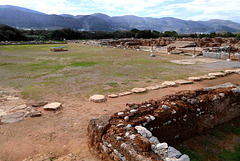
This stone with a diameter of around 90 cm is located on the side of the central square. It has a central mortise and 34 cup-shaped indentations arranged in a ring. It is assumed that this was a sacrificial stone.
Malia
| 18 May 2025 |
|
Malia (aka Palace of Malia) is a large Minoan archaeological site near the modern village of Malia. It was occupied from the middle 3rd millennium BC until about 1250 BC. During the Late Minoan period (1700 - 1470 BC) it was one of the largest Minoan palaces. It has been excavated for over a century.
The palace area has a diameter of approximately 600 meters. The total area of the city is estimated at about 80 hectares. The first palace was probably built around 1900 BC. Evidence of even older construction has been found. Malia was destroyed by a severe earthquake between 1750 and 1700 BC. The palace complex was rebuilt on the same site just a few decades later, even larger. Most of the ruins visible today date from this second period.
Malia was destroyed again around 1450 BC, at roughly the same time as the palaces of Phaistos and Kato Zakros. Fire marks on the palace walls indicate an enemy conquest. After this destruction, Malia was used only briefly.
The palace, like other Minoan palace complexes, is built around a large courtyard measuring 48 x 23 meters. In the center of the courtyard is an altar for burnt offerings: four brick columns surround a pit in which ash was found, suggesting burnt animal sacrifices.

Malia
| 18 May 2025 |
|
|
|
Malia (aka Palace of Malia) is a large Minoan archaeological site near the modern village of Malia. It was occupied from the middle 3rd millennium BC until about 1250 BC. During the Late Minoan period (1700 - 1470 BC) it was one of the largest Minoan palaces. It has been excavated for over a century.
The palace area has a diameter of approximately 600 meters. The total area of the city is estimated at about 80 hectares. The first palace was probably built around 1900 BC. Evidence of even older construction has been found. Malia was destroyed by a severe earthquake between 1750 and 1700 BC. The palace complex was rebuilt on the same site just a few decades later, even larger. Most of the ruins visible today date from this second period.
Malia was destroyed again around 1450 BC, at roughly the same time as the palaces of Phaistos and Kato Zakros. Fire marks on the palace walls indicate an enemy conquest. After this destruction, Malia was used only briefly.
Pithoi

Malia
| 18 May 2025 |
|
Malia (aka Palace of Malia) is a large Minoan archaeological site near the modern village of Malia. It was occupied from the middle 3rd millennium BC until about 1250 BC. During the Late Minoan period (1700 - 1470 BC) it was one of the largest Minoan palaces. It has been excavated for over a century.
The palace area has a diameter of approximately 600 meters. The total area of the city is estimated at about 80 hectares. The first palace was probably built around 1900 BC. Evidence of even older construction has been found. Malia was destroyed by a severe earthquake between 1750 and 1700 BC. The palace complex was rebuilt on the same site just a few decades later, even larger. Most of the ruins visible today date from this second period.
Malia was destroyed again around 1450 BC, at roughly the same time as the palaces of Phaistos and Kato Zakros. Fire marks on the palace walls indicate an enemy conquest. After this destruction, Malia was used only briefly.
Many of the excavation sites had been used as workshops. Following the information given, this was once an oil mill.

Malia
| 17 May 2025 |
|
|
Malia (aka Palace of Malia) is a large Minoan archaeological site near the modern village of Malia. It was occupied from the middle 3rd millennium BC until about 1250 BC. During the Late Minoan period (1700 - 1470 BC) it was one of the largest Minoan palaces. It has been excavated for over a century.
The palace area has a diameter of approximately 600 meters. The total area of the city is estimated at about 80 hectares. The first palace was probably built around 1900 BC. Evidence of even older construction has been found. Malia was destroyed by a severe earthquake between 1750 and 1700 BC. The palace complex was rebuilt on the same site just a few decades later, even larger. Most of the ruins visible today date from this second period.
Malia was destroyed again around 1450 BC, at roughly the same time as the palaces of Phaistos and Kato Zakros. Fire marks on the palace walls indicate an enemy conquest. After this destruction, Malia was used only briefly.
Most of the more recent excavations are covered by huge, transparent roofs supported by steel supports that protect them from rain.

Malia
| 17 May 2025 |
|
Malia (aka Palace of Malia) is a large Minoan archaeological site near the modern village of Malia. It was occupied from the middle 3rd millennium BC until about 1250 BC. During the Late Minoan period (1700 - 1470 BC) it was one of the largest Minoan palaces. It has been excavated for over a century.
The palace area has a diameter of approximately 600 meters. The total area of the city is estimated at about 80 hectares. The first palace was probably built around 1900 BC. Evidence of even older construction has been found. Malia was destroyed by a severe earthquake between 1750 and 1700 BC. The palace complex was rebuilt on the same site just a few decades later, even larger. Most of the ruins visible today date from this second period.
Malia was destroyed again around 1450 BC, at roughly the same time as the palaces of Phaistos and Kato Zakros. Fire marks on the palace walls indicate an enemy conquest. After this destruction, Malia was used only briefly.
Most of the more recent excavations are covered by huge, transparent roofs supported by steel supports that protect them from rain.
Heraklion - Archaeological Museum
| 02 Apr 2025 |
|
Crete is the largest and most populous of the Greek islands, is located about 100 km south of the Peloponnese. Crete was the center of Europe's first advanced civilization, the Minoans, from 3000 to 1400 BC. The Minoan civilization was overrun by the Mycenaean civilization from mainland Greece. Crete was later ruled by Rome, then successively by the Byzantine Empire, Andalusian Arabs, the Byzantine Empire again, the Venetian Republic, and the Ottoman Empire. In 1898 Crete, whose people had for some time wanted to join the Greek state, achieved independence from the Ottomans, formally becoming the Cretan State. Crete became part of Greece in December 1913.
Heraklion is the largest city and the administrative capital of the island of Crete. With a municipal population of about 180.000 it is the fourth largest city in Greece. The greater area of Heraklion has been continuously inhabited since at least 7000 BCE, making it one of the oldest inhabited regions in Europe. As a major center of the Minoan civilization it often considered Europe's oldest city.
The Heraklion Archaeological Museum is one of the largest museums in Greeceand the best in the world for Minoan art, as it contains by far the most important and complete collection of artefacts of the Minoan civilization of Crete.
The museum began in 1883 as a simple collection of antiquities; it was about the time when the Minoan civilization was beginning to be rediscovered, and shortly before the first excavations using proper scientific methods. It was also during the period when Crete was a virtually autonomous part of the Ottoman Empire, after the Pact of Halepa of 1878, later followed by the independent Cretan State (1898-1913). The political situation helped to keep Cretan finds on the island during a crucial period of discoveries.
The museum is located in the town centre. It was built between 1937 and 1940 on a site previously occupied by the Roman Catholic monastery of Saint-Francis which was destroyed by earthquake in 1856.
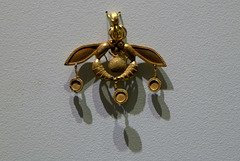
The Bee Pendant / The Malia Pendant / The Bees of Malia
The gold pendant was found in a tomb in 1930 at Chrysolakkos, Malia. It dates to the Minoan civilization, 1800-1650 BC.
The pendant measures 4.9 cm wide and 4.6 cm high. It depicts two bees or wasps sucking on a drop of honey. Another interpretation is that they are depositing the honey in a honeycomb between them. The insects' bodies are curled around the honeycomb, forming a circle. Above the bees' heads is a gold ball in a wire cage. From each of their wings and where their stingers touch, hangs a disc with a granulated edge.
Jump to top
RSS feed- Martin M. Miles' latest photos with "Malia" - Photos
- ipernity © 2007-2026
- Help & Contact
|
Club news
|
About ipernity
|
History |
ipernity Club & Prices |
Guide of good conduct
Donate | Group guidelines | Privacy policy | Terms of use | Statutes | In memoria -
Facebook
X
