

Martin M. Miles' photos with the keyword: Hagios Demetrios

Mystras - Hagios Demetrios
| 07 Jul 2026 |
|
|
|
Mystras is a Byzantine ruined city near the village of the same name, northwest of Sparta.
The history of Mystras begins with the Fourth Crusade. When the Crusaders conquered the Peloponnese in 1206/1207, Godfrey I of Villehardouin became Prince of Achaea. His son, William II, conquered the rest of Laconia and in 1249 built a strong hilltop fortress in Mystras, which had previously been uninhabited.
In 1259, William II was captured by the troops of the Byzantine Emperor and secured his release by surrendering Mystras. The Greek inhabitants of Sparta, weary of Crusader rule, settled in Mystras, located just three kilometers away. A flourishing city grew up below the castle, eventually boasting a population of tens of thousands.
Mystras was conquered by the Ottomans in 1460. Minarets began to appear alongside churches and monasteries. The city came under Venetian control in 1687, but fell back to the Ottoman Turks as early as 1715.
In 1770, during a Russo-Turkish war, troops from the Balkans, who had invaded the Peloponnese on Ottoman orders, devastated the city. This marked the end of Mystras's heyday. During the Greek War of Independence, the city was subsequently so severely destroyed that plans for its reconstruction were abandoned. Instead, a short time later, Sparta, which had been abandoned centuries earlier, was rebuilt.
Mystras has been a UNESCO World Heritage Site since 1988.
The Church of Hagios Demetrios, the earliest of the surviving churches of Mystras, is the metropolitan church, It is a wooden roofed basilica.
The church was founded between 1263 and 1272 by the Bishop Eugenios, whose tomb was discovered in the church. The paintings were commissioned by Bishop Theodosios and date to approximately 1272.
Inscriptions dedicate the structure to Nikiphoros, Metropolitan of Laconia, however, he was undoubtedly not the founder, he likely only commissioned the construction of the narthex around 1310.

Mystras
| 06 Jul 2026 |
|
|
Mystras is a Byzantine ruined city near the village of the same name, northwest of Sparta.
The history of Mystras begins with the Fourth Crusade. When the Crusaders conquered the Peloponnese in 1206/1207, Godfrey I of Villehardouin became Prince of Achaea. His son, William II, conquered the rest of Laconia and in 1249 built a strong hilltop fortress in Mystras, which had previously been uninhabited.
In 1259, William II was captured by the troops of the Byzantine Emperor and secured his release by surrendering Mystras. The Greek inhabitants of Sparta, weary of Crusader rule, settled in Mystras, located just three kilometers away. A flourishing city grew up below the castle, eventually boasting a population of tens of thousands.
Mystras was conquered by the Ottomans in 1460. Minarets began to appear alongside churches and monasteries. The city came under Venetian control in 1687, but fell back to the Ottoman Turks as early as 1715.
In 1770, during a Russo-Turkish war, troops from the Balkans, who had invaded the Peloponnese on Ottoman orders, devastated the city. This marked the end of Mystras's heyday. During the Greek War of Independence, the city was subsequently so severely destroyed that plans for its reconstruction were abandoned. Instead, a short time later, Sparta, which had been abandoned centuries earlier, was rebuilt.
Mystras has been a UNESCO World Heritage Site since 1988.
Carved graffiti can be found all over the ruined town.

Mystras
| 06 Jul 2026 |
|
|
Mystras is a Byzantine ruined city near the village of the same name, northwest of Sparta.
The history of Mystras begins with the Fourth Crusade. When the Crusaders conquered the Peloponnese in 1206/1207, Godfrey I of Villehardouin became Prince of Achaea. His son, William II, conquered the rest of Laconia and in 1249 built a strong hilltop fortress in Mystras, which had previously been uninhabited.
In 1259, William II was captured by the troops of the Byzantine Emperor and secured his release by surrendering Mystras. The Greek inhabitants of Sparta, weary of Crusader rule, settled in Mystras, located just three kilometers away. A flourishing city grew up below the castle, eventually boasting a population of tens of thousands.
Mystras was conquered by the Ottomans in 1460. Minarets began to appear alongside churches and monasteries. The city came under Venetian control in 1687, but fell back to the Ottoman Turks as early as 1715.
In 1770, during a Russo-Turkish war, troops from the Balkans, who had invaded the Peloponnese on Ottoman orders, devastated the city. This marked the end of Mystras's heyday. During the Greek War of Independence, the city was subsequently so severely destroyed that plans for its reconstruction were abandoned. Instead, a short time later, Sparta, which had been abandoned centuries earlier, was rebuilt.
Mystras has been a UNESCO World Heritage Site since 1988.
The Frankish castle towering over the byzantine town.

Mystras - Museum
| 06 Jul 2026 |
|
|
Adjoining the Basilica of Hagios Demetrios is a small museum. Some of the exhibits are far older than Mystras.
Signet ring
used within the Byzantine administration.

Mystras - Museum
| 05 Jul 2026 |
|
|
|
Adjoining the Basilica of Hagios Demetrios is a small museum whose exhibits are far older than Mystras.
Christ Enthroned
2nd half of the 14th c. AD

Mystras - Museum
| 05 Jul 2026 |
|
|
Adjoining the Basilica of Hagios Demetrios is a small museum whose exhibits are far older than Mystras.
A legend in the "Alexander romance" has Alexander the Great, wishing to see the whole world from above. To do this he harnessed two large birds or griffins with a seat for him between them. To entice them to keep flying higher he placed meat (some say "roasted puppies") on two skewers which he held above their heads.

Mystras - Museum
| 04 Jul 2026 |
|
|
Adjoining the Basilica of Hagios Demetrios is a small museum whose exhibits are far older than Mystras.
Roman sarcophagus

Mystras - Hagios Demetrios
| 04 Jul 2026 |
|
|
Mystras is a Byzantine ruined city near the village of the same name, northwest of Sparta.
The history of Mystras begins with the Fourth Crusade. When the Crusaders conquered the Peloponnese in 1206/1207, Godfrey I of Villehardouin became Prince of Achaea. His son, William II, conquered the rest of Laconia and in 1249 built a strong hilltop fortress in Mystras, which had previously been uninhabited.
In 1259, William II was captured by the troops of the Byzantine Emperor and secured his release by surrendering Mystras. The Greek inhabitants of Sparta, weary of Crusader rule, settled in Mystras, located just three kilometers away. A flourishing city grew up below the castle, eventually boasting a population of tens of thousands.
Mystras was conquered by the Ottomans in 1460. Minarets began to appear alongside churches and monasteries. The city came under Venetian control in 1687, but fell back to the Ottoman Turks as early as 1715.
In 1770, during a Russo-Turkish war, troops from the Balkans, who had invaded the Peloponnese on Ottoman orders, devastated the city. This marked the end of Mystras's heyday. During the Greek War of Independence, the city was subsequently so severely destroyed that plans for its reconstruction were abandoned. Instead, a short time later, Sparta, which had been abandoned centuries earlier, was rebuilt.
Mystras has been a UNESCO World Heritage Site since 1988.
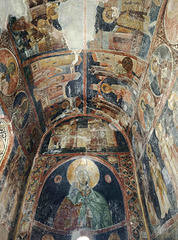
The Church of Hagios Demetrios, the earliest of the surviving churches of Mystras, is the metropolitan church, It is a wooden roofed basilica.
The church was founded between 1263 and 1272 by the Bishop Eugenios, whose tomb was discovered in the church. The paintings were commissioned by Bishop Theodosios and date to approximately 1272.
Inscriptions dedicate the structure to Nikiphoros, Metropolitan of Laconia, however, he was undoubtedly not the founder, he likely only commissioned the construction of the narthex around 1310.
Mystras - Hagios Demetrios
| 04 Jul 2026 |
|
|
Mystras is a Byzantine ruined city near the village of the same name, northwest of Sparta.
The history of Mystras begins with the Fourth Crusade. When the Crusaders conquered the Peloponnese in 1206/1207, Godfrey I of Villehardouin became Prince of Achaea. His son, William II, conquered the rest of Laconia and in 1249 built a strong hilltop fortress in Mystras, which had previously been uninhabited.
In 1259, William II was captured by the troops of the Byzantine Emperor and secured his release by surrendering Mystras. The Greek inhabitants of Sparta, weary of Crusader rule, settled in Mystras, located just three kilometers away. A flourishing city grew up below the castle, eventually boasting a population of tens of thousands.
Mystras was conquered by the Ottomans in 1460. Minarets began to appear alongside churches and monasteries. The city came under Venetian control in 1687, but fell back to the Ottoman Turks as early as 1715.
In 1770, during a Russo-Turkish war, troops from the Balkans, who had invaded the Peloponnese on Ottoman orders, devastated the city. This marked the end of Mystras's heyday. During the Greek War of Independence, the city was subsequently so severely destroyed that plans for its reconstruction were abandoned. Instead, a short time later, Sparta, which had been abandoned centuries earlier, was rebuilt.
Mystras has been a UNESCO World Heritage Site since 1988.
The Church of Hagios Demetrios, the earliest of the surviving churches of Mystras, is the metropolitan church, It is a wooden roofed basilica.
The church was founded between 1263 and 1272 by the Bishop Eugenios, whose tomb was discovered in the church. The paintings were commissioned by Bishop Theodosios and date to approximately 1272.
Inscriptions dedicate the structure to Nikiphoros, Metropolitan of Laconia, however, he was undoubtedly not the founder, he likely only commissioned the construction of the narthex around 1310.

Mystras - Hagios Demetrios
| 04 Jul 2026 |
|
|
Mystras is a Byzantine ruined city near the village of the same name, northwest of Sparta.
The history of Mystras begins with the Fourth Crusade. When the Crusaders conquered the Peloponnese in 1206/1207, Godfrey I of Villehardouin became Prince of Achaea. His son, William II, conquered the rest of Laconia and in 1249 built a strong hilltop fortress in Mystras, which had previously been uninhabited.
In 1259, William II was captured by the troops of the Byzantine Emperor and secured his release by surrendering Mystras. The Greek inhabitants of Sparta, weary of Crusader rule, settled in Mystras, located just three kilometers away. A flourishing city grew up below the castle, eventually boasting a population of tens of thousands.
Mystras was conquered by the Ottomans in 1460. Minarets began to appear alongside churches and monasteries. The city came under Venetian control in 1687, but fell back to the Ottoman Turks as early as 1715.
In 1770, during a Russo-Turkish war, troops from the Balkans, who had invaded the Peloponnese on Ottoman orders, devastated the city. This marked the end of Mystras's heyday. During the Greek War of Independence, the city was subsequently so severely destroyed that plans for its reconstruction were abandoned. Instead, a short time later, Sparta, which had been abandoned centuries earlier, was rebuilt.
Mystras has been a UNESCO World Heritage Site since 1988.
The Church of Hagios Demetrios, the earliest of the surviving churches of Mystras, is the metropolitan church, It is a wooden roofed basilica.
The church was founded between 1263 and 1272 by the Bishop Eugenios, whose tomb was discovered in the church. The paintings were commissioned by Bishop Theodosios and date to approximately 1272.
Inscriptions dedicate the structure to Nikiphoros, Metropolitan of Laconia, however, he was undoubtedly not the founder, he likely only commissioned the construction of the narthex around 1310.

Mystras - Hagios Demetrios
| 03 Jul 2026 |
|
|
Mystras is a Byzantine ruined city near the village of the same name, northwest of Sparta.
The history of Mystras begins with the Fourth Crusade. When the Crusaders conquered the Peloponnese in 1206/1207, Godfrey I of Villehardouin became Prince of Achaea. His son, William II, conquered the rest of Laconia and in 1249 built a strong hilltop fortress in Mystras, which had previously been uninhabited.
In 1259, William II was captured by the troops of the Byzantine Emperor and secured his release by surrendering Mystras. The Greek inhabitants of Sparta, weary of Crusader rule, settled in Mystras, located just three kilometers away. A flourishing city grew up below the castle, eventually boasting a population of tens of thousands.
Mystras was conquered by the Ottomans in 1460. Minarets began to appear alongside churches and monasteries. The city came under Venetian control in 1687, but fell back to the Ottoman Turks as early as 1715.
In 1770, during a Russo-Turkish war, troops from the Balkans, who had invaded the Peloponnese on Ottoman orders, devastated the city. This marked the end of Mystras's heyday. During the Greek War of Independence, the city was subsequently so severely destroyed that plans for its reconstruction were abandoned. Instead, a short time later, Sparta, which had been abandoned centuries earlier, was rebuilt.
Mystras has been a UNESCO World Heritage Site since 1988.
The Church of Hagios Demetrios, the earliest of the surviving churches of Mystras, is the metropolitan church, It is a wooden roofed basilica.
The church was founded between 1263 and 1272 by the Bishop Eugenios, whose tomb was discovered in the church. The paintings were commissioned by Bishop Theodosios and date to approximately 1272.
Inscriptions dedicate the structure to Nikiphoros, Metropolitan of Laconia, however, he was undoubtedly not the founder, he likely only commissioned the construction of the narthex around 1310.

Mystras - Hagios Demetrios
| 03 Jul 2026 |
|
|
Mystras is a Byzantine ruined city near the village of the same name, northwest of Sparta.
The history of Mystras begins with the Fourth Crusade. When the Crusaders conquered the Peloponnese in 1206/1207, Godfrey I of Villehardouin became Prince of Achaea. His son, William II, conquered the rest of Laconia and in 1249 built a strong hilltop fortress in Mystras, which had previously been uninhabited.
In 1259, William II was captured by the troops of the Byzantine Emperor and secured his release by surrendering Mystras. The Greek inhabitants of Sparta, weary of Crusader rule, settled in Mystras, located just three kilometers away. A flourishing city grew up below the castle, eventually boasting a population of tens of thousands.
Mystras was conquered by the Ottomans in 1460. Minarets began to appear alongside churches and monasteries. The city came under Venetian control in 1687, but fell back to the Ottoman Turks as early as 1715.
In 1770, during a Russo-Turkish war, troops from the Balkans, who had invaded the Peloponnese on Ottoman orders, devastated the city. This marked the end of Mystras's heyday. During the Greek War of Independence, the city was subsequently so severely destroyed that plans for its reconstruction were abandoned. Instead, a short time later, Sparta, which had been abandoned centuries earlier, was rebuilt.
Mystras has been a UNESCO World Heritage Site since 1988.
The Church of Hagios Demetrios, the earliest of the surviving churches of Mystras, is the metropolitan church, It is a wooden roofed basilica.
The church was founded between 1263 and 1272 by the Bishop Eugenios, whose tomb was discovered in the church. The paintings were commissioned by Bishop Theodosios and date to approximately 1272.
Inscriptions dedicate the structure to Nikiphoros, Metropolitan of Laconia, however, he was undoubtedly not the founder, he likely only commissioned the construction of the narthex around 1310.

Mystras - Hagios Demetrios
| 03 Jul 2026 |
|
|
Mystras is a Byzantine ruined city near the village of the same name, northwest of Sparta.
The history of Mystras begins with the Fourth Crusade. When the Crusaders conquered the Peloponnese in 1206/1207, Godfrey I of Villehardouin became Prince of Achaea. His son, William II, conquered the rest of Laconia and in 1249 built a strong hilltop fortress in Mystras, which had previously been uninhabited.
In 1259, William II was captured by the troops of the Byzantine Emperor and secured his release by surrendering Mystras. The Greek inhabitants of Sparta, weary of Crusader rule, settled in Mystras, located just three kilometers away. A flourishing city grew up below the castle, eventually boasting a population of tens of thousands.
Mystras was conquered by the Ottomans in 1460. Minarets began to appear alongside churches and monasteries. The city came under Venetian control in 1687, but fell back to the Ottoman Turks as early as 1715.
In 1770, during a Russo-Turkish war, troops from the Balkans, who had invaded the Peloponnese on Ottoman orders, devastated the city. This marked the end of Mystras's heyday. During the Greek War of Independence, the city was subsequently so severely destroyed that plans for its reconstruction were abandoned. Instead, a short time later, Sparta, which had been abandoned centuries earlier, was rebuilt.
Mystras has been a UNESCO World Heritage Site since 1988.
The Church of Hagios Demetrios, the earliest of the surviving churches of Mystras, is the metropolitan church, It is a wooden roofed basilica.
The church was founded between 1263 and 1272 by the Bishop Eugenios, whose tomb was discovered in the church. The paintings were commissioned by Bishop Theodosios and date to approximately 1272.
Inscriptions dedicate the structure to Nikiphoros, Metropolitan of Laconia, however, he was undoubtedly not the founder, he likely only commissioned the construction of the narthex around 1310.

Mystras - Hagios Demetrios
| 03 Jul 2026 |
|
|
Mystras is a Byzantine ruined city near the village of the same name, northwest of Sparta.
The history of Mystras begins with the Fourth Crusade. When the Crusaders conquered the Peloponnese in 1206/1207, Godfrey I of Villehardouin became Prince of Achaea. His son, William II, conquered the rest of Laconia and in 1249 built a strong hilltop fortress in Mystras, which had previously been uninhabited.
In 1259, William II was captured by the troops of the Byzantine Emperor and secured his release by surrendering Mystras. The Greek inhabitants of Sparta, weary of Crusader rule, settled in Mystras, located just three kilometers away. A flourishing city grew up below the castle, eventually boasting a population of tens of thousands.
Mystras was conquered by the Ottomans in 1460. Minarets began to appear alongside churches and monasteries. The city came under Venetian control in 1687, but fell back to the Ottoman Turks as early as 1715.
In 1770, during a Russo-Turkish war, troops from the Balkans, who had invaded the Peloponnese on Ottoman orders, devastated the city. This marked the end of Mystras's heyday. During the Greek War of Independence, the city was subsequently so severely destroyed that plans for its reconstruction were abandoned. Instead, a short time later, Sparta, which had been abandoned centuries earlier, was rebuilt.
Mystras has been a UNESCO World Heritage Site since 1988.
The Church of Hagios Demetrios, the earliest of the surviving churches of Mystras, is the metropolitan church, It is a wooden roofed basilica.
The church was founded between 1263 and 1272 by the Bishop Eugenios, whose tomb was discovered in the church. The paintings were commissioned by Bishop Theodosios and date to approximately 1272.
Inscriptions dedicate the structure to Nikiphoros, Metropolitan of Laconia, however, he was undoubtedly not the founder, he likely only commissioned the construction of the narthex around 1310.
January 6 1449 Constantine XI Palaiologos, the last reigning Byzantine emperor, was supposedly crowned, standing in this church on this marble relief of a double-headed eagle

Mystras - Hagios Demetrios
| 03 Jul 2026 |
|
|
Mystras is a Byzantine ruined city near the village of the same name, northwest of Sparta.
The history of Mystras begins with the Fourth Crusade. When the Crusaders conquered the Peloponnese in 1206/1207, Godfrey I of Villehardouin became Prince of Achaea. His son, William II, conquered the rest of Laconia and in 1249 built a strong hilltop fortress in Mystras, which had previously been uninhabited.
In 1259, William II was captured by the troops of the Byzantine Emperor and secured his release by surrendering Mystras. The Greek inhabitants of Sparta, weary of Crusader rule, settled in Mystras, located just three kilometers away. A flourishing city grew up below the castle, eventually boasting a population of tens of thousands.
Mystras was conquered by the Ottomans in 1460. Minarets began to appear alongside churches and monasteries. The city came under Venetian control in 1687, but fell back to the Ottoman Turks as early as 1715.
In 1770, during a Russo-Turkish war, troops from the Balkans, who had invaded the Peloponnese on Ottoman orders, devastated the city. This marked the end of Mystras's heyday. During the Greek War of Independence, the city was subsequently so severely destroyed that plans for its reconstruction were abandoned. Instead, a short time later, Sparta, which had been abandoned centuries earlier, was rebuilt.
Mystras has been a UNESCO World Heritage Site since 1988.
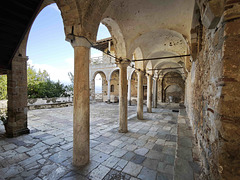
The Church of Hagios Demetrios, the earliest of the surviving churches of Mystras, is the metropolitan church, It is a wooden roofed basilica.
The church was founded between 1263 and 1272 by the Bishop Eugenios, whose tomb was discovered in the church. The paintings were commissioned by Bishop Theodosios and date to approximately 1272.
Inscriptions dedicate the structure to Nikiphoros, Metropolitan of Laconia, however, he was undoubtedly not the founder, he likely only commissioned the construction of the narthex around 1310.
Mystras - Hagios Demetrios
| 03 Jul 2026 |
|
|
Mystras is a Byzantine ruined city near the village of the same name, northwest of Sparta.
The history of Mystras begins with the Fourth Crusade. When the Crusaders conquered the Peloponnese in 1206/1207, Godfrey I of Villehardouin became Prince of Achaea. His son, William II, conquered the rest of Laconia and in 1249 built a strong hilltop fortress in Mystras, which had previously been uninhabited.
In 1259, William II was captured by the troops of the Byzantine Emperor and secured his release by surrendering Mystras. The Greek inhabitants of Sparta, weary of Crusader rule, settled in Mystras, located just three kilometers away. A flourishing city grew up below the castle, eventually boasting a population of tens of thousands.
Mystras was conquered by the Ottomans in 1460. Minarets began to appear alongside churches and monasteries. The city came under Venetian control in 1687, but fell back to the Ottoman Turks as early as 1715.
In 1770, during a Russo-Turkish war, troops from the Balkans, who had invaded the Peloponnese on Ottoman orders, devastated the city. This marked the end of Mystras's heyday. During the Greek War of Independence, the city was subsequently so severely destroyed that plans for its reconstruction were abandoned. Instead, a short time later, Sparta, which had been abandoned centuries earlier, was rebuilt.
Mystras has been a UNESCO World Heritage Site since 1988.
The Church of Hagios Demetrios, the earliest of the surviving churches of Mystras, is the metropolitan church, It is a wooden roofed basilica.
The church was founded between 1263 and 1272 by the Bishop Eugenios, whose tomb was discovered in the church. The paintings were commissioned by Bishop Theodosios and date to approximately 1272.
Inscriptions dedicate the structure to Nikiphoros, Metropolitan of Laconia, however, he was undoubtedly not the founder, he likely only commissioned the construction of the narthex around 1310.

Mystras - Hagios Demetrios
| 03 Jul 2026 |
|
|
Mystras is a Byzantine ruined city near the village of the same name, northwest of Sparta.
The history of Mystras begins with the Fourth Crusade. When the Crusaders conquered the Peloponnese in 1206/1207, Godfrey I of Villehardouin became Prince of Achaea. His son, William II, conquered the rest of Laconia and in 1249 built a strong hilltop fortress in Mystras, which had previously been uninhabited.
In 1259, William II was captured by the troops of the Byzantine Emperor and secured his release by surrendering Mystras. The Greek inhabitants of Sparta, weary of Crusader rule, settled in Mystras, located just three kilometers away. A flourishing city grew up below the castle, eventually boasting a population of tens of thousands.
Mystras was conquered by the Ottomans in 1460. Minarets began to appear alongside churches and monasteries. The city came under Venetian control in 1687, but fell back to the Ottoman Turks as early as 1715.
In 1770, during a Russo-Turkish war, troops from the Balkans, who had invaded the Peloponnese on Ottoman orders, devastated the city. This marked the end of Mystras's heyday. During the Greek War of Independence, the city was subsequently so severely destroyed that plans for its reconstruction were abandoned. Instead, a short time later, Sparta, which had been abandoned centuries earlier, was rebuilt.
Mystras has been a UNESCO World Heritage Site since 1988.
The Church of Hagios Demetrios, the earliest of the surviving churches of Mystras, is the metropolitan church, It is a wooden roofed basilica.
The church was founded between 1263 and 1272 by the Bishop Eugenios, whose tomb was discovered in the church. The paintings were commissioned by Bishop Theodosios and date to approximately 1272.
Inscriptions dedicate the structure to Nikiphoros, Metropolitan of Laconia, however, he was undoubtedly not the founder, he likely only commissioned the construction of the narthex around 1310.

Mystras - Hagios Demetrios
| 02 Jul 2026 |
|
|
|
Mystras is a Byzantine ruined city near the village of the same name, northwest of Sparta.
The history of Mystras begins with the Fourth Crusade. When the Crusaders conquered the Peloponnese in 1206/1207, Godfrey I of Villehardouin became Prince of Achaea. His son, William II, conquered the rest of Laconia and in 1249 built a strong hilltop fortress in Mystras, which had previously been uninhabited.
In 1259, William II was captured by the troops of the Byzantine Emperor and secured his release by surrendering Mystras. The Greek inhabitants of Sparta, weary of Crusader rule, settled in Mystras, located just three kilometers away. A flourishing city grew up below the castle, eventually boasting a population of tens of thousands.
Mystras was conquered by the Ottomans in 1460. Minarets began to appear alongside churches and monasteries. The city came under Venetian control in 1687, but fell back to the Ottoman Turks as early as 1715.
In 1770, during a Russo-Turkish war, troops from the Balkans, who had invaded the Peloponnese on Ottoman orders, devastated the city. This marked the end of Mystras's heyday. During the Greek War of Independence, the city was subsequently so severely destroyed that plans for its reconstruction were abandoned. Instead, a short time later, Sparta, which had been abandoned centuries earlier, was rebuilt.
Mystras has been a UNESCO World Heritage Site since 1988.
The Church of Hagios Demetrios, the earliest of the surviving churches of Mystras, is the metropolitan church, It is a wooden roofed basilica.
The church was founded between 1263 and 1272 by the Bishop Eugenios, whose tomb was discovered in the church. The paintings were commissioned by Bishop Theodosios and date to approximately 1272.
Inscriptions dedicate the structure to Nikiphoros, Metropolitan of Laconia, however, he was undoubtedly not the founder, he likely only commissioned the construction of the narthex around 1310.
Jump to top
RSS feed- Martin M. Miles' latest photos with "Hagios Demetrios" - Photos
- ipernity © 2007-2026
- Help & Contact
|
Club news
|
About ipernity
|
History |
ipernity Club & Prices |
Guide of good conduct
Donate | Group guidelines | Privacy policy | Terms of use | Statutes | In memoria -
Facebook
X
