

Martin M. Miles' photos with the keyword: Archaeological

Ierapetra - Archaeological Collection
| 11 Jun 2026 |
|
|
Ierapetra is the southernmost city in Europe (excluding Cyprus) and the fourth-largest city in Crete.
In ancient times, the city was called Hierapytna. The earliest remains of the city date back to the fifth century BC. It was an important Dorian city in eastern Crete. The city of Gortyn surpassed Hierapytna's importance as an independent state when Hierapytna was conquered by the Romans in 67 BC. The city was severely damaged during the Arab conquest in 824 but was subsequently rebuilt. It experienced a new period of prosperity during the Venetian period from the 13th to the 17th centuries.
The Archaeological Collection is housed in the building of an Ottoman School that was built in 1899.
Minoan Jewellery

Ierapetra - Archaeological Collection
| 11 Jun 2026 |
|
|
|
Ierapetra is the southernmost city in Europe (excluding Cyprus) and the fourth-largest city in Crete.
In ancient times, the city was called Hierapytna. The earliest remains of the city date back to the fifth century BC. It was an important Dorian city in eastern Crete. The city of Gortyn surpassed Hierapytna's importance as an independent state when Hierapytna was conquered by the Romans in 67 BC. The city was severely damaged during the Arab conquest in 824 but was subsequently rebuilt. It experienced a new period of prosperity during the Venetian period from the 13th to the 17th centuries.
The Archaeological Collection is housed in the building of an Ottoman School that was built in 1899.
Marble statue
of Demeter-Isis
On top of her head is a small altar flanked by two serpents with raised heads. The left hand holds an ear of wheat.
2nd c. AD

Ierapetra - Archaeological Collection
| 11 Jun 2026 |
|
|
Ierapetra is the southernmost city in Europe (excluding Cyprus) and the fourth-largest city in Crete.
In ancient times, the city was called Hierapytna. The earliest remains of the city date back to the fifth century BC. It was an important Dorian city in eastern Crete. The city of Gortyn surpassed Hierapytna's importance as an independent state when Hierapytna was conquered by the Romans in 67 BC. The city was severely damaged during the Arab conquest in 824 but was subsequently rebuilt. It experienced a new period of prosperity during the Venetian period from the 13th to the 17th centuries.
The Archaeological Collection is housed in the building of an Ottoman School that was built in 1899.
Marble heads
2nd c. AD

Ierapetra - Archaeological Collection
| 11 Jun 2026 |
|
|
Ierapetra is the southernmost city in Europe (excluding Cyprus) and the fourth-largest city in Crete.
In ancient times, the city was called Hierapytna. The earliest remains of the city date back to the fifth century BC. It was an important Dorian city in eastern Crete. The city of Gortyn surpassed Hierapytna's importance as an independent state when Hierapytna was conquered by the Romans in 67 BC. The city was severely damaged during the Arab conquest in 824 but was subsequently rebuilt. It experienced a new period of prosperity during the Venetian period from the 13th to the 17th centuries.
The Archaeological Collection is housed in the building of an Ottoman School that was built in 1899.
Marble head
of a larger than life statue
Sculpted in the time of Emperor Augustus (27 BC - 14 AC)
Ierapetra - Archaeological Collection
| 11 Jun 2026 |
|
|
Ierapetra is the southernmost city in Europe (excluding Cyprus) and the fourth-largest city in Crete.
In ancient times, the city was called Hierapytna. The earliest remains of the city date back to the fifth century BC. It was an important Dorian city in eastern Crete. The city of Gortyn surpassed Hierapytna's importance as an independent state when Hierapytna was conquered by the Romans in 67 BC. The city was severely damaged during the Arab conquest in 824 but was subsequently rebuilt. It experienced a new period of prosperity during the Venetian period from the 13th to the 17th centuries.
The Archaeological Collection is housed in the building of an Ottoman School that was built in 1899.
Minoan Larnax
known as the Episkopi Larnax (named after the find spot).
Hunting scenes
The hunters chase the ibex with dogs.
To the left is a hunter having a dog on a lead
13th c BC.

Ierapetra - Archaeological Collection
| 10 Jun 2026 |
|
|
Ierapetra is the southernmost city in Europe (excluding Cyprus) and the fourth-largest city in Crete.
In ancient times, the city was called Hierapytna. The earliest remains of the city date back to the fifth century BC. It was an important Dorian city in eastern Crete. The city of Gortyn surpassed Hierapytna's importance as an independent state when Hierapytna was conquered by the Romans in 67 BC. The city was severely damaged during the Arab conquest in 824 but was subsequently rebuilt. It experienced a new period of prosperity during the Venetian period from the 13th to the 17th centuries.
The Archaeological Collection is housed in the building of an Ottoman School that was built in 1899.
Minoan Larnax
known as the Episkopi Larnax (named after the find spot).
It appears as though all the human figures are descendants of the Cyclopes. A chariot race is visible on the left, above the octopus. Shepherds appear at the bottom right and top left, and ibexes at the top right.
Detail: one of the one-eyed shepherds
13th c BC.
-
The Odyssey, attributed to Homer, was first composed around the 8th or 7th century BC. It tells the story of the Cyclops Polyphemus, who was blinded by Odysseus.
They story (and many others) may be way older as parts of long oral traditions.

Ierapetra - Archaeological Collection
| 10 Jun 2026 |
|
|
Ierapetra is the southernmost city in Europe (excluding Cyprus) and the fourth-largest city in Crete.
In ancient times, the city was called Hierapytna. The earliest remains of the city date back to the fifth century BC. It was an important Dorian city in eastern Crete. The city of Gortyn surpassed Hierapytna's importance as an independent state when Hierapytna was conquered by the Romans in 67 BC. The city was severely damaged during the Arab conquest in 824 but was subsequently rebuilt. It experienced a new period of prosperity during the Venetian period from the 13th to the 17th centuries.
The Archaeological Collection is housed in the building of an Ottoman School that was built in 1899.
Minoan Larnax
known as the Episkopi Larnax (named after the find spot).
It appears as though all the human figures are descendants of the Cyclopes. A chariot race is visible on the left, above the octopus. Shepherds appear at the bottom right and top left, and ibexes at the top right.
13th c BC.

Ierapetra - Archaeological Collection
| 10 Jun 2026 |
|
|
Ierapetra is the southernmost city in Europe (excluding Cyprus) and the fourth-largest city in Crete.
In ancient times, the city was called Hierapytna. The earliest remains of the city date back to the fifth century BC. It was an important Dorian city in eastern Crete. The city of Gortyn surpassed Hierapytna's importance as an independent state when Hierapytna was conquered by the Romans in 67 BC. The city was severely damaged during the Arab conquest in 824 but was subsequently rebuilt. It experienced a new period of prosperity during the Venetian period from the 13th to the 17th centuries.
The Archaeological Collection is housed in the building of an Ottoman School that was built in 1899.
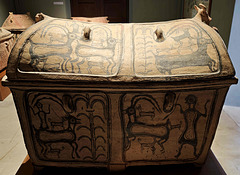
Minoan Larnax
Box-shaped terracotta sarcophagus with saddle shaped lid.
It is decorated with geometric patterns and floral motifs
Late minoan, 1400–1200 BC
Ierapetra - Archaeological Collection
| 10 Jun 2026 |
|
|
Ierapetra is the southernmost city in Europe (excluding Cyprus) and the fourth-largest city in Crete.
In ancient times, the city was called Hierapytna. The earliest remains of the city date back to the fifth century BC. It was an important Dorian city in eastern Crete. The city of Gortyn surpassed Hierapytna's importance as an independent state when Hierapytna was conquered by the Romans in 67 BC. The city was severely damaged during the Arab conquest in 824 but was subsequently rebuilt. It experienced a new period of prosperity during the Venetian period from the 13th to the 17th centuries.
The Archaeological Collection is housed in the building of an Ottoman School that was built in 1899.
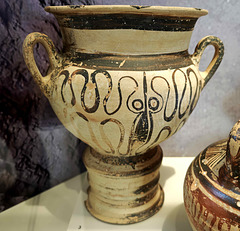
Octopus Stirrup Jar
1500 - 1450 BC

Ierapetra - Archaeological Collection
| 10 Jun 2026 |
|
|
Ierapetra is the southernmost city in Europe (excluding Cyprus) and the fourth-largest city in Crete.
In ancient times, the city was called Hierapytna. The earliest remains of the city date back to the fifth century BC. It was an important Dorian city in eastern Crete. The city of Gortyn surpassed Hierapytna's importance as an independent state when Hierapytna was conquered by the Romans in 67 BC. The city was severely damaged during the Arab conquest in 824 but was subsequently rebuilt. It experienced a new period of prosperity during the Venetian period from the 13th to the 17th centuries.
The Archaeological Collection is housed in the building of an Ottoman School that was built in 1899.
Octopus Vessel
1500 - 1450 BC

Ierapetra - Archaeological Collection
| 10 Jun 2026 |
|
|
Ierapetra is the southernmost city in Europe (excluding Cyprus) and the fourth-largest city in Crete.
In ancient times, the city was called Hierapytna. The earliest remains of the city date back to the fifth century BC. It was an important Dorian city in eastern Crete. The city of Gortyn surpassed Hierapytna's importance as an independent state when Hierapytna was conquered by the Romans in 67 BC. The city was severely damaged during the Arab conquest in 824 but was subsequently rebuilt. It experienced a new period of prosperity during the Venetian period from the 13th to the 17th centuries.
The Archaeological Collection is housed in the building of an Ottoman School that was built in 1899.
Octopus Vessels
1500 - 1450 BC

Ierapetra - Archaeological Collection
| 10 Jun 2026 |
|
|
Ierapetra is the southernmost city in Europe (excluding Cyprus) and the fourth-largest city in Crete.
In ancient times, the city was called Hierapytna. The earliest remains of the city date back to the fifth century BC. It was an important Dorian city in eastern Crete. The city of Gortyn surpassed Hierapytna's importance as an independent state when Hierapytna was conquered by the Romans in 67 BC. The city was severely damaged during the Arab conquest in 824 but was subsequently rebuilt. It experienced a new period of prosperity during the Venetian period from the 13th to the 17th centuries.
The Archaeological Collection is housed in the building of an Ottoman School that was built in 1899.
Moulded vase
Grave good or votive offering (?)

Ierapetra - Archaeological Collection
| 10 Jun 2026 |
|
|
Ierapetra is the southernmost city in Europe (excluding Cyprus) and the fourth-largest city in Crete.
In ancient times, the city was called Hierapytna. The earliest remains of the city date back to the fifth century BC. It was an important Dorian city in eastern Crete. The city of Gortyn surpassed Hierapytna's importance as an independent state when Hierapytna was conquered by the Romans in 67 BC. The city was severely damaged during the Arab conquest in 824 but was subsequently rebuilt. It experienced a new period of prosperity during the Venetian period from the 13th to the 17th centuries.
The Archaeological Collection is housed in the building of an Ottoman School that was built in 1899.
Pelike
with a battle scene
4th c. BC

Kourion – Sanctuary of Apollo Hylates
| 17 Apr 2026 |
|
|
Hylates was worshipped as a local god in Cyprus and was considered equal to the Greek god Apollo in his functions.
A sanctuary of Apollo Hylates was located west of Kourion. It was probably used for worship between the 8th century BC and the 4th century AD. The site originally contained an archaic temple, a circular monument and an altar.
During Roman rule, the site was expanded to include the south and north buildings, both of which may have served for the display of votive offerings or for the accommodation of visitors. Terracotta figurines and pottery collected at the temple from the 5th century BC until Roman rule were buried in the votive pit.
Most of the monuments, as they appear today, are the result of restoration work from the 1st century AD, including the partially reconstructed Temple of Apollo, rooms for pilgrims, a sand-covered area for wrestling and boxing training (palaestra), a bath complex, and a Sacred Way.

Kourion – Sanctuary of Apollo Hylates
| 17 Apr 2026 |
|
|
Hylates was worshipped as a local god in Cyprus and was considered equal to the Greek god Apollo in his functions.
A sanctuary of Apollo Hylates was located west of Kourion. It was probably used for worship between the 8th century BC and the 4th century AD. The site originally contained an archaic temple, a circular monument and an altar.
During Roman rule, the site was expanded to include the south and north buildings, both of which may have served for the display of votive offerings or for the accommodation of visitors. Terracotta figurines and pottery collected at the temple from the 5th century BC until Roman rule were buried in the votive pit.
Most of the monuments, as they appear today, are the result of restoration work from the 1st century AD, including the partially reconstructed Temple of Apollo, rooms for pilgrims, a sand-covered area for wrestling and boxing training (palaestra), a bath complex, and a Sacred Way.
The hypocaust of the Roman bath

Kourion – Sanctuary of Apollo Hylates
| 17 Apr 2026 |
|
|
Hylates was worshipped as a local god in Cyprus and was considered equal to the Greek god Apollo in his functions.
A sanctuary of Apollo Hylates was located west of Kourion. It was probably used for worship between the 8th century BC and the 4th century AD. The site originally contained an archaic temple, a circular monument and an altar.
During Roman rule, the site was expanded to include the south and north buildings, both of which may have served for the display of votive offerings or for the accommodation of visitors. Terracotta figurines and pottery collected at the temple from the 5th century BC until Roman rule were buried in the votive pit.
Most of the monuments, as they appear today, are the result of restoration work from the 1st century AD, including the partially reconstructed Temple of Apollo, rooms for pilgrims, a sand-covered area for wrestling and boxing training (palaestra), a bath complex, and a Sacred Way.

Kourion – Sanctuary of Apollo Hylates
| 16 Apr 2026 |
|
|
|
Hylates was worshipped as a local god in Cyprus and was considered equal to the Greek god Apollo in his functions.
A sanctuary of Apollo Hylates was located west of Kourion. It was probably used for worship between the 8th century BC and the 4th century AD. The site originally contained an archaic temple, a circular monument and an altar.
During Roman rule, the site was expanded to include the south and north buildings, both of which may have served for the display of votive offerings or for the accommodation of visitors. Terracotta figurines and pottery collected at the temple from the 5th century BC until Roman rule were buried in the votive pit.
Most of the monuments, as they appear today, are the result of restoration work from the 1st century AD, including the partially reconstructed Temple of Apollo, rooms for pilgrims, a sand-covered area for wrestling and boxing training (palaestra), a bath complex, and a Sacred Way.
Construction of the temple began under Emperor Augustus. It was a relatively simple, rectangular building with a cella and vestibule, but without columns. Under Emperor Trajan, the temple was rebuilt on a stepped platform as a smaller tetrasyl temple with a cella, vestibule, and fluted columns.
Its current form is the result of a partial reconstruction in 1980.

Kourion – Sanctuary of Apollo Hylates
| 16 Apr 2026 |
|
|
Hylates was worshipped as a local god in Cyprus and was considered equal to the Greek god Apollo in his functions.
A sanctuary of Apollo Hylates was located west of Kourion. It was probably used for worship between the 8th century BC and the 4th century AD. The site originally contained an archaic temple, a circular monument and an altar.
During Roman rule, the site was expanded to include the south and north buildings, both of which may have served for the display of votive offerings or for the accommodation of visitors. Terracotta figurines and pottery collected at the temple from the 5th century BC until Roman rule were buried in the votive pit.
Most of the monuments, as they appear today, are the result of restoration work from the 1st century AD, including the partially reconstructed Temple of Apollo, rooms for pilgrims, a sand-covered area for wrestling and boxing training (palaestra), a bath complex, and a Sacred Way.
Construction of the temple began under Emperor Augustus. It was a relatively simple, rectangular building with a cella and vestibule, but without columns. Under Emperor Trajan, the temple was rebuilt on a stepped platform as a smaller tetrasyl temple with a cella, vestibule, and fluted columns.
Its current form is the result of a partial reconstruction in 1980.
Jump to top
RSS feed- Martin M. Miles' latest photos with "Archaeological" - Photos
- ipernity © 2007-2026
- Help & Contact
|
Club news
|
About ipernity
|
History |
ipernity Club & Prices |
Guide of good conduct
Donate | Group guidelines | Privacy policy | Terms of use | Statutes | In memoria -
Facebook
X
