

Martin M. Miles' photos with the keyword: Nazis

Toplou Monastery
| 04 May 2025 |
|
The monastery was founded in the 14th century. It was destroyed and rebuilt several times by pirates and in 1612 by a severe earthquake. Like other Cretan abbeys, Toplou was a refuge for partisans during Ottoman rule. In 1821, Turks massacred 13 monks and 13 lay people.
During the German occupation, Cretan resistance fighters operated a radio station here. The Nazis executed the abbot and two monks in 1944
The monastery`s graveyard
Toplou Monastery
| 04 May 2025 |
|
|
The monastery was founded in the 14th century. It was destroyed and rebuilt several times by pirates and in 1612 by a severe earthquake. Like other Cretan abbeys, Toplou was a refuge for partisans during Ottoman rule. In 1821, Turks massacred 13 monks and 13 lay people.
During the German occupation, Cretan resistance fighters operated a radio station here. The Nazis executed the abbot and two monks in 1944
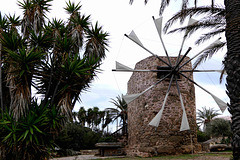
The monks of this remote monastery lived self-sufficiently for centuries. This mill belonged to the monastery.

Toplou Monastery
| 04 May 2025 |
|
|
|
The monastery was founded in the 14th century. It was destroyed and rebuilt several times by pirates and in 1612 by a severe earthquake. Like other Cretan abbeys, Toplou was a refuge for partisans during Ottoman rule. In 1821, Turks massacred 13 monks and 13 lay people.
During the German occupation, Cretan resistance fighters operated a radio station here. The Nazis executed the abbot and two monks in 1944
The monastery is famous for its icon museum, which has sadly been closed

Toplou Monastery
| 04 May 2025 |
|
|
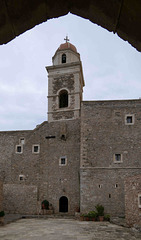
The monastery was founded in the 14th century. It was destroyed and rebuilt several times by pirates and in 1612 by a severe earthquake. Like other Cretan abbeys, Toplou was a refuge for partisans during Ottoman rule. In 1821, Turks massacred 13 monks and 13 lay people.
During the German occupation, Cretan resistance fighters operated a radio station here. The Nazis executed the abbot and two monks in 1944
The monastery is famous for its icon museum, which has sadly been closed
Toplou Monastery
| 03 May 2025 |
|
|
The monastery was founded in the 14th century. It was destroyed and rebuilt several times by pirates and in 1612 by a severe earthquake. Like other Cretan abbeys, Toplou was a refuge for partisans during Ottoman rule. In 1821, Turks massacred 13 monks and 13 lay people.
During the German occupation, Cretan resistance fighters operated a radio station here. The Nazis executed the abbot and two monks in 1944
The monastery is famous for its icon museum, which has sadly been closed
Brauweiler - St. Nikolaus
| 09 Aug 2022 |
|
|
Brauweiler, now a district of Pulheim, borders Cologne to the east, but is still largely surrounded by agriculture.
In the "Fundatio monasterii Brunwilarensis", a source of the late 11th century, the construction of a wooden chapel in which relics of Saint Medardus from Soissons were kept is mentioned. Count-Palatine Hermann I had a new chapel built of stone and rebuilt a destroyed manor nearby.
Around 991, the wedding between Count Palatine Ezzo-Ehrenfried and Mathilde, a daughter of Emperor Otto II and Theophanu, took place here. On this occasion, Ezzo transferred the estate.
During a pilgrimage to Rome before 1024, Ezzo and Mathilde received relics of St. Nicholas and a cross from the Pope for the foundation of a monastery.
The abbot Poppo of Stablo was entrusted with the foundation of the monastery. In 1024 seven monks arrived at Brauweiler and began the construction of the monastery. The church and monastery were consecrated in 1028. From 1065 until his death in 1091, Wolfhelm of Brauweiler, later Saint Wolfhelm, was abbot here.
A period of prosperity was brought about by the introduction of the Bursfeld Reform in 1467. The abbey last built the prelate's wing from 1780 to 1785. After the French occupation of the Left Bank of the Rhine, the abbey was dissolved in 1802 in the course of secularization. The abbey church became a parish church, while the buildings were used as a labor institution from 1815 by the Prussian government. Since 1920, the "Bewahrungshaus" and "Zellengebäude" were rented to the Cologne justice administration.
These two buildings served as a concentration camp for one year starting in 1933, then as a prison for the Cologne Gestapo until 1945. Over 1000 people were imprisoned here by the Nazis during the entire period.
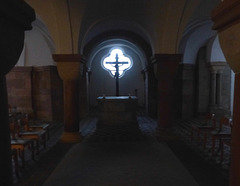
St. Nikolaus, the former abbey church, was built between 1136 and 1240.
The Romanesque crypt is the oldest part of the building.
Brauweiler - St. Nikolaus
| 09 Aug 2022 |
|
|
Brauweiler, now a district of Pulheim, borders Cologne to the east, but is still largely surrounded by agriculture.
In the "Fundatio monasterii Brunwilarensis", a source of the late 11th century, the construction of a wooden chapel in which relics of Saint Medardus from Soissons were kept is mentioned. Count-Palatine Hermann I had a new chapel built of stone and rebuilt a destroyed manor nearby.
Around 991, the wedding between Count Palatine Ezzo-Ehrenfried and Mathilde, a daughter of Emperor Otto II and Theophanu, took place here. On this occasion, Ezzo transferred the estate.
During a pilgrimage to Rome before 1024, Ezzo and Mathilde received relics of St. Nicholas and a cross from the Pope for the foundation of a monastery.
The abbot Poppo of Stablo was entrusted with the foundation of the monastery. In 1024 seven monks arrived at Brauweiler and began the construction of the monastery. The church and monastery were consecrated in 1028. From 1065 until his death in 1091, Wolfhelm of Brauweiler, later Saint Wolfhelm, was abbot here.
A period of prosperity was brought about by the introduction of the Bursfeld Reform in 1467. The abbey last built the prelate's wing from 1780 to 1785. After the French occupation of the Left Bank of the Rhine, the abbey was dissolved in 1802 in the course of secularization. The abbey church became a parish church, while the buildings were used as a labor institution from 1815 by the Prussian government. Since 1920, the "Bewahrungshaus" and "Zellengebäude" were rented to the Cologne justice administration.
These two buildings served as a concentration camp for one year starting in 1933, then as a prison for the Cologne Gestapo until 1945. Over 1000 people were imprisoned here by the Nazis during the entire period.
St. Nikolaus, the former abbey church, was built between 1136 and 1240.
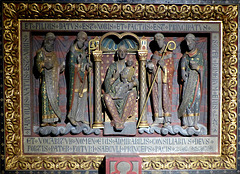
The surrounding text is from the Bible (Isaiah 09.06)
Parvulus natus est nobis,
et Filius datus est nobis;
et factus est principatus super humerum eius,
et vocabitur Admirabilis, Deus, Fortis.
A small one was born to us
and the Son was given to us;
and the principality became upon his shoulder,
and he will be called Wonderful, God, Strong.
Brauweiler - St. Nikolaus
| 09 Aug 2022 |
|
|
Brauweiler, now a district of Pulheim, borders Cologne to the east, but is still largely surrounded by agriculture.
In the "Fundatio monasterii Brunwilarensis", a source of the late 11th century, the construction of a wooden chapel in which relics of Saint Medardus from Soissons were kept is mentioned. Count-Palatine Hermann I had a new chapel built of stone and rebuilt a destroyed manor nearby.
Around 991, the wedding between Count Palatine Ezzo-Ehrenfried and Mathilde, a daughter of Emperor Otto II and Theophanu, took place here. On this occasion, Ezzo transferred the estate.
During a pilgrimage to Rome before 1024, Ezzo and Mathilde received relics of St. Nicholas and a cross from the Pope for the foundation of a monastery.
The abbot Poppo of Stablo was entrusted with the foundation of the monastery. In 1024 seven monks arrived at Brauweiler and began the construction of the monastery. The church and monastery were consecrated in 1028. From 1065 until his death in 1091, Wolfhelm of Brauweiler, later Saint Wolfhelm, was abbot here.
A period of prosperity was brought about by the introduction of the Bursfeld Reform in 1467. The abbey last built the prelate's wing from 1780 to 1785. After the French occupation of the Left Bank of the Rhine, the abbey was dissolved in 1802 in the course of secularization. The abbey church became a parish church, while the buildings were used as a labor institution from 1815 by the Prussian government. Since 1920, the "Bewahrungshaus" and "Zellengebäude" were rented to the Cologne justice administration.
These two buildings served as a concentration camp for one year starting in 1933, then as a prison for the Cologne Gestapo until 1945. Over 1000 people were imprisoned here by the Nazis during the entire period.
St. Nikolaus, the former abbey church, was built between 1136 and 1240.
Some of the romanesque works show french influences.
Brauweiler - St. Nikolaus
| 09 Aug 2022 |
|
Brauweiler, now a district of Pulheim, borders Cologne to the east, but is still largely surrounded by agriculture.
In the "Fundatio monasterii Brunwilarensis", a source of the late 11th century, the construction of a wooden chapel in which relics of Saint Medardus from Soissons were kept is mentioned. Count-Palatine Hermann I had a new chapel built of stone and rebuilt a destroyed manor nearby.
Around 991, the wedding between Count Palatine Ezzo-Ehrenfried and Mathilde, a daughter of Emperor Otto II and Theophanu, took place here. On this occasion, Ezzo transferred the estate.
During a pilgrimage to Rome before 1024, Ezzo and Mathilde received relics of St. Nicholas and a cross from the Pope for the foundation of a monastery.
The abbot Poppo of Stablo was entrusted with the foundation of the monastery. In 1024 seven monks arrived at Brauweiler and began the construction of the monastery. The church and monastery were consecrated in 1028. From 1065 until his death in 1091, Wolfhelm of Brauweiler, later Saint Wolfhelm, was abbot here.
A period of prosperity was brought about by the introduction of the Bursfeld Reform in 1467. The abbey last built the prelate's wing from 1780 to 1785. After the French occupation of the Left Bank of the Rhine, the abbey was dissolved in 1802 in the course of secularization. The abbey church became a parish church, while the buildings were used as a labor institution from 1815 by the Prussian government. Since 1920, the "Bewahrungshaus" and "Zellengebäude" were rented to the Cologne justice administration.
These two buildings served as a concentration camp for one year starting in 1933, then as a prison for the Cologne Gestapo until 1945. Over 1000 people were imprisoned here by the Nazis during the entire period.
St. Nikolaus, the former abbey church, was built between 1136 and 1240.
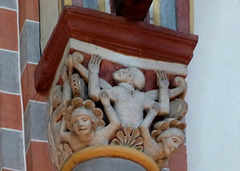
The nave has some nice capitals.
Brauweiler - St. Nikolaus
| 09 Aug 2022 |
|
|
|
Brauweiler, now a district of Pulheim, borders Cologne to the east, but is still largely surrounded by agriculture.
In the "Fundatio monasterii Brunwilarensis", a source of the late 11th century, the construction of a wooden chapel in which relics of Saint Medardus from Soissons were kept is mentioned. Count-Palatine Hermann I had a new chapel built of stone and rebuilt a destroyed manor nearby.
Around 991, the wedding between Count Palatine Ezzo-Ehrenfried and Mathilde, a daughter of Emperor Otto II and Theophanu, took place here. On this occasion, Ezzo transferred the estate.
During a pilgrimage to Rome before 1024, Ezzo and Mathilde received relics of St. Nicholas and a cross from the Pope for the foundation of a monastery.
The abbot Poppo of Stablo was entrusted with the foundation of the monastery. In 1024 seven monks arrived at Brauweiler and began the construction of the monastery. The church and monastery were consecrated in 1028. From 1065 until his death in 1091, Wolfhelm of Brauweiler, later Saint Wolfhelm, was abbot here.
A period of prosperity was brought about by the introduction of the Bursfeld Reform in 1467. The abbey last built the prelate's wing from 1780 to 1785. After the French occupation of the Left Bank of the Rhine, the abbey was dissolved in 1802 in the course of secularization. The abbey church became a parish church, while the buildings were used as a labor institution from 1815 by the Prussian government. Since 1920, the "Bewahrungshaus" and "Zellengebäude" were rented to the Cologne justice administration.
These two buildings served as a concentration camp for one year starting in 1933, then as a prison for the Cologne Gestapo until 1945. Over 1000 people were imprisoned here by the Nazis during the entire period.
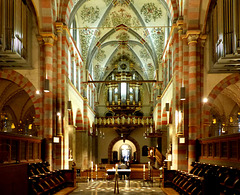
St. Nikolaus, the former abbey church, was built between 1136 and 1240.
Brauweiler - St. Nikolaus
| 09 Aug 2022 |
|
|
Brauweiler, now a district of Pulheim, borders Cologne to the east, but is still largely surrounded by agriculture.
In the "Fundatio monasterii Brunwilarensis", a source of the late 11th century, the construction of a wooden chapel in which relics of Saint Medardus from Soissons were kept is mentioned. Count-Palatine Hermann I had a new chapel built of stone and rebuilt a destroyed manor nearby.
Around 991, the wedding between Count Palatine Ezzo-Ehrenfried and Mathilde, a daughter of Emperor Otto II and Theophanu, took place here. On this occasion, Ezzo transferred the estate.
During a pilgrimage to Rome before 1024, Ezzo and Mathilde received relics of St. Nicholas and a cross from the Pope for the foundation of a monastery.
The abbot Poppo of Stablo was entrusted with the foundation of the monastery. In 1024 seven monks arrived at Brauweiler and began the construction of the monastery. The church and monastery were consecrated in 1028. From 1065 until his death in 1091, Wolfhelm of Brauweiler, later Saint Wolfhelm, was abbot here.
A period of prosperity was brought about by the introduction of the Bursfeld Reform in 1467. The abbey last built the prelate's wing from 1780 to 1785. After the French occupation of the Left Bank of the Rhine, the abbey was dissolved in 1802 in the course of secularization. The abbey church became a parish church, while the buildings were used as a labor institution from 1815 by the Prussian government. Since 1920, the "Bewahrungshaus" and "Zellengebäude" were rented to the Cologne justice administration.
These two buildings served as a concentration camp for one year starting in 1933, then as a prison for the Cologne Gestapo until 1945. Over 1000 people were imprisoned here by the Nazis during the entire period.
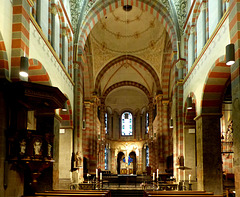
St. Nikolaus, the former abbey church, was built between 1136 and 1240.
Brauweiler - St. Nikolaus
| 09 Aug 2022 |
|
|
Brauweiler, now a district of Pulheim, borders Cologne to the east, but is still largely surrounded by agriculture.
In the "Fundatio monasterii Brunwilarensis", a source of the late 11th century, the construction of a wooden chapel in which relics of Saint Medardus from Soissons were kept is mentioned. Count-Palatine Hermann I had a new chapel built of stone and rebuilt a destroyed manor nearby.
Around 991, the wedding between Count Palatine Ezzo-Ehrenfried and Mathilde, a daughter of Emperor Otto II and Theophanu, took place here. On this occasion, Ezzo transferred the estate.
During a pilgrimage to Rome before 1024, Ezzo and Mathilde received relics of St. Nicholas and a cross from the Pope for the foundation of a monastery.
The abbot Poppo of Stablo was entrusted with the foundation of the monastery. In 1024 seven monks arrived at Brauweiler and began the construction of the monastery. The church and monastery were consecrated in 1028. From 1065 until his death in 1091, Wolfhelm of Brauweiler, later Saint Wolfhelm, was abbot here.
A period of prosperity was brought about by the introduction of the Bursfeld Reform in 1467. The abbey last built the prelate's wing from 1780 to 1785. After the French occupation of the Left Bank of the Rhine, the abbey was dissolved in 1802 in the course of secularization. The abbey church became a parish church, while the buildings were used as a labor institution from 1815 by the Prussian government. Since 1920, the "Bewahrungshaus" and "Zellengebäude" were rented to the Cologne justice administration.
These two buildings served as a concentration camp for one year starting in 1933, then as a prison for the Cologne Gestapo until 1945. Over 1000 people were imprisoned here by the Nazis during the entire period.
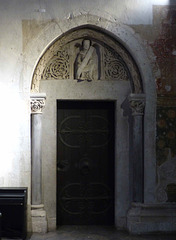
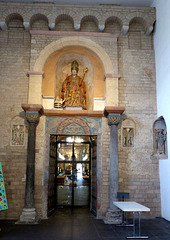
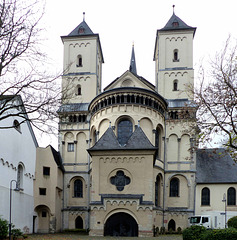
St. Nikolaus, the former abbey church, was built between 1136 and 1240. The impressive westwerk is from around 1140.
Above the archaic Romanesque tympanum stands St. Nicholas. At his feet are three little children, who had been lured by a malicious butcher into his house, where he killed them, placing their remains in a barrel to cure, planning to sell them off as ham. Nicholas saw through the butcher's lies and resurrected the pickled children.
Brauweiler - St. Nikolaus
| 09 Aug 2022 |
|
|
Brauweiler, now a district of Pulheim, borders Cologne to the east, but is still largely surrounded by agriculture.
In the "Fundatio monasterii Brunwilarensis", a source of the late 11th century, the construction of a wooden chapel in which relics of Saint Medardus from Soissons were kept is mentioned. Count-Palatine Hermann I had a new chapel built of stone and rebuilt a destroyed manor nearby.
Around 991, the wedding between Count Palatine Ezzo-Ehrenfried and Mathilde, a daughter of Emperor Otto II and Theophanu, took place here. On this occasion, Ezzo transferred the estate.
During a pilgrimage to Rome before 1024, Ezzo and Mathilde received relics of St. Nicholas and a cross from the Pope for the foundation of a monastery.
The abbot Poppo of Stablo was entrusted with the foundation of the monastery. In 1024 seven monks arrived at Brauweiler and began the construction of the monastery. The church and monastery were consecrated in 1028. From 1065 until his death in 1091, Wolfhelm of Brauweiler, later Saint Wolfhelm, was abbot here.
A period of prosperity was brought about by the introduction of the Bursfeld Reform in 1467. The abbey last built the prelate's wing from 1780 to 1785. After the French occupation of the Left Bank of the Rhine, the abbey was dissolved in 1802 in the course of secularization. The abbey church became a parish church, while the buildings were used as a labor institution from 1815 by the Prussian government. Since 1920, the "Bewahrungshaus" and "Zellengebäude" were rented to the Cologne justice administration.
These two buildings served as a concentration camp for one year starting in 1933, then as a prison for the Cologne Gestapo until 1945. Over 1000 people were imprisoned here by the Nazis during the entire period.
St. Nikolaus, the former abbey church, was built between 1136 and 1240. The impressive westwerk is from around 1140.
The choir was built around 1200, modeled on Groß St. Martin in nearby Cologne.
Brauweiler - St. Nikolaus
| 08 Aug 2022 |
|
|
|
Brauweiler, now a district of Pulheim, borders Cologne to the east but is still largely surrounded by agriculture.
In the "Fundatio monasterii Brunwilarensis", a source of the late 11th century, the construction of a wooden chapel in which relics of Saint Medardus from Soissons were kept is mentioned. Count-Palatine Hermann I had a new chapel built of stone and rebuilt a destroyed manor nearby.
Around 991, the wedding between Count Palatine Ezzo-Ehrenfried and Mathilde, a daughter of Emperor Otto II and Theophanu, took place here. On this occasion, Ezzo transferred the estate.
During a pilgrimage to Rome before 1024, Ezzo and Mathilde received relics and a cross from the Pope for the foundation of a monastery.
The abbot Poppo of Stablo was entrusted with the foundation of the monastery. In 1024 seven monks arrived at Brauweiler and began the construction of the monastery. The church and monastery were consecrated in 1028. From 1065 until he died in 1091, Wolfhelm of Brauweiler, later Saint Wolfhelm, was abbot here.
A period of prosperity was brought about by the introduction of the Bursfeld Reform in 1467. The abbey last built the prelate's wing from 1780 to 1785. After the French occupation of the Left Bank of the Rhine, the abbey was dissolved in 1802 in the course of secularization. The abbey church became a parish church, while the buildings were used as a labor institution from 1815 by the Prussian government. Since 1920, the "Bewahrungshaus" and "Zellengebäude" were rented to the Cologne justice administration.
These two buildings served as a concentration camp for one year starting in 1933, then as a prison for the Cologne Gestapo until 1945. Over 1000 people were imprisoned here by the Nazis during the entire period.
St. Nicholas, the former abbey church, was built between 1136 and 1240. The impressive westwerk is from around 1140.
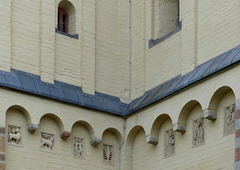
A fries runs along the base of the tower. The signs of the zodiac to the left, holy men to the right.
Brauweiler - St. Nikolaus
| 08 Aug 2022 |
|
|
|
Brauweiler, now a district of Pulheim, borders Cologne to the east, but is still largely surrounded by agriculture.
In the "Fundatio monasterii Brunwilarensis", a source of the late 11th century, the construction of a wooden chapel in which relics of Saint Medardus from Soissons were kept is mentioned. Count-Palatine Hermann I had a new chapel built of stone and rebuilt a destroyed manor nearby.
Around 991, the wedding between Count Palatine Ezzo-Ehrenfried and Mathilde, a daughter of Emperor Otto II and Theophanu, took place here. On this occasion, Ezzo transferred the estate.
During a pilgrimage to Rome before 1024, Ezzo and Mathilde received relics and a cross from the Pope for the foundation of a monastery.
The abbot Poppo of Stablo was entrusted with the foundation of the monastery. In 1024 seven monks arrived at Brauweiler and began the construction of the monastery. The church and monastery were consecrated in 1028. From 1065 until his death in 1091, Wolfhelm of Brauweiler, later Saint Wolfhelm, was abbot here.
A period of prosperity was brought about by the introduction of the Bursfeld Reform in 1467. The abbey last built the prelate's wing from 1780 to 1785. After the French occupation of the Left Bank of the Rhine, the abbey was dissolved in 1802 in the course of secularization. The abbey church became a parish church, while the buildings were used as a labor institution from 1815 by the Prussian government. Since 1920, the "Bewahrungshaus" and "Zellengebäude" were rented to the Cologne justice administration.
These two buildings served as a concentration camp for one year starting in 1933, then as a prison for the Cologne Gestapo until 1945. Over 1000 people were imprisoned here by the Nazis during the entire period.
St. Nicholas, the former abbey church, was built between 1136 and 1240. The impressive westwerk is from around 1140.
Brauweiler - Abtei
| 08 Aug 2022 |
|
|
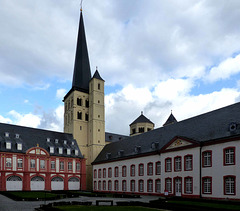
Brauweiler, now a district of Pulheim, borders Cologne to the east but is still largely surrounded by agriculture.
In the "Fundatio monasterii Brunwilarensis", a source of the late 11th century, the construction of a wooden chapel in which relics of Saint Medardus from Soissons were kept is mentioned. Count-Palatine Hermann I had a new chapel built of stone and rebuilt a destroyed manor nearby.
Around 991, the wedding between Count Palatine Ezzo-Ehrenfried and Mathilde, a daughter of Emperor Otto II and Theophanu, took place here. On this occasion, Ezzo transferred the estate.
During a pilgrimage to Rome before 1024, Ezzo and Mathilde received relics and a cross from the Pope for the foundation of a monastery.
The abbot Poppo of Stablo was entrusted with the foundation of the monastery. In 1024 seven monks arrived at Brauweiler and began the construction of the monastery. The church and monastery were consecrated in 1028. From 1065 until he died in 1091, Wolfhelm of Brauweiler, later Saint Wolfhelm, was abbot here.
A period of prosperity was brought about by the introduction of the Bursfeld Reform in 1467. The abbey last built the prelate's wing from 1780 to 1785. After the French occupation of the Left Bank of the Rhine, the abbey was dissolved in 1802 in the course of secularization. The abbey church became a parish church, while the buildings were used as a labor institution from 1815 by the Prussian government. Since 1920, the "Bewahrungshaus" and "Zellengebäude" were rented to the Cologne justice administration.
These two buildings served as a concentration camp for one year starting in 1933, then as a prison for the Cologne Gestapo until 1945. Over 1000 people were imprisoned here by the National Socialists during the entire period.
Pilviškiai - Killing Field
| 12 Dec 2021 |
|
|
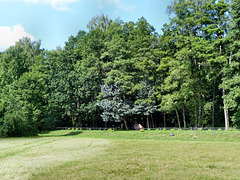
After the German Wehrmacht had occupied the rural municipality of Pilviškiai in 1941 a self-defence unit was formed. Since June 1941 after making public the antisemitic order issued by the Nazis, the Jews were not allowed to walk on the pavement, they could not leave their home later than 8.00 pm and they were not allowed to buy or sell on the market.
At the end of August 1941 summoned the police unit. They were told to arrest the Jews. The policemen and the members of the self-defence unit arrested about 400 Jewish men. Following this was an operation of mass killings. On August 27-29 1941, the Jewish men were conveyed to this place. They were told to excavate two ditches. Nex to them the Jewish men were forced to stand. Prior to murdering, the victims were undressed to underwear, then grouped in small groups by the ditch and killed. The men were out to death by shooting in their back from about 10m distance. The Germans and several members of the self-defence unit comprised the firing squad. The executions were photographed by German officers. According to data from the historical investigation, about 300-350 Jews and several dozen Soviet activists were killed here.
During the Nazi occupation, 190.000 Lithuanian Jews were killed
Jump to top
RSS feed- Martin M. Miles' latest photos with "Nazis" - Photos
- ipernity © 2007-2026
- Help & Contact
|
Club news
|
About ipernity
|
History |
ipernity Club & Prices |
Guide of good conduct
Donate | Group guidelines | Privacy policy | Terms of use | Statutes | In memoria -
Facebook
X
