

Martin M. Miles' photos with the keyword: Asclepius

Epidaurus - Archaeological Museum
| 02 Jul 2026 |
|
|
The small archaeological museum is located at the entrance to the excavation site and displays some artifacts found there.
Statue of Hygeia
wearing a chiton and an himation.
A large snake twists around her shoulder
Ca 160 AD

Epidaurus - Archaeological Museum
| 02 Jul 2026 |
|
|
The small archaeological museum is located at the entrance to the excavation site and displays some artifacts found there.
Left - Portrait of Emperor Hadrian / 117 - 138 AD
Right - Portrait of a bearded man / 3rd c AD

Epidaurus - Archaeological Museum
| 02 Jul 2026 |
|
|
The small archaeological museum is located at the entrance to the excavation site and displays some artifacts found there.

Epidaurus - Sanctuary of Asclepius
| 02 Jul 2026 |
|
|
The first cult site was established here in the 7th century BC, dedicated to the worship of Apollo Maleatas.
From the 5th century BC onwards Asclepius came to stand alongside his mythological divine father, Apollo. As the people of Epidaurus succeeded in promoting their "asclepieion" as Asclepius´ birthplace, it developed into the god's most important sanctuary and amassed great wealth. It was the healing god Asclepius who drew pilgrims and those seeking cures to Epidaurus.
During the Roman period, the complex was supplemented by cisterns, wells, thermae and a building with a courtyard.
In 87 BC, the sanctuary was looted by the Roman general Sulla, who handed over numerous votive offerings and cult objects to his soldiers as pay. However, the sanctuary was rebuilt during the later Roman period. In 395 AD the Goths under Alarich I raided the sanctuary. With the rise of Christianity, the ancient cult sites increasingly lost their significance. The site was "officially" closed in 426 AD.
Epidaurus has been a UNESCO World Heritage Site since 1988.
The Ancient Theatre is the best conserved part of the sanctuary. According to Pausanias, the ancient theatre was constructed at the end of the 4th century BC by the architect Polykleitos. At a maximum capacity of 13,000 to 14,000 spectators, the theatre hosted music, singing and dramatic games that were included in the worship of Asclepius. It was also used as a means to heal patients, since there was a belief that the observation of dramatic shows had positive effects on mental and physical health.
The theater boasts excellent acoustics, allowing every word to be understood even from the uppermost rows. A cylindrical stone slab is set into the floor at the center of the stage; the sound of a coin dropped onto this slab can be heard even from the back rows.
The first excavation of the theatre began in 1881. With the work meanwhile done, the theatre has been recovered (except the stage building) almost entirely in its original form.

Epidaurus - Sanctuary of Asclepius
| 02 Jul 2026 |
|
|
The first cult site was established here in the 7th century BC, dedicated to the worship of Apollo Maleatas.
From the 5th century BC onwards Asclepius came to stand alongside his mythological divine father, Apollo. As the people of Epidaurus succeeded in promoting their "asclepieion" as Asclepius´ birthplace, it developed into the god's most important sanctuary and amassed great wealth. It was the healing god Asclepius who drew pilgrims and those seeking cures to Epidaurus.
During the Roman period, the complex was supplemented by cisterns, wells, thermae and a building with a courtyard.
In 87 BC, the sanctuary was looted by the Roman general Sulla, who handed over numerous votive offerings and cult objects to his soldiers as pay. However, the sanctuary was rebuilt during the later Roman period. In 395 AD the Goths under Alarich I raided the sanctuary. With the rise of Christianity, the ancient cult sites increasingly lost their significance. The site was "officially" closed in 426 AD.
Epidaurus has been a UNESCO World Heritage Site since 1988.
The Ancient Theatre is the best conserved part of the sanctuary. According to Pausanias, the ancient theatre was constructed at the end of the 4th century BC by the architect Polykleitos. At a maximum capacity of 13,000 to 14,000 spectators, the theatre hosted music, singing and dramatic games that were included in the worship of Asclepius. It was also used as a means to heal patients, since there was a belief that the observation of dramatic shows had positive effects on mental and physical health.
The theater boasts excellent acoustics, allowing every word to be understood even from the uppermost rows. A cylindrical stone slab is set into the floor at the center of the stage; the sound of a coin dropped onto this slab can be heard even from the back rows.
The first excavation of the theatre began in 1881. With the work meanwhile done, the theatre has been recovered (except the stage building) almost entirely in its original form.

Epidaurus - Sanctuary of Asclepius
| 01 Jul 2026 |
|
|
The first cult site was established here in the 7th century BC, dedicated to the worship of Apollo Maleatas.
From the 5th century BC onwards Asclepius came to stand alongside his mythological divine father, Apollo. As the people of Epidaurus succeeded in promoting their "asclepieion" as Asclepius´ birthplace, it developed into the god's most important sanctuary and amassed great wealth. It was the healing god Asclepius who drew pilgrims and those seeking cures to Epidaurus.
During the Roman period, the complex was supplemented by cisterns, wells, thermae and a building with a courtyard.
In 87 BC, the sanctuary was looted by the Roman general Sulla, who handed over numerous votive offerings and cult objects to his soldiers as pay. However, the sanctuary was rebuilt during the later Roman period. In 395 AD the Goths under Alarich I raided the sanctuary. With the rise of Christianity, the ancient cult sites increasingly lost their significance. The site was "officially" closed in 426 AD.
Epidaurus has been a UNESCO World Heritage Site since 1988.
The Asclepieia festival, held every four years, was an important religious and athletic event. There were Panhellenic games, similar to those held at Olympia or Delphi. Originally, they consisted purely of athletic competitions, but cultural disciplines were added later. The athletic contest took place in this stadium.

Epidaurus - Sanctuary of Asclepius
| 01 Jul 2026 |
|
|
The first cult site was established here in the 7th century BC, dedicated to the worship of Apollo Maleatas.
From the 5th century BC onwards Asclepius came to stand alongside his mythological divine father, Apollo. As the people of Epidaurus succeeded in promoting their "asclepieion" as Asclepius´ birthplace, it developed into the god's most important sanctuary and amassed great wealth. It was the healing god Asclepius who drew pilgrims and those seeking cures to Epidaurus.
During the Roman period, the complex was supplemented by cisterns, wells, thermae and a building with a courtyard.
In 87 BC, the sanctuary was looted by the Roman general Sulla, who handed over numerous votive offerings and cult objects to his soldiers as pay. However, the sanctuary was rebuilt during the later Roman period. In 395 AD the Goths under Alarich I raided the sanctuary. With the rise of Christianity, the ancient cult sites increasingly lost their significance. The site was "officially" closed in 426 AD.
Epidaurus has been a UNESCO World Heritage Site since 1988.
Tholos (also known as Thymele) is a circular building that was surrounded on the outside by 26 Doric columns. Inside, it featured a ring of 14 Corinthian marble columns. The Tholos was built by Polykleitos between 365 and 335 BC. Efforts to restore and partially reconstruct the Tholos building have been underway for about 20 years.

Epidaurus - Sanctuary of Asclepius
| 01 Jul 2026 |
|
|
The first cult site was established here in the 7th century BC, dedicated to the worship of Apollo Maleatas.
From the 5th century BC onwards Asclepius came to stand alongside his mythological divine father, Apollo. As the people of Epidaurus succeeded in promoting their "asclepieion" as Asclepius´ birthplace, it developed into the god's most important sanctuary and amassed great wealth. It was the healing god Asclepius who drew pilgrims and those seeking cures to Epidaurus.
During the Roman period, the complex was supplemented by cisterns, wells, thermae and a building with a courtyard.
In 87 BC, the sanctuary was looted by the Roman general Sulla, who handed over numerous votive offerings and cult objects to his soldiers as pay. However, the sanctuary was rebuilt during the later Roman period.
In 395 AD the Goths under Alarich I raided the sanctuary. With the rise of Christianity, the ancient cult sites increasingly lost their significance. The site was "officially" closed in 426 AD.
Epidaurus has been a UNESCO World Heritage Site since 1988.

Epidaurus - Sanctuary of Asclepius
| 01 Jul 2026 |
|
|
The first cult site was established here in the 7th century BC, dedicated to the worship of Apollo Maleatas.
From the 5th century BC onwards Asclepius came to stand alongside his mythological divine father, Apollo. As the people of Epidaurus succeeded in promoting their "asclepieion" as Asclepius´ birthplace, it developed into the god's most important sanctuary and amassed great wealth. It was the healing god Asclepius who drew pilgrims and those seeking cures to Epidaurus.
During the Roman period, the complex was supplemented by cisterns, wells, thermae and a building with a courtyard. In 87 BC, the sanctuary was looted by the Roman general Sulla, who handed over numerous votive offerings and cult objects to his soldiers as pay. However, the sanctuary was rebuilt during the later Roman period. In 395 AD the Goths under Alarich I raided the sanctuary. With the rise of Christianity, the ancient cult sites increasingly lost their significance. The site was "officially" closed in 426 AD.
Epidaurus has been a UNESCO World Heritage Site since 1988.

Epidaurus - Sanctuary of Asclepius
| 01 Jul 2026 |
|
|
The first cult site was established here in the 7th century BC, dedicated to the worship of Apollo Maleatas.
From the 5th century BC onwards Asclepius came to stand alongside his mythological divine father, Apollo. As the people of Epidaurus succeeded in promoting their "asclepieion" as Asclepius´ birthplace, it developed into the god's most important sanctuary and amassed great wealth. It was the healing god Asclepius who drew pilgrims and those seeking cures to Epidaurus.
During the Roman period, the complex was supplemented by cisterns, wells, thermae and a building with a courtyard.
In 87 BC, the sanctuary was looted by the Roman general Sulla, who handed over numerous votive offerings and cult objects to his soldiers as pay. However, the sanctuary was rebuilt during the later Roman period.
In 395 AD the Goths under Alarich I raided the sanctuary. With the rise of Christianity, the ancient cult sites increasingly lost their significance. The site was "officially" closed in 426 AD.
Epidaurus has been a UNESCO World Heritage Site since 1988.

Epidaurus - Sanctuary of Asclepius
| 01 Jul 2026 |
|
|
The first cult site was established here in the 7th century BC, dedicated to the worship of Apollo Maleatas.
From the 5th century BC onwards Asclepius came to stand alongside his mythological divine father, Apollo. As the people of Epidaurus succeeded in promoting their "asclepieion" as Asclepius´ birthplace, it developed into the god's most important sanctuary and amassed great wealth. It was the healing god Asclepius who drew pilgrims and those seeking cures to Epidaurus.
During the Roman period, the complex was supplemented by cisterns, wells, thermae and a building with a courtyard.
In 87 BC, the sanctuary was looted by the Roman general Sulla, who handed over numerous votive offerings and cult objects to his soldiers as pay. However, the sanctuary was rebuilt during the later Roman period.
In 395 AD the Goths under Alarich I raided the sanctuary. With the rise of Christianity, the ancient cult sites increasingly lost their significance. The site was "officially" closed in 426 AD.
Epidaurus has been a UNESCO World Heritage Site since 1988.
Butrint
| 30 Oct 2024 |
|
|
Butrint is a ruined city located around 20 kilometers south of Saranda. It stretches across a peninsula that is surrounded to the north and east by Lake Butrint and by a canal, which flows into the Ionian Sea after around two and a half kilometers.
Numerous cultures have left their marks on Butrint.
Butrint was originally one of the main towns of the Chaonians, an Epirote tribe. The oldest finds date from the 10th to the 8th century BC. Excavations uncovered pottery from the 7th century BC. Ceramics from the 6th century BC from Corinth and Attica have also been found. A fortification has existed on the Acropolis since the 6th century BC.
In the following centuries Butrint was largely Hellenized linguistically and culturally. It was one of the largest cities in the region at this time and had several magnificent buildings.
In 228 BC, Butrint became a Roman protectorate and was was part of the part of the province of Macedonia since 146 BC. In 48 BC, Gaius Julius Caesar visited the city and declared it a veterans' colony. Since there was resistance to this, which was discussed (by Cicero) in the Roman Senate, the city only received a small number of colonists. But shortly after the Battle of Actium (31 BC), Emperor Augustus renewed his plans to make Butrint a veterans' colony. The city doubled in size and experienced its heyday in the next few decades. The city was named Colonia Iulia (or Augusta) Buthrotum in honor of the emperor and minted coins as such.
With the Christianization, Butrint became the seat of a bishop in the 4th century. Butrint survived the raids during the Migration Period unscathed due to its protected location on a peninsula.
At the end of the 6th century Butrint was one of the few towns in Epirus that retained its status as an episcopal see. Colonization by the Byzantine authorities seems to have taken place in the 9th and 10th centuries. It remained an outpost of the Byzantine empire fending off assaults from the Normans until 1204 when following the Fourth Crusade, the Byzantine Empire fragmented. In the following centuries, the area was a site of constant conflicts.
In 1267, Charles of Anjou took control of Butrint and Corfu. In 1274, Byzantine forces re-entered Butrint. The Charles of Anjou and the orthodox Nikephoros allied and drove the Byzantines from the area in 1278.
From 1284 the Angevin control was limited to Butrint and nearby Corfu. The Republic of Venice purchased the area including Corfu from the Angevins in 1386, however, the Venetian merchants were principally interested in Corfu and Butrint declined.
By 1572 the wars between Venice and the Ottoman Empire had left Butrinto ruinous and the acropolis was abandoned.
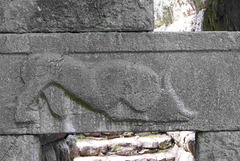
The so-called "Lion Gate" takes its name from the relief above the entrance, which shows a lion devouring the head of a bull. It is one of six entrances to the city.
The lion relief was not part of the original wall, but was added here in the 5th or 6th century AD to make the gate smaller and easier to defend. The relief comes probably from a temple building and could date as early as the 6th century BC.
The relief

Butrint
| 30 Oct 2024 |
|
Butrint is a ruined city located around 20 kilometers south of Saranda. It stretches across a peninsula that is surrounded to the north and east by Lake Butrint and by a canal, which flows into the Ionian Sea after around two and a half kilometers.
Numerous cultures have left their marks on Butrint.
Butrint was originally one of the main towns of the Chaonians, an Epirote tribe. The oldest finds date from the 10th to the 8th century BC. Excavations uncovered pottery from the 7th century BC. Ceramics from the 6th century BC from Corinth and Attica have also been found. A fortification has existed on the Acropolis since the 6th century BC.
In the following centuries Butrint was largely Hellenized linguistically and culturally. It was one of the largest cities in the region at this time and had several magnificent buildings.
In 228 BC, Butrint became a Roman protectorate and was was part of the part of the province of Macedonia since 146 BC. In 48 BC, Gaius Julius Caesar visited the city and declared it a veterans' colony. Since there was resistance to this, which was discussed (by Cicero) in the Roman Senate, the city only received a small number of colonists. But shortly after the Battle of Actium (31 BC), Emperor Augustus renewed his plans to make Butrint a veterans' colony. The city doubled in size and experienced its heyday in the next few decades. The city was named Colonia Iulia (or Augusta) Buthrotum in honor of the emperor and minted coins as such.
With the Christianization, Butrint became the seat of a bishop in the 4th century. Butrint survived the raids during the Migration Period unscathed due to its protected location on a peninsula.
At the end of the 6th century Butrint was one of the few towns in Epirus that retained its status as an episcopal see. Colonization by the Byzantine authorities seems to have taken place in the 9th and 10th centuries. It remained an outpost of the Byzantine empire fending off assaults from the Normans until 1204 when following the Fourth Crusade, the Byzantine Empire fragmented. In the following centuries, the area was a site of constant conflicts.
In 1267, Charles of Anjou took control of Butrint and Corfu. In 1274, Byzantine forces re-entered Butrint. The Charles of Anjou and the orthodox Nikephoros allied and drove the Byzantines from the area in 1278.
From 1284 the Angevin control was limited to Butrint and nearby Corfu. The Republic of Venice purchased the area including Corfu from the Angevins in 1386, however, the Venetian merchants were principally interested in Corfu and Butrint declined.
By 1572 the wars between Venice and the Ottoman Empire had left Butrinto ruinous and the acropolis was abandoned.
The so-called "Lion Gate" takes its name from the relief above the entrance, which shows a lion devouring the head of a bull. It is one of six entrances to the city.
The lion relief was not part of the original wall, but was added here in the 5th or 6th century AD to make the gate smaller and easier to defend. The relief comes probably from a temple building and could date as early as the 6th century BC.
Butrint
| 30 Oct 2024 |
|
Butrint is a ruined city located around 20 kilometers south of Saranda. It stretches across a peninsula that is surrounded to the north and east by Lake Butrint and by a canal, which flows into the Ionian Sea after around two and a half kilometers.
Numerous cultures have left their marks on Butrint.
Butrint was originally one of the main towns of the Chaonians, an Epirote tribe. The oldest finds date from the 10th to the 8th century BC. Excavations uncovered pottery from the 7th century BC. Ceramics from the 6th century BC from Corinth and Attica have also been found. A fortification has existed on the Acropolis since the 6th century BC.
In the following centuries Butrint was largely Hellenized linguistically and culturally. It was one of the largest cities in the region at this time and had several magnificent buildings.
In 228 BC, Butrint became a Roman protectorate and was was part of the part of the province of Macedonia since 146 BC. In 48 BC, Gaius Julius Caesar visited the city and declared it a veterans' colony. Since there was resistance to this, which was discussed (by Cicero) in the Roman Senate, the city only received a small number of colonists. But shortly after the Battle of Actium (31 BC), Emperor Augustus renewed his plans to make Butrint a veterans' colony. The city doubled in size and experienced its heyday in the next few decades. The city was named Colonia Iulia (or Augusta) Buthrotum in honor of the emperor and minted coins as such.
With the Christianization, Butrint became the seat of a bishop in the 4th century. Butrint survived the raids during the Migration Period unscathed due to its protected location on a peninsula.
At the end of the 6th century Butrint was one of the few towns in Epirus that retained its status as an episcopal see. Colonization by the Byzantine authorities seems to have taken place in the 9th and 10th centuries. It remained an outpost of the Byzantine empire fending off assaults from the Normans until 1204 when following the Fourth Crusade, the Byzantine Empire fragmented. In the following centuries, the area was a site of constant conflicts.
In 1267, Charles of Anjou took control of Butrint and Corfu. In 1274, Byzantine forces re-entered Butrint. The Charles of Anjou and the orthodox Nikephoros allied and drove the Byzantines from the area in 1278.
From 1284 the Angevin control was limited to Butrint and nearby Corfu. The Republic of Venice purchased the area including Corfu from the Angevins in 1386, however, the Venetian merchants were principally interested in Corfu and Butrint declined.
By 1572 the wars between Venice and the Ottoman Empire had left Butrinto ruinous and the acropolis was abandoned.
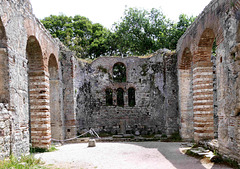
The "Grand Basilica" was built in the early 6th century together with the baptistery. It was the seat of a bishop until the 16th century, when he moved to Glyki. The basilica consisted of a central nave with side aisles, a transept and the apse. The entire floor was decorated with mosaics. The basilica was rebuilt by Charles I of Naples in 1267.
Butrint
| 30 Oct 2024 |
|
Butrint is a ruined city located around 20 kilometers south of Saranda. It stretches across a peninsula that is surrounded to the north and east by Lake Butrint and by a canal, which flows into the Ionian Sea after around two and a half kilometers.
Numerous cultures have left their marks on Butrint.
Butrint was originally one of the main towns of the Chaonians, an Epirote tribe. The oldest finds date from the 10th to the 8th century BC. Excavations uncovered pottery from the 7th century BC. Ceramics from the 6th century BC from Corinth and Attica have also been found. A fortification has existed on the Acropolis since the 6th century BC.
In the following centuries Butrint was largely Hellenized linguistically and culturally. It was one of the largest cities in the region at this time and had several magnificent buildings.
In 228 BC, Butrint became a Roman protectorate and was was part of the part of the province of Macedonia since 146 BC. In 48 BC, Gaius Julius Caesar visited the city and declared it a veterans' colony. Since there was resistance to this, which was discussed (by Cicero) in the Roman Senate, the city only received a small number of colonists. But shortly after the Battle of Actium (31 BC), Emperor Augustus renewed his plans to make Butrint a veterans' colony. The city doubled in size and experienced its heyday in the next few decades. The city was named Colonia Iulia (or Augusta) Buthrotum in honor of the emperor and minted coins as such.
With the Christianization, Butrint became the seat of a bishop in the 4th century. Butrint survived the raids during the Migration Period unscathed due to its protected location on a peninsula.
At the end of the 6th century Butrint was one of the few towns in Epirus that retained its status as an episcopal see. Colonization by the Byzantine authorities seems to have taken place in the 9th and 10th centuries. It remained an outpost of the Byzantine empire fending off assaults from the Normans until 1204 when following the Fourth Crusade, the Byzantine Empire fragmented. In the following centuries, the area was a site of constant conflicts.
In 1267, Charles of Anjou took control of Butrint and Corfu. In 1274, Byzantine forces re-entered Butrint. The Charles of Anjou and the orthodox Nikephoros allied and drove the Byzantines from the area in 1278.
From 1284 the Angevin control was limited to Butrint and nearby Corfu. The Republic of Venice purchased the area including Corfu from the Angevins in 1386, however, the Venetian merchants were principally interested in Corfu and Butrint declined.
By 1572 the wars between Venice and the Ottoman Empire had left Butrinto ruinous and the acropolis was abandoned.
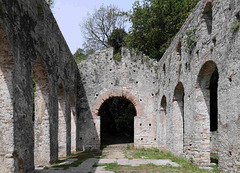
The "Grand Basilica" was built in the early 6th century together with the baptistery. It was the seat of a bishop until the 16th century, when he moved to Glyki. The basilica consisted of a central nave with side aisles, a transept and the apse. The entire floor was decorated with mosaics. The basilica was rebuilt by Charles I of Naples in 1267.
Butrint
| 30 Oct 2024 |
|
Butrint is a ruined city located around 20 kilometers south of Saranda. It stretches across a peninsula that is surrounded to the north and east by Lake Butrint and by a canal, which flows into the Ionian Sea after around two and a half kilometers.
Numerous cultures have left their marks on Butrint.
Butrint was originally one of the main towns of the Chaonians, an Epirote tribe. The oldest finds date from the 10th to the 8th century BC. Excavations uncovered pottery from the 7th century BC. Ceramics from the 6th century BC from Corinth and Attica have also been found. A fortification has existed on the Acropolis since the 6th century BC.
In the following centuries Butrint was largely Hellenized linguistically and culturally. It was one of the largest cities in the region at this time and had several magnificent buildings.
In 228 BC, Butrint became a Roman protectorate and was was part of the part of the province of Macedonia since 146 BC. In 48 BC, Gaius Julius Caesar visited the city and declared it a veterans' colony. Since there was resistance to this, which was discussed (by Cicero) in the Roman Senate, the city only received a small number of colonists. But shortly after the Battle of Actium (31 BC), Emperor Augustus renewed his plans to make Butrint a veterans' colony. The city doubled in size and experienced its heyday in the next few decades. The city was named Colonia Iulia (or Augusta) Buthrotum in honor of the emperor and minted coins as such.
With the Christianization, Butrint became the seat of a bishop in the 4th century. Butrint survived the raids during the Migration Period unscathed due to its protected location on a peninsula.
At the end of the 6th century Butrint was one of the few towns in Epirus that retained its status as an episcopal see. Colonization by the Byzantine authorities seems to have taken place in the 9th and 10th centuries. It remained an outpost of the Byzantine empire fending off assaults from the Normans until 1204 when following the Fourth Crusade, the Byzantine Empire fragmented. In the following centuries, the area was a site of constant conflicts.
In 1267, Charles of Anjou took control of Butrint and Corfu. In 1274, Byzantine forces re-entered Butrint. The Charles of Anjou and the orthodox Nikephoros allied and drove the Byzantines from the area in 1278.
From 1284 the Angevin control was limited to Butrint and nearby Corfu. The Republic of Venice purchased the area including Corfu from the Angevins in 1386, however, the Venetian merchants were principally interested in Corfu and Butrint declined.
By 1572 the wars between Venice and the Ottoman Empire had left Butrinto ruinous and the acropolis was abandoned.
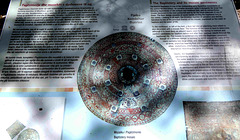
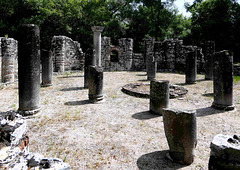
The round structure of the antique baptistery, measuring 14.5 meters in diameter, was built within space that was part of a Roman bathhouse.
The cross-shaped font, the baptistry's central feature, has two interior steps, allowing those about to be baptized to step down into the basin. Two concentric colonnades once supported a wooden roof. Made from Egyptian granite, the columns stood on a variety of repurposed bases. The wall's interior also featured 24 half-columns and was covered with plaster and painted. A low bench ran around the foot of the interior wall.
The circular baptistery is known for its well-preserved mosaic floor. However, since it is not covered, it is covered with sand and therefore not visible to tourists. However, there is at least one photo that shows what is under the sand.
Butrint
| 30 Oct 2024 |
|
Butrint is a ruined city located around 20 kilometers south of Saranda. It stretches across a peninsula that is surrounded to the north and east by Lake Butrint and by a canal, which flows into the Ionian Sea after around two and a half kilometers.
Numerous cultures have left their marks on Butrint.
Butrint was originally one of the main towns of the Chaonians, an Epirote tribe. The oldest finds date from the 10th to the 8th century BC. Excavations uncovered pottery from the 7th century BC. Ceramics from the 6th century BC from Corinth and Attica have also been found. A fortification has existed on the Acropolis since the 6th century BC.
In the following centuries Butrint was largely Hellenized linguistically and culturally. It was one of the largest cities in the region at this time and had several magnificent buildings.
In 228 BC, Butrint became a Roman protectorate and was was part of the part of the province of Macedonia since 146 BC. In 48 BC, Gaius Julius Caesar visited the city and declared it a veterans' colony. Since there was resistance to this, which was discussed (by Cicero) in the Roman Senate, the city only received a small number of colonists. But shortly after the Battle of Actium (31 BC), Emperor Augustus renewed his plans to make Butrint a veterans' colony. The city doubled in size and experienced its heyday in the next few decades. The city was named Colonia Iulia (or Augusta) Buthrotum in honor of the emperor and minted coins as such.
With the Christianization, Butrint became the seat of a bishop in the 4th century. Butrint survived the raids during the Migration Period unscathed due to its protected location on a peninsula.
At the end of the 6th century Butrint was one of the few towns in Epirus that retained its status as an episcopal see. Colonization by the Byzantine authorities seems to have taken place in the 9th and 10th centuries. It remained an outpost of the Byzantine empire fending off assaults from the Normans until 1204 when following the Fourth Crusade, the Byzantine Empire fragmented. In the following centuries, the area was a site of constant conflicts.
In 1267, Charles of Anjou took control of Butrint and Corfu. In 1274, Byzantine forces re-entered Butrint. The Charles of Anjou and the orthodox Nikephoros allied and drove the Byzantines from the area in 1278.
From 1284 the Angevin control was limited to Butrint and nearby Corfu. The Republic of Venice purchased the area including Corfu from the Angevins in 1386, however, the Venetian merchants were principally interested in Corfu and Butrint declined.
By 1572 the wars between Venice and the Ottoman Empire had left Butrinto ruinous and the acropolis was abandoned.
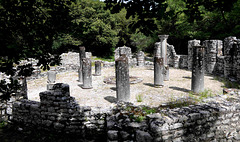
The round structure of the antique baptistery, measuring 14.5 meters in diameter, was built within space that was part of a Roman bathhouse.
The cross-shaped font, the baptistry's central feature, has two interior steps, allowing those about to be baptized to step down into the basin. Two concentric colonnades once supported a wooden roof. Made from Egyptian granite, the columns stood on a variety of repurposed bases. The wall's interior also featured 24 half-columns and was covered with plaster and painted. A low bench ran around the foot of the interior wall.
The circular baptistery is known for its well-preserved mosaic pavement, but as it is not protected by a roof is covered with sand and so not visible for the tourists.
Butrint
| 30 Oct 2024 |
|
|
Butrint is a ruined city located around 20 kilometers south of Saranda. It stretches across a peninsula that is surrounded to the north and east by Lake Butrint and by a canal, which flows into the Ionian Sea after around two and a half kilometers.
Numerous cultures have left their marks on Butrint.
Butrint was originally one of the main towns of the Chaonians, an Epirote tribe. The oldest finds date from the 10th to the 8th century BC. Excavations uncovered pottery from the 7th century BC. Ceramics from the 6th century BC from Corinth and Attica have also been found. A fortification has existed on the Acropolis since the 6th century BC.
In the following centuries Butrint was largely Hellenized linguistically and culturally. It was one of the largest cities in the region at this time and had several magnificent buildings.
In 228 BC, Butrint became a Roman protectorate and was was part of the part of the province of Macedonia since 146 BC. In 48 BC, Gaius Julius Caesar visited the city and declared it a veterans' colony. Since there was resistance to this, which was discussed (by Cicero) in the Roman Senate, the city only received a small number of colonists. But shortly after the Battle of Actium (31 BC), Emperor Augustus renewed his plans to make Butrint a veterans' colony. The city doubled in size and experienced its heyday in the next few decades. The city was named Colonia Iulia (or Augusta) Buthrotum in honor of the emperor and minted coins as such.
With the Christianization, Butrint became the seat of a bishop in the 4th century. Butrint survived the raids during the Migration Period unscathed due to its protected location on a peninsula.
At the end of the 6th century Butrint was one of the few towns in Epirus that retained its status as an episcopal see. Colonization by the Byzantine authorities seems to have taken place in the 9th and 10th centuries. It remained an outpost of the Byzantine empire fending off assaults from the Normans until 1204 when following the Fourth Crusade, the Byzantine Empire fragmented. In the following centuries, the area was a site of constant conflicts.
In 1267, Charles of Anjou took control of Butrint and Corfu. In 1274, Byzantine forces re-entered Butrint. The Charles of Anjou and the orthodox Nikephoros allied and drove the Byzantines from the area in 1278.
From 1284 the Angevin control was limited to Butrint and nearby Corfu. The Republic of Venice purchased the area including Corfu from the Angevins in 1386, however, the Venetian merchants were principally interested in Corfu and Butrint declined.
By 1572 the wars between Venice and the Ottoman Empire had left Butrinto ruinous and the acropolis was abandoned.
The round structure of the antique baptistery, measuring 14.5 meters in diameter, was built within space that was part of a Roman bathhouse.
The cross-shaped font, the baptistry's central feature, has two interior steps, allowing those about to be baptized to step down into the basin. Two concentric colonnades once supported a wooden roof. Made from Egyptian granite, the columns stood on a variety of repurposed bases. The wall's interior also featured 24 half-columns and was covered with plaster and painted. A low bench ran around the foot of the interior wall.
The circular baptistery is known for its well-preserved mosaic pavement, but as it is not protected by a roof is covered with sand and so not visible for the tourists.
Jump to top
RSS feed- Martin M. Miles' latest photos with "Asclepius" - Photos
- ipernity © 2007-2026
- Help & Contact
|
Club news
|
About ipernity
|
History |
ipernity Club & Prices |
Guide of good conduct
Donate | Group guidelines | Privacy policy | Terms of use | Statutes | In memoria -
Facebook
X
