

Martin M. Miles' photos with the keyword: Agia Triada

Phaistos
| 27 Apr 2025 |
|
|
Phaistos is a Bronze Age Minoan settlement on a ridge above the fertile Messara Plain. The ruins of the Palace of Phaistos once formed the second largest Minoan palace in Crete after Knossos, with an area of 8,400 m². Agia Triada only about two kilometers west was another, smaller Minoan palace complex. Both palaces were connected by a road.
According to legend, the city of Phaistos was founded by King Minos. The first ruler of Phaistos is said to have been Minos` brother Rhadamanthys. According to Homer, the city took part in the Trojan War.
With the flourishing of Minoan culture (1900–1700 BC), the first palace was built between 1900 and 1850 BC. It was damaged several times by earthquakes and fire, most recently destroyed in the great earthquake of around 1700 BC. The attempts at reconstruction in the 17th century BC failed. It was not until around 1600 BC that a new palace was begun, but it was never completed. At the same time, the palace of Agia Triada was built, which was more lavishly furnished. It is therefore assumed that Agia Triada was the new ruler's palace, while Phaistos was the cult and economic center.
The "New Palace Period" ended around 1430 BC with the conquest by the Mycenaean Greeks from 1450 to 1425 BC. The destruction of Phaistos by fire around 1450 BC, as well as the demise of other palace complexes on Crete, occurred during this period, a connection with the war can be assumed. The palace of Phaistos was not rebuilt, however, the settlement continued to exist throughout the post-Minoan, Geometric, and Classical periods. The administrative center was likely relocated to Agia Triada, where a ruler's megaron and a marketplace were built.
From around 1200 BC, the Mycenaean culture on Crete also gradually declined. From around 1000 BC, Crete was settled by the Dorians. With the end of the Geometric and the beginning of the Archaic periods around 750 BC, Phaistos, like other Greek cities, developed into an important polis. As early as the Geometric Age (900–750 BC), living quarters stood above the western courtyard of the former Minoan palace, and excavations have shown that this existed in the Archaic period (750–500 BC) and the subsequent Classical period (500–336 BC). In the 7th century BC, new streets and temples were built. The polis of Phaistos dominated the Gulf of Messara. In the Classical and the subsequent Hellenistic period (336–146 BC), Phaistos was the seat of a Cretan league of cities. Around 180 BC, however, Phaistos was subjugated by Gortyn, which became part of the Roman Empire in 67 BC. The city-states were dissolved by the Roman administration, and Phaistos continued to exist only as a settlement in the shadow of Gortyn.

Phaistos
| 27 Apr 2025 |
|
Phaistos is a Bronze Age Minoan settlement on a ridge above the fertile Messara Plain. The ruins of the Palace of Phaistos once formed the second largest Minoan palace in Crete after Knossos, with an area of 8,400 m². Agia Triada only about two kilometers west was another, smaller Minoan palace complex. Both palaces were connected by a road.
According to legend, the city of Phaistos was founded by King Minos. The first ruler of Phaistos is said to have been Minos` brother Rhadamanthys. According to Homer, the city took part in the Trojan War.
With the flourishing of Minoan culture (1900–1700 BC), the first palace was built between 1900 and 1850 BC. It was damaged several times by earthquakes and fire, most recently destroyed in the great earthquake of around 1700 BC. The attempts at reconstruction in the 17th century BC failed. It was not until around 1600 BC that a new palace was begun, but it was never completed. At the same time, the palace of Agia Triada was built, which was more lavishly furnished. It is therefore assumed that Agia Triada was the new ruler's palace, while Phaistos was the cult and economic center.
The "New Palace Period" ended around 1430 BC with the conquest by the Mycenaean Greeks from 1450 to 1425 BC. The destruction of Phaistos by fire around 1450 BC, as well as the demise of other palace complexes on Crete, occurred during this period, a connection with the war can be assumed. The palace of Phaistos was not rebuilt, however, the settlement continued to exist throughout the post-Minoan, Geometric, and Classical periods. The administrative center was likely relocated to Agia Triada, where a ruler's megaron and a marketplace were built.
From around 1200 BC, the Mycenaean culture on Crete also gradually declined. From around 1000 BC, Crete was settled by the Dorians. With the end of the Geometric and the beginning of the Archaic periods around 750 BC, Phaistos, like other Greek cities, developed into an important polis. As early as the Geometric Age (900–750 BC), living quarters stood above the western courtyard of the former Minoan palace, and excavations have shown that this existed in the Archaic period (750–500 BC) and the subsequent Classical period (500–336 BC). In the 7th century BC, new streets and temples were built. The polis of Phaistos dominated the Gulf of Messara. In the Classical and the subsequent Hellenistic period (336–146 BC), Phaistos was the seat of a Cretan league of cities. Around 180 BC, however, Phaistos was subjugated by Gortyn, which became part of the Roman Empire in 67 BC. The city-states were dissolved by the Roman administration, and Phaistos continued to exist only as a settlement in the shadow of Gortyn.
The King´s megaron

Phaistos
| 27 Apr 2025 |
|
Phaistos is a Bronze Age Minoan settlement on a ridge above the fertile Messara Plain. The ruins of the Palace of Phaistos once formed the second largest Minoan palace in Crete after Knossos, with an area of 8,400 m². Agia Triada only about two kilometers west was another, smaller Minoan palace complex. Both palaces were connected by a road.
According to legend, the city of Phaistos was founded by King Minos. The first ruler of Phaistos is said to have been Minos` brother Rhadamanthys. According to Homer, the city took part in the Trojan War.
With the flourishing of Minoan culture (1900–1700 BC), the first palace was built between 1900 and 1850 BC. It was damaged several times by earthquakes and fire, most recently destroyed in the great earthquake of around 1700 BC. The attempts at reconstruction in the 17th century BC failed. It was not until around 1600 BC that a new palace was begun, but it was never completed. At the same time, the palace of Agia Triada was built, which was more lavishly furnished. It is therefore assumed that Agia Triada was the new ruler's palace, while Phaistos was the cult and economic center.
The "New Palace Period" ended around 1430 BC with the conquest by the Mycenaean Greeks from 1450 to 1425 BC. The destruction of Phaistos by fire around 1450 BC, as well as the demise of other palace complexes on Crete, occurred during this period, a connection with the war can be assumed. The palace of Phaistos was not rebuilt, however, the settlement continued to exist throughout the post-Minoan, Geometric, and Classical periods. The administrative center was likely relocated to Agia Triada, where a ruler's megaron and a marketplace were built.
From around 1200 BC, the Mycenaean culture on Crete also gradually declined. From around 1000 BC, Crete was settled by the Dorians. With the end of the Geometric and the beginning of the Archaic periods around 750 BC, Phaistos, like other Greek cities, developed into an important polis. As early as the Geometric Age (900–750 BC), living quarters stood above the western courtyard of the former Minoan palace, and excavations have shown that this existed in the Archaic period (750–500 BC) and the subsequent Classical period (500–336 BC). In the 7th century BC, new streets and temples were built. The polis of Phaistos dominated the Gulf of Messara. In the Classical and the subsequent Hellenistic period (336–146 BC), Phaistos was the seat of a Cretan league of cities. Around 180 BC, however, Phaistos was subjugated by Gortyn, which became part of the Roman Empire in 67 BC. The city-states were dissolved by the Roman administration, and Phaistos continued to exist only as a settlement in the shadow of Gortyn.
The Queen´s megaron

Phaistos
| 27 Apr 2025 |
|
Phaistos is a Bronze Age Minoan settlement on a ridge above the fertile Messara Plain. The ruins of the Palace of Phaistos once formed the second largest Minoan palace in Crete after Knossos, with an area of 8,400 m². Agia Triada only about two kilometers west was another, smaller Minoan palace complex. Both palaces were connected by a road.
According to legend, the city of Phaistos was founded by King Minos. The first ruler of Phaistos is said to have been Minos` brother Rhadamanthys. According to Homer, the city took part in the Trojan War.
With the flourishing of Minoan culture (1900–1700 BC), the first palace was built between 1900 and 1850 BC. It was damaged several times by earthquakes and fire, most recently destroyed in the great earthquake of around 1700 BC. The attempts at reconstruction in the 17th century BC failed. It was not until around 1600 BC that a new palace was begun, but it was never completed. At the same time, the palace of Agia Triada was built, which was more lavishly furnished. It is therefore assumed that Agia Triada was the new ruler's palace, while Phaistos was the cult and economic center.
The "New Palace Period" ended around 1430 BC with the conquest by the Mycenaean Greeks from 1450 to 1425 BC. The destruction of Phaistos by fire around 1450 BC, as well as the demise of other palace complexes on Crete, occurred during this period, a connection with the war can be assumed. The palace of Phaistos was not rebuilt, however, the settlement continued to exist throughout the post-Minoan, Geometric, and Classical periods. The administrative center was likely relocated to Agia Triada, where a ruler's megaron and a marketplace were built.
From around 1200 BC, the Mycenaean culture on Crete also gradually declined. From around 1000 BC, Crete was settled by the Dorians. With the end of the Geometric and the beginning of the Archaic periods around 750 BC, Phaistos, like other Greek cities, developed into an important polis. As early as the Geometric Age (900–750 BC), living quarters stood above the western courtyard of the former Minoan palace, and excavations have shown that this existed in the Archaic period (750–500 BC) and the subsequent Classical period (500–336 BC). In the 7th century BC, new streets and temples were built. The polis of Phaistos dominated the Gulf of Messara. In the Classical and the subsequent Hellenistic period (336–146 BC), Phaistos was the seat of a Cretan league of cities. Around 180 BC, however, Phaistos was subjugated by Gortyn, which became part of the Roman Empire in 67 BC. The city-states were dissolved by the Roman administration, and Phaistos continued to exist only as a settlement in the shadow of Gortyn.
The central court

Phaistos
| 27 Apr 2025 |
|
Phaistos is a Bronze Age Minoan settlement on a ridge above the fertile Messara Plain. The ruins of the Palace of Phaistos once formed the second largest Minoan palace in Crete after Knossos, with an area of 8,400 m². Agia Triada only about two kilometers west was another, smaller Minoan palace complex. Both palaces were connected by a road.
According to legend, the city of Phaistos was founded by King Minos. The first ruler of Phaistos is said to have been Minos` brother Rhadamanthys. According to Homer, the city took part in the Trojan War.
With the flourishing of Minoan culture (1900–1700 BC), the first palace was built between 1900 and 1850 BC. It was damaged several times by earthquakes and fire, most recently destroyed in the great earthquake of around 1700 BC. The attempts at reconstruction in the 17th century BC failed. It was not until around 1600 BC that a new palace was begun, but it was never completed. At the same time, the palace of Agia Triada was built, which was more lavishly furnished. It is therefore assumed that Agia Triada was the new ruler's palace, while Phaistos was the cult and economic center.
The "New Palace Period" ended around 1430 BC with the conquest by the Mycenaean Greeks from 1450 to 1425 BC. The destruction of Phaistos by fire around 1450 BC, as well as the demise of other palace complexes on Crete, occurred during this period, a connection with the war can be assumed. The palace of Phaistos was not rebuilt, however, the settlement continued to exist throughout the post-Minoan, Geometric, and Classical periods. The administrative center was likely relocated to Agia Triada, where a ruler's megaron and a marketplace were built.
From around 1200 BC, the Mycenaean culture on Crete also gradually declined. From around 1000 BC, Crete was settled by the Dorians. With the end of the Geometric and the beginning of the Archaic periods around 750 BC, Phaistos, like other Greek cities, developed into an important polis. As early as the Geometric Age (900–750 BC), living quarters stood above the western courtyard of the former Minoan palace, and excavations have shown that this existed in the Archaic period (750–500 BC) and the subsequent Classical period (500–336 BC). In the 7th century BC, new streets and temples were built. The polis of Phaistos dominated the Gulf of Messara. In the Classical and the subsequent Hellenistic period (336–146 BC), Phaistos was the seat of a Cretan league of cities. Around 180 BC, however, Phaistos was subjugated by Gortyn, which became part of the Roman Empire in 67 BC. The city-states were dissolved by the Roman administration, and Phaistos continued to exist only as a settlement in the shadow of Gortyn.
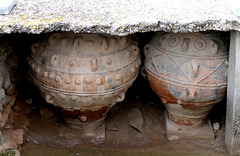
Kouloures
Phaistos
| 27 Apr 2025 |
|
|
|
Phaistos is a Bronze Age Minoan settlement on a ridge above the fertile Messara Plain. The ruins of the Palace of Phaistos once formed the second largest Minoan palace in Crete after Knossos, with an area of 8,400 m². Agia Triada only about two kilometers west was another, smaller Minoan palace complex. Both palaces were connected by a road.
According to legend, the city of Phaistos was founded by King Minos. The first ruler of Phaistos is said to have been Minos` brother Rhadamanthys. According to Homer, the city took part in the Trojan War.
With the flourishing of Minoan culture (1900–1700 BC), the first palace was built between 1900 and 1850 BC. It was damaged several times by earthquakes and fire, most recently destroyed in the great earthquake of around 1700 BC. The attempts at reconstruction in the 17th century BC failed. It was not until around 1600 BC that a new palace was begun, but it was never completed. At the same time, the palace of Agia Triada was built, which was more lavishly furnished. It is therefore assumed that Agia Triada was the new ruler's palace, while Phaistos was the cult and economic center.
The "New Palace Period" ended around 1430 BC with the conquest by the Mycenaean Greeks from 1450 to 1425 BC. The destruction of Phaistos by fire around 1450 BC, as well as the demise of other palace complexes on Crete, occurred during this period, a connection with the war can be assumed. The palace of Phaistos was not rebuilt, however, the settlement continued to exist throughout the post-Minoan, Geometric, and Classical periods. The administrative center was likely relocated to Agia Triada, where a ruler's megaron and a marketplace were built.
From around 1200 BC, the Mycenaean culture on Crete also gradually declined. From around 1000 BC, Crete was settled by the Dorians. With the end of the Geometric and the beginning of the Archaic periods around 750 BC, Phaistos, like other Greek cities, developed into an important polis. As early as the Geometric Age (900–750 BC), living quarters stood above the western courtyard of the former Minoan palace, and excavations have shown that this existed in the Archaic period (750–500 BC) and the subsequent Classical period (500–336 BC). In the 7th century BC, new streets and temples were built. The polis of Phaistos dominated the Gulf of Messara. In the Classical and the subsequent Hellenistic period (336–146 BC), Phaistos was the seat of a Cretan league of cities. Around 180 BC, however, Phaistos was subjugated by Gortyn, which became part of the Roman Empire in 67 BC. The city-states were dissolved by the Roman administration, and Phaistos continued to exist only as a settlement in the shadow of Gortyn.
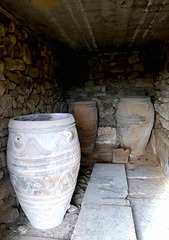
Storage containers - pithoi
Phaistos
| 27 Apr 2025 |
|
Phaistos is a Bronze Age Minoan settlement on a ridge above the fertile Messara Plain. The ruins of the Palace of Phaistos once formed the second largest Minoan palace in Crete after Knossos, with an area of 8,400 m². Agia Triada only about two kilometers west was another, smaller Minoan palace complex. Both palaces were connected by a road.
According to legend, the city of Phaistos was founded by King Minos. The first ruler of Phaistos is said to have been Minos` brother Rhadamanthys. According to Homer, the city took part in the Trojan War.
With the flourishing of Minoan culture (1900–1700 BC), the first palace was built between 1900 and 1850 BC. It was damaged several times by earthquakes and fire, most recently destroyed in the great earthquake of around 1700 BC. The attempts at reconstruction in the 17th century BC failed. It was not until around 1600 BC that a new palace was begun, but it was never completed. At the same time, the palace of Agia Triada was built, which was more lavishly furnished. It is therefore assumed that Agia Triada was the new ruler's palace, while Phaistos was the cult and economic center.
The "New Palace Period" ended around 1430 BC with the conquest by the Mycenaean Greeks from 1450 to 1425 BC. The destruction of Phaistos by fire around 1450 BC, as well as the demise of other palace complexes on Crete, occurred during this period, a connection with the war can be assumed. The palace of Phaistos was not rebuilt, however, the settlement continued to exist throughout the post-Minoan, Geometric, and Classical periods. The administrative center was likely relocated to Agia Triada, where a ruler's megaron and a marketplace were built.
From around 1200 BC, the Mycenaean culture on Crete also gradually declined. From around 1000 BC, Crete was settled by the Dorians. With the end of the Geometric and the beginning of the Archaic periods around 750 BC, Phaistos, like other Greek cities, developed into an important polis. As early as the Geometric Age (900–750 BC), living quarters stood above the western courtyard of the former Minoan palace, and excavations have shown that this existed in the Archaic period (750–500 BC) and the subsequent Classical period (500–336 BC). In the 7th century BC, new streets and temples were built. The polis of Phaistos dominated the Gulf of Messara. In the Classical and the subsequent Hellenistic period (336–146 BC), Phaistos was the seat of a Cretan league of cities. Around 180 BC, however, Phaistos was subjugated by Gortyn, which became part of the Roman Empire in 67 BC. The city-states were dissolved by the Roman administration, and Phaistos continued to exist only as a settlement in the shadow of Gortyn.
Magazine with storage containers - pithoi

Phaistos
| 27 Apr 2025 |
|
Phaistos is a Bronze Age Minoan settlement on a ridge above the fertile Messara Plain. The ruins of the Palace of Phaistos once formed the second largest Minoan palace in Crete after Knossos, with an area of 8,400 m². Agia Triada only about two kilometers west was another, smaller Minoan palace complex. Both palaces were connected by a road.
According to legend, the city of Phaistos was founded by King Minos. The first ruler of Phaistos is said to have been Minos` brother Rhadamanthys. According to Homer, the city took part in the Trojan War.
With the flourishing of Minoan culture (1900–1700 BC), the first palace was built between 1900 and 1850 BC. It was damaged several times by earthquakes and fire, most recently destroyed in the great earthquake of around 1700 BC. The attempts at reconstruction in the 17th century BC failed. It was not until around 1600 BC that a new palace was begun, but it was never completed. At the same time, the palace of Agia Triada was built, which was more lavishly furnished. It is therefore assumed that Agia Triada was the new ruler's palace, while Phaistos was the cult and economic center.
The "New Palace Period" ended around 1430 BC with the conquest by the Mycenaean Greeks from 1450 to 1425 BC. The destruction of Phaistos by fire around 1450 BC, as well as the demise of other palace complexes on Crete, occurred during this period, a connection with the war can be assumed. The palace of Phaistos was not rebuilt, however, the settlement continued to exist throughout the post-Minoan, Geometric, and Classical periods. The administrative center was likely relocated to Agia Triada, where a ruler's megaron and a marketplace were built.
From around 1200 BC, the Mycenaean culture on Crete also gradually declined. From around 1000 BC, Crete was settled by the Dorians. With the end of the Geometric and the beginning of the Archaic periods around 750 BC, Phaistos, like other Greek cities, developed into an important polis. As early as the Geometric Age (900–750 BC), living quarters stood above the western courtyard of the former Minoan palace, and excavations have shown that this existed in the Archaic period (750–500 BC) and the subsequent Classical period (500–336 BC). In the 7th century BC, new streets and temples were built. The polis of Phaistos dominated the Gulf of Messara. In the Classical and the subsequent Hellenistic period (336–146 BC), Phaistos was the seat of a Cretan league of cities. Around 180 BC, however, Phaistos was subjugated by Gortyn, which became part of the Roman Empire in 67 BC. The city-states were dissolved by the Roman administration, and Phaistos continued to exist only as a settlement in the shadow of Gortyn.
Magazine with storage containers - pithoi

Phaistos
| 26 Apr 2025 |
|
|
Phaistos is a Bronze Age Minoan settlement on a ridge above the fertile Messara Plain. The ruins of the Palace of Phaistos once formed the second largest Minoan palace in Crete after Knossos, with an area of 8,400 m². Agia Triada only about two kilometers west was another, smaller Minoan palace complex. Both palaces were connected by a road.
According to legend, the city of Phaistos was founded by King Minos. The first ruler of Phaistos is said to have been Minos` brother Rhadamanthys. According to Homer, the city took part in the Trojan War.
With the flourishing of Minoan culture (1900–1700 BC), the first palace was built between 1900 and 1850 BC. It was damaged several times by earthquakes and fire, most recently destroyed in the great earthquake of around 1700 BC. The attempts at reconstruction in the 17th century BC failed. It was not until around 1600 BC that a new palace was begun, but it was never completed. At the same time, the palace of Agia Triada was built, which was more lavishly furnished. It is therefore assumed that Agia Triada was the new ruler's palace, while Phaistos was the cult and economic center.
The "New Palace Period" ended around 1430 BC with the conquest by the Mycenaean Greeks from 1450 to 1425 BC. The destruction of Phaistos by fire around 1450 BC, as well as the demise of other palace complexes on Crete, occurred during this period, a connection with the war can be assumed. The palace of Phaistos was not rebuilt, however, the settlement continued to exist throughout the post-Minoan, Geometric, and Classical periods. The administrative center was likely relocated to Agia Triada, where a ruler's megaron and a marketplace were built.
From around 1200 BC, the Mycenaean culture on Crete also gradually declined. From around 1000 BC, Crete was settled by the Dorians. With the end of the Geometric and the beginning of the Archaic periods around 750 BC, Phaistos, like other Greek cities, developed into an important polis. As early as the Geometric Age (900–750 BC), living quarters stood above the western courtyard of the former Minoan palace, and excavations have shown that this existed in the Archaic period (750–500 BC) and the subsequent Classical period (500–336 BC). In the 7th century BC, new streets and temples were built. The polis of Phaistos dominated the Gulf of Messara. In the Classical and the subsequent Hellenistic period (336–146 BC), Phaistos was the seat of a Cretan league of cities. Around 180 BC, however, Phaistos was subjugated by Gortyn, which became part of the Roman Empire in 67 BC. The city-states were dissolved by the Roman administration, and Phaistos continued to exist only as a settlement in the shadow of Gortyn.

Phaistos
| 26 Apr 2025 |
|
|
Phaistos is a Bronze Age Minoan settlement on a ridge above the fertile Messara Plain. The ruins of the Palace of Phaistos once formed the second largest Minoan palace in Crete after Knossos, with an area of 8,400 m². Agia Triada only about two kilometers west was another, smaller Minoan palace complex. Both palaces were connected by a road.
According to legend, the city of Phaistos was founded by King Minos. The first ruler of Phaistos is said to have been Minos` brother Rhadamanthys. According to Homer, the city took part in the Trojan War.
With the flourishing of Minoan culture (1900–1700 BC), the first palace was built between 1900 and 1850 BC. It was damaged several times by earthquakes and fire, most recently destroyed in the great earthquake of around 1700 BC. The attempts at reconstruction in the 17th century BC failed. It was not until around 1600 BC that a new palace was begun, but it was never completed. At the same time, the palace of Agia Triada was built, which was more lavishly furnished. It is therefore assumed that Agia Triada was the new ruler's palace, while Phaistos was the cult and economic center.
The "New Palace Period" ended around 1430 BC with the conquest by the Mycenaean Greeks from 1450 to 1425 BC. The destruction of Phaistos by fire around 1450 BC, as well as the demise of other palace complexes on Crete, occurred during this period, a connection with the war can be assumed. The palace of Phaistos was not rebuilt, however, the settlement continued to exist throughout the post-Minoan, Geometric, and Classical periods. The administrative center was likely relocated to Agia Triada, where a ruler's megaron and a marketplace were built.
From around 1200 BC, the Mycenaean culture on Crete also gradually declined. From around 1000 BC, Crete was settled by the Dorians. With the end of the Geometric and the beginning of the Archaic periods around 750 BC, Phaistos, like other Greek cities, developed into an important polis. As early as the Geometric Age (900–750 BC), living quarters stood above the western courtyard of the former Minoan palace, and excavations have shown that this existed in the Archaic period (750–500 BC) and the subsequent Classical period (500–336 BC). In the 7th century BC, new streets and temples were built. The polis of Phaistos dominated the Gulf of Messara. In the Classical and the subsequent Hellenistic period (336–146 BC), Phaistos was the seat of a Cretan league of cities. Around 180 BC, however, Phaistos was subjugated by Gortyn, which became part of the Roman Empire in 67 BC. The city-states were dissolved by the Roman administration, and Phaistos continued to exist only as a settlement in the shadow of Gortyn.

Phaistos
| 26 Apr 2025 |
|
Phaistos is a Bronze Age Minoan settlement on a ridge above the fertile Messara Plain. The ruins of the Palace of Phaistos once formed the second largest Minoan palace in Crete after Knossos, with an area of 8,400 m². Agia Triada only about two kilometers west was another, smaller Minoan palace complex. Both palaces were connected by a road.
According to legend, the city of Phaistos was founded by King Minos. The first ruler of Phaistos is said to have been Minos` brother Rhadamanthys. According to Homer, the city took part in the Trojan War.
With the flourishing of Minoan culture (1900–1700 BC), the first palace was built between 1900 and 1850 BC. It was damaged several times by earthquakes and fire, most recently destroyed in the great earthquake of around 1700 BC. The attempts at reconstruction in the 17th century BC failed. It was not until around 1600 BC that a new palace was begun, but it was never completed. At the same time, the palace of Agia Triada was built, which was more lavishly furnished. It is therefore assumed that Agia Triada was the new ruler's palace, while Phaistos was the cult and economic center.
The "New Palace Period" ended around 1430 BC with the conquest by the Mycenaean Greeks from 1450 to 1425 BC. The destruction of Phaistos by fire around 1450 BC, as well as the demise of other palace complexes on Crete, occurred during this period, a connection with the war can be assumed. The palace of Phaistos was not rebuilt, however, the settlement continued to exist throughout the post-Minoan, Geometric, and Classical periods. The administrative center was likely relocated to Agia Triada, where a ruler's megaron and a marketplace were built.
From around 1200 BC, the Mycenaean culture on Crete also gradually declined. From around 1000 BC, Crete was settled by the Dorians. With the end of the Geometric and the beginning of the Archaic periods around 750 BC, Phaistos, like other Greek cities, developed into an important polis. As early as the Geometric Age (900–750 BC), living quarters stood above the western courtyard of the former Minoan palace, and excavations have shown that this existed in the Archaic period (750–500 BC) and the subsequent Classical period (500–336 BC). In the 7th century BC, new streets and temples were built. The polis of Phaistos dominated the Gulf of Messara. In the Classical and the subsequent Hellenistic period (336–146 BC), Phaistos was the seat of a Cretan league of cities. Around 180 BC, however, Phaistos was subjugated by Gortyn, which became part of the Roman Empire in 67 BC. The city-states were dissolved by the Roman administration, and Phaistos continued to exist only as a settlement in the shadow of Gortyn.

Phaistos
| 26 Apr 2025 |
|
|
Phaistos is a Bronze Age Minoan settlement on a ridge above the fertile Messara Plain. The ruins of the Palace of Phaistos once formed the second largest Minoan palace in Crete after Knossos, with an area of 8,400 m². Agia Triada only about two kilometers west was another, smaller Minoan palace complex. Both palaces were connected by a road.
According to legend, the city of Phaistos was founded by King Minos. The first ruler of Phaistos is said to have been Minos` brother Rhadamanthys. According to Homer, the city took part in the Trojan War.
With the flourishing of Minoan culture (1900–1700 BC), the first palace was built between 1900 and 1850 BC. It was damaged several times by earthquakes and fire, most recently destroyed in the great earthquake of around 1700 BC. The attempts at reconstruction in the 17th century BC failed. It was not until around 1600 BC that a new palace was begun, but it was never completed. At the same time, the palace of Agia Triada was built, which was more lavishly furnished. It is therefore assumed that Agia Triada was the new ruler's palace, while Phaistos was the cult and economic center.
The "New Palace Period" ended around 1430 BC with the conquest by the Mycenaean Greeks from 1450 to 1425 BC. The destruction of Phaistos by fire around 1450 BC, as well as the demise of other palace complexes on Crete, occurred during this period, a connection with the war can be assumed. The palace of Phaistos was not rebuilt, however, the settlement continued to exist throughout the post-Minoan, Geometric, and Classical periods. The administrative center was likely relocated to Agia Triada, where a ruler's megaron and a marketplace were built.
From around 1200 BC, the Mycenaean culture on Crete also gradually declined. From around 1000 BC, Crete was settled by the Dorians. With the end of the Geometric and the beginning of the Archaic periods around 750 BC, Phaistos, like other Greek cities, developed into an important polis. As early as the Geometric Age (900–750 BC), living quarters stood above the western courtyard of the former Minoan palace, and excavations have shown that this existed in the Archaic period (750–500 BC) and the subsequent Classical period (500–336 BC). In the 7th century BC, new streets and temples were built. The polis of Phaistos dominated the Gulf of Messara. In the Classical and the subsequent Hellenistic period (336–146 BC), Phaistos was the seat of a Cretan league of cities. Around 180 BC, however, Phaistos was subjugated by Gortyn, which became part of the Roman Empire in 67 BC. The city-states were dissolved by the Roman administration, and Phaistos continued to exist only as a settlement in the shadow of Gortyn.

Phaistos
| 26 Apr 2025 |
|
Phaistos is a Bronze Age Minoan settlement on a ridge above the fertile Messara Plain. The ruins of the Palace of Phaistos once formed the second largest Minoan palace in Crete after Knossos, with an area of 8,400 m². Agia Triada only about two kilometers west was another, smaller Minoan palace complex. Both palaces were connected by a road.
According to legend, the city of Phaistos was founded by King Minos. The first ruler of Phaistos is said to have been Minos` brother Rhadamanthys. According to Homer, the city took part in the Trojan War.
With the flourishing of Minoan culture (1900–1700 BC), the first palace was built between 1900 and 1850 BC. It was damaged several times by earthquakes and fire, most recently destroyed in the great earthquake of around 1700 BC. The attempts at reconstruction in the 17th century BC failed. It was not until around 1600 BC that a new palace was begun, but it was never completed. At the same time, the palace of Agia Triada was built, which was more lavishly furnished. It is therefore assumed that Agia Triada was the new ruler's palace, while Phaistos was the cult and economic center.
The "New Palace Period" ended around 1430 BC with the conquest by the Mycenaean Greeks from 1450 to 1425 BC. The destruction of Phaistos by fire around 1450 BC, as well as the demise of other palace complexes on Crete, occurred during this period, a connection with the war can be assumed. The palace of Phaistos was not rebuilt, however, the settlement continued to exist throughout the post-Minoan, Geometric, and Classical periods. The administrative center was likely relocated to Agia Triada, where a ruler's megaron and a marketplace were built.
From around 1200 BC, the Mycenaean culture on Crete also gradually declined. From around 1000 BC, Crete was settled by the Dorians. With the end of the Geometric and the beginning of the Archaic periods around 750 BC, Phaistos, like other Greek cities, developed into an important polis. As early as the Geometric Age (900–750 BC), living quarters stood above the western courtyard of the former Minoan palace, and excavations have shown that this existed in the Archaic period (750–500 BC) and the subsequent Classical period (500–336 BC). In the 7th century BC, new streets and temples were built. The polis of Phaistos dominated the Gulf of Messara. In the Classical and the subsequent Hellenistic period (336–146 BC), Phaistos was the seat of a Cretan league of cities. Around 180 BC, however, Phaistos was subjugated by Gortyn, which became part of the Roman Empire in 67 BC. The city-states were dissolved by the Roman administration, and Phaistos continued to exist only as a settlement in the shadow of Gortyn.

Agia Triada
| 23 Apr 2025 |
|
|
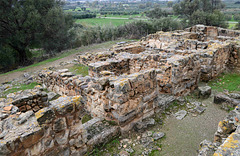
Agia Triada is an archaeological site with the remains of a palace complex in the west of the Messara Plain, about two kilometers northwest of the ruins of Phaistos, a Minoan palace complex. There was already an extensive settlement at the beginning of the Pre-Palace period at the end of the 4th millennium BC. Tholos tombs, east of the fenced excavation area, are dated to the Pre-Palace period. Due to the sedimentation of the Timbaki basin at the mouth of the Geropotamos, Agia Triada lost its landfill around 1900 BC. the direct access to the sea that existed in the early Minoan period. During the New Palace period, between 1600 and 1550 BC, a small palace complex was built known as the "great Minoan villa." The settlement at Agia Triada lay east of the palace, which is considered the political and sacred administrative center. The wall paintings are in the same style as the paintings at Knossos.
The palace of Agia Triada was destroyed around 1450 BC. Afterwards, around 1400 BC, a Mycenaean megaron was built on its ruins. To the north, below the complex, in the post-palatial period, a development of dwellings and warehouses was built. It represents a "Minoan market village." It is assumed that artisans and merchants who maintained intensive trade relations with North Africa settled here.
To the north the remains of two large buildings have been preserved, one of them megaron-like, which are dated to 1350 to 1250 BC. During the decline of the Minoan/Mycenaean culture, the palace of Agia Triada was destroyed around 1250 BC. After that, the site was used as a place of worship. Statuettes were placed in the open air. The cult continued until the the 11th and 10th centuries BC and resumed in the 7th century BC.
Agia Triada
| 23 Apr 2025 |
|
Agia Triada is an archaeological site with the remains of a palace complex in the west of the Messara Plain, about two kilometers northwest of the ruins of Phaistos, a Minoan palace complex. There was already an extensive settlement at the beginning of the Pre-Palace period at the end of the 4th millennium BC. Tholos tombs, east of the fenced excavation area, are dated to the Pre-Palace period. Due to the sedimentation of the Timbaki basin at the mouth of the Geropotamos, Agia Triada lost its landfill around 1900 BC. the direct access to the sea that existed in the early Minoan period. During the New Palace period, between 1600 and 1550 BC, a small palace complex was built known as the "great Minoan villa." The settlement at Agia Triada lay east of the palace, which is considered the political and sacred administrative center. The wall paintings are in the same style as the paintings at Knossos.
The palace of Agia Triada was destroyed around 1450 BC. Afterwards, around 1400 BC, a Mycenaean megaron was built on its ruins. To the north, below the complex, in the post-palatial period, a development of dwellings and warehouses was built. It represents a "Minoan market village." It is assumed that artisans and merchants who maintained intensive trade relations with North Africa settled here.
To the north the remains of two large buildings have been preserved, one of them megaron-like, which are dated to 1350 to 1250 BC. During the decline of the Minoan/Mycenaean culture, the palace of Agia Triada was destroyed around 1250 BC. After that, the site was used as a place of worship. Statuettes were placed in the open air. The cult continued until the the 11th and 10th centuries BC and resumed in the 7th century BC.
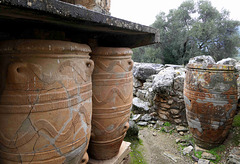
Pithoi are large storage containers
Agia Triada
| 23 Apr 2025 |
|
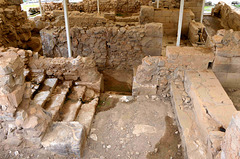
Agia Triada is an archaeological site with the remains of a palace complex in the west of the Messara Plain, about two kilometers northwest of the ruins of Phaistos, a Minoan palace complex. There was already an extensive settlement at the beginning of the Pre-Palace period at the end of the 4th millennium BC. Tholos tombs, east of the fenced excavation area, are dated to the Pre-Palace period. Due to the sedimentation of the Timbaki basin at the mouth of the Geropotamos, Agia Triada lost its landfill around 1900 BC. the direct access to the sea that existed in the early Minoan period. During the New Palace period, between 1600 and 1550 BC, a small palace complex was built known as the "great Minoan villa." The settlement at Agia Triada lay east of the palace, which is considered the political and sacred administrative center. The wall paintings are in the same style as the paintings at Knossos.
The palace of Agia Triada was destroyed around 1450 BC. Afterwards, around 1400 BC, a Mycenaean megaron was built on its ruins. To the north, below the complex, in the post-palatial period, a development of dwellings and warehouses was built. It represents a "Minoan market village." It is assumed that artisans and merchants who maintained intensive trade relations with North Africa settled here.
To the north the remains of two large buildings have been preserved, one of them megaron-like, which are dated to 1350 to 1250 BC. During the decline of the Minoan/Mycenaean culture, the palace of Agia Triada was destroyed around 1250 BC. After that, the site was used as a place of worship. Statuettes were placed in the open air. The cult continued until the the 11th and 10th centuries BC and resumed in the 7th century BC.
Agia Triada
| 23 Apr 2025 |
|
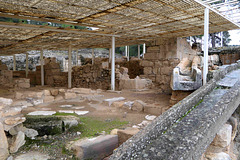
Agia Triada is an archaeological site with the remains of a palace complex in the west of the Messara Plain, about two kilometers northwest of the ruins of Phaistos, a Minoan palace complex. There was already an extensive settlement at the beginning of the Pre-Palace period at the end of the 4th millennium BC. Tholos tombs, east of the fenced excavation area, are dated to the Pre-Palace period. Due to the sedimentation of the Timbaki basin at the mouth of the Geropotamos, Agia Triada lost its landfill around 1900 BC. the direct access to the sea that existed in the early Minoan period. During the New Palace period, between 1600 and 1550 BC, a small palace complex was built known as the "great Minoan villa." The settlement at Agia Triada lay east of the palace, which is considered the political and sacred administrative center. The wall paintings are in the same style as the paintings at Knossos.
The palace of Agia Triada was destroyed around 1450 BC. Afterwards, around 1400 BC, a Mycenaean megaron was built on its ruins. To the north, below the complex, in the post-palatial period, a development of dwellings and warehouses was built. It represents a "Minoan market village." It is assumed that artisans and merchants who maintained intensive trade relations with North Africa settled here.
To the north the remains of two large buildings have been preserved, one of them megaron-like, which are dated to 1350 to 1250 BC. During the decline of the Minoan/Mycenaean culture, the palace of Agia Triada was destroyed around 1250 BC. After that, the site was used as a place of worship. Statuettes were placed in the open air. The cult continued until the the 11th and 10th centuries BC and resumed in the 7th century BC.
Agia Triada
| 23 Apr 2025 |
|
Agia Triada is an archaeological site with the remains of a palace complex in the west of the Messara Plain, about two kilometers northwest of the ruins of Phaistos, a Minoan palace complex. There was already an extensive settlement at the beginning of the Pre-Palace period at the end of the 4th millennium BC. Tholos tombs, east of the fenced excavation area, are dated to the Pre-Palace period. Due to the sedimentation of the Timbaki basin at the mouth of the Geropotamos, Agia Triada lost its landfill around 1900 BC. the direct access to the sea that existed in the early Minoan period. During the New Palace period, between 1600 and 1550 BC, a small palace complex was built known as the "great Minoan villa." The settlement at Agia Triada lay east of the palace, which is considered the political and sacred administrative center. The wall paintings are in the same style as the paintings at Knossos.
The palace of Agia Triada was destroyed around 1450 BC. Afterwards, around 1400 BC, a Mycenaean megaron was built on its ruins. To the north, below the complex, in the post-palatial period, a development of dwellings and warehouses was built. It represents a "Minoan market village." It is assumed that artisans and merchants who maintained intensive trade relations with North Africa settled here.
To the north the remains of two large buildings have been preserved, one of them megaron-like, which are dated to 1350 to 1250 BC. During the decline of the Minoan/Mycenaean culture, the palace of Agia Triada was destroyed around 1250 BC. After that, the site was used as a place of worship. Statuettes were placed in the open air. The cult continued until the the 11th and 10th centuries BC and resumed in the 7th century BC.
Jump to top
RSS feed- Martin M. Miles' latest photos with "Agia Triada" - Photos
- ipernity © 2007-2026
- Help & Contact
|
Club news
|
About ipernity
|
History |
ipernity Club & Prices |
Guide of good conduct
Donate | Group guidelines | Privacy policy | Terms of use | Statutes | In memoria -
Facebook
X
