Martin M. Miles' photos with the keyword: Abbey of St. Victor
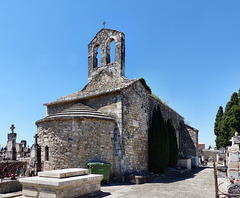
Saint-Andiol - Sainte-Croix

19 Jan 2017 4 2 349
This chapel, today located in the center of a graveyard, was erected before 1000, probably by monks from the Abbey of St. Victor (Marseille). It was used by the Pénitents Noirs from the 16th century on, what probably saved the chapel from demolition. Unfortunately the chapel was - locked.

Ripoll - Monastery of Santa Maria

02 Sep 2012 286
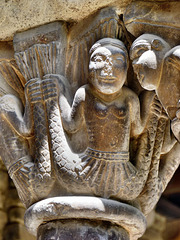
Wilfred the Hairy (aka Guifré el Pilós), whom we just "met" as the founder of the nearby monastery in Sant Joan de les Abadesses, where his daughter Emma of Barcelona was the first abbess, founded the Monastery of Santa Maria in Ripoll in 879. Here his son Radulf de Barcelona was abbot. This was not only Wilfred´s family business, he was very succesful in the political power game of that time. The first church was consecrated in 888, but as the monastery grew it was "reconsecrated" in 935, 977 and 1032. When Oliba de Besalú, as well a descendent of Wilfred, was abbot here (1008 - 1046), this was a cultural center. More than 250 books were on the shelves of the monastery´s library. The church was the burial place for the Counts of Besalú and Barcelona. Still today many tombs can be found in the transept, including that one of Wilfred the Hairy. The decline started within the 15th century. In 1428 it was severely damaged by an earthquake, the restoration was done in Gothic style. The church got ruined the first Carlist War, the library burnt down, the last monks had left. In 1847 part of the cloister and soon after, the abbot´s palace got demolished. The Bishop of Vic organized the rebuilding, so that the church got consecrated again in 1893. The church of today is vastly a product of the reconstruction of th 19th century, but it may be "near" to the romanesque structure. The cloister got reconstructed end of the 19th century as well, but as only a part of it had been demolished, it still contains a lot of the original structure. The construction of the ground floor started 1180 and it took to the the early 15th century to complete it. The second floor dates to the 15th and 16th century. Some of the capitals are sculptured by Jordi de Déu (aka Jordi Johan). Jordi de Déu (+1418), born on the island of Sicily, with greek roots, was sold as a slave to catalan master carver Jaume Cascalls, who taught him sculpture. The mermaid and the monkey (to the right) have a little smalltalk. Since about 800 years..

Ripoll - Monastery of Santa Maria

03 Sep 2012 301
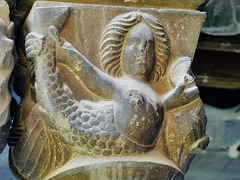
Wilfred the Hairy (aka Guifré el Pilós), whom we just "met" as the founder of the nearby monastery in Sant Joan de les Abadesses, where his daughter Emma of Barcelona was the first abbess, founded the Monastery of Santa Maria in Ripoll in 879. Here his son Radulf de Barcelona was abbot. This was not only Wilfred´s family business, he was very succesful in the political power game of that time. The first church was consecrated in 888, but as the monastery grew it was "reconsecrated" in 935, 977 and 1032. When Oliba de Besalú, as well a descendent of Wilfred, was abbot here (1008 - 1046), this was a cultural center. More than 250 books were on the shelves of the monastery´s library. The church was the burial place for the Counts of Besalú and Barcelona. Still today many tombs can be found in the transept, including that one of Wilfred the Hairy. The decline started within the 15th century. In 1428 it was severely damaged by an earthquake, the restoration was done in Gothic style. The church got ruined the first Carlist War, the library burnt down, the last monks had left. In 1847 part of the cloister and soon after, the abbot´s palace got demolished. The Bishop of Vic organized the rebuilding, so that the church got consecrated again in 1893. The church of today is vastly a product of the reconstruction of th 19th century, but it may be "near" to the romanesque structure. The cloister got reconstructed end of the 19th century as well, but as only a part of it had been demolished, it still contains a lot of the original structure. The construction of the ground floor started 1180 and it took to the the early 15th century to complete it. The second floor dates to the 15th and 16th century. Some of the capitals are sculptured by Jordi de Déu (aka Jordi Johan). Jordi de Déu (+1418), born on the island of Sicily, with greek roots, was sold as a slave to catalan master carver Jaume Cascalls, who taught him sculpture. Two row boats on the sides of the capital escort this beautiful mermaid. She is holding a (broken) mirror in her hand, being a symbol of vanity.

Ripoll - Monastery of Santa Maria

03 Sep 2012 295
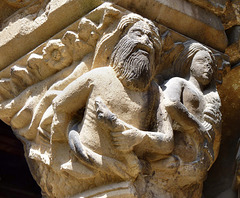
Wilfred the Hairy (aka Guifré el Pilós), whom we just "met" as the founder of the nearby monastery in Sant Joan de les Abadesses, where his daughter Emma of Barcelona was the first abbess, founded the Monastery of Santa Maria in Ripoll in 879. Here his son Radulf de Barcelona was abbot. This was not only Wilfred´s family business, he was very succesful in the political power game of that time. The first church was consecrated in 888, but as the monastery grew it was "reconsecrated" in 935, 977 and 1032. When Oliba de Besalú, as well a descendent of Wilfred, was abbot here (1008 - 1046), this was a cultural center. More than 250 books were on the shelves of the monastery´s library. The church was the burial place for the Counts of Besalú and Barcelona. Still today many tombs can be found in the transept, including that one of Wilfred the Hairy. The decline started within the 15th century. In 1428 it was severely damaged by an earthquake, the restoration was done in Gothic style. The church got ruined the first Carlist War, the library burnt down, the last monks had left. In 1847 part of the cloister and soon after, the abbot´s palace got demolished. The Bishop of Vic organized the rebuilding, so that the church got consecrated again in 1893. The church of today is vastly a product of the reconstruction of th 19th century, but it may be "near" to the romanesque structure. The cloister got reconstructed end of the 19th century as well, but as only a part of it had been demolished, it still contains a lot of the original structure. The construction of the ground floor started 1180 and it took to the the early 15th century to complete it. The second floor dates to the 15th and 16th century. Some of the capitals are sculptured by Jordi de Déu (aka Jordi Johan). Jordi de Déu (+1418), born on the island of Sicily, with greek roots, was sold as a slave to catalan master carver Jaume Cascalls, who taught him sculpture. A pretty mermaid and her handsome, bearded husband. The two tails of the couple meet on the other side of the capital.

Ripoll - Monastery of Santa Maria

02 Sep 2012 320
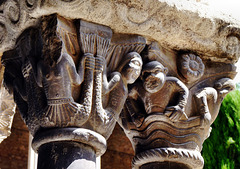
Wilfred the Hairy (aka Guifré el Pilós), whom we just "met" as the founder of the nearby monastery in Sant Joan de les Abadesses, where his daughter Emma of Barcelona was the first abbess, founded the Monastery of Santa Maria in Ripoll in 879. Here his son Radulf de Barcelona was abbot. This was not only Wilfred´s family business, he was very succesful in the political power game of that time. The first church was consecrated in 888, but as the monastery grew it was "reconsecrated" in 935, 977 and 1032. When Oliba de Besalú, as well a descendent of Wilfred, was abbot here (1008 - 1046), this was a cultural center. More than 250 books were on the shelves of the monastery´s library. The church was the burial place for the Counts of Besalú and Barcelona. Still today many tombs can be found in the transept, including that one of Wilfred the Hairy. The decline started within the 15th century. In 1428 it was severely damaged by an earthquake, the restoration was done in Gothic style. The church got ruined the first Carlist War, the library burnt down, the last monks had left. In 1847 part of the cloister and soon after, the abbot´s palace got demolished. The Bishop of Vic organized the rebuilding, so that the church got consecrated again in 1893. The church of today is vastly a product of the reconstruction of th 19th century, but it may be "near" to the romanesque structure. The cloister got reconstructed end of the 19th century as well, but as only a part of it had been demolished, it still contains a lot of the original structure. The construction of the ground floor started 1180 and it took to the the early 15th century to complete it. The second floor dates to the 15th and 16th century. Some of the capitals are sculptured by Jordi de Déu (aka Jordi Johan). Jordi de Déu (+1418), born on the island of Sicily, with greek roots, was sold as a slave to catalan master carver Jaume Cascalls, who taught him sculpture. These damaged romanesque capitals depict mermaids and monkeys. The monkeys seem to stand in water (waves).