
Martin M. Miles' photos with the keyword: Schinkel
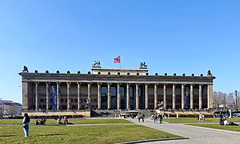
Berlin - Altes Museum
| 04 Jul 2025 |
|
The Altes Museum (Old Museum) is part of the Museum Island complex and is therefore a UNESCO World Heritage Site. Built by Karl Friedrich Schinkel between 1825 and 1830 on behalf of King Frederick William III, it is considered one of the masterpieces of German Classicism. The architect Schinkel's plans were also based on designs by the Crown Prince, later King Friedrich Wilhelm IV, who desired an acropolis-like development of the Museum Island.
During the Nazi era, the Altes Museum served as a backdrop for propaganda events. It was hit by high-explosive bombs during air raids in 1941 and 1943 and burned down in May 1945 when an ammunition truck parked next to it exploded.
From 1951 to 1966, the building was largely restored to its original condition. Since 1904, the Antiquities Collection was housed here, which was relocated around 1942. After the building's reconstruction, the Antiquities Collection's exhibits were again housed here.

Berlin - Neue Wache
| 18 Jun 2025 |
|
Berlin is the capital and largest city of Germany. The city is one of Germany's 16 federal states.
The first records of towns in the area of present-day Berlin date from the late 12th century. The central part of Berlin can be traced back to two towns. Cölln on the Fischerinsel is first mentioned in 1237 and Berlin, across the river Spree in 1244. The two towns over time formed close economic and social ties, and profited from the staple right on the two important trade routes Via Imperii and from Bruges to Novgorod.
In 1415, Frederick I became the elector of the Margraviate of Brandenburg. His successors established Berlin-Cölln as capital of the margraviate, and subsequent members of the Hohenzollern family ruled in Berlin until 1918, first as electors of Brandenburg, then as kings of Prussia, and eventually as German emperors.
The Thirty Years' War between 1618 and 1648 devastated Berlin. The city lost half of its population. Frederick William, known as the "Grosse Kurfürst" initiated a policy of promoting immigration and religious tolerance from 1640 on. In 1685, Frederick William offered asylum to the Huguenots. By 1700, approximately 30 percent of Berlin's residents were French Huguenots. Other immigrants came from Bohemia and Poland.
The Industrial Revolution transformed Berlin during the 19th century; the city's economy and population expanded dramatically, and it became the main railway hub and economic centre of Germany. Additional suburbs soon developed and increased the area and population of Berlin. In 1871, Berlin became capital of the newly founded German Empire.
In 1933 the Nazi Party came to power. After the "Kristallnacht" progrom in 1938, thousands of the city's Jews were imprisoned in the nearby Sachsenhausen concentration camp. Starting in 1943, many were shipped to death camps, such as Auschwitz.
During World War II, large parts of Berlin were destroyed by Allied air raids and the 1945 Battle of Berlin. Around 125,000 civilians were killed. After the end of WWII , by Berlin received large numbers of refugees from the Eastern provinces. The victorious powers divided the city into four sectors, analogous to the occupation zones into which Germany was divided. The sectors of the Western Allies formed West Berlin, while the Soviet sector formed East Berlin.
The Berlin Wall was a barrier that divided the city from 1961 to 1989, when it fell. In October 1990, the German reunification process was formally finished.
The Neue Wache ( New Watchhouse) is a listed building on "Unter den Linden" boulevard in the historic centre of Berlin. It was erected from 1816 to 1818 according to plans by Karl Friedrich Schinkel as a guardhouse for the Royal Palace and a memorial to the Liberation Wars.
Since 1931, it has held Germany's Tomb of the Unknown Soldier and national memorial for the First World War. Following German Reunification, the site has also been, since 1993, the Central Memorial of the Federal Republic of Germany to the Victims of War and Tyranny.

Berlin - Altes Museum
| 25 Nov 2019 |
|
|
Berlin is the capital and largest city of Germany. The city is one of Germany's 16 federal states.
The first records of towns in the area of present-day Berlin date from the late 12th century. The central part of Berlin can be traced back to two towns. Cölln on the Fischerinsel is first mentioned in 1237 and Berlin, across the river Spree in 1244. The two towns over time formed close economic and social ties, and profited from the staple right on the two important trade routes Via Imperii and from Bruges to Novgorod.
In 1415, Frederick I became the elector of the Margraviate of Brandenburg. His successors established Berlin-Cölln as capital of the margraviate, and subsequent members of the Hohenzollern family ruled in Berlin until 1918, first as electors of Brandenburg, then as kings of Prussia, and eventually as German emperors.
The Thirty Years' War between 1618 and 1648 devastated Berlin. The city lost half of its population. Frederick William, known as the "Grosse Kurfürst" initiated a policy of promoting immigration and religious tolerance from 1640 on. In 1685, Frederick William offered asylum to the Huguenots. By 1700, approximately 30 percent of Berlin's residents were French Huguenots. Other immigrants came from Bohemia and Poland.
The Industrial Revolution transformed Berlin during the 19th century; the city's economy and population expanded dramatically, and it became the main railway hub and economic centre of Germany. Additional suburbs soon developed and increased the area and population of Berlin. In 1871, Berlin became capital of the newly founded German Empire.
In 1933 the Nazi Party came to power. After the "Kristallnacht" progrom in 1938, thousands of the city's Jews were imprisoned in the nearby Sachsenhausen concentration camp. Starting in 1943, many were shipped to death camps, such as Auschwitz.
During World War II, large parts of Berlin were destroyed by Allied air raids and the 1945 Battle of Berlin. Around 125,000 civilians were killed. After the end of WWII , by Berlin received large numbers of refugees from the Eastern provinces. The victorious powers divided the city into four sectors, analogous to the occupation zones into which Germany was divided. The sectors of the Western Allies formed West Berlin, while the Soviet sector formed East Berlin.
The Berlin Wall was a barrier that divided the city from 1961 to 1989, when it fell. In October 1990, the German reunification process was formally finished.
-
The Alte Museum was commissioned by Friedrich Wilhelm III and built 1825 - 1830 by Karl Friedrich Schinkel for the royal art collections. This is one of the major works of German classicism. Currently, the "Old Museum" is home to the "Antikensammlung" (antiquities collection).
During WWII the museum was hit in Allied air raids and burned down in 1945. From 1951 to 1966 it got restored as the first museum of the "Museum Island".
Jump to top
RSS feed- Martin M. Miles' latest photos with "Schinkel" - Photos
- ipernity © 2007-2026
- Help & Contact
|
Club news
|
About ipernity
|
History |
ipernity Club & Prices |
Guide of good conduct
Donate | Group guidelines | Privacy policy | Terms of use | Statutes | In memoria -
Facebook
X
