

Martin M. Miles' photos with the keyword: Bach
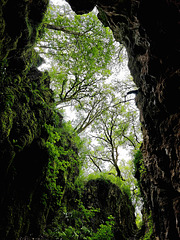
Bach - Les Phosphatières du Cloup d'Aural
| 02 Nov 2025 |
|
|
This is a former open-pit phosphate mine.
In 1865, a doctor and chemist discovered bone fragments and unusual stones scattered across a field. He took samples and found that they contained 70 to 80% tricalcium phosphate.
The phosphate mines were put into operation in the 1870s after further deposits were discovered. Hundreds of them were located in the region where Jurassic limestone outcrops, between Cahors, Figeac, Gaillac, and Montauban. However, by 1887, the deposits were already running out, and 112 phosphate mines were closed that year. The discovery of phosphates in North Africa made the mining of the Quercy phosphate mines less profitable. By 1902, only two remained in operation.
The scientific interest in these phosphate mines stems from the numerous vertebrate fossils found there, dating back to the Tertiary period, between the end of the Eocene and the beginning of the Miocene epochs, approximately 20 million years ago. Some of these fossils served as international reference points for the standard sequence of European fauna. Over 600 animal species have been identified in the phosphate mines.
The disused phosphate mines were slated to become landfills. Therefore, since 1992, the association "Les Phosphatières du Quercy" has been working to develop the Cloup d'Aural mine in Bach.
The phosphate deposits of the Quercy region were all located in cavities and sinkholes within the karst landscape.
Bach - Les Phosphatières du Cloup d'Aural
| 02 Nov 2025 |
|
|
|
This is a former open-pit phosphate mine.
In 1865, a doctor and chemist discovered bone fragments and unusual stones scattered across a field. He took samples and found that they contained 70 to 80% tricalcium phosphate.
The phosphate mines were put into operation in the 1870s after further deposits were discovered. Hundreds of them were located in the region where Jurassic limestone outcrops, between Cahors, Figeac, Gaillac, and Montauban. However, by 1887, the deposits were already running out, and 112 phosphate mines were closed that year. The discovery of phosphates in North Africa made the mining of the Quercy phosphate mines less profitable. By 1902, only two remained in operation.
The scientific interest in these phosphate mines stems from the numerous vertebrate fossils found there, dating back to the Tertiary period, between the end of the Eocene and the beginning of the Miocene epochs, approximately 20 million years ago. Some of these fossils served as international reference points for the standard sequence of European fauna. Over 600 animal species have been identified in the phosphate mines.
The disused phosphate mines were slated to become landfills. Therefore, since 1992, the association "Les Phosphatières du Quercy" has been working to develop the Cloup d'Aural mine in Bach.
The phosphate deposits of the Quercy region were all located in cavities and sinkholes within the karst landscape.
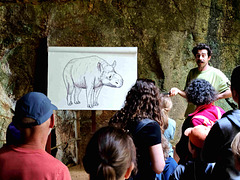
The very knowledgeable, multilingual tour guide led the tourists through the gorge.

Bach - Les Phosphatières du Cloup d'Aural
| 01 Nov 2025 |
|
|
This is a former open-pit phosphate mine.
In 1865, a doctor and chemist discovered bone fragments and unusual stones scattered across a field. He took samples and found that they contained 70 to 80% tricalcium phosphate.
The phosphate mines were put into operation in the 1870s after further deposits were discovered. Hundreds of them were located in the region where Jurassic limestone outcrops, between Cahors, Figeac, Gaillac, and Montauban. However, by 1887, the deposits were already running out, and 112 phosphate mines were closed that year. The discovery of phosphates in North Africa made the mining of the Quercy phosphate mines less profitable. By 1902, only two remained in operation.
The scientific interest in these phosphate mines stems from the numerous vertebrate fossils found there, dating back to the Tertiary period, between the end of the Eocene and the beginning of the Miocene epochs, approximately 20 million years ago. Some of these fossils served as international reference points for the standard sequence of European fauna. Over 600 animal species have been identified in the phosphate mines.
The disused phosphate mines were slated to become landfills. Therefore, since 1992, the association "Les Phosphatières du Quercy" has been working to develop the Cloup d'Aural mine in Bach.
The phosphate deposits of the Quercy region were all located in cavities and sinkholes within the karst landscape.
Jump to top
RSS feed- Martin M. Miles' latest photos with "Bach" - Photos
- ipernity © 2007-2026
- Help & Contact
|
Club news
|
About ipernity
|
History |
ipernity Club & Prices |
Guide of good conduct
Donate | Group guidelines | Privacy policy | Terms of use | Statutes | In memoria -
Facebook
X
