

Martin M. Miles' photos with the keyword: Bamburgh
Bamburgh - St Aidan
| 06 Mar 2025 |
|
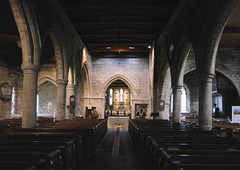
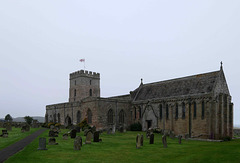
Saint Aidan´s church dates from the late 12th century. The chancel, was added in 1230. According to Bede, St Aidan built a wooden church outside the castle wall, on the site of the current church, in AD 635, and he died here in AD 652. St Aidan had been called to Bamburgh from Iona by King Oswald to establish Christianity in his kingdom of Northumbria.
In 1123 Bamburgh was given to the Augustinian priory at Nowell in Yorkshire by Henry I. The grant was finally confirmed by the pope about a century later, so that the Augustinians could establish a cell of canons here.
The canons remained until the Dissolution of the Monasteries under Henry VII, when they were forced to leave. After the Reformation, St Aidan's became the parish church for the village but its maintenance was neglected. Over the subsequent centuries repairs were undertaken, including significant restorations during the 1800s.
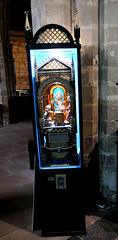
It was quite a surprise to find this machine, an automaton designed by Keith Newstead, in the church.
Bamburgh - St Aidan
| 06 Mar 2025 |
|
Saint Aidan´s church dates from the late 12th century. The chancel, was added in 1230. According to Bede, St Aidan built a wooden church outside the castle wall, on the site of the current church, in AD 635, and he died here in AD 652. St Aidan had been called to Bamburgh from Iona by King Oswald to establish Christianity in his kingdom of Northumbria.
In 1123 Bamburgh was given to the Augustinian priory at Nowell in Yorkshire by Henry I. The grant was finally confirmed by the pope about a century later, so that the Augustinians could establish a cell of canons here.
The canons remained until the Dissolution of the Monasteries under Henry VII, when they were forced to leave. After the Reformation, St Aidan's became the parish church for the village but its maintenance was neglected. Over the subsequent centuries repairs were undertaken, including significant restorations during the 1800s.
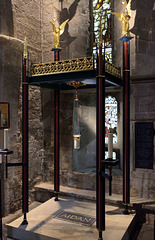
Bede reports that he fell ill in Bamburgh, thought to be the site of the present village church. A tent was erected against the western wall, perhaps because moving him would have hastened his end. He died here on the 31st of August 651.
Bamburgh - St Aidan
| 06 Mar 2025 |
|
|
Saint Aidan´s church dates from the late 12th century. The chancel, was added in 1230. According to Bede, St Aidan built a wooden church outside the castle wall, on the site of the current church, in AD 635, and he died here in AD 652. St Aidan had been called to Bamburgh from Iona by King Oswald to establish Christianity in his kingdom of Northumbria.
In 1123 Bamburgh was given to the Augustinian priory at Nowell in Yorkshire by Henry I. The grant was finally confirmed by the pope about a century later, so that the Augustinians could establish a cell of canons here.
The canons remained until the Dissolution of the Monasteries under Henry VII, when they were forced to leave. After the Reformation, St Aidan's became the parish church for the village but its maintenance was neglected. Over the subsequent centuries repairs were undertaken, including significant restorations during the 1800s.
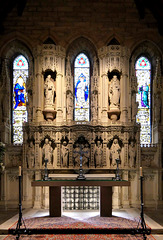
The 19th reredos is depicting 7th and 8th centuries saints of the northern England.
Bamburgh - St Aidan
| 06 Mar 2025 |
|
|
Saint Aidan´s church dates from the late 12th century. The chancel, was added in 1230. According to Bede, St Aidan built a wooden church outside the castle wall, on the site of the current church, in AD 635, and he died here in AD 652. St Aidan had been called to Bamburgh from Iona by King Oswald to establish Christianity in his kingdom of Northumbria.
In 1123 Bamburgh was given to the Augustinian priory at Nowell in Yorkshire by Henry I. The grant was finally confirmed by the pope about a century later, so that the Augustinians could establish a cell of canons here.
The canons remained until the Dissolution of the Monasteries under Henry VII, when they were forced to leave. After the Reformation, St Aidan's became the parish church for the village but its maintenance was neglected. Over the subsequent centuries repairs were undertaken, including significant restorations during the 1800s.
Bamburgh - St Aidan
| 06 Mar 2025 |
|
|
|
Saint Aidan´s church dates from the late 12th century. The chancel, was added in 1230. According to Bede, St Aidan built a wooden church outside the castle wall, on the site of the current church, in AD 635, and he died here in AD 652. St Aidan had been called to Bamburgh from Iona by King Oswald to establish Christianity in his kingdom of Northumbria.
In 1123 Bamburgh was given to the Augustinian priory at Nowell in Yorkshire by Henry I. The grant was finally confirmed by the pope about a century later, so that the Augustinians could establish a cell of canons here.
The canons remained until the Dissolution of the Monasteries under Henry VII, when they were forced to leave. After the Reformation, St Aidan's became the parish church for the village but its maintenance was neglected. Over the subsequent centuries repairs were undertaken, including significant restorations during the 1800s.
Bamburgh - Castle
| 06 Mar 2025 |
|
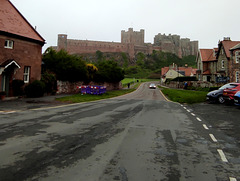
Originally it was the site of a Celtic Briton stronghold called Din Guarie. In 547 the castle was recorded as having been captured by the Anglo-Saxon ruler Ida of Bernicia, the first known king of the Anglian kingdom of Bernicia. Ida´s grandson Æðelfriþ left the castle to his wife Bebba, from whom the early name Bebbanburgh is derived. The Vikings destroyed the original stronghold in 993.
The Normans built a new castle, which forms the core of the present castle. William II unsuccessfully besieged the castle in 1095 during a rebellion supported by Robert de Mowbray, Earl of Northumbria. After Robert de Mowbray's capture, his wife defended the castle until she was forced to surrender by the king's threat to blind her husband.
Bamburgh then became the property of the reigning monarch of England. As an important English outpost, the castle was occasionally the target of attacks by the Scots. In 1464, during the Wars of the Roses, Bamburgh Castle became the first English castle to be defended by artillery after a nine-month siege.
The Forster family, who had provided the castle's governors to the Crown for centuries, received the castle and owned it until 1700, when it was sold. The castle fell into disrepair and was restored by various owners in the 18th and 19th centuries. It was eventually bought by Victorian tycoon William Armstrong, who completed the restoration. The castle is still owned by the Armstrong family
Bamburgh - Castle
| 05 Mar 2025 |
|
|
|
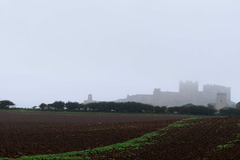
Originally it was the site of a Celtic Briton stronghold called Din Guarie. In 547 the castle was recorded as having been captured by the Anglo-Saxon ruler Ida of Bernicia, the first known king of the Anglian kingdom of Bernicia. Ida´s grandson Æðelfriþ left the castle to his wife Bebba, from whom the early name Bebbanburgh is derived. The Vikings destroyed the original stronghold in 993.
The Normans built a new castle, which forms the core of the present castle. William II unsuccessfully besieged the castle in 1095 during a rebellion supported by Robert de Mowbray, Earl of Northumbria. After Robert de Mowbray's capture, his wife defended the castle until she was forced to surrender by the king's threat to blind her husband.
Bamburgh then became the property of the reigning monarch of England. As an important English outpost, the castle was occasionally the target of attacks by the Scots. In 1464, during the Wars of the Roses, Bamburgh Castle became the first English castle to be defended by artillery after a nine-month siege.
The Forster family, who had provided the castle's governors to the Crown for centuries, received the castle and owned it until 1700, when it was sold. The castle fell into disrepair and was restored by various owners in the 18th and 19th centuries. It was eventually bought by Victorian tycoon William Armstrong, who completed the restoration. The castle is still owned by the Armstrong family
Jump to top
RSS feed- Martin M. Miles' latest photos with "Bamburgh" - Photos
- ipernity © 2007-2026
- Help & Contact
|
Club news
|
About ipernity
|
History |
ipernity Club & Prices |
Guide of good conduct
Donate | Group guidelines | Privacy policy | Terms of use | Statutes | In memoria -
Facebook
X
