

Martin M. Miles' photos with the keyword: Museum

Paris - Centre Georges-Pompidou
| 14 Jan 2026 |
|
Paris is the capital and largest city of France, with over 2 million inhabitants and more than 13 million in the greater metropolitan area.
The Centre Georges-Pompidou was designed by architects Renzo Piano, Richard Rogers and Gianfranco Franchini on the initiative of former French President Georges Pompidou and opened on January 31, 1977, after a five-year construction period.
It houses the Musée National d’Art Moderne with important works of art of the 20th century, to which a centre for industrial design is attached, the Bibliothèque Publique d’Information with about 2000 reading places, a children’s workshop, cinema, theatre and lecture halls, a bookshop as well as a restaurant and a café.
I first saw the museum in 1978 when the "Paris-Berlin" exhibition opened, and I was completely taken aback. I remember standing in front of the building with the feeling that a UFO had landed. It all seemed so unreal.
Unfortunately, the Centre Pompidou is closed for renovations until 2030.

Paris - Centre Georges-Pompidou
| 14 Jan 2026 |
|
|
Paris is the capital and largest city of France, with over 2 million inhabitants and more than 13 million in the greater metropolitan area.
The Centre Georges-Pompidou was designed by architects Renzo Piano, Richard Rogers and Gianfranco Franchini on the initiative of former French President Georges Pompidou and opened on January 31, 1977, after a five-year construction period.
It houses the Musée National d’Art Moderne with important works of art of the 20th century, to which a centre for industrial design is attached, the Bibliothèque Publique d’Information with about 2000 reading places, a children’s workshop, cinema, theatre and lecture halls, a bookshop as well as a restaurant and a café.
I first saw the museum in 1978 when the "Paris-Berlin" exhibition opened, and I was completely taken aback. I remember standing in front of the building with the feeling that a UFO had landed. It all seemed so unreal.
Unfortunately, the Centre Pompidou is closed for renovations until 2030.
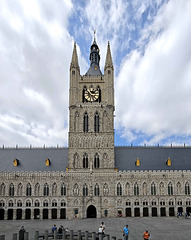
Ypres - Lakenhalle
| 07 Sep 2025 |
|
Baldwin II the Bald, Margrave of Flanders, fortified Ypres to defend against the Normans with th early 10th century. During the Middle Ages, Ypres was a prosperous Flemish city with a population of 40,000 in 1200 AD, renowned for its linen trade with England, which was mentioned in the Canterbury Tales. Textiles from Ypres could be found in the markets of Novgorod in Kievan Rus' in the early 12th century. In 1241, a major fire ruined much of the old city. During the Norwich Crusade, led by the English bishop Henry le Despenser, Ypres was besieged in 1383, until French relief forces arrived. Ypres became the seat of the new Diocese of Ypres in 1561, and Saint Martin's Church was elevated to cathedral. In 1678, Ypres was conquered by the forces of Louis XIV of France. It remained French and Vauban constructed his typical fortifications.
Ypres occupied a strategic position during the First World War. The neutrality of Belgium, established by the First Treaty of London, brought the British Empire into the war. The Germans surrounded the city on three sides, bombarding it throughout much of the war. To counterattack, British, French, and allied forces made costly advances into the German lines on the surrounding hills. In the First Battle of Ypres (November 1914), the Allies captured the town from the Germans. The Germans´ use of poison gas for the first time in April 1915 marked the beginning of the Second Battle of Ypres. They captured high ground east of the town. Mustard gas, also called Yperite from the name of this town, was also used for the first time near Ypres, in the autumn of 1917. After the war, Winston Churchill proposed to leave Ypres in ruins as a mausoleum,.
The "Lakenhalle" (cloth hall) is a large, Gothic building complex originally dating back to the 13th century. The foundation stone is said to have been laid around 1200 by the Count of Flanders, and its construction lasted until 1304. It was one of the largest commercial buildings of the Middle Ages, when it served as the main market and warehouse for the city's prosperous cloth industry. At 125 metres in breadth, with a 70 metres high belfry tower, it recalls the importance and wealth of the medieval trade city.
On November 4, 1914, a German general had the medieval Lakenhalle reduced to rubble and ashes without any military reason. Reconstructions started in the early 1920s. It was opted for a faithful and rigorous restitution of the building. The current hall is therefore largely an exact replica of the medieval building as it existed before the war. However, some parts of the monument are still original, notably in the western part and at the base of the belfry. Most of the reusable old elements found in the ruins and the rubble were reintegrated into the monument, and they served as a model for the missing elements. Reconstruction work ended in 1967.
Today the "In Flanders Fields Museum", dedicated to the history of the Great War, is housed here. The Renaissance annex, the "Nieuwerck", added 1619 - 1622 now serves as the town hall.
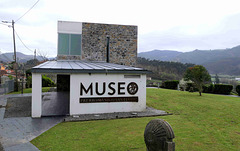
Santianes - Museo Prerromanico Santianes
| 02 Oct 2024 |
|
|
Next to the pre-Romanesque church of San Juan Apóstol y Evangelista is the "Museo Prerromanico Santianes", which was obviously built with great dedication and enthusiasm.
This seems to have waned, as the museum has probably been closed for some time. Perhaps it is only open in summer.
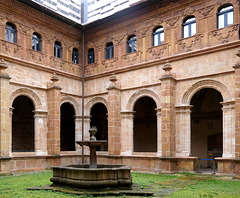
Oviedo - Museo Arqueológico de Asturias
| 01 Oct 2024 |
|
|
Oviedo was founded on a hill that the Romans called Ovetao. The monks Máximo and Fromestano founded a monastery on the Roman road in 761 and built a hermitage. Later, two dozen monks from the Muslim south joined the founders and, according to a document, chose Fromestano as their first abbot. They were under the protection of Fruela I, who chose the place as a residence for his wife Munia, who gave birth here to their son and later King Alfonso II.
Alfonso II (aka "the Chaste", "el Casto" moved the capital here in 812 and made Oviedo the seat of the bishopric. In 912, however, Oviedo lost its function as capital to León under García I in the course of the reconquest. Alfonso II fortified Oviedo and furnished it with palaces and churches.
During his reign, a tomb attributed to St James the Elder was discovered in Santiago de Compostela in 812. The king travelled from Oviedo to Santiago and is said to have been the first pilgrim to Santiago. He is also said to have opened the first Way of St James, the Camino Primitivo. Until the city of León was established as both the capital of the Kingdom of León and the nexus of a safe route — the Camino Francés — the Camino Primitivo remained the most frequented route for those going to Santiago.
The Museo Arqueológico de Asturias is housed in a 16th century monastery.
The Comisión Provincial de Monumentos, founded in 1845 to protect Spanish and Asturian cultural assets and monuments, opened a museum in 1870 for artefacts from Asturias and other donated items. The Museo Arqueológico de Asturias was officially founded in 1944 and moved to its current location.
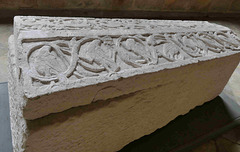
Oviedo - Museo Arqueológico de Asturias
| 01 Oct 2024 |
|
Oviedo was founded on a hill that the Romans called Ovetao. The monks Máximo and Fromestano founded a monastery on the Roman road in 761 and built a hermitage. Later, two dozen monks from the Muslim south joined the founders and, according to a document, chose Fromestano as their first abbot. They were under the protection of Fruela I, who chose the place as a residence for his wife Munia, who gave birth here to their son and later King Alfonso II.
Alfonso II (aka "the Chaste", "el Casto" moved the capital here in 812 and made Oviedo the seat of the bishopric. In 912, however, Oviedo lost its function as capital to León under García I in the course of the reconquest. Alfonso II fortified Oviedo and furnished it with palaces and churches.
During his reign, a tomb attributed to St James the Elder was discovered in Santiago de Compostela in 812. The king travelled from Oviedo to Santiago and is said to have been the first pilgrim to Santiago. He is also said to have opened the first Way of St James, the Camino Primitivo. Until the city of León was established as both the capital of the Kingdom of León and the nexus of a safe route — the Camino Francés — the Camino Primitivo remained the most frequented route for those going to Santiago.
The Museo Arqueológico de Asturias is housed in a 16th century monastery.
The Comisión Provincial de Monumentos, founded in 1845 to protect Spanish and Asturian cultural assets and monuments, opened a museum in 1870 for artefacts from Asturias and other donated items. The Museo Arqueológico de Asturias was officially founded in 1944 and moved to its current location.
Sarcofago de Dona Gontrodo / 1186
Oviedo - Museo Arqueológico de Asturias
| 01 Oct 2024 |
|
Oviedo was founded on a hill that the Romans called Ovetao. The monks Máximo and Fromestano founded a monastery on the Roman road in 761 and built a hermitage. Later, two dozen monks from the Muslim south joined the founders and, according to a document, chose Fromestano as their first abbot. They were under the protection of Fruela I, who chose the place as a residence for his wife Munia, who gave birth here to their son and later King Alfonso II.
Alfonso II (aka "the Chaste", "el Casto" moved the capital here in 812 and made Oviedo the seat of the bishopric. In 912, however, Oviedo lost its function as capital to León under García I in the course of the reconquest. Alfonso II fortified Oviedo and furnished it with palaces and churches.
During his reign, a tomb attributed to St James the Elder was discovered in Santiago de Compostela in 812. The king travelled from Oviedo to Santiago and is said to have been the first pilgrim to Santiago. He is also said to have opened the first Way of St James, the Camino Primitivo. Until the city of León was established as both the capital of the Kingdom of León and the nexus of a safe route — the Camino Francés — the Camino Primitivo remained the most frequented route for those going to Santiago.
The Museo Arqueológico de Asturias is housed in a 16th century monastery.
The Comisión Provincial de Monumentos, founded in 1845 to protect Spanish and Asturian cultural assets and monuments, opened a museum in 1870 for artefacts from Asturias and other donated items. The Museo Arqueológico de Asturias was officially founded in 1944 and moved to its current location.
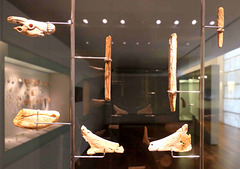
Bone carvings / Magdalenian culture ca. 15,000 BC
Oviedo - Museo Arqueológico de Asturias
| 01 Oct 2024 |
|
Oviedo was founded on a hill that the Romans called Ovetao. The monks Máximo and Fromestano founded a monastery on the Roman road in 761 and built a hermitage. Later, two dozen monks from the Muslim south joined the founders and, according to a document, chose Fromestano as their first abbot. They were under the protection of Fruela I, who chose the place as a residence for his wife Munia, who gave birth here to their son and later King Alfonso II.
Alfonso II (aka "the Chaste", "el Casto" moved the capital here in 812 and made Oviedo the seat of the bishopric. In 912, however, Oviedo lost its function as capital to León under García I in the course of the reconquest. Alfonso II fortified Oviedo and furnished it with palaces and churches.
During his reign, a tomb attributed to St James the Elder was discovered in Santiago de Compostela in 812. The king travelled from Oviedo to Santiago and is said to have been the first pilgrim to Santiago. He is also said to have opened the first Way of St James, the Camino Primitivo. Until the city of León was established as both the capital of the Kingdom of León and the nexus of a safe route — the Camino Francés — the Camino Primitivo remained the most frequented route for those going to Santiago.
The Museo Arqueológico de Asturias is housed in a 16th century monastery.
The Comisión Provincial de Monumentos, founded in 1845 to protect Spanish and Asturian cultural assets and monuments, opened a museum in 1870 for artefacts from Asturias and other donated items. The Museo Arqueológico de Asturias was officially founded in 1944 and moved to its current location.
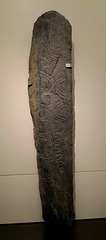
Decorated stone slab / neolithic
Oviedo - Museo Arqueológico de Asturias
| 01 Oct 2024 |
|
Oviedo was founded on a hill that the Romans called Ovetao. The monks Máximo and Fromestano founded a monastery on the Roman road in 761 and built a hermitage. Later, two dozen monks from the Muslim south joined the founders and, according to a document, chose Fromestano as their first abbot. They were under the protection of Fruela I, who chose the place as a residence for his wife Munia, who gave birth here to their son and later King Alfonso II.
Alfonso II (aka "the Chaste", "el Casto" moved the capital here in 812 and made Oviedo the seat of the bishopric. In 912, however, Oviedo lost its function as capital to León under García I in the course of the reconquest. Alfonso II fortified Oviedo and furnished it with palaces and churches.
During his reign, a tomb attributed to St James the Elder was discovered in Santiago de Compostela in 812. The king travelled from Oviedo to Santiago and is said to have been the first pilgrim to Santiago. He is also said to have opened the first Way of St James, the Camino Primitivo. Until the city of León was established as both the capital of the Kingdom of León and the nexus of a safe route — the Camino Francés — the Camino Primitivo remained the most frequented route for those going to Santiago.
The Museo Arqueológico de Asturias is housed in a 16th century monastery.
The Comisión Provincial de Monumentos, founded in 1845 to protect Spanish and Asturian cultural assets and monuments, opened a museum in 1870 for artefacts from Asturias and other donated items. The Museo Arqueológico de Asturias was officially founded in 1944 and moved to its current location.
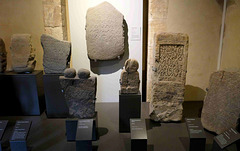
Roman stelae
Oviedo - Museo Arqueológico de Asturias
| 01 Oct 2024 |
|
|
Oviedo was founded on a hill that the Romans called Ovetao. The monks Máximo and Fromestano founded a monastery on the Roman road in 761 and built a hermitage. Later, two dozen monks from the Muslim south joined the founders and, according to a document, chose Fromestano as their first abbot. They were under the protection of Fruela I, who chose the place as a residence for his wife Munia, who gave birth here to their son and later King Alfonso II.
Alfonso II (aka "the Chaste", "el Casto" moved the capital here in 812 and made Oviedo the seat of the bishopric. In 912, however, Oviedo lost its function as capital to León under García I in the course of the reconquest. Alfonso II fortified Oviedo and furnished it with palaces and churches.
During his reign, a tomb attributed to St James the Elder was discovered in Santiago de Compostela in 812. The king travelled from Oviedo to Santiago and is said to have been the first pilgrim to Santiago. He is also said to have opened the first Way of St James, the Camino Primitivo. Until the city of León was established as both the capital of the Kingdom of León and the nexus of a safe route — the Camino Francés — the Camino Primitivo remained the most frequented route for those going to Santiago.
The Museo Arqueológico de Asturias is housed in a 16th century monastery.
The Comisión Provincial de Monumentos, founded in 1845 to protect Spanish and Asturian cultural assets and monuments, opened a museum in 1870 for artefacts from Asturias and other donated items. The Museo Arqueológico de Asturias was officially founded in 1944 and moved to its current location.
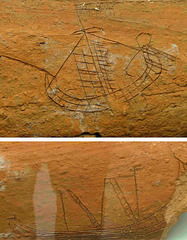
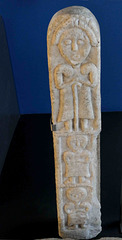
Two graffiti found at the Monasterio de Cornellana
Oviedo - Museo Arqueológico de Asturias
| 30 Sep 2024 |
|
|
|
Oviedo was founded on a hill that the Romans called Ovetao. The monks Máximo and Fromestano founded a monastery on the Roman road in 761 and built a hermitage. Later, two dozen monks from the Muslim south joined the founders and, according to a document, chose Fromestano as their first abbot. They were under the protection of Fruela I, who chose the place as a residence for his wife Munia, who gave birth here to their son and later King Alfonso II.
Alfonso II (aka "the Chaste", "el Casto" moved the capital here in 812 and made Oviedo the seat of the bishopric. In 912, however, Oviedo lost its function as capital to León under García I in the course of the reconquest. Alfonso II fortified Oviedo and furnished it with palaces and churches.
During his reign, a tomb attributed to St James the Elder was discovered in Santiago de Compostela in 812. The king travelled from Oviedo to Santiago and is said to have been the first pilgrim to Santiago. He is also said to have opened the first Way of St James, the Camino Primitivo. Until the city of León was established as both the capital of the Kingdom of León and the nexus of a safe route — the Camino Francés — the Camino Primitivo remained the most frequented route for those going to Santiago.
The Museo Arqueológico de Asturias is housed in a 16th century monastery.
The Comisión Provincial de Monumentos, founded in 1845 to protect Spanish and Asturian cultural assets and monuments, opened a museum in 1870 for artefacts from Asturias and other donated items. The Museo Arqueológico de Asturias was officially founded in 1944 and moved to its current location.
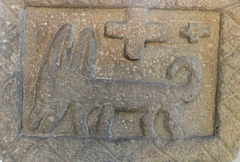
The stone dates to tThe Kingdom of Asturias.
It was founded by the Visigothic nobleman Pelagius. It was the first Christian political entity established after the Umayyad conquest of Visigothic Hispania in 711. In 722, Pelagius defeated an Umayyad army at the Battle of Covadonga, in what is retroactively regarded as the beginning of the Reconquista.
Oviedo - Museo Arqueológico de Asturias
| 30 Sep 2024 |
|
|
Oviedo was founded on a hill that the Romans called Ovetao. The monks Máximo and Fromestano founded a monastery on the Roman road in 761 and built a hermitage. Later, two dozen monks from the Muslim south joined the founders and, according to a document, chose Fromestano as their first abbot. They were under the protection of Fruela I, who chose the place as a residence for his wife Munia, who gave birth here to their son and later King Alfonso II.
Alfonso II (aka "the Chaste", "el Casto" moved the capital here in 812 and made Oviedo the seat of the bishopric. In 912, however, Oviedo lost its function as capital to León under García I in the course of the reconquest. Alfonso II fortified Oviedo and furnished it with palaces and churches.
During his reign, a tomb attributed to St James the Elder was discovered in Santiago de Compostela in 812. The king travelled from Oviedo to Santiago and is said to have been the first pilgrim to Santiago. He is also said to have opened the first Way of St James, the Camino Primitivo. Until the city of León was established as both the capital of the Kingdom of León and the nexus of a safe route — the Camino Francés — the Camino Primitivo remained the most frequented route for those going to Santiago.
The Museo Arqueológico de Asturias is housed in a 16th century monastery.
The Comisión Provincial de Monumentos, founded in 1845 to protect Spanish and Asturian cultural assets and monuments, opened a museum in 1870 for artefacts from Asturias and other donated items. The Museo Arqueológico de Asturias was officially founded in 1944 and moved to its current location.
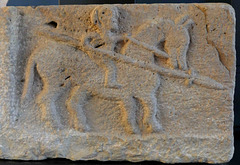
The stone dates to tThe Kingdom of Asturias.
It was founded by the Visigothic nobleman Pelagius. It was the first Christian political entity established after the Umayyad conquest of Visigothic Hispania in 711. In 722, Pelagius defeated an Umayyad army at the Battle of Covadonga, in what is retroactively regarded as the beginning of the Reconquista.
Oviedo - Museo Arqueológico de Asturias
| 30 Sep 2024 |
|
|
Oviedo was founded on a hill that the Romans called Ovetao. The monks Máximo and Fromestano founded a monastery on the Roman road in 761 and built a hermitage. Later, two dozen monks from the Muslim south joined the founders and, according to a document, chose Fromestano as their first abbot. They were under the protection of Fruela I, who chose the place as a residence for his wife Munia, who gave birth here to their son and later King Alfonso II.
Alfonso II (aka "the Chaste", "el Casto" moved the capital here in 812 and made Oviedo the seat of the bishopric. In 912, however, Oviedo lost its function as capital to León under García I in the course of the reconquest. Alfonso II fortified Oviedo and furnished it with palaces and churches.
During his reign, a tomb attributed to St James the Elder was discovered in Santiago de Compostela in 812. The king travelled from Oviedo to Santiago and is said to have been the first pilgrim to Santiago. He is also said to have opened the first Way of St James, the Camino Primitivo. Until the city of León was established as both the capital of the Kingdom of León and the nexus of a safe route — the Camino Francés — the Camino Primitivo remained the most frequented route for those going to Santiago.
The Museo Arqueológico de Asturias is housed in a 16th century monastery.
The Comisión Provincial de Monumentos, founded in 1845 to protect Spanish and Asturian cultural assets and monuments, opened a museum in 1870 for artefacts from Asturias and other donated items. The Museo Arqueológico de Asturias was officially founded in 1944 and moved to its current location.
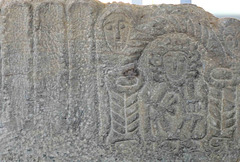
The stone dates to tThe Kingdom of Asturias.
It was founded by the Visigothic nobleman Pelagius. It was the first Christian political entity established after the Umayyad conquest of Visigothic Hispania in 711. In 722, Pelagius defeated an Umayyad army at the Battle of Covadonga, in what is retroactively regarded as the beginning of the Reconquista.
Oviedo - Museo Arqueológico de Asturias
| 30 Sep 2024 |
|
Oviedo was founded on a hill that the Romans called Ovetao. The monks Máximo and Fromestano founded a monastery on the Roman road in 761 and built a hermitage. Later, two dozen monks from the Muslim south joined the founders and, according to a document, chose Fromestano as their first abbot. They were under the protection of Fruela I, who chose the place as a residence for his wife Munia, who gave birth here to their son and later King Alfonso II.
Alfonso II (aka "the Chaste", "el Casto" moved the capital here in 812 and made Oviedo the seat of the bishopric. In 912, however, Oviedo lost its function as capital to León under García I in the course of the reconquest. Alfonso II fortified Oviedo and furnished it with palaces and churches.
During his reign, a tomb attributed to St James the Elder was discovered in Santiago de Compostela in 812. The king travelled from Oviedo to Santiago and is said to have been the first pilgrim to Santiago. He is also said to have opened the first Way of St James, the Camino Primitivo. Until the city of León was established as both the capital of the Kingdom of León and the nexus of a safe route — the Camino Francés — the Camino Primitivo remained the most frequented route for those going to Santiago.
The Museo Arqueológico de Asturias is housed in a 16th century monastery.
The Comisión Provincial de Monumentos, founded in 1845 to protect Spanish and Asturian cultural assets and monuments, opened a museum in 1870 for artefacts from Asturias and other donated items. The Museo Arqueológico de Asturias was officially founded in 1944 and moved to its current location.
The stone dates to tThe Kingdom of Asturias.
It was founded by the Visigothic nobleman Pelagius. It was the first Christian political entity established after the Umayyad conquest of Visigothic Hispania in 711. In 722, Pelagius defeated an Umayyad army at the Battle of Covadonga, in what is retroactively regarded as the beginning of the Reconquista.
Oviedo - Museo Arqueológico de Asturias
| 30 Sep 2024 |
|
|
Oviedo was founded on a hill that the Romans called Ovetao. The monks Máximo and Fromestano founded a monastery on the Roman road in 761 and built a hermitage. Later, two dozen monks from the Muslim south joined the founders and, according to a document, chose Fromestano as their first abbot. They were under the protection of Fruela I, who chose the place as a residence for his wife Munia, who gave birth here to their son and later King Alfonso II.
Alfonso II (aka "the Chaste", "el Casto" moved the capital here in 812 and made Oviedo the seat of the bishopric. In 912, however, Oviedo lost its function as capital to León under García I in the course of the reconquest. Alfonso II fortified Oviedo and furnished it with palaces and churches.
During his reign, a tomb attributed to St James the Elder was discovered in Santiago de Compostela in 812. The king travelled from Oviedo to Santiago and is said to have been the first pilgrim to Santiago. He is also said to have opened the first Way of St James, the Camino Primitivo. Until the city of León was established as both the capital of the Kingdom of León and the nexus of a safe route — the Camino Francés — the Camino Primitivo remained the most frequented route for those going to Santiago.
The Museo Arqueológico de Asturias is housed in a 16th century monastery.
The Comisión Provincial de Monumentos, founded in 1845 to protect Spanish and Asturian cultural assets and monuments, opened a museum in 1870 for artefacts from Asturias and other donated items. The Museo Arqueológico de Asturias was officially founded in 1944 and moved to its current location.
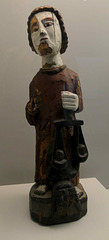
St Michael at the "weighing of souls" / 14th century
Oviedo - Museo Arqueológico de Asturias
| 30 Sep 2024 |
|
Oviedo was founded on a hill that the Romans called Ovetao. The monks Máximo and Fromestano founded a monastery on the Roman road in 761 and built a hermitage. Later, two dozen monks from the Muslim south joined the founders and, according to a document, chose Fromestano as their first abbot. They were under the protection of Fruela I, who chose the place as a residence for his wife Munia, who gave birth here to their son and later King Alfonso II.
Alfonso II (aka "the Chaste", "el Casto" moved the capital here in 812 and made Oviedo the seat of the bishopric. In 912, however, Oviedo lost its function as capital to León under García I in the course of the reconquest. Alfonso II fortified Oviedo and furnished it with palaces and churches.
During his reign, a tomb attributed to St James the Elder was discovered in Santiago de Compostela in 812. The king travelled from Oviedo to Santiago and is said to have been the first pilgrim to Santiago. He is also said to have opened the first Way of St James, the Camino Primitivo. Until the city of León was established as both the capital of the Kingdom of León and the nexus of a safe route — the Camino Francés — the Camino Primitivo remained the most frequented route for those going to Santiago.
The Museo Arqueológico de Asturias is housed in a 16th century monastery.
The Comisión Provincial de Monumentos, founded in 1845 to protect Spanish and Asturian cultural assets and monuments, opened a museum in 1870 for artefacts from Asturias and other donated items. The Museo Arqueológico de Asturias was officially founded in 1944 and moved to its current location.
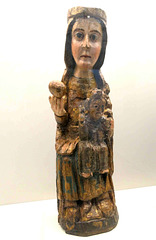
Virgin and Child / 13th century
Oviedo - Museo Arqueológico de Asturias
| 30 Sep 2024 |
|
Oviedo was founded on a hill that the Romans called Ovetao. The monks Máximo and Fromestano founded a monastery on the Roman road in 761 and built a hermitage. Later, two dozen monks from the Muslim south joined the founders and, according to a document, chose Fromestano as their first abbot. They were under the protection of Fruela I, who chose the place as a residence for his wife Munia, who gave birth here to their son and later King Alfonso II.
Alfonso II (aka "the Chaste", "el Casto" moved the capital here in 812 and made Oviedo the seat of the bishopric. In 912, however, Oviedo lost its function as capital to León under García I in the course of the reconquest. Alfonso II fortified Oviedo and furnished it with palaces and churches.
During his reign, a tomb attributed to St James the Elder was discovered in Santiago de Compostela in 812. The king travelled from Oviedo to Santiago and is said to have been the first pilgrim to Santiago. He is also said to have opened the first Way of St James, the Camino Primitivo. Until the city of León was established as both the capital of the Kingdom of León and the nexus of a safe route — the Camino Francés — the Camino Primitivo remained the most frequented route for those going to Santiago.
The Museo Arqueológico de Asturias is housed in a 16th century monastery.
The Comisión Provincial de Monumentos, founded in 1845 to protect Spanish and Asturian cultural assets and monuments, opened a museum in 1870 for artefacts from Asturias and other donated items. The Museo Arqueológico de Asturias was officially founded in 1944 and moved to its current location.
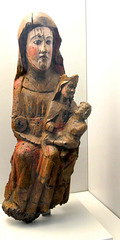
Virgin and Child with Saint Anne / 14th century
Jump to top
RSS feed- Martin M. Miles' latest photos with "Museum" - Photos
- ipernity © 2007-2026
- Help & Contact
|
Club news
|
About ipernity
|
History |
ipernity Club & Prices |
Guide of good conduct
Donate | Group guidelines | Privacy policy | Terms of use | Statutes | In memoria -
Facebook
X
