

Martin M. Miles' photos with the keyword: burial
Agios Nikolaos - Archaeological Museum
| 15 May 2025 |
|
Agios Nikolaos was settled in the late Bronze Age by Dorian occupants of Lato under the name Lato pros Kamara, often simply Kamara. It was the port of Lato for a long time. In the 2nd century BC, Lato was abandoned, and many citizens settled in Kamara. The name of the present-day town comes from the church of Agios Nikolaos, which dates back to the 9th or 10th century and is one of the oldest intact churches in Crete.
In 1970, the Archaeological Museum was opened to house finds from Eastern Crete that had previously been housed in Heraklion
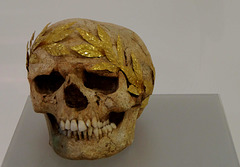
Skull of a young man with a golden wreath. Kamara, Roman period. The golden wreath consists of 24 leaves. Such wreaths symbolized both the deceased's victory in the Games and his posthumous glorification. A coin placed in the deceased's mouth as an obolus for Charon's ferry was minted between 14 and 37 AD.
Agios Nikolaos - Archaeological Museum
| 15 May 2025 |
|
Agios Nikolaos was settled in the late Bronze Age by Dorian occupants of Lato under the name Lato pros Kamara, often simply Kamara. It was the port of Lato for a long time. In the 2nd century BC, Lato was abandoned, and many citizens settled in Kamara. The name of the present-day town comes from the church of Agios Nikolaos, which dates back to the 9th or 10th century and is one of the oldest intact churches in Crete.
In 1970, the Archaeological Museum was opened to house finds from Eastern Crete that had previously been housed in Heraklion
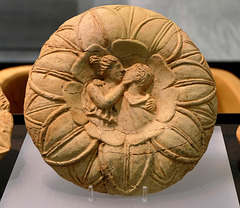
Rosette, Kamara, Stavros Potamos cemeteries, Hellenistic Roman period
There were used as decorative objects and grave goods ion burials.
Cairnpapple Hill
| 20 Feb 2025 |
|
|
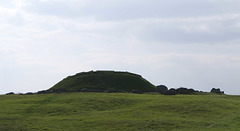
Cairnpapple Hill is home to a prehistoric monument. The plateau on the 312 metre high hill south of Linlithgow, was used as a burial ground and place of worship between around 3000 and 1400 BC. Excavations towards the end of the 1940s revealed the complete chronology of the elements on the mound.
The first activity on the mound consisted of the placement of three menhirs in the centre of an arc of small pits containing cremated human bones. This cemetery was located within an oval henge monument with a ditch and rampart built around 3000 BC, in which a circle of 24 menhirs was erected.
Centuries later, the type of use changed and burials took place in a chambered tomb, which was erected in the western section of the henge and covered by a round mound. The grave was the resting place of an important person whose face was covered with a kind of mask. Next to her lay a wooden club. A drinking cup lay at the head and foot of the grave. The stone mound was later enlarged to accommodate two urns.
Trefignath
| 16 Dec 2024 |
|
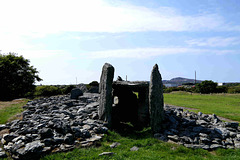
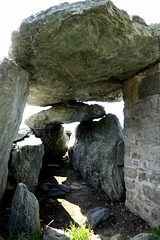
Trefignath is located on the island of Holy Island, which belongs to Anglesey. It is a megalithic structure of the Cotswold Severn Tomb type. The structure was excavated in 1987, revealing a three-phase structure within the remains of the mostly removed stone mound.
The oldest part is the western chamber, which was built over a cavity in the rock with access to the south. Four large supporting stones from it still remain. Radiocarbon dates from the old surface show that this structure was built around 3750-3500 BC.
The current middle chamber was built next. It is also still marked by four supporting stones. The mound was given a west-east orientation.
Finally, the far better preserved east chamber was built in the forecourt and the stone mound was extended to its current shape. The chamber is almost complete and has two large portal stones in addition to the capstones.
Trefignath
| 16 Dec 2024 |
|
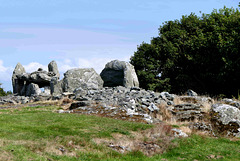
Trefignath is located on the island of Holy Island, which belongs to Anglesey. It is a megalithic structure of the Cotswold Severn Tomb type. The structure was excavated in 1987, revealing a three-phase structure within the remains of the mostly removed stone mound.
The oldest part is the western chamber, which was built over a cavity in the rock with access to the south. Four large supporting stones from it still remain. Radiocarbon dates from the old surface show that this structure was built around 3750-3500 BC.
The current middle chamber was built next. It is also still marked by four supporting stones. The mound was given a west-east orientation.
Finally, the far better preserved east chamber was built in the forecourt and the stone mound was extended to its current shape. The chamber is almost complete and has two large portal stones in addition to the capstones.
Trefignath
| 15 Dec 2024 |
|
|
Trefignath is located on the island of Holy Island, which belongs to Anglesey. It is a megalithic structure of the Cotswold Severn Tomb type. The structure was excavated in 1987, revealing a three-phase structure within the remains of the mostly removed stone mound.
The oldest part is the western chamber, which was built over a cavity in the rock with access to the south. Four large supporting stones from it still remain. Radiocarbon dates from the old surface show that this structure was built around 3750-3500 BC.
The current middle chamber was built next. It is also still marked by four supporting stones. The mound was given a west-east orientation.
Finally, the far better preserved east chamber was built in the forecourt and the stone mound was extended to its current shape. The chamber is almost complete and has two large portal stones in addition to the capstones.
Barclodiad y Gawres
| 15 Dec 2024 |
|
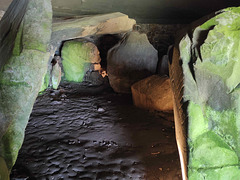
Barclodiad y Gawres is a Neolithic burial chamber. It is an example of a cross-shaped passage grave, with a main and two side chambers. Some of the stones have spirals, zig-zags, lozenges and chevrons
The megalithic complex was used for sacred purposes in the Neolithic and Bronze Ages. In Celtic times it may have been connected to one of the "Druid groves" of Môn Mam Cymru mentioned by Tacitus. This cannot be ruled out because megalithic sanctuaries often had significance in the pagan Celtic religion.
One of the decorated stones is seen on the right
Barclodiad y Gawres
| 15 Dec 2024 |
|
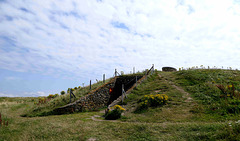
Barclodiad y Gawres is a Neolithic burial chamber. It is an example of a cross-shaped passage grave, with a main and two side chambers. Some of the stones have spirals, zig-zags, lozenges and chevrons
The megalithic complex was used for sacred purposes in the Neolithic and Bronze Ages. In Celtic times it may have been connected to one of the "Druid groves" of Môn Mam Cymru mentioned by Tacitus. This cannot be ruled out because megalithic sanctuaries often had significance in the pagan Celtic religion.
Bodowyr
| 14 Dec 2024 |
|
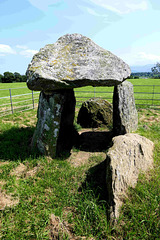
The Bodowyr burial chamber is the surviving remains of the central chamber of a passage tomb.
Three bearing stones, about one meter high, support a wedge-shaped capstone that is over 2.0 meters long and almost one meter thick at its widest point. A fallen stone nearby could be a former closure stone. The passage tomb would originally have been located in an earthen or stone mound with a narrow entrance. This has been completely removed by erosion, field cultivation or stone theft.
Bodowyr
| 14 Dec 2024 |
|
|
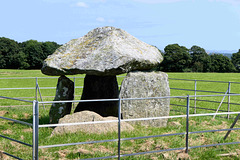
The Bodowyr burial chamber is the surviving remains of the central chamber of a passage tomb.
Three bearing stones, about one meter high, support a wedge-shaped capstone that is over 2.0 meters long and almost one meter thick at its widest point. A fallen stone nearby could be a former closure stone. The passage tomb would originally have been located in an earthen or stone mound with a narrow entrance. This has been completely removed by erosion, field cultivation or stone theft.
Bryn Celli Ddu
| 14 Dec 2024 |
|
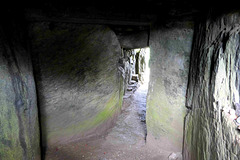
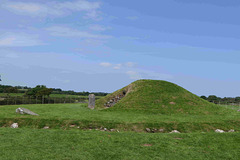
Bryn Celli Ddu is generally recognised as the finest passage tomb in Wales, and unlike many other megalithic sites, it not only has a full entrance passage and a roughly circular chamber, but also lies beneath a mound of earth which was backfilled after the 1929 excavations. It is located on the island of Anglesey.
The oldest remains of the complex are five postholes, which were previously thought to date from the time of the tomb. However, radiocarbon analyses in 2006 revealed that they date from around 4000 BC. This means that the holes date from the end of the Mesolithic period and are therefore around 1000 years older than the next known utilisation phase of the site.
A henge was built around 3000 BC, consisting of a circular rampart and a ditch 21 metres in diameter. Within this circle was an oval stone circle. Burnt human bones were buried at the foot of some of these stones. The serpent pattern stone was found lying nearby, its decoration on both sides suggesting that it was standing upright.
About 1000 years after the henge was built, the site was radically remodelled. All but one of the standing stones were vandalised and the tomb was erected. At 26 metres in diameter, it was much larger than it is now, and will have had a full row of kerbstones. Human bones, both burnt and unburnt, were found in the chamber and in the passage, indicating a number of different burial rituals. In the end, the tomb was sealed by placing a large stone in front of the entrance between the two portal stones.
Bryn Celli Ddu
| 14 Dec 2024 |
|
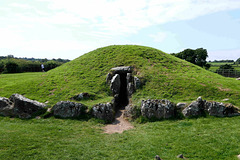
Bryn Celli Ddu is generally recognised as the finest passage tomb in Wales, and unlike many other megalithic sites, it not only has a full entrance passage and a roughly circular chamber, but also lies beneath a mound of earth which was backfilled after the 1929 excavations. It is located on the island of Anglesey.
The oldest remains of the complex are five postholes, which were previously thought to date from the time of the tomb. However, radiocarbon analyses in 2006 revealed that they date from around 4000 BC. This means that the holes date from the end of the Mesolithic period and are therefore around 1000 years older than the next known utilisation phase of the site.
A henge was built around 3000 BC, consisting of a circular rampart and a ditch 21 metres in diameter. Within this circle was an oval stone circle. Burnt human bones were buried at the foot of some of these stones. The serpent pattern stone was found lying nearby, its decoration on both sides suggesting that it was standing upright.
About 1000 years after the henge was built, the site was radically remodelled. All but one of the standing stones were vandalised and the tomb was erected. At 26 metres in diameter, it was much larger than it is now, and will have had a full row of kerbstones. Human bones, both burnt and unburnt, were found in the chamber and in the passage, indicating a number of different burial rituals. In the end, the tomb was sealed by placing a large stone in front of the entrance between the two portal stones.
Bryn Celli Ddu
| 14 Dec 2024 |
|
|
Bryn Celli Ddu is generally recognised as the finest passage tomb in Wales, and unlike many other megalithic sites, it not only has a full entrance passage and a roughly circular chamber, but also lies beneath a mound of earth which was backfilled after the 1929 excavations. It is located on the island of Anglesey.
The oldest remains of the complex are five postholes, which were previously thought to date from the time of the tomb. However, radiocarbon analyses in 2006 revealed that they date from around 4000 BC. This means that the holes date from the end of the Mesolithic period and are therefore around 1000 years older than the next known utilisation phase of the site.
A henge was built around 3000 BC, consisting of a circular rampart and a ditch 21 metres in diameter. Within this circle was an oval stone circle. Burnt human bones were buried at the foot of some of these stones. The serpent pattern stone was found lying nearby, its decoration on both sides suggesting that it was standing upright.
About 1000 years after the henge was built, the site was radically remodelled. All but one of the standing stones were vandalised and the tomb was erected. At 26 metres in diameter, it was much larger than it is now, and will have had a full row of kerbstones. Human bones, both burnt and unburnt, were found in the chamber and in the passage, indicating a number of different burial rituals. In the end, the tomb was sealed by placing a large stone in front of the entrance between the two portal stones.
Trellyffaint
| 11 Dec 2024 |
|
|
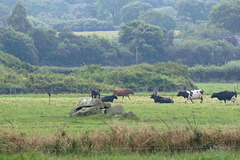
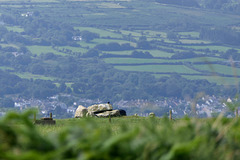
The dolmen of Trellyffaint is a portal tomb. It is located north of Nevern (Pembrokeshire) Trellyffaint is a double tomb with a large or main and small or secondary chamber. The capstone of the main chamber is supported by two stones to the south and a third supporting stone blocks the back of the chamber. The chamber height used to be greater, but the capstone slipped and broke.
The smaller, neighbouring chamber to the north-west consists of only three side stones. It may be a chamber added later or a stone box. It is possible that a cairn once covered both chambers.
Its name, which might be translated as ‘Toad’s Hall’, stems from the early medieval historian and geographer, Giraldus Cambrensis, who believed that its occupant was a chieftain who had been devoured by toads.
Trellyffaint
| 11 Dec 2024 |
|
The dolmen of Trellyffaint is a portal tomb. It is located north of Nevern (Pembrokeshire) Trellyffaint is a double tomb with a large or main and small or secondary chamber. The capstone of the main chamber is supported by two stones to the south and a third supporting stone blocks the back of the chamber. The chamber height used to be greater, but the capstone slipped and broke.
The smaller, neighbouring chamber to the north-west consists of only three side stones. It may be a chamber added later or a stone box. It is possible that a cairn once covered both chambers.
Its name, which might be translated as ‘Toad’s Hall’, stems from the early medieval historian and geographer, Giraldus Cambrensis, who believed that its occupant was a chieftain who had been devoured by toads.
Pentre Ifan
| 06 Dec 2024 |
|
|
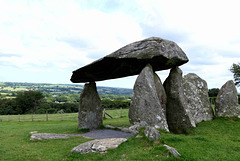
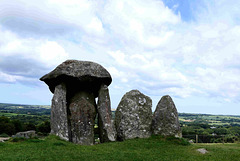
Pentre Ifan is the most famous megalithic monument in Wales. It is the remains of a Neolithic portal tomb from around 3500 BC for the communal burial of the dead. It may have been used for a time and then sealed. Originally, the chamber was covered by a mound of stones. However, these stones were removed a long time ago, so the original covering is missing.
The enormous capstone, which rests on only three supporting stones, is five metres long and probably weighs over 16 tonnes.
Excavations have revealed that the chamber lies in a large oval pit dug into the shallow slope. There were dry stone walls on the sides, covered with a few large slabs. From the remaining traces, the length of the embankment can be estimated at 36 metres. The area of the forecourt was obviously sealed with carefully stacked stones, which then had to be cleared away again for each burial.
Pentre Ifan
| 06 Dec 2024 |
|
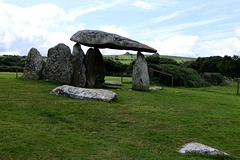
Pentre Ifan is the most famous megalithic monument in Wales. It is the remains of a Neolithic portal tomb from around 3500 BC for the communal burial of the dead. It may have been used for a time and then sealed. Originally, the chamber was covered by a mound of stones. However, these stones were removed a long time ago, so the original covering is missing.
The enormous capstone, which rests on only three supporting stones, is five metres long and probably weighs over 16 tonnes.
Excavations have revealed that the chamber lies in a large oval pit dug into the shallow slope. There were dry stone walls on the sides, covered with a few large slabs. From the remaining traces, the length of the embankment can be estimated at 36 metres. The area of the forecourt was obviously sealed with carefully stacked stones, which then had to be cleared away again for each burial.
Pentre Ifan
| 06 Dec 2024 |
|
Pentre Ifan is the most famous megalithic monument in Wales. It is the remains of a Neolithic portal tomb from around 3500 BC for the communal burial of the dead. It may have been used for a time and then sealed. Originally, the chamber was covered by a mound of stones. However, these stones were removed a long time ago, so the original covering is missing.
The enormous capstone, which rests on only three supporting stones, is five metres long and probably weighs over 16 tonnes.
Excavations have revealed that the chamber lies in a large oval pit dug into the shallow slope. There were dry stone walls on the sides, covered with a few large slabs. From the remaining traces, the length of the embankment can be estimated at 36 metres. The area of the forecourt was obviously sealed with carefully stacked stones, which then had to be cleared away again for each burial.
Jump to top
RSS feed- Martin M. Miles' latest photos with "burial" - Photos
- ipernity © 2007-2026
- Help & Contact
|
Club news
|
About ipernity
|
History |
ipernity Club & Prices |
Guide of good conduct
Donate | Group guidelines | Privacy policy | Terms of use | Statutes | In memoria -
Facebook
X
