

Martin M. Miles' photos with the keyword: amputated
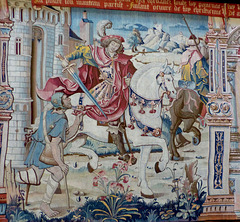
Montpezat-de-Quercy - Collégiale Saint-Martin
| 08 Oct 2021 |
|
|
The village of Montpezat-de-Quercy is a bastide in the province of Quercy Blanc. Like the very most of the bastide it was planned around a central market square that is surriunded by half timbered houses with it shady arcades.
The remains of a Gallo-Roman settlement were found, but the town reached its peak in the Middle Ages, ruled by the noble family Montpezat. They were accused of Cathar-heresy around 1250 and were replaced by the Prés family.
A well known member of them is 1280, Pierre des Prés, born 1280. His parents were anxious that he join the priesthood. He was called (aged 26) to the service of Pope John XXII, who was a native of Cahors. During his lifetime Pierre des Prés held many positions of high office and offered great loyalty to the Pope. He became Vice-Chancellor of the Roman Church and led a distinguished career of over 45 years until he died of the plague in 1361.
Being rich and influental Vice-Chancellor he wished to erect a church in the village of his birth and Prés arranged for the construction of the Saint Martin Collegiate Church. It was built in the southern French Gothic style and was consecrated in 1343.
About 200 years later Flemish tapestries were made for the choir of the collegiate church, telling the life of Saint Martin.
Saint Martin sharing his cloak. To the right a Moorish horseman wearing a turban. In the forground the poor, amputated man using a crutch.
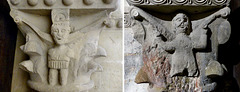
Saint-Papoul - Abbaye de Saint-Papoul
| 01 Feb 2017 |
|
The abbey was founded within the 8th century. It is dedicated to Saint Papoul, a disciple of Saint Saturnin, missionary and first bishop of Toulouse. It was believed that Saint Papoul was martyred near the place, where the abbey is now.
Later a monk named Berenger (or Berengar) lived a pious life here. After he got canonized his relics attracted the first pilgrims to this place. In the aftermath of the crusade against the Cathars the papal organisation created new (smaller) dioceses to enable a stricter control. So since 1317 the abbey church of Saint Papoul was promoted to a cathedral, holding a bishopric (upto 1801).
Saint Papoul is a quiet little village, that is one of my favourite places since a long time. Yes, there are the works of the "Maître de Cabestany", who is known under this name since the 1930s when a tympanum and other carvings were found in Cabestany (near Perpignan), but there is so much more. The range of different artistic styles and icons in Saint-Papoul is enormous.
The Romanesque capitals of the former abbey church / cathedral have not only a very specific, rough and "simple" style.
The "work accident", seen previous, was obvious, as the person had lost a foot. These two capitals depict as well injured/crippled men. The person on the left has no feet and no arms. The man to the right has no legs (and hold himself on pegs, like seen on the previous upload).
Jump to top
RSS feed- Martin M. Miles' latest photos with "amputated" - Photos
- ipernity © 2007-2026
- Help & Contact
|
Club news
|
About ipernity
|
History |
ipernity Club & Prices |
Guide of good conduct
Donate | Group guidelines | Privacy policy | Terms of use | Statutes | In memoria -
Facebook
X
