

Martin M. Miles' photos with the keyword: icon

Athens - Byzantine and Christian Museum
| 09 Jun 2025 |
|
|
Athens, the southernmost capital on the European mainland, is one of the world's oldest cities, with its recorded history spanning over 3,400 years. According to Greek mythology the city was named after Athena, the ancient Greek goddess of wisdom. Classical Athens was one of the most powerful city-states in ancient Greece. It was a centre for democracy, the arts, education and philosophy, and was highly influential throughout the European continent, particularly in Ancient Rome. For this reason it is often regarded as the cradle of Western civilisation and the birthplace of democracy.
Founded in 1914, it is now located in the former villa of the Duchess of Plaisance, also known as the Villa Ilissia, in close proximity to the War Museum. It houses more than 25,000 exhibits, artifacts from the 3rd century AD to the late Middle Ages.
Mosaic icon of the "Virgin of Tenderness"
from Triglia, Asia Minor
Made by a Constantinople workshop, Late 13th c.
Gonia Monastery
| 11 Apr 2025 |
|
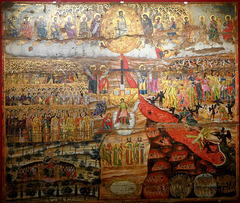
Gonia Monastery (Monastery of Panagia Hodegetria) is located on the southeast coast of the Rodopos peninsula. It was founded in the 9th century and was originally situated at Menies, on the ruins of the ancient temple of Artemis. The monastery was built in the 13th century and rebuilt between 1618 and 1634 in its present location, with Venetian influences in its architectural design and adornments.
According to monks the present location at Kolymvari was considered safer from attack. Despite this, the monastery was heavily damaged by Ottoman bombardment on many occasions throughout its history, finally in 1867, during the Cretan Revolt (1866–1869). During WWII the monastery was partly destroyed by German bombing and it became one of the most important areas of Cretan resistance to Nazi Germany.
The monastery´s museum displays Cretan icons.
The Second Coming / Konstantinos Papadopoulos - 1792
Gonia Monastery
| 10 Apr 2025 |
|
|
|
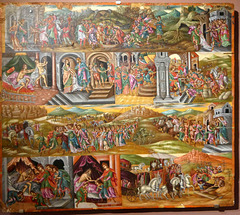
Gonia Monastery (Monastery of Panagia Hodegetria) is located on the southeast coast of the Rodopos peninsula. It was founded in the 9th century and was originally situated at Menies, on the ruins of the ancient temple of Artemis. The monastery was built in the 13th century and rebuilt between 1618 and 1634 in its present location, with Venetian influences in its architectural design and adornments.
According to monks the present location at Kolymvari was considered safer from attack. Despite this, the monastery was heavily damaged by Ottoman bombardment on many occasions throughout its history, finally in 1867, during the Cretan Revolt (1866–1869). During WWII the monastery was partly destroyed by German bombing and it became one of the most important areas of Cretan resistance to Nazi Germany.
The monastery´s museum Cretan icons.
The Story of Joseph / by "Nilius the Monk" - 1642
Gonia Monastery
| 10 Apr 2025 |
|
|
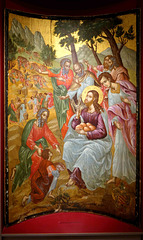
Gonia Monastery (Monastery of Panagia Hodegetria) is located on the southeast coast of the Rodopos peninsula. It was founded in the 9th century and was originally situated at Menies, on the ruins of the ancient temple of Artemis. The monastery was built in the 13th century and rebuilt between 1618 and 1634 in its present location, with Venetian influences in its architectural design and adornments.
According to monks the present location at Kolymvari was considered safer from attack. Despite this, the monastery was heavily damaged by Ottoman bombardment on many occasions throughout its history, finally in 1867, during the Cretan Revolt (1866–1869). During WWII the monastery was partly destroyed by German bombing and it became one of the most important areas of Cretan resistance to Nazi Germany.
The monastery´s museum Cretan icons.
The Blessing of the five Breads / by "Nilius the Monk" -
Gonia Monastery
| 10 Apr 2025 |
|
|
Gonia Monastery (Monastery of Panagia Hodegetria) is located on the southeast coast of the Rodopos peninsula. It was founded in the 9th century and was originally situated at Menies, on the ruins of the ancient temple of Artemis. The monastery was built in the 13th century and rebuilt between 1618 and 1634 in its present location, with Venetian influences in its architectural design and adornments.
According to monks the present location at Kolymvari was considered safer from attack. Despite this, the monastery was heavily damaged by Ottoman bombardment on many occasions throughout its history, finally in 1867, during the Cretan Revolt (1866–1869). During WWII the monastery was partly destroyed by German bombing and it became one of the most important areas of Cretan resistance to Nazi Germany.
The monastery´s museum Cretan icons.
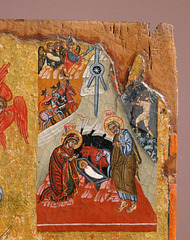
A detail of the "Dormation" icon (prev upload).
The Nativity
The Magi the are approaching the scene - in a very unsusal attire
Gonia Monastery
| 10 Apr 2025 |
|
|
Gonia Monastery (Monastery of Panagia Hodegetria) is located on the southeast coast of the Rodopos peninsula. It was founded in the 9th century and was originally situated at Menies, on the ruins of the ancient temple of Artemis. The monastery was built in the 13th century and rebuilt between 1618 and 1634 in its present location, with Venetian influences in its architectural design and adornments.
According to monks the present location at Kolymvari was considered safer from attack. Despite this, the monastery was heavily damaged by Ottoman bombardment on many occasions throughout its history, finally in 1867, during the Cretan Revolt (1866–1869). During WWII the monastery was partly destroyed by German bombing and it became one of the most important areas of Cretan resistance to Nazi Germany.
The monastery´s museum Cretan icons.
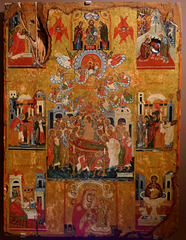
The Dormation of the Holy Virgin with Scenes of her Life -1728
Gonia Monastery
| 10 Apr 2025 |
|
|
Gonia Monastery (Monastery of Panagia Hodegetria) is located on the southeast coast of the Rodopos peninsula. It was founded in the 9th century and was originally situated at Menies, on the ruins of the ancient temple of Artemis. The monastery was built in the 13th century and rebuilt between 1618 and 1634 in its present location, with Venetian influences in its architectural design and adornments.
According to monks the present location at Kolymvari was considered safer from attack. Despite this, the monastery was heavily damaged by Ottoman bombardment on many occasions throughout its history, finally in 1867, during the Cretan Revolt (1866–1869). During WWII the monastery was partly destroyed by German bombing and it became one of the most important areas of Cretan resistance to Nazi Germany.
The monastery´s museum Cretan icons.
The Last Supper
The Nativity (shepherds left, Magi right)
Ecce Home
"By the hand of Demetrios Ssouros - 1779"
Heraklion - Agia Ekaterini
| 30 Mar 2025 |
|
Crete is the largest and most populous of the Greek islands, is located about 100 km south of the Peloponnese. Crete was the center of Europe's first advanced civilization, the Minoans, from 3000 to 1400 BC. The Minoan civilization was overrun by the Mycenaean civilization from mainland Greece. Crete was later ruled by Rome, then successively by the Byzantine Empire, Andalusian Arabs, the Byzantine Empire again, the Venetian Republic, and the Ottoman Empire. In 1898 Crete, whose people had for some time wanted to join the Greek state, achieved independence from the Ottomans, formally becoming the Cretan State. Crete became part of Greece in December 1913.
Heraklion is the largest city and the administrative capital of the island of Crete. With a municipal population of about 180.000 it is the fourth largest city in Greece. The greater area of Heraklion has been continuously inhabited since at least 7000 BCE, making it one of the oldest inhabited regions in Europe. As a major center of the Minoan civilization it often considered Europe's oldest city.
The church of Agia Ekaterini was built in 1555 as the centre of the monastery. The ground plan is that of a Latin cross. In the second half of the 16th century, a side chapel dedicated to the Holy Ten Martyrs of Crete was added to the north. This side chapel is crowned by a dome construction, which is a mixture of Venetian and Islamic architectural elements. Today, the church houses the ‘Museum of Christian Art’.
After the Fall of Constantinople in 1453, Byzantine artists and scholars began to emigrate. They were particularly attracted to Crete, which formed a Christian island in the eastern Mediterranean and became the centre of Byzantine culture in the Greek world. A fruitful cultural exchange between Italy and Crete took place here. The artists on Crete, who came from the tradition of Byzantine painting, adopted aspects of the painting style and, in particular, the painting technique and manner of depiction from Renaissance Italy and merged them with the Byzantine tradition. This gave rise to a school of icon painting known as the "Cretan School".
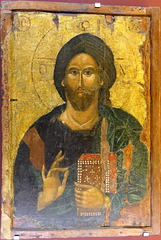
Christ Pantocrator
End of 14th c
Heraklion - Agia Ekaterini
| 30 Mar 2025 |
|
Crete is the largest and most populous of the Greek islands, is located about 100 km south of the Peloponnese. Crete was the center of Europe's first advanced civilization, the Minoans, from 3000 to 1400 BC. The Minoan civilization was overrun by the Mycenaean civilization from mainland Greece. Crete was later ruled by Rome, then successively by the Byzantine Empire, Andalusian Arabs, the Byzantine Empire again, the Venetian Republic, and the Ottoman Empire. In 1898 Crete, whose people had for some time wanted to join the Greek state, achieved independence from the Ottomans, formally becoming the Cretan State. Crete became part of Greece in December 1913.
Heraklion is the largest city and the administrative capital of the island of Crete. With a municipal population of about 180.000 it is the fourth largest city in Greece. The greater area of Heraklion has been continuously inhabited since at least 7000 BCE, making it one of the oldest inhabited regions in Europe. As a major center of the Minoan civilization it often considered Europe's oldest city.
The church of Agia Ekaterini was built in 1555 as the centre of the monastery. The ground plan is that of a Latin cross. In the second half of the 16th century, a side chapel dedicated to the Holy Ten Martyrs of Crete was added to the north. This side chapel is crowned by a dome construction, which is a mixture of Venetian and Islamic architectural elements. Today, the church houses the ‘Museum of Christian Art’.
After the Fall of Constantinople in 1453, Byzantine artists and scholars began to emigrate. They were particularly attracted to Crete, which formed a Christian island in the eastern Mediterranean and became the centre of Byzantine culture in the Greek world. A fruitful cultural exchange between Italy and Crete took place here. The artists on Crete, who came from the tradition of Byzantine painting, adopted aspects of the painting style and, in particular, the painting technique and manner of depiction from Renaissance Italy and merged them with the Byzantine tradition. This gave rise to a school of icon painting known as the "Cretan School".
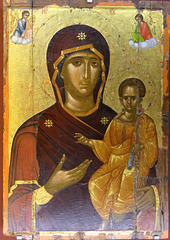
Virgin Hodegetria
End of 14th c
Heraklion - Agia Ekaterini
| 30 Mar 2025 |
|
Crete is the largest and most populous of the Greek islands, is located about 100 km south of the Peloponnese. Crete was the center of Europe's first advanced civilization, the Minoans, from 3000 to 1400 BC. The Minoan civilization was overrun by the Mycenaean civilization from mainland Greece. Crete was later ruled by Rome, then successively by the Byzantine Empire, Andalusian Arabs, the Byzantine Empire again, the Venetian Republic, and the Ottoman Empire. In 1898 Crete, whose people had for some time wanted to join the Greek state, achieved independence from the Ottomans, formally becoming the Cretan State. Crete became part of Greece in December 1913.
Heraklion is the largest city and the administrative capital of the island of Crete. With a municipal population of about 180.000 it is the fourth largest city in Greece. The greater area of Heraklion has been continuously inhabited since at least 7000 BCE, making it one of the oldest inhabited regions in Europe. As a major center of the Minoan civilization it often considered Europe's oldest city.
The church of Agia Ekaterini was built in 1555 as the centre of the monastery. The ground plan is that of a Latin cross. In the second half of the 16th century, a side chapel dedicated to the Holy Ten Martyrs of Crete was added to the north. This side chapel is crowned by a dome construction, which is a mixture of Venetian and Islamic architectural elements. Today, the church houses the ‘Museum of Christian Art’.
After the Fall of Constantinople in 1453, Byzantine artists and scholars began to emigrate. They were particularly attracted to Crete, which formed a Christian island in the eastern Mediterranean and became the centre of Byzantine culture in the Greek world. A fruitful cultural exchange between Italy and Crete took place here. The artists on Crete, who came from the tradition of Byzantine painting, adopted aspects of the painting style and, in particular, the painting technique and manner of depiction from Renaissance Italy and merged them with the Byzantine tradition. This gave rise to a school of icon painting known as the "Cretan School".
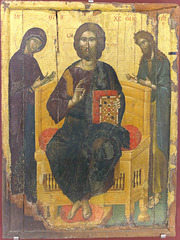
The Deësis
Early 15th c
Heraklion - Agia Ekaterini
| 30 Mar 2025 |
|
Crete is the largest and most populous of the Greek islands, is located about 100 km south of the Peloponnese. Crete was the center of Europe's first advanced civilization, the Minoans, from 3000 to 1400 BC. The Minoan civilization was overrun by the Mycenaean civilization from mainland Greece. Crete was later ruled by Rome, then successively by the Byzantine Empire, Andalusian Arabs, the Byzantine Empire again, the Venetian Republic, and the Ottoman Empire. In 1898 Crete, whose people had for some time wanted to join the Greek state, achieved independence from the Ottomans, formally becoming the Cretan State. Crete became part of Greece in December 1913.
Heraklion is the largest city and the administrative capital of the island of Crete. With a municipal population of about 180.000 it is the fourth largest city in Greece. The greater area of Heraklion has been continuously inhabited since at least 7000 BCE, making it one of the oldest inhabited regions in Europe. As a major center of the Minoan civilization it often considered Europe's oldest city.
The church of Agia Ekaterini was built in 1555 as the centre of the monastery. The ground plan is that of a Latin cross. In the second half of the 16th century, a side chapel dedicated to the Holy Ten Martyrs of Crete was added to the north. This side chapel is crowned by a dome construction, which is a mixture of Venetian and Islamic architectural elements. Today, the church houses the ‘Museum of Christian Art’.
After the Fall of Constantinople in 1453, Byzantine artists and scholars began to emigrate. They were particularly attracted to Crete, which formed a Christian island in the eastern Mediterranean and became the centre of Byzantine culture in the Greek world. A fruitful cultural exchange between Italy and Crete took place here. The artists on Crete, who came from the tradition of Byzantine painting, adopted aspects of the painting style and, in particular, the painting technique and manner of depiction from Renaissance Italy and merged them with the Byzantine tradition. This gave rise to a school of icon painting known as the "Cretan School".
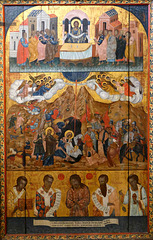
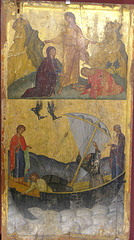
Angelos Akotantos (1390–1457)
upper zone: Christ appears the Holy Women (Chairete)
lower zone: The miracle of Saint Fanourios
2nd quarter of 15th c
Heraklion - Agia Ekaterini
| 30 Mar 2025 |
|
Crete is the largest and most populous of the Greek islands, is located about 100 km south of the Peloponnese. Crete was the center of Europe's first advanced civilization, the Minoans, from 3000 to 1400 BC. The Minoan civilization was overrun by the Mycenaean civilization from mainland Greece. Crete was later ruled by Rome, then successively by the Byzantine Empire, Andalusian Arabs, the Byzantine Empire again, the Venetian Republic, and the Ottoman Empire. In 1898 Crete, whose people had for some time wanted to join the Greek state, achieved independence from the Ottomans, formally becoming the Cretan State. Crete became part of Greece in December 1913.
Heraklion is the largest city and the administrative capital of the island of Crete. With a municipal population of about 180.000 it is the fourth largest city in Greece. The greater area of Heraklion has been continuously inhabited since at least 7000 BCE, making it one of the oldest inhabited regions in Europe. As a major center of the Minoan civilization it often considered Europe's oldest city.
The church of Agia Ekaterini was built in 1555 as the centre of the monastery. The ground plan is that of a Latin cross. In the second half of the 16th century, a side chapel dedicated to the Holy Ten Martyrs of Crete was added to the north. This side chapel is crowned by a dome construction, which is a mixture of Venetian and Islamic architectural elements. Today, the church houses the ‘Museum of Christian Art’.
After the Fall of Constantinople in 1453, Byzantine artists and scholars began to emigrate. They were particularly attracted to Crete, which formed a Christian island in the eastern Mediterranean and became the centre of Byzantine culture in the Greek world. A fruitful cultural exchange between Italy and Crete took place here. The artists on Crete, who came from the tradition of Byzantine painting, adopted aspects of the painting style and, in particular, the painting technique and manner of depiction from Renaissance Italy and merged them with the Byzantine tradition. This gave rise to a school of icon painting known as the "Cretan School".
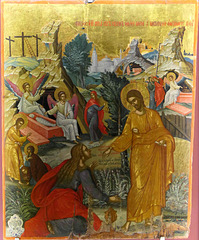
Michael Damaskenos (1530 - 1593 / Noli me tangere / c 1588
Heraklion - Agia Ekaterini
| 30 Mar 2025 |
|
Crete is the largest and most populous of the Greek islands, is located about 100 km south of the Peloponnese. Crete was the center of Europe's first advanced civilization, the Minoans, from 3000 to 1400 BC. The Minoan civilization was overrun by the Mycenaean civilization from mainland Greece. Crete was later ruled by Rome, then successively by the Byzantine Empire, Andalusian Arabs, the Byzantine Empire again, the Venetian Republic, and the Ottoman Empire. In 1898 Crete, whose people had for some time wanted to join the Greek state, achieved independence from the Ottomans, formally becoming the Cretan State. Crete became part of Greece in December 1913.
Heraklion is the largest city and the administrative capital of the island of Crete. With a municipal population of about 180.000 it is the fourth largest city in Greece. The greater area of Heraklion has been continuously inhabited since at least 7000 BCE, making it one of the oldest inhabited regions in Europe. As a major center of the Minoan civilization it often considered Europe's oldest city.
The church of Agia Ekaterini was built in 1555 as the centre of the monastery. The ground plan is that of a Latin cross. In the second half of the 16th century, a side chapel dedicated to the Holy Ten Martyrs of Crete was added to the north. This side chapel is crowned by a dome construction, which is a mixture of Venetian and Islamic architectural elements. Today, the church houses the ‘Museum of Christian Art’.
After the Fall of Constantinople in 1453, Byzantine artists and scholars began to emigrate. They were particularly attracted to Crete, which formed a Christian island in the eastern Mediterranean and became the centre of Byzantine culture in the Greek world. A fruitful cultural exchange between Italy and Crete took place here. The artists on Crete, who came from the tradition of Byzantine painting, adopted aspects of the painting style and, in particular, the painting technique and manner of depiction from Renaissance Italy and merged them with the Byzantine tradition. This gave rise to a school of icon painting known as the "Cretan School".
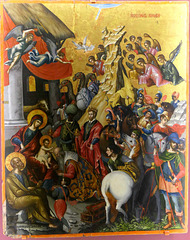
Michael Damaskenos (1530 - 1593 / The Adoration of the Magi / c 1588
Jump to top
RSS feed- Martin M. Miles' latest photos with "icon" - Photos
- ipernity © 2007-2026
- Help & Contact
|
Club news
|
About ipernity
|
History |
ipernity Club & Prices |
Guide of good conduct
Donate | Group guidelines | Privacy policy | Terms of use | Statutes | In memoria -
Facebook
X
