

Martin M. Miles' photos with the keyword: night

Chania - Kiosk
| 08 Jun 2026 |
|
|
Chania is the second largest settlement on the island after Heraklion.
This area appears to have been inhabited since the Neolithic Age. It was built as a city in the Minoan period (3000–1900 BC) under the name Kudonija. According to ancient tradition, the city was founded by the mythical King Minos. Cydonia reemerged after the end of the Minoan period as an important city-state. The first major wave of settlers from mainland Greece was by the Dorians who came around 1100 BC. In Homer's Odyssey the inhabitants of Kydonia are mentioned twice.
After centuries of war between the Cretan cities, the island became a Roman province in 67 BC. Due to its pro-Roman stance, the city was granted the status of a free city. The Roman conquest of Crete marked the end of the civil wars and the beginning of a long period of peace and economic prosperity.
After the end of the Roman Empire and the division of the empire in 395, Chania was ruled by the Byzantine Empire (395–824) and then by the Emirate of Crete (824–961). During the second Byzantine period (961–1204), the city was known in Greek as Chania. To ward off further Arab invasion, the Byzantines heavily fortified the city, using materials from ancient buildings in the surrounding area.After the fall of Constantinople during the 1204 Fourth Crusade, Crete was sold to the Venetians In 1252, the Venetians managed to subdue the Cretans and Chania flourished as a commercial centre of a fertile agricultural region. Contact with Venice led to close intertwining of Cretan and Venetian cultures.
The city walls were reinforced at this time, but could not prevent an Ottoman army from capturing it from the Venetians after a two-month siege.
Many Cretans fled to escape persecution while numerous Turkish Muslim settlers arrived changing the ethnic mix of the city. The city remained under Ottoman control despite fighting during the Greek War of Independence and the Cretan Revolts in the 19th century until Crete moved towards independence that eventually led to Crete's union with Greece on 1 December 1913.
On the way home.
The kiosk by the sports field is still open late in the evening to cater to thirsty and exhausted athletes.

Rethymno
| 02 Jun 2026 |
|
|
Crete, the largest and most populous of the Greek islands, is located about 100 km south of the Peloponnese. Crete was the center of Europe's first advanced civilization, the Minoans, from 3000 to 1400 BC. The Minoan civilization was overrun by the Mycenaean civilization from mainland Greece. Crete was later ruled by Rome, then successively by the Byzantine Empire, the Byzantine Empire again, the Venetian Republic, and the Ottoman Empire. In 1898 Crete, whose people had for some time wanted to join the Greek state, achieved independence from the Ottomans, formally becoming the Cretan State. Crete became part of Greece in December 1913.
In Hellenistic times, ancient Rhithymna was a small town. The name Rhithymna can be found in inscriptions and finds of coins minted in the town from the 4th and 3rd centuries BC. It continued to exist as a small town during the Roman period and the first Byzantine era, but was destroyed during the Arab conquest. Attempts to reconquer the island by the weakened Byzantine Empire were unsuccessful. The later Emperor Nicephorus II succeeded in reintegrating the island into the Byzantine Empire in 960/961.
The second Byzantine era ended after the capture of Constantinople in 1204 by the crusaders of the Fourth Crusade. To finance the war, Crete was sold to the Venetians for 10,000 silver marks. By 1218, the Venetians had conquered the entire island against the resistance of the locals.
Rethymno began a period of growth when the Venetians decided to establish an intermediate commercial station between Heraklion and Chania. Today's old town was almost entirely built by the Republic of Venice. The town was captured by the Ottoman Empire in and they ruled it for almost three centuries. The town gradually took on a Muslim character. In 1647, the main Catholic church of San Nicolo was rededicated as the Sultan Ibrahim Mosque. Other churches were converted into mosques or demolished. Many of the former cultural elite left the city, mostly in the direction of Venice.
During the Battle of Crete (May 1941), the Battle of Rethymno was fought between German paratroopers and combined forces of the Second Australian Imperial Force and the Hellenic Army. The Germans won the battle after creating huge damage.

Rethymno - Guora Gate
| 02 Jun 2026 |
|
|
Crete, the largest and most populous of the Greek islands, is located about 100 km south of the Peloponnese. Crete was the center of Europe's first advanced civilization, the Minoans, from 3000 to 1400 BC. The Minoan civilization was overrun by the Mycenaean civilization from mainland Greece. Crete was later ruled by Rome, then successively by the Byzantine Empire, the Byzantine Empire again, the Venetian Republic, and the Ottoman Empire. In 1898 Crete, whose people had for some time wanted to join the Greek state, achieved independence from the Ottomans, formally becoming the Cretan State. Crete became part of Greece in December 1913.
In Hellenistic times, ancient Rhithymna was a small town. The name Rhithymna can be found in inscriptions and finds of coins minted in the town from the 4th and 3rd centuries BC. It continued to exist as a small town during the Roman period and the first Byzantine era, but was destroyed during the Arab conquest. Attempts to reconquer the island by the weakened Byzantine Empire were unsuccessful. The later Emperor Nicephorus II succeeded in reintegrating the island into the Byzantine Empire in 960/961.
The second Byzantine era ended after the capture of Constantinople in 1204 by the crusaders of the Fourth Crusade. To finance the war, Crete was sold to the Venetians for 10,000 silver marks. By 1218, the Venetians had conquered the entire island against the resistance of the locals.
Rethymno began a period of growth when the Venetians decided to establish an intermediate commercial station between Heraklion and Chania. Today's old town was almost entirely built by the Republic of Venice. The town was captured by the Ottoman Empire in and they ruled it for almost three centuries. The town gradually took on a Muslim character. In 1647, the main Catholic church of San Nicolo was rededicated as the Sultan Ibrahim Mosque. Other churches were converted into mosques or demolished. Many of the former cultural elite left the city, mostly in the direction of Venice.
During the Battle of Crete (May 1941), the Battle of Rethymno was fought between German paratroopers and combined forces of the Second Australian Imperial Force and the Hellenic Army. The Germans won the battle after creating huge damage.
Guora Gate (aka Megali Porta) is the only remaining ancient gate from the 16th-century city walls. During the Venetian period, this was the main entrance from the south side.

Rethymno
| 01 Jun 2026 |
|
|
Crete, the largest and most populous of the Greek islands, is located about 100 km south of the Peloponnese. Crete was the center of Europe's first advanced civilization, the Minoans, from 3000 to 1400 BC. The Minoan civilization was overrun by the Mycenaean civilization from mainland Greece. Crete was later ruled by Rome, then successively by the Byzantine Empire, the Byzantine Empire again, the Venetian Republic, and the Ottoman Empire. In 1898 Crete, whose people had for some time wanted to join the Greek state, achieved independence from the Ottomans, formally becoming the Cretan State. Crete became part of Greece in December 1913.
In Hellenistic times, ancient Rhithymna was a small town. The name Rhithymna can be found in inscriptions and finds of coins minted in the town from the 4th and 3rd centuries BC. It continued to exist as a small town during the Roman period and the first Byzantine era, but was destroyed during the Arab conquest. Attempts to reconquer the island by the weakened Byzantine Empire were unsuccessful. The later Emperor Nicephorus II succeeded in reintegrating the island into the Byzantine Empire in 960/961.
The second Byzantine era ended after the capture of Constantinople in 1204 by the crusaders of the Fourth Crusade. To finance the war, Crete was sold to the Venetians for 10,000 silver marks. By 1218, the Venetians had conquered the entire island against the resistance of the locals.
Rethymno began a period of growth when the Venetians decided to establish an intermediate commercial station between Heraklion and Chania. Today's old town was almost entirely built by the Republic of Venice. The town was captured by the Ottoman Empire in and they ruled it for almost three centuries. The town gradually took on a Muslim character. In 1647, the main Catholic church of San Nicolo was rededicated as the Sultan Ibrahim Mosque. Other churches were converted into mosques or demolished. Many of the former cultural elite left the city, mostly in the direction of Venice.
During the Battle of Crete (May 1941), the Battle of Rethymno was fought between German paratroopers and combined forces of the Second Australian Imperial Force and the Hellenic Army. The Germans won the battle after creating huge damage.

Rethymno - Four Martyrs Church
| 01 Jun 2026 |
|
|
Crete, the largest and most populous of the Greek islands, is located about 100 km south of the Peloponnese. Crete was the center of Europe's first advanced civilization, the Minoans, from 3000 to 1400 BC. The Minoan civilization was overrun by the Mycenaean civilization from mainland Greece. Crete was later ruled by Rome, then successively by the Byzantine Empire, the Byzantine Empire again, the Venetian Republic, and the Ottoman Empire. In 1898 Crete, whose people had for some time wanted to join the Greek state, achieved independence from the Ottomans, formally becoming the Cretan State. Crete became part of Greece in December 1913.
In Hellenistic times, ancient Rhithymna was a small town. The name Rhithymna can be found in inscriptions and finds of coins minted in the town from the 4th and 3rd centuries BC. It continued to exist as a small town during the Roman period and the first Byzantine era, but was destroyed during the Arab conquest. Attempts to reconquer the island by the weakened Byzantine Empire were unsuccessful. The later Emperor Nicephorus II succeeded in reintegrating the island into the Byzantine Empire in 960/961.
The second Byzantine era ended after the capture of Constantinople in 1204 by the crusaders of the Fourth Crusade. To finance the war, Crete was sold to the Venetians for 10,000 silver marks. By 1218, the Venetians had conquered the entire island against the resistance of the locals.
Rethymno began a period of growth when the Venetians decided to establish an intermediate commercial station between Heraklion and Chania. Today's old town was almost entirely built by the Republic of Venice. The town was captured by the Ottoman Empire in and they ruled it for almost three centuries. The town gradually took on a Muslim character. In 1647, the main Catholic church of San Nicolo was rededicated as the Sultan Ibrahim Mosque. Other churches were converted into mosques or demolished. Many of the former cultural elite left the city, mostly in the direction of Venice.
During the Battle of Crete (May 1941), the Battle of Rethymno was fought between German paratroopers and combined forces of the Second Australian Imperial Force and the Hellenic Army. The Germans won the battle after creating huge damage.
Rethymno’s largest church, the Church of the Four Martyrs is a rather new building, dating to 1975. The Four Martyrs were Angelis, Manouil, Georgios and Nikolaos. They were all members of a family, which had feigned conversion to Islam to gain the benefits by the local Ottoman rulers. Hence, they were wealthy and upstanding members of the local community. When the 1821 Revolution broke out, they joined the side of the Cretan rebels against the Ottomans. They took part in the rebellion until 1824, when Crete was subdued by the Egyptians and they were arrested as apostates. The Pasha offered them to reconvert to Islam to spare their lives, but they refused. On October 28th, 1824, following four months of torture, the Four Martyrs were taken to the Porta Guora, where they were decapitated.

Heraklion - Venetian Loggia
| 29 May 2026 |
|
|
Crete is the largest and most populous of the Greek islands, is located about 100 km south of the Peloponnese. Crete was the center of Europe's first advanced civilization, the Minoans, from 3000 to 1400 BC. The Minoan civilization was overrun by the Mycenaean civilization from mainland Greece. Crete was later ruled by Rome, then successively by the Byzantine Empire, Andalusian Arabs, the Byzantine Empire again, the Venetian Republic, and the Ottoman Empire. In 1898 Crete, whose people had for some time wanted to join the Greek state, achieved independence from the Ottomans, formally becoming the Cretan State. Crete became part of Greece in December 1913.
Heraklion is the largest city and the administrative capital of the island of Crete. With a municipal population of about 180.000 it is the fourth largest city in Greece. The greater area of Heraklion has been continuously inhabited since at least 7000 BCE, making it one of the oldest inhabited regions in Europe. As a major center of the Minoan civilization it often considered Europe's oldest city.
The Venetians erected this luxurious building so that the nobles and lords could spend their time in comfort. It is considered one of the most elegant architectural monuments in Heraklion from the Venetian period. The building was built around 1628 by Francisco Morosini, the General Provost of Crete. After the conquest of the city by the Turks, the Loggia lost its old identity and fame.
Today the town hall is located in the Venetian loggia.

Agia Napa - Bottoms Up
| 16 May 2026 |
|
|
|
Agia Napa is the largest tourist resort in Cyprus, with a 27,000-person-bed capacity and more than 175 hotels and apartments of all sizes. Agia Napa attracts mainly young people from Great Britain and Scandinavia, who come to enjoy the beaches and the countless bars and clubs.
So, during the season, it's noisy and very hectic. In winter, the place is so quiet that tourists can comfortably stay in the apartment above the bottle shop.
Sitia
| 06 May 2025 |
|
Settlement in the city area dates back to the pre-Minoan period. Architectural remains have been found from the end of the Neolithic period to the Bronze Age.
The city flourished during the Classical, Hellenistic, Roman, and Byzantine periods as one of the island's most important ports. During Venetian times, the city was destroyed three times: first by an earthquake in 1508, then by the Turkish pirate Hayreddin Barbarossa in 1538, and finally by the Venetians themselves in 1651. This last destruction occurred during the Cretan War. Lacking the resources to withstand a prolonged siege by the Turks, the Venetians destroyed the fortifications and relocated the garrison to Heraklion. The inhabitants migrated west, and the town remained deserted for the next 200 years of Turkish rule.
The city was rebuilt after the Cretan Revolt until 1870. Today it has almost 20,000 inhabitants.
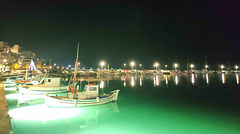
An evening stroll along the harbor

Toledo
| 24 Oct 2023 |
|
In 192 BC, the Romans conquered the area and founded the outpost Toletum. Due to its iron ore deposits, Toledo developed into an important settlement. Since the first barbarian invasions, the ancient walls were reinforced. In 411 the Alans and later the Visigoths conquered the city. Toledo was the capital of the Visigoths' empire from about 531 to 711.
The Moors conquered the place in 712. Toledo experienced its heyday during the period of Moorish rule as Ṭulayṭula during the Caliphate of Córdoba until its conquest by Alfonso VI in 1085, after a four-year siege. In 1088, only a few years after the conquest, Archbishop Bernard of Toledo obtained confirmation from Pope Urban II that Toledo should hold the "primatus in totis Hispaniarum regnis" (primacy in all the kingdoms of the Iberian dominions). The Archbishop of Toledo is still today the Primate of the Catholic Church of Spain.
In the 12th and 13th centuries, the Toledo school of translators translated ancient philosophical writings (Plato, Aristotle) that had been translated from Greek into Arabic, but also genuinely Arabic writings from the fields of astronomy, mathematics, Islamic religion and theology into Latin.
After the conquest by Alfonso VI, Toledo became the residence of the Kingdom of Castile in 1087 and remained the capital of Spain until 1561.
Night over the Tajo river
Palencia - Churrería - "El Mara"
| 14 Sep 2023 |
|
|
Palencia was called Pallantia in ancient times and was the capital of a Celtiberian tribe. Palencia probably became the seat of a bishop as early as the 3rd century, and the city experienced its first heyday under the Visigoths in the 6th and 7th centuries.
In the 8th century, the Arab-Moorish armies conquered the area around Palencia. In the 11th century the city was reconquered by the Christians (reconquista). The greatest supporter at the beginning of the 13th century was the Castilian King Alfonso VIII. Already during his lifetime, but mainly after his death (1214), the existing cathedral school was converted into one of the first universities in Europe.
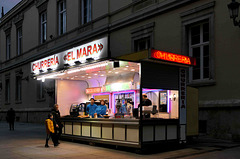
Churrería - "El Mara"
Venezia - Canal Grande
| 18 Sep 2015 |
|
|
Venice (ital. Venezia) is one of the most important tourist destinations worldwide with about 30 million visitors each year.
As each tourist takes at least 100 photos (minimum!) in Venice 3000000000 photos are taken here per year, what means more than 8 millions per day. Many of them are uploaded and can be found in the web.
So, I will only upload a couple of photos - and not add many words..
-
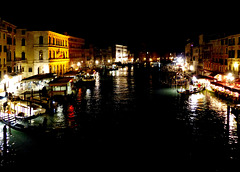
The Canal Grande, as seen from the Rialto Bridge, late in the evening.
Florence - at night
| 04 Sep 2015 |
|
|
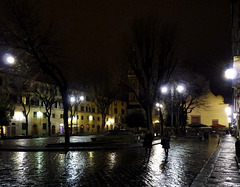
Crossing the Piazza Santo Spirito at night. Slippery when wet.
In the background is the Basilica di Santo Spirito.
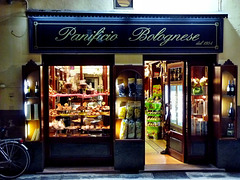
Pisa - Panificio Bolognese
| 25 Jun 2015 |
|
|
|
Strolling through the Italian night I found this pastry shop, that was still open
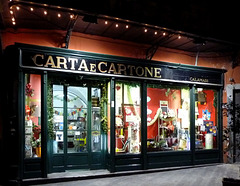
Pisa - CARTA E CARTONE
| 25 Jun 2015 |
|
|
Strolling through the Italian night I found this wonderful shop.
Of course it was closed at night time.
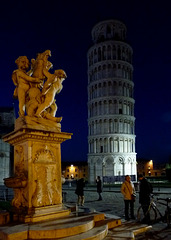
Pisa - Leaning Tower
| 18 Jun 2015 |
|
|
|
The Leaning Tower is the main tourist attraction in Pisa. Zillions of photos are taken here each week.
Some decades again a discussion started, how to prevent the tower from toppling. 800 tonnes of lead counterweights got installed. In 1989, after a medieval tower in Pavia had collapsed, the Leaning Tower was closed to the public. Engineers were able to straighten the tower by 45 cms and the tower was opened to the public again end of 2001.
The engineers returned - and in 2008 they had installed underground cables to the secure the tower. What not many people know, is, that over nighttime, the tower is moved in an upright position. Then all motors holding the cables are switched off. Power consumption is zero - and 1 terawatt of electricity is saved each year.
Here is the tower seen in the upright night-position.
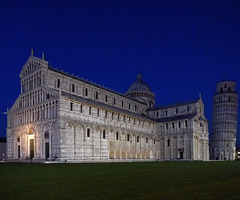
Pisa - Duomo di Santa Maria Assunta
| 18 Jun 2015 |
|
|
|
The cathedral is the heart of the Piazza del Duomo (aka "Piazza dei Miracoli"). Its construction began in 1064 and set the model for the Pisan Romanesque style of architecture. The Leaning Tower is to the right. I stayed for hours here that night.
Jump to top
RSS feed- Martin M. Miles' latest photos with "night" - Photos
- ipernity © 2007-2026
- Help & Contact
|
Club news
|
About ipernity
|
History |
ipernity Club & Prices |
Guide of good conduct
Donate | Group guidelines | Privacy policy | Terms of use | Statutes | In memoria -
Facebook
X
