
Jaap van 't Veen's photos with the keyword: Lier
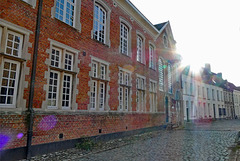
België - Lier, Begijnhof
| 31 Dec 2025 |
|
|
|
The Begijnhof (Beguinage) was founded in 1258 and formed a separate parish. The beguinage is spread over 11 narrow streets and counts 95 houses. The front doors of the houses bear the name of a saint or a biblical scene. Some façades have panels depicting the Stations of the Cross. The current buildings date mainly from the 17th century.
The beguinage is like a village in the middle of the city, surrounded by brick walls and accessible through four gates. At the centre of the beguinage stands the baroque Sint-Margaretakerk (St Margaret's Church). Construction started in the 17th century, and it was not until a century later that the upper part of the façade and the bell tower were completed.
The Beguinage was restored in the 1990s and was recognised as a UNESCO World Heritage Site in 1998.
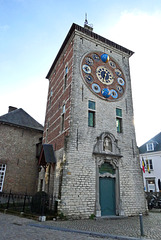
België - Lier, Zimmertoren
| 29 Dec 2025 |
|
|
|
The former Cornelius tower - dating back to the 14th century - was part of the old city fortifications. It was transformed into the Zimmertoren (Zimmer Tower) in 1930. Clockmaker and astronomer Louis Zimmer donated the Jubilee Clock to the town of Lier in honour of Belgium's 100th anniversary.
The Jubilee Clock on the front of the tower captivates everyone who pays a visit. The clock shows time indications on all continents, phases of the moon, times of tides and many other periodic phenomena.
Nowadays the Zimmertoren is without a doubt the most famous landmark in Lier.

België - Lier
| 26 Dec 2025 |
|
|
|
Lier is a town with 38,000 inhabitants located at the confluence of the Grote Nete and Kleine Nete rivers. The Binnennete, a closed section of the Kleine Nete, runs through the town centre. No wonder Lier is known as the “Netestad”.
Lier has a rich history and was already inhabited in Roman times. In the Middle Ages, it was an important trading town and a member of the Hanseatic League. Today, Lier is best known for its picturesque town centre with its charming squares, narrow streets and historic buildings.
The inhabitants of Lier are also known as “schapenkoppen” (sheep heads). This nickname comes from a legend in which Duke John II wanted to thank the inhabitants for their contribution to the battle against Mechelen in the 14th century. As a reward, the city council could choose between a university or a cattle market. The council chose the cattle market (the university came a little later in Leuven). The duke is said to have remarked, “Oh, those “schapenkoppen” , in response to this choice.
Jump to top
RSS feed- Jaap van 't Veen's latest photos with "Lier" - Photos
- ipernity © 2007-2026
- Help & Contact
|
Club news
|
About ipernity
|
History |
ipernity Club & Prices |
Guide of good conduct
Donate | Group guidelines | Privacy policy | Terms of use | Statutes | In memoria -
Facebook
X
