

Jaap van 't Veen's photos with the keyword: Utrecht
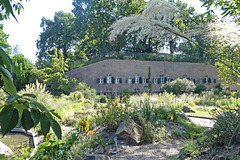
Nederland - Botanische Tuinen Universiteit Utrecht
| 24 Jul 2026 |
|
|
|
The Botanische Tuinen Universiteit Utrecht (Utrecht University Botanic Gardens) are the largest academic botanical garden - with a size of about 10 hectare - in the Netherlands. The garden is located on Utrecht Science Park and surrounded by (modern) buildings of the university.
The botanic garden has a spectacular setting including a large rock garden built on the bunkers of an old fort. It has a collection of around 10.000 plant species.
The Botanic Gardens originate back to 1639, when the first botanical garden for medicinal purposes was founded in the city centre of Utrecht. In 1963 it came to the current location at Fort Hoofddijk , once part of the New Dutch Waterline. Between 1964 and 1974, over 2.100 tons of Ardennes rock created one of Europe’s largest rock gardens on and around the fort.

Nederland - Bunnik, Kromme Rijn
| 17 Dec 2025 |
|
|
|
The river Kromme Rijn (Crooked Rhine) flows from Wijk bij Duurstede to Utrecht and is 28 kilometres long. The river with its amny bends is the artery of Utrecht and supplies water to the Oudegracht and the canals. Normally, seven cubic metres of water per second pass through Amelisweerd estate (Bunnik). When it rains heavily, this can increase to as much as twelve cubic metres. Rainwater then flows from the Utrechtse Heuvelrug (Utrecht Hill Ridge) to the Kromme Rijn via various ditches.
Until 1930, the Kromme Rijn was the main transport artery for goods and people between Wijk bij Duurstede and Utrecht. Where the provincial road now runs, there was previously only a muddy cart track. The boats were pulled by people. Until 1870, the journey between Wijk bij Duurstede and Utrecht took about six hours.

Nederland - Spakenburg, Oude Haven
| 15 Dec 2025 |
|
|
|
The Oude Haven (Old Harbour) is Spakenburg’s soul. The harbour dates back to the 15th century. Ot was built for the botters , wooden boats used by fishermen when fishing was a way to earn a living.
After the construction of the Afsluitdijk , the saltwater Zuiderzee was dammed off and became a freshwater lake. This put an end to the fishing industry. The harbour no longer served the same function and became a marina.
Around 1975 more and more people started buying up the old botters and refurbishing them for recreational purposes. Nowadays about twenty of these old vessels can be admired in the Oude Haven .

Nederland - Botanische Tuinen Universiteit Utrecht
| 10 Dec 2025 |
|
|
|
The Botanische Tuinen Universiteit Utrecht (Utrecht University Botanic Gardens) is the largest academic botanical garden - with a size of about 100.000m² - in the Netherlands. The garden is located on Utrecht Science Park and surrounded by (modern) buildings of the university.
The botanic garden has a spectacular setting including a large rock garden built on the bunkers of an old fort. It has a collection of around 10.000 plant species.
The Botanic Gardens originate back to 1639, when the first botanical garden for medicinal purposes was founded in the city centre of Utrecht. In 1963 it came to the current location at Fort Hoofddijk , once part of the New Dutch Waterline. Between 1964 and 1974, over 2.100 tons of Ardennes rock created one of Europe’s largest rock gardens on and around the fort.

Nederland - Utrecht, Fort Hoofddijk
| 08 Dec 2025 |
|
|
|
Fort Hoofddijk (also called Werk aan de Hoofddijk ) is part of the New Dutch Waterline. This line runs from Muiden to the Biesbosch and was intended to protect the cities of Amsterdam, The Hague, Rotterdam and Utrecht against enemies from the east by flooding large areas of land.
When Fort Hoofddijk was completed in 1879, it had 12 cannons and was garrisoned by approximately 100 soldiers. The fort was never used in a war, partly due to the development of aircraft that could fly over the line. Five buildings were originally constructed within the fort moat, four of which still remain today: three depots and a large bombproof barracks.
Today, Fort Hoofddijk is located in the middle of the Botanical Gardens and the buildings are used by Utrecht University.

Nederland - Bunnik, Huis Rhijnauwen
| 05 Dec 2025 |
|
|
|
Around the year 1200, Rhijnauwen Castle (a real fortress with a moat and a drawbridge) stood on the site of Huis Rhijnauwen (Manor Rhijnauwen). The castle was destroyed by the French in 1672. The current building was built around 1830. In 1919, the estate was purchased by the municipality of Utrecht from its last private owner.
Huis Rhijnauwen - located on the right bank of the river Kromme Rijn - has been used as a youth hostel since 1933, making it the oldest in the Netherlands.

Nederland - Bunnik, Landhuis Oud Amelisweerd
| 24 Nov 2025 |
|
|
|
Landhuis Oud Amelisweerd (Manor Oud Amelisweerd) was built in 1770 as a summer residence commissioned by Gerard Godard Taets van Amerongen. He had a bridge built over the river Kromme Rijn and transformed the estate into the park we see today.
Because the country house has never been intensively inhabited, many original elements have been preserved.The layout, floors, doors and ceilings have remained unchanged since 1770. This originality, together with the 18th and 19th century Chinese and Dutch wallpaper that is still present, makes Oud Amelisweerd unique.
In later history, the country house had various owners, including King Louis Napoleon Bonaparte, the Bosch van Drakestein family and, from 1951, the municipality of Utrecht. Today - being a National Monument - it houses a museum with exhibitions on art, science and history.
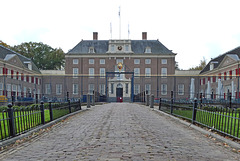
Nederland - Slot Zeist
| 21 Nov 2025 |
|
|
|
Slot Zeist (Castle Zeist) was built between 1677 and 1686 on behalf of Willem Adriaan van Nassau, grandson of Willem van Oranje. The building was designed by architect Jacobus Roman, who also designed Paleis Het Loo in Apeldoorn. The interior was mainly designed by the Huguenot Daniël Marot. His largely preserved wall and ceiling paintings are reminiscent of French Baroque.
In 1745, Slot Zeist was purchased by the merchant Cornelis Schellinger. In 1746, he donated part of it to the Moravian Brethren community, which would serve as their headquarters in the Netherlands.
In 1924, the castle was purchased by the municipality of Zeist. The castle was renovated in 1969 and restored to its original Baroque style, using authentic demolition material from other Baroque buildings.
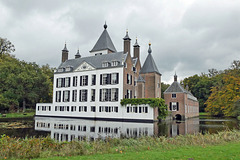
Nederland - Kasteel Renswoude
| 19 Nov 2025 |
|
|
|
Kasteel Renswoude (Renswoude Castle), formerly called Borchwal , is a castle and knight's manor and estate nearby the village of Renswoude. The first house probably dates from the late 14th century. Perhaps the name refers to a borgwal (circular rampart) that surrounded the castle.
During the Dutch 'Golden Age' - in 1654 – the original house was demolished by order of Johan van Reede and replaced by the current country house in Dutch-classicist style. It was probably built on the medieval foundations. The castle has a special design, which gives it a double appearance. The white plastered back gives the building a real country-house appearance, while the front with its towers is more reminiscent of a castle. The facade of the main building is dominated by the large tower in the middle with a corner tower protruding on either side.
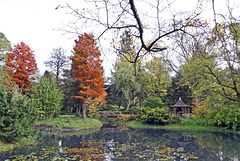
Nederland - Doorn, Nationaal Bomenmuseum Gimborn
| 17 Nov 2025 |
|
|
|
Nationaal Bomenmuseum Gimborn (National Tree Museum Gimborn) is the largest arboretum in the Netherlands. The park-like landscape is criss-crossed with winding paths, a large heath garden, unique vistas and an enormous tree house. The ponds are fed by clear seepage water from the Utrechtse Heuvelrug (Utrecht Hill Ridge).
Covering 29 hectares, it houses a world-famous collection of 3.000 species of trees and shrubs from all over the world. German ink manufacturer Max von Gimborn started it as a private collection of conifers and ericaceous plants in 1924.
Nederland - Huis Doorn
| 14 Nov 2025 |
|
|
|
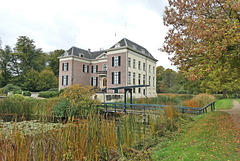
Huis Doorn (House Doorn) has a rich history, beginning as a medieval moated castle built in the 13th century. After several renovations, it was restored again in the 17th century and converted into the current country house in 1872.
However, its most famous period began in 1920, when the exiled German Emperor Wilhelm II bought it and lived there in exile until his death in 1941.
After World War II, Huis Doorn and its contents were confiscated by the Dutch government and it became a national museum. The interior of the house has not been changed since Wilhelm II died.
Nederland - Utrecht, Gertrudiskathedraal
| 04 Jun 2025 |
|
|
|
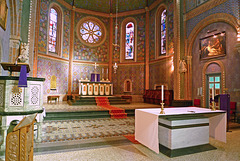
Sint-Gertrudiskathedraal (Saint Gertrude's Cathedral) serves as the main church of the Old Catholic Church and the seat of the Old Catholic Archbishop in the Netherlands. The church was built between 1912 and 1914 in the neo-Romanesque style, chosen as a tribute to the long-lost Saint Mary's Church that once stood nearby.
The cathedral's towers dominate its front side, while a three-sided apse completes the structure. Inside the murals, primarily geometric and abstract, add to the cathedral’s unique atmosphere. Its inventory of religious artifacts, including paintings, sculptures, church silver, and relics, comes from various disused Old Catholic churches.

Nederland - Utrecht, Sint Willibrordkerk
| 02 Jun 2025 |
|
|
|
The Sint Willibrordkerk (Saint Willibrord's Church) is one of the finest remaining examples of the 19th-century Utrecht school of the Gothic revival. It was built between 1875 and the church is almost completely hidden from view by its surrounding buildings. Sint Willibrordkerk is considered being one of the most beautiful neo-gothic churches of the Netherlands.
The original and very special interior, comes as a complete surprise for the visitor. The rich furniture and welth of decorations of the church was almost completely designed and made in the workshop of the German sculptor W.F. Mengelberg, who had gained experience from the restoration of the Cathedral of Cologne. The windows in the southern wall and the carvings on the pulpit depict scenes from the life of St Willibrord, the missionary who converted the people of the northern Netherlands to christianity.
Nederland - Utrecht, Domkerk en Domtoren
| 28 May 2025 |
|
|
|
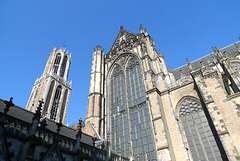
The Domkerk (St. Martin's Cathedral) was the cathedral of the diocese of Utrecht during the Middle Ages. It once was the largest church and the only cathedral of the Netherlands.
The construction of the present church started already in 1254. Since 1580 it is a protestant church.
In 1674 a tornado destroyed the part of the church that was connected to the tower and was never rebuild. The Dom tower is with a height of more than 112 meters the highest medieval tower in the country.
Main image: Dom Church and Dom Tower seen from the cloister (Pandhof) next to the church.
Nederland - Kasteel Renswoude
| 31 Jan 2025 |
|
|
|
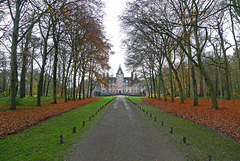
Kasteel Renswoude (Renswoude Castle), formerly called Borchwal , is a castle and knight's manor and estate nearby the village of Renswoude. The first house probably dates from the late 14th century. Perhaps the name refers to a borgwal (circular rampart) that surrounded the castle.
During the Dutch 'Golden Age' - in 1654 – the original house was demolished by order of Johan van Reede and replaced by the current country house in Dutch-classicist style. It was probably built on the medieval foundations. The castle has a special design, which gives it a double appearance. The white plastered back gives the building a real country-house appearance, while the front with its towers is more reminiscent of a castle. The facade of the main building is dominated by the large tower in the middle with a corner tower protruding on either side.
Kasteel Renswoude is surrounded by a park, which is open to the public. Nowadays the castle is divided into several apartments where some members of the castle owners' family reside.
Nederland - Wijk bij Duurstede, ‘Rijn en Lek’
| 18 Dec 2024 |
|
|
|
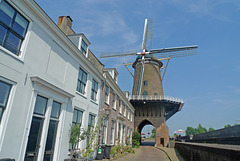
Windmill ‘Rijn en Lek’ is dating back to 1659, when it was built on top of the - only remaining - medieval city gate of the town, the Leuterpoort. In the beginning it was used as a bark mill, but around 1820 it became a flourmill, which it still is. The mill stands proudly above the gate on the dike and is the only mill in the Netherlands on top of a city gate.
The ‘Rijn en Lek’ is often confused with the windmill painted by Ruisdael, called ‘The windmill at Wijk bij Duurstede’, which stood a few blocks away.
The mill got its name ‘Rijn en Lek’ due to the fact that the river Rhine changes it name into Lek River downstream from Wijk bij Duurstede.
Nederland - Wijk bij Duurstede, Kasteel Duurstede
| 16 Dec 2024 |
|
|
|
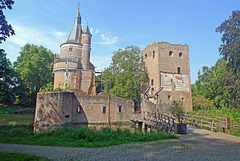
Kasteel Duurstede (Duurstede Castle) is dating back to the 13th century and is one of the oldest medieval castles in the Netherlands. Around 1270 Zweder I van Zuylen van Abcoude built a freestanding keep on a raised and moated site nearby the (lost) city Dorestad. This building was about 11 meters high and had 2.5 meter thick walls. Later on an extra floor and a residential wing with a great hall were added.
Until the beginning of the 15th century the castle was possessed by the Van Zuylen van Abcoude family, when they were forced to sell it to the bishops of Utrecht who kept it until 1580. After that year Kasteel Duurstede fell to the States of Utrecht. They had no money to maintain the castle, so it slowly fell into decay. And after the French troops had devastated the town of Wijk bij Duurstede in 1672 the locals repaired their houses and the town walls with stones from the castle.
In 1852 the town council became owner of the castle and turned the fortifications around the castle into a park. Until around 1925 the castle could only be reached with a little ferry; nowadays there is a little drawbridge.
Today only the two towers and some of the walls remain, but the castle has been renovated to include a terrace cafe, gazebo in the garden and rooms inside which are used for events or weddings.
Nederland - Kasteel Amerongen
| 13 Dec 2024 |
|
|
|
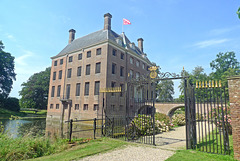
Kasteel Amerongen (Amerongen Castle) was built between 1670 and 1684 on the site of a medieval castle, that had been burned down by French troops. The great Dutch house, garden and furnishings form a unit seldom seen in the Netherlands. The castle has a rich family-history, going back 700 years. The owners played an important part in the Dutch and European history.
Godard Adriaan van Reede (1621-1691) held a key-position in the insurrection against the French supremacy. As a retribution the house was burnt down by the French in 1673, but rebuilt by his wife Margaretha Turnor in Dutch classicist style. After World War I the German Kaiser Wilhelm II (1859-1941) lived at the castle for 18 months and signed his abdication here in 1918.
Kasteel Amerongen is surrounded by historical gardens. The castle itself can be visited (quite limited opening hours) only by a guided tour.
Jump to top
RSS feed- Jaap van 't Veen's latest photos with "Utrecht" - Photos
- ipernity © 2007-2026
- Help & Contact
|
Club news
|
About ipernity
|
History |
ipernity Club & Prices |
Guide of good conduct
Donate | Group guidelines | Privacy policy | Terms of use | Statutes | In memoria -
Facebook
X
