

Jaap van 't Veen's photos with the keyword: Doorn
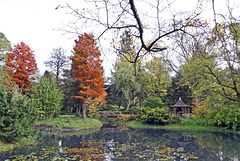
Nederland - Doorn, Nationaal Bomenmuseum Gimborn
| 17 Nov 2025 |
|
|
|
Nationaal Bomenmuseum Gimborn (National Tree Museum Gimborn) is the largest arboretum in the Netherlands. The park-like landscape is criss-crossed with winding paths, a large heath garden, unique vistas and an enormous tree house. The ponds are fed by clear seepage water from the Utrechtse Heuvelrug (Utrecht Hill Ridge).
Covering 29 hectares, it houses a world-famous collection of 3.000 species of trees and shrubs from all over the world. German ink manufacturer Max von Gimborn started it as a private collection of conifers and ericaceous plants in 1924.
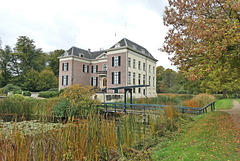
Nederland - Huis Doorn
| 14 Nov 2025 |
|
|
|
Huis Doorn (House Doorn) has a rich history, beginning as a medieval moated castle built in the 13th century. After several renovations, it was restored again in the 17th century and converted into the current country house in 1872.
However, its most famous period began in 1920, when the exiled German Emperor Wilhelm II bought it and lived there in exile until his death in 1941.
After World War II, Huis Doorn and its contents were confiscated by the Dutch government and it became a national museum. The interior of the house has not been changed since Wilhelm II died.
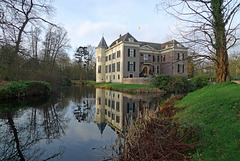
Nederland - Doorn, Huis Doorn
| 06 Jan 2016 |
|
|
|
‘Huis Doorn’ was first mentioned in the year of 838 as ‘Villa Thorhem’. Later this ‘Hof Doorn’ was owned by a deanery. Around 1200 the castle is owned by the dean of the cathedral itself and used as monastic grange. The oldest parts of ‘Huis Doorn’ are dating back to the end of the 13th century and (most probably) built by dean Adolf van Waldeck. In 13 22 the castle was completely destroyed and rebuilt twenty-five years later as a moated seat.
In the following centuries the castle had many owners and was often renovated and expanded. At the end of the 18th century it was converted into an elegant country house, still with a moat. The surrounding park was laid out as an English landscape garden.
At the end of World War I the last German Kaiser Wilhelm II fled to the neutral Netherlands, where he was given political asylum. After a stay in Castle Amerongen he bought ‘Huis Doorn’ in 1919. After extensive alterations he finally moved to Doorn in May 1920, where he lived in exile until his death in June 1941. He is buried in a mausoleum in the gardens (PiP 3).
After the German occupation in World War II, the house was seized by the Dutch government as hostile property. Nowadays - still owned by the government - it houses a museum about World War I and the life of Kaiser Wilhelm II in ‘Huis Doorn’.
Jump to top
RSS feed- Jaap van 't Veen's latest photos with "Doorn" - Photos
- ipernity © 2007-2026
- Help & Contact
|
Club news
|
About ipernity
|
History |
ipernity Club & Prices |
Guide of good conduct
Donate | Group guidelines | Privacy policy | Terms of use | Statutes | In memoria -
Facebook
X
