

Jaap van 't Veen's photos with the keyword: Stevensweert
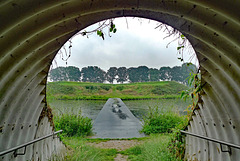
Nederland - Stevensweert
| 11 Aug 2021 |
|
|
|
Stevensweert is an old fortified town situated on an island between two branches of the river Maas. During the Eighty Years' War, this island was conquered by the Spaniards in 1633. They immediately built almost impregnable fortifications.
Stevensweert was surrounded by a high earthen wall with seven bastions; around the wall a wide moat was dug out with five ravelins. The Spanish garrison stayed in specially built barracks. In 1702, after a two-day siege, the fortress fell to Dutch troops. Three years later, five additional bastions were constructed.
In 1874 the fortifications were purchased by the municipality of Stevensweert. The land was parcelled out and the inhabitants were able to buy the available plots. In the 1980s, plans were made to reconstruct part of the fortifications. This plan was realised in 2010 and nowadays Stevensweert again partly resembles the impressive fortress it was in the past.
(Due to bad rainy weather I only took one picture of the present fortifications.)
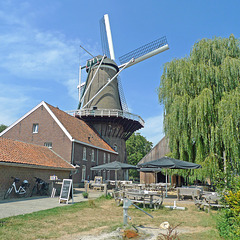
Nederland - Stevensweert, Hompesche Molen
| 06 Nov 2020 |
|
|
|
Count Reinier Vincent van Hompesch owned from the year 1719 the heerlijkheid (the lowest administrative and judicial unit in rural areas in the Netherlands) Stevensweert. He wanted his own banmolen (mill soke), in which the inhabitants of the villages Stevensweert and Ohé were obliged to grind their grains, so that the count could claim a part of the revenues. The mill was built between 1721 and 1722.
The Hompesche Molen is a so called stellingmolen (tower stage). From this stage (or platform) the miller could bring the sails in the right position. The mill has eight floors (called attics), including the basement, which was also used as a prison. The building is made entirely of brick and is round in shape. With a height of 37 meters it is the tallest flour mill in the province of Limburg.
During the Second World War, the mill was badly damaged and could not loger used. Between 1948 and 1949 it was restored, but the mill fell into disuse again and was in a worse condition, which led to another renovation between 1975 and 1977. After that, wheat and barley were milled for years by a voluntary miller for use as cattle feed.
Between 2005 and 2013 there has been a visitor centre in the outbuildings and miller's house. From 2009 a brasserie has been housed in the miller's house adjacent to the mill. In 2014 the mill became the property of the Vereniging Natuurmonumenten (a Dutch Society for Nature Conservation). In 2015 the mill was restored and made accessible to the public.
Jump to top
RSS feed- Jaap van 't Veen's latest photos with "Stevensweert" - Photos
- ipernity © 2007-2026
- Help & Contact
|
Club news
|
About ipernity
|
History |
ipernity Club & Prices |
Guide of good conduct
Donate | Group guidelines | Privacy policy | Terms of use | Statutes | In memoria -
Facebook
X
