

Anne Elliott's photos with the keyword: 19 June 2015
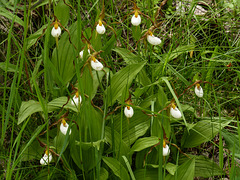
02 Mountain Lady's Slipper / Cypripedium montanum
| 08 Mar 2016 |
|
This was the very first time I had ever seen this species, so it was a thrill to find some growing along the Chief Mountain Parkway in Waterton Lakes National Park, on 19 June 2015. There were quite a few growing in or above the ditch along the side of the road. This was quite a spectacular grouping of them. The following day, I saw some at a different location in the park and got better, closer photos of individual flowers. This plant is rare in Alberta.
www.fs.fed.us/wildflowers/plant-of-the-week/cypripedium_m...
"With its merging landforms, connected ecoregions and its mild, moist, windy climate, Waterton Lakes National Park is an amazing meeting place for an abundant and diverse collection of vegetation.
Despite it's small size (505 sq km) Waterton is graced with over 1000 species of vascular plants . Over half of Alberta's plant species are found in this tiny place. The park's four ecoregions - foothills parkland, montane, subalpine and alpine - embrace forty-five vegetation communities. Sixteen of these are considered significant because they are rare or fragile and threatened.
Waterton also has an unusually high number of rare plants - over 175 are provincially rare (e.g. mountain lady's-slipper, pygmy poppy, mountain hollyhock), and over twenty of these are found only in the Waterton area (e.g. western wakerobin, Lewis' mock-orange, white-veined wintergreen). Over 50 species are rare in Canada (e.g. Bolander's quillwort, Lyall's scorpionweed, Brewer's monkeyflower.)" From Parks Canada website.
www.pc.gc.ca/eng/pn-np/ab/waterton/natcul/natcul1/f.aspx
I was so lucky to be invited to join friends Sandy and Heide on a three-day trip to Waterton Lakes National Park, from 19-21 (inclusive) June 2015. We met up with other members of the Alberta Native Plant Council for their annual Botany Alberta weekend. Most people who attended stayed at the Crooked Creek Campground, a 5.6 km drive east of the Waterton Park Gate on Highway 5, but my friends and I stayed at the Crandell Mountain Lodge on the edge of Waterton town. The ANPC people had a list of species that they hoped to find, and they were very successful.
Our stay down south overlapped the annual Waterton Wildflower Festival, but we came across very few people on our various drives and hikes. Needless to say, I was extremely fortunate to spend three days with people who are very knowledgeable about plants and many other things. This meant that I got to see many wildflower species, including several that were new to me, such as this gorgeous Mariposa Lily. It was one of the flowers that was on my mental Wish List - and there were hundreds of them to be seen!
Our two main hikes of the weekend were the Bertha Lake Trail as far as the Bertha Falls (on 20 June), and the Crandell Lake Trail (on 21 June). Makes me smile when a described "short, easy hike" in a book or on the Internet turns into a full day of exploration along the trail, taking hours to reach the destination, though returning to the cars in a much shorter time.
The wind made photographing plants a real challenge, including the beautiful Mariposa Lilies in the meadow along the Hay Barn road. Though I took plenty of photos, I wasn't sure that I would end up with any that were sharp enough. Trying to catch a quick shot when a flower is blowing in and out of the viewfinder is not easy!
I tried to find a list of plant species in Waterton Park on the Internet, but had no luck. I do have the book, "Wildflowers of Waterton Park" by Jacinthe Lavoie and Ian Wilson, which has an Index of Plant names, but I had hoped to find a list that I could print out.
Thank you so much, Sandy and Heide, for a great three-day trip in such spectacular scenery, surrounded by amazing nature. The wildflowers were top priority, but I was so happy to see insects, scenery and even a bit of wildlife that included a very distant female Grizzly with a cub from last year and two Black Bears, one of which was along the Crandell Lake trail at the same time we were there.
Thanks, too, Sandy, for doing all the driving - so much appreciated by Heide and myself! Also have to thank you both for being so thoughtful as far as my limitations go and for your patience in allowing me to take lots of photos! Thanks, Heide, for all the reminders to stay hydrated while hiking!
Two other people to mention - Arnold, it was so good to see you at the meeting place. Been a long time since our paths crossed. Jerry P. (from Calgary), good to bump into you in Waterton, and thanks so much for telling us about various sightings and even taking us to several of the locations, despite the fact that you had just returned from a major mountain ridge hike that day. Loved seeing the distant Loon lying in the grass at the edge of one of the wetlands.
Great trip, great company! How lucky I am.
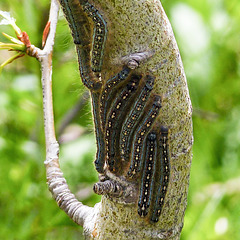
A few little wrigglers
| 02 Mar 2016 |
|
"With its merging landforms, connected ecoregions and its mild, moist, windy climate, Waterton Lakes National Park is an amazing meeting place for an abundant and diverse collection of vegetation.
Despite it's small size (505 sq km) Waterton is graced with over 1000 species of vascular plants . Over half of Alberta's plant species are found in this tiny place. The park's four ecoregions - foothills parkland, montane, subalpine and alpine - embrace forty-five vegetation communities. Sixteen of these are considered significant because they are rare or fragile and threatened.
Waterton also has an unusually high number of rare plants - over 175 are provincially rare (e.g. mountain lady's-slipper, pygmy poppy, mountain hollyhock), and over twenty of these are found only in the Waterton area (e.g. western wakerobin, Lewis' mock-orange, white-veined wintergreen). Over 50 species are rare in Canada (e.g. Bolander's quillwort, Lyall's scorpionweed, Brewer's monkeyflower.)" From Parks Canada website.
www.pc.gc.ca/eng/pn-np/ab/waterton/natcul/natcul1/f.aspx
I was so lucky to be invited to join friends Sandy and Heide on a three-day trip to Waterton Lakes National Park, from 19-21 (inclusive) June 2015. We met up with other members of the Alberta Native Plant Council for their annual Botany Alberta weekend. Most people who attended stayed at the Crooked Creek Campground, a 5.6 km drive east of the Waterton Park Gate on Highway 5, but my friends and I stayed at the Crandell Mountain Lodge on the edge of Waterton town. The ANPC people had a list of species that they hoped to find, and they were very successful.
Our stay down south overlapped the annual Waterton Wildflower Festival, but we came across very few people on our various drives and hikes. Needless to say, I was extremely fortunate to spend three days with people who are very knowledgeable about plants and many other things. This meant that I got to see many wildflower species, including several that were new to me, such as the gorgeous Mariposa Lily. It was one of the flowers that was on my Wish List - and there were hundreds of them to be seen!
Our two main hikes of the weekend were the Bertha Lake Trail as far as the Bertha Falls (on 20 June), and the Crandell Lake Trail (on 21 June). Makes me smile when a described "short, easy hike" in a book or on the Internet turns into a full day of exploration along the trail, taking hours to reach the destination, though returning to the cars in a much shorter time.
The wind made photographing plants a real challenge, including the beautiful Mariposa Lilies in the meadow along the Hay Barn road. Though I took plenty of photos, I wasn't sure that I would end up with any that were sharp enough. Trying to catch a quick shot when a flower is blowing in and out of the viewfinder is not easy!
I tried to find a list of plant species in Waterton Park on the Internet, but had no luck. I do have the book, "Wildflowers of Waterton Park" by Jacinthe Lavoie and Ian Wilson, which has an Index of Plant names, but I had hoped to find a list that I could print out.
Thank you so much, Sandy and Heide, for a great three-day trip in such spectacular scenery, surrounded by amazing nature. The wildflowers were top priority, but I was so happy to see insects, scenery and even a bit of wildlife that included a very distant female Grizzly with a cub from last year and two Black Bears, one of which was along the Crandell Lake trail at the same time we were there. I believe the mass of Tent Caterpillars in this photo were seen along the Chief Mountain Parkway, that had a huge invasion of these - they were on every tree, plant, grass and a few on the road. They were busy stripping every leaf from the trees. It was most unpleasant trying to get photos of these insects, to say the least!
Thanks, too, Sandy, for doing all the driving - so much appreciated by Heide and myself! Also have to thank you both for being so thoughtful as far as my limitations go and for your patience in allowing me to take lots of photos! Thanks, Heide, for all the reminders to stay hydrated while hiking!
Two other people to mention - Arnold, it was so good to see you at the meeting place. Been a long time since our paths crossed. Jerry P. (from Calgary), good to bump into you in Waterton, and thanks so much for telling us about various sightings and even taking us to several of the locations, despite the fact that you had just returned from a major mountain ridge hike that day. Loved seeing the distant Loon lying in the grass at the edge of one of the wetlands.
Great trip, great company! How lucky I was to get this chance.
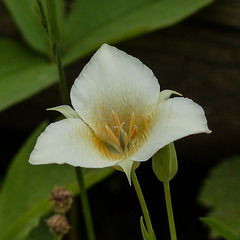
Mariposa Lily / Calochortus apiculatus
| 15 Dec 2015 |
|
|
|
"With its merging landforms, connected ecoregions and its mild, moist, windy climate, Waterton Lakes National Park is an amazing meeting place for an abundant and diverse collection of vegetation.
Despite it's small size (505 sq km) Waterton is graced with over 1000 species of vascular plants . Over half of Alberta's plant species are found in this tiny place. The park's four ecoregions - foothills parkland, montane, subalpine and alpine - embrace forty-five vegetation communities. Sixteen of these are considered significant because they are rare or fragile and threatened.
Waterton also has an unusually high number of rare plants - over 175 are provincially rare (e.g. mountain lady's-slipper, pygmy poppy, mountain hollyhock), and over twenty of these are found only in the Waterton area (e.g. western wakerobin, Lewis' mock-orange, white-veined wintergreen). Over 50 species are rare in Canada (e.g. Bolander's quillwort, Lyall's scorpionweed, Brewer's monkeyflower.)" From Parks Canada website.
www.pc.gc.ca/eng/pn-np/ab/waterton/natcul/natcul1/f.aspx
I was so lucky to be invited to join friends Sandy and Heide on a three-day trip to Waterton Lakes National Park, from 19-21 (inclusive) June 2015. We met up with other members of the Alberta Native Plant Council for their annual Botany Alberta weekend. Most people who attended stayed at the Crooked Creek Campground, a 5.6 km drive east of the Waterton Park Gate on Highway 5, but my friends and I stayed at the Crandell Mountain Lodge on the edge of Waterton town. The ANPC people had a list of species that they hoped to find, and they were very successful.
Our stay down south overlapped the annual Waterton Wildflower Festival, but we came across very few people on our various drives and hikes. Needless to say, I was extremely fortunate to spend three days with people who are very knowledgeable about plants and many other things. This meant that I got to see many wildflower species, including several that were new to me, such as this gorgeous Mariposa Lily. It was one of the flowers that was on my mental Wish List - and there were hundreds of them to be seen!
Our two main hikes of the weekend were the Bertha Lake Trail as far as the Bertha Falls (on 20 June), and the Crandell Lake Trail (on 21 June). Makes me smile when a described "short, easy hike" in a book or on the Internet turns into a full day of exploration along the trail, taking hours to reach the destination, though returning to the cars in a much shorter time.
The wind made photographing plants a real challenge, including the beautiful Mariposa Lilies in the meadow along the Hay Barn road. Though I took plenty of photos, I wasn't sure that I would end up with any that were sharp enough. Trying to catch a quick shot when a flower is blowing in and out of the viewfinder is not easy! I think the one in my photo was more shltered at the edge of a trail.
I tried to find a list of plant species in Waterton Park on the Internet, but had no luck. I do have the book, "Wildflowers of Waterton Park" by Jacinthe Lavoie and Ian Wilson, which has an Index of Plant names, but I had hoped to find a list that I could print out.
Thank you so much, Sandy and Heide, for a great three-day trip in such spectacular scenery, surrounded by amazing nature. The wildflowers were top priority, but I was so happy to see insects, scenery and even a bit of wildlife that included a very distant female Grizzly with a cub from last year and two Black Bears, one of which was along the Crandell Lake trail at the same time we were there.
Thanks, too, Sandy, for doing all the driving - so much appreciated by Heide and myself! Also have to thank you both for being so thoughtful as far as my limitations go and for your patience in allowing me to take lots of photos! Thanks, Heide, for all the reminders to stay hydrated while hiking!
Two other people to mention - Arnold, it was so good to see you at the meeting place. Been a long time since our paths crossed. Jerry P. (from Calgary), good to bump into you in Waterton, and thanks so much for telling us about various sightings and even taking us to several of the locations, despite the fact that you had just returned from a major mountain hike that day. Loved seeing the distant Loon lying in the grass at the edge of one of the wetlands.
Great trip, great company! How lucky I am.
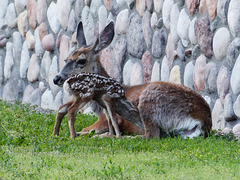
Mule Deer, Mom and baby
| 17 Jul 2015 |
|
On the first day of three spent in Waterton Lakes National Park, my friends and I came across this beautiful sight along one of the roads in the small town of Waterton. This tiny baby Mule Deer could barely stand and kept falling down. It was trying to nurse - amazingly, its mother eventually lay down to make nursing easier for her new little one.
"With its merging landforms, connected ecoregions and its mild, moist, windy climate, Waterton Lakes National Park is an amazing meeting place for an abundant and diverse collection of vegetation.
Despite it's small size (505 sq km) Waterton is graced with over 1000 species of vascular plants . Over half of Alberta's plant species are found in this tiny place. The park's four ecoregions - foothills parkland, montane, subalpine and alpine - embrace forty-five vegetation communities. Sixteen of these are considered significant because they are rare or fragile and threatened.
Waterton also has an unusually high number of rare plants - over 175 are provincially rare (e.g. mountain lady's-slipper, pygmy poppy, mountain hollyhock), and over twenty of these are found only in the Waterton area (e.g. western wakerobin, Lewis' mock-orange, white-veined wintergreen). Over 50 species are rare in Canada (e.g. Bolander's quillwort, Lyall's scorpionweed, Brewer's monkeyflower.)" From Parks Canada website.
www.pc.gc.ca/eng/pn-np/ab/waterton/natcul/natcul1/f.aspx
I was so lucky to be invited to join friends Sandy and Heide on a three-day trip to Waterton Lakes National Park, from 19-21 (inclusive) June 2015. We met up with other members of the Alberta Native Plant Council for their annual Botany Alberta weekend. Most people who attended stayed at the Crooked Creek Campground, a 5.6 km drive east of the Waterton Park Gate on Highway 5, but my friends and I stayed at the Crandell Mountain Lodge on the edge of Waterton town. The ANPC people had a list of particular rare species that they hoped to find, and they were very successful.
Our stay down south overlapped the annual Waterton Wildflower Festival, but we came across very few people on our various drives and hikes. Needless to say, I was extremely fortunate to spend three days with people who are very knowledgeable about plants and many other things. This meant that I got to see many wildflower species, including several that were new to me, such as the gorgeous Mariposa Lily. It was one of the flowers that was on my mental Wish List - and there were hundreds of them to be seen! I had also never seen the white Mountain Lady's Slipper or the spectacular Bear Grass and I was so thrilled that there were still several of the latter plants in bloom. Absolutely made my day!
Our two main hikes of the weekend were the Bertha Lake Trail as far as the Bertha Falls (on 20 June), and the Crandell Lake Trail (on 21 June). Makes me smile when a described "short, easy hike" in a book or on the Internet turns into a full day of exploration along the trail, taking hours to reach the destination, though returning to the cars in a much shorter time.
The wind made photographing some of the plants a real challenge, including the beautiful Mariposa Lilies in the meadow along the Hay Barn road. Though I took plenty of photos, I wasn't sure that I would end up with any that were sharp enough. Trying to catch a quick shot when a flower is blowing in and out of the viewfinder is not easy! Unfortunately, I'm no longer able to get down and take macro shots (my lens needs to be about 4" away from the subject), so my photos have to be telemacro.
Thank you so much, Sandy and Heide, for a great three-day trip in such spectacular scenery, surrounded by amazing nature. The wildflowers were top priority, but I was so happy to see insects, scenery and even a bit of wildlife that included a very distant female Grizzly with a cub from last year and two Black Bears, one of which was along the Crandell Lake trail at the same time we were there.
Thanks, too, Sandy, for doing all the driving - so much appreciated by Heide and myself! Also have to thank you both for being so thoughtful as far as my limitations go (lol, I can move much better than I was expecting today!) and for your patience in allowing me to take lots of photos! Heide, you'll be glad to know that I have a bottle of water sitting by my computer - thanks for all the reminders to keep hydrated while hiking. Two other people to mention - Arnold, it was so good to see you at the meeting place. Been a long time since our paths crossed. Jerry (from Calgary), good to bump into you in Waterton, and thanks so much for telling us about various sightings and even taking us to several of the locations, despite the fact that you had just returned from a major mountain hike that day. Loved seeing the distant (nesting) Loon lying in the grass at the edge of one of the wetlands.
Great trip, great company! How lucky I am.
Grizzly Bear with last year's cub
| 01 Jul 2015 |
|
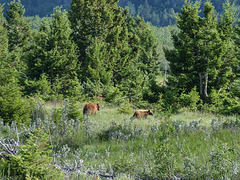
Definitely a very distant shot, lol, but I wanted to add it to my Waterton Lakes National Park album. We were on our way to meet other members of the Alberta Native Plant Council in the early evening of 20 June 2015, when we saw that quite a few cars had stopped on a bridge along Highway 5. Yes, we did what most people do, we pulled over and took a look, as there was most likely a bear to be seen. Well, this Grizzly and a cub from last year were barely visible in the far, far distance. Tried a shot or two and, in this one, you can actually tell what the animals are. Such a thrill, especially as I think I've only ever seen a Grizzly (and a cub from the previous year) on one other occasion - by Kananaskis Lakes in Kananaskis, and at very close quarters! Any other bears that I have seen were Black Bears. Also, this was a botany trip, so anything else seen was a bonus : ) We saw four bears in total. A Black Bear crossed the road ahead of our car in the dark on the first evening (no photo). A second Black Bear was near the trailhead for Crandell Lake Trail - was passing though the forest, gave us one quick glance, strode across the path and disappeared into the trees. Not interested in us at all. The other two bears were the two Grizzlies in this photo. Amazing to watch as they hung out in the meadow, looking for food.
I was so lucky to be invited to join friends Sandy and Heide on a three-day trip to Waterton Lakes National Park, from 19-21 (inclusive) June 2015. We met up with other members of the Alberta Native Plant Council for their annual Botany Alberta weekend. Most people who attended stayed at the Crooked Creek Campground, a 5.6 km drive east of the Waterton Park Gate on Highway 5, but my friends and I stayed at the Crandell Mountain Lodge on the edge of Waterton town. The ANPC people had a list of species that they hoped to find, and they were very successful.
Our stay down south overlapped the annual Waterton Wildflower Festival, but we came across very few people on our various drives and hikes. I was expecting everywhere to be packed. Needless to say, I was extremely fortunate to spend three days with people who are specialists and very knowledgeable about plants, and many other things. This meant that I got to see many wildflower species, including several that were new to me, such as the gorgeous Mariposa Lily. It was one of the flowers that was on my Wish List - and there were hundreds of them to be seen! I had also never seen the spectacular Bear Grass and I was so thrilled that there were still several plants in bloom. Absolutely made my day!
Our two main hikes of the weekend were the Bertha Lake Trail as far as the Bertha Falls (on 20 June), and the Crandell Lake Trail (on 21 June). Makes me smile when a described "short, easy hike" in a book or on the Internet turns into a full day of exploration along the trail, taking hours to reach the destination, though returning to the cars in a much shorter time. Our walks/hikes are very slow-paced with endless stops to look at/for plants and to take photos. This makes it possible for me to go along.
Crandell Lake from the Crandell Campground trailhead:
Return distance 4.0 km (2.4 miles), elevation gain 150 metres (492'), hiking time 1.5 hours (we took all day!).
Bertha Falls from the townsite trailhead:
Return distance 5.6 km (3.4 miles), elevation gain 150 metres (492'), hiking time 1.5 hours (again, we took all day). For me, this hike felt much further than it was!
The wind made photographing plants a real challenge, including the beautiful Mariposa Lilies in the meadow along the Hay Barn road. Trying to catch a quick shot when a flower is blowing in and out of the viewfinder is not easy! Unfortunately, I'm no longer able to get down and take macro shots (my lens needs to be about 4" away from the subject), so my photos have to be telemacro.
I've been trying to find an online list of plant species in Waterton Park, but have so far been out of luck. I do have the book, "Wildflowers of Waterton Park" by Jacinthe Lavoie and Ian Wilson, which has an Index of Plant names, but I was hoping to find a list that I could print out.
It's going to take me ages to type descriptions for the various photos I'll slowly be posting, and I will no doubt keep adding new bits and pieces over time. There is just so much information I want to add, but my descriptions are already way too long. Also, my photos of quite a few of the plants will be posted for the use of ANPC members and are, unfortunately, really poor images. Need them added to my Waterton Lakes album, so please bear with me : ) Luckily, you don't even need to look at them.
A touch of sunset
| 28 Jun 2015 |
|
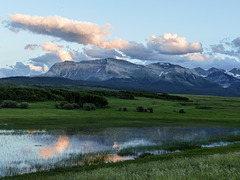
This photo was taken on 19 June 2015, the first day of a three-day trip to Waterton Lakes National Park. Travelling south from Calgary was roughly a three-hour drive, giving us time to do some exploring in the park the rest of the day.
"In 1932, Waterton-Glacier International Peace Park was formed from Waterton and Glacier. It was dedicated to world peace by Sir Charles Arthur Mander on behalf of Rotary International. Although the park has a lot of diversity for its size, the main highlight is the Waterton lakes—the deepest in the Canadian Rockies—overlooked by the historic Prince of Wales Hotel National Historic Site.
In 1979, Waterton and bordering Glacier National park in the US were designated as World Biosphere reserves, preserving mountains, prairie, lakes and freshwater wetlands ecosystems. Habitats represented in the parks' range include: prairie grasslands, aspen grove forests, alpine tundra/high meadows, lower subalpine forests, deciduous and coniferous forests.
The park is part of the Waterton-Glacier International Peace Park, designated as World Heritage Site in 1995 for their distinctive climate, physiographic setting, mountain-prairie interface, and tri-ocean hydrographical divide. They are areas of significant scenic values with abundant and diverse flora and fauna"
en.wikipedia.org/wiki/Waterton_Lakes_National_Park</
I was so lucky to be invited to join friends Sandy and Heide on a three-day trip to Waterton Lakes National Park, from 19-21 (inclusive) June 2015. We met up with other members of the Alberta Native Plant Council for their annual Botany Alberta weekend. Most people who attended stayed at the Crooked Creek Campground, a 5.6 km drive east of the Waterton Park Gate on Highway 5, but my friends and I stayed at the Crandell Mountain Lodge on the edge of Waterton town. The ANPC people had a list of species that they hoped to find, and they were very successful.
Our stay down south overlapped the annual Waterton Wildflower Festival, but we came across very few people on our various drives and hikes. Needless to say, I was extremely fortunate to spend three days with people who are very knowledgeable about plants and many other things. This meant that I got to see many wildflower species, including several that were new to me, such as the gorgeous Mariposa Lily. It was one of the flowers that was on my Wish List - and there were hundreds of them to be seen! I had also never seen the spectacular Bear Grass and I was so thrilled that there were still several plants in bloom. Absolutely made my day!
Our two main hikes of the weekend were the Bertha Lake Trail as far as the Bertha Falls (on 20 June), and the Crandell Lake Trail (on 21 June). Makes me smile when a described "short, easy hike" in a book or on the Internet turns into a full day of exploration along the trail, taking hours to reach the destination, though returning to the cars in a much shorter time. Our walks/hikes are very slow-paced with endless stops to look at/for plants and to take photos. This makes it possible for me to go along.
Crandell Lake from the Crandell Campground trailhead:
Return distance 4.0 km (2.4 miles), elevation gain 150 metres (492'), hiking time 1.5 hours (we took all day!).
Bertha Falls from the townsite trailhead:
Return distance 5.6 km (3.4 miles), elevation gain 150 metres (492'), hiking time 1.5 hours (again, we took all day). For me, this hike felt much further than it was!
The wind made photographing plants a real challenge, including the beautiful Mariposa Lilies in the meadow along the Hay Barn road. Trying to catch a quick shot when a flower is blowing in and out of the viewfinder is not easy! Unfortunately, I'm no longer able to get down and take macro shots (my lens needs to be about 4" away from the subject), so my photos have to be telemacro.
I've been trying to find an online list of plant species in Waterton Park, but have so far been out of luck. I do have the book, "Wildflowers of Waterton Park" by Jacinthe Lavoie and Ian Wilson, which has an Index of Plant names, but I was hoping to find a list that I could print out.
It's going to take me ages to type descriptions for the various photos I'll slowly be posting, and I will no doubt keep adding new bits and pieces over time. There is just so much information I want to add, but my descriptions are already way too long. Also, my photos of quite a few of the plants will be posted for the use of ANPC members and are, unfortunately, really poor images. Need them added to my Waterton Lakes album, so please bear with me : ) Luckily, you don't even need to look at them.
Wild Chives / Allium schoenoprasum
| 27 Jun 2015 |
|
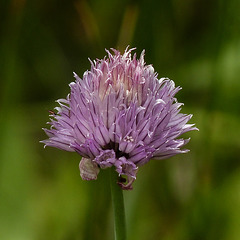
No matter where I am, I always love coming across Wild Chives. Love the colour. Photographed this flower on 19 June 2015, along the Chief Mountain Parkway in Waterton Lakes National Park. It was growing along with vibrant Wood Lilies and white Mountain Lady's Slippers. The whole area along that road had had the leaves stripped from the trees by millions of Tent Caterpillars - they were all over the tree trunks and branches and on the ground. This was the first day of a three-day trip to Waterton. Travelling south from Calgary was roughly a three-hour drive, giving us time to do some exploring in the park the rest of the day.
I was so lucky to be invited to join friends Sandy and Heide on a three-day trip to Waterton Lakes National Park, from 19-21 (inclusive) June 2015. We met up with other members of the Alberta Native Plant Council for their annual Botany Alberta weekend. Most people who attended stayed at the Crooked Creek Campground, a 5.6 km drive east of the Waterton Park Gate on Highway 5, but my friends and I stayed at the Crandell Mountain Lodge on the edge of Waterton town. The ANPC people had a list of species that they hoped to find, and they were very successful.
Our stay down south overlapped the annual Waterton Wildflower Festival, but we came across very few people on our various drives and hikes. Needless to say, I was extremely fortunate to spend three days with people who are very knowledgeable about plants and many other things. This meant that I got to see many wildflower species, including several that were new to me, such as the gorgeous Mariposa Lily. It was one of the flowers that was on my Wish List - and there were hundreds of them to be seen! I had also never seen the spectacular Bear Grass and I was so thrilled that there were still several plants in bloom. Absolutely made my day!
Our two main hikes of the weekend were the Bertha Lake Trail as far as the Bertha Falls (on 20 June), and the Crandell Lake Trail (on 21 June). Makes me smile when a described "short, easy hike" in a book or on the Internet turns into a full day of exploration along the trail, taking hours to reach the destination, though returning to the cars in a much shorter time. Our walks/hikes are very slow-paced with endless stops to look at/for plants and to take photos. This makes it possible for me to go along.
Crandell Lake from the Crandell Campground trailhead:
Return distance 4.0 km (2.4 miles), elevation gain 150 metres (492'), hiking time 1.5 hours (we took all day!).
Bertha Falls from the townsite trailhead:
Return distance 5.6 km (3.4 miles), elevation gain 150 metres (492'), hiking time 1.5 hours (again, we took all day). For me, this hike felt much further than it was!
The wind made photographing plants a real challenge, including the beautiful Mariposa Lilies in the meadow along the Hay Barn road. Trying to catch a quick shot when a flower is blowing in and out of the viewfinder is not easy! Unfortunately, I'm no longer able to get down and take macro shots (my lens needs to be about 4" away from the subject), so my photos have to be telemacro.
I've been trying to find an online list of plant species in Waterton Park, but have so far been out of luck. I do have the book, "Wildflowers of Waterton Park" by Jacinthe Lavoie and Ian Wilson, which has an Index of Plant names, but I was hoping to find a list that I could print out.
It's going to take me ages to type descriptions for the various photos I'll slowly be posting, and I will no doubt keep adding new bits and pieces over time. There is just so much information I want to add, but my descriptions are already way too long. Also, my photos of quite a few of the plants will be posted for the use of ANPC members and are, unfortunately, really poor images. Need them added to my Waterton Lakes album, so please bear with me : ) Luckily, you don't even need to look at them.
View across the valley
| 26 Jun 2015 |
|
|
|
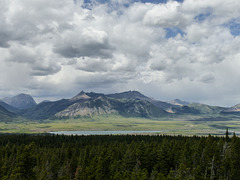
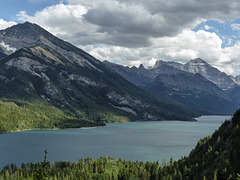
This photo was taken on 19 June 2015, the first day of a three-day trip to Waterton Lakes National Park. Travelling south from Calgary was roughly a three-hour drive, giving us time to do some exploring in the park the rest of the day. This view was taken from a viewpoint along the Chief Mountain Parkway (a bit further up this road is the Canada/US Customs). The small town of Waterton is off to the left of the photo. Those clouds brought us a little bit of rain while we stood there (trying to keep the raindrops away from my camera lens).
"In 1932, Waterton-Glacier International Peace Park was formed from Waterton and Glacier. It was dedicated to world peace by Sir Charles Arthur Mander on behalf of Rotary International. Although the park has a lot of diversity for its size, the main highlight is the Waterton lakes—the deepest in the Canadian Rockies—overlooked by the historic Prince of Wales Hotel National Historic Site.
In 1979, Waterton and bordering Glacier National park in the US were designated as World Biosphere reserves, preserving mountains, prairie, lakes and freshwater wetlands ecosystems. Habitats represented in the parks' range include: prairie grasslands, aspen grove forests, alpine tundra/high meadows, lower subalpine forests, deciduous and coniferous forests.
The park is part of the Waterton-Glacier International Peace Park, designated as World Heritage Site in 1995 for their distinctive climate, physiographic setting, mountain-prairie interface, and tri-ocean hydrographical divide. They are areas of significant scenic values with abundant and diverse flora and fauna"
en.wikipedia.org/wiki/Waterton_Lakes_National_Park</
I was so lucky to be invited to join friends Sandy and Heide on a three-day trip to Waterton Lakes National Park, from 19-21 (inclusive) June 2015. We met up with other members of the Alberta Native Plant Council for their annual Botany Alberta weekend. Most people who attended stayed at the Crooked Creek Campground, a 5.6 km drive east of the Waterton Park Gate on Highway 5, but my friends and I stayed at the Crandell Mountain Lodge on the edge of Waterton town. The ANPC people had a list of species that they hoped to find, and they were very successful.
Our stay down south overlapped the annual Waterton Wildflower Festival, but we came across very few people on our various drives and hikes. Needless to say, I was extremely fortunate to spend three days with people who are very knowledgeable about plants and many other things. This meant that I got to see many wildflower species, including several that were new to me, such as the gorgeous Mariposa Lily. It was one of the flowers that was on my Wish List - and there were hundreds of them to be seen! I had also never seen the spectacular Bear Grass and I was so thrilled that there were still several plants in bloom. Absolutely made my day!
Our two main hikes of the weekend were the Bertha Lake Trail as far as the Bertha Falls (on 20 June), and the Crandell Lake Trail (on 21 June). Makes me smile when a described "short, easy hike" in a book or on the Internet turns into a full day of exploration along the trail, taking hours to reach the destination, though returning to the cars in a much shorter time. Our walks/hikes are very slow-paced with endless stops to look at/for plants and to take photos. This makes it possible for me to go along.
Crandell Lake from the Crandell Campground trailhead:
Return distance 4.0 km (2.4 miles), elevation gain 150 metres (492'), hiking time 1.5 hours (we took all day!).
Bertha Falls from the townsite trailhead:
Return distance 5.6 km (3.4 miles), elevation gain 150 metres (492'), hiking time 1.5 hours (again, we took all day). For me, this hike felt much further than it was!
The wind made photographing plants a real challenge, including the beautiful Mariposa Lilies in the meadow along the Hay Barn road. Trying to catch a quick shot when a flower is blowing in and out of the viewfinder is not easy! Unfortunately, I'm no longer able to get down and take macro shots (my lens needs to be about 4" away from the subject), so my photos have to be telemacro.
I've been trying to find an online list of plant species in Waterton Park, but have so far been out of luck. I do have the book, "Wildflowers of Waterton Park" by Jacinthe Lavoie and Ian Wilson, which has an Index of Plant names, but I was hoping to find a list that I could print out.
It's going to take me ages to type descriptions for the various photos I'll slowly be posting, and I will no doubt keep adding new bits and pieces over time. There is just so much information I want to add, but my descriptions are already way too long. Also, my photos of quite a few of the plants will be posted for the use of ANPC members and are, unfortunately, really poor images. Need them added to my Waterton Lakes album, so please bear with me : ) Luckily, you don't even need to look at them.
Wood Lily
| 26 Jun 2015 |
|
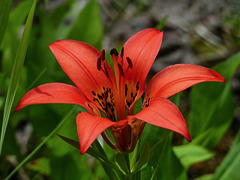
This photo was taken on 19 June 2015, the first day of a three-day trip to Waterton Lakes National Park. Travelling south from Calgary was roughly a three-hour drive, giving us time to do some exploring in the park the rest of the day. This bright Wood Lily was growing near the edge of the Chief Mountain Parkway, photographed when we stopped to admire and take photos of some gorgeous white Mountain Lady's Slippers. All along this road (and in other parts of the park), there were millions of Tent Caterpillars (the blue ones and the orange/brown ones), all over the tree trunks and branches and on the ground. Made it most unpleasant, to say the least!
I was so lucky to be invited to join friends Sandy and Heide on a three-day trip to Waterton Lakes National Park, from 19-21 (inclusive) June 2015. We met up with other members of the Alberta Native Plant Council for their annual Botany Alberta weekend. Most people who attended stayed at the Crooked Creek Campground, a 5.6 km drive east of the Waterton Park Gate on Highway 5, but my friends and I stayed at the Crandell Mountain Lodge on the edge of Waterton town. The ANPC people had a list of species that they hoped to find, and they were very successful.
Our stay down south overlapped the annual Waterton Wildflower Festival, but we came across very few people on our various drives and hikes. Needless to say, I was extremely fortunate to spend three days with people who are very knowledgeable about plants and many other things. This meant that I got to see many wildflower species, including several that were new to me, such as the gorgeous Mariposa Lily. It was one of the flowers that was on my Wish List - and there were hundreds of them to be seen! I had also never seen the spectacular Bear Grass and I was so thrilled that there were still several plants in bloom. Absolutely made my day!
Our two main hikes of the weekend were the Bertha Lake Trail as far as the Bertha Falls (on 20 June), and the Crandell Lake Trail (on 21 June). Makes me smile when a described "short, easy hike" in a book or on the Internet turns into a full day of exploration along the trail, taking hours to reach the destination, though returning to the cars in a much shorter time. Our walks/hikes are very slow-paced with endless stops to look at/for plants and to take photos. This makes it possible for me to go along.
Crandell Lake from the Crandell Campground trailhead:
Return distance 4.0 km (2.4 miles), elevation gain 150 metres (492'), hiking time 1.5 hours (we took all day!).
Bertha Falls from the townsite trailhead:
Return distance 5.6 km (3.4 miles), elevation gain 150 metres (492'), hiking time 1.5 hours (again, we took all day). For me, this hike felt much further than it was!
The wind made photographing plants a real challenge, including the beautiful Mariposa Lilies in the meadow along the Hay Barn road. Trying to catch a quick shot when a flower is blowing in and out of the viewfinder is not easy! Unfortunately, I'm no longer able to get down and take macro shots (my lens needs to be about 4" away from the subject), so my photos have to be telemacro.
I've been trying to find an online list of plant species in Waterton Park, but have so far been out of luck. I do have the book, "Wildflowers of Waterton Park" by Jacinthe Lavoie and Ian Wilson, which has an Index of Plant names, but I was hoping to find a list that I could print out.
It's going to take me ages to type descriptions for the various photos I'll slowly be posting, and I will no doubt keep adding new bits and pieces over time. There is just so much information I want to add, but my descriptions are already way too long. Also, my photos of quite a few of the plants will be posted for the use of ANPC members and are, unfortunately, really poor images. Need them added to my Waterton Lakes album, so please bear with me : ) Luckily, you don't even need to look at them.

American Goldfinch
| 26 Jun 2015 |
|
This brightly coloured male American Goldfinch was feeding at a net feeder hanging at a campsite. Taken on 19 June 2015, the first day of a three-day trip to Waterton Lakes National Park. Travelling south from Calgary was roughly a three-hour drive, giving us time to do some exploring in the park the rest of the day.
I was so lucky to be invited to join friends Sandy and Heide on a three-day trip to Waterton Lakes National Park, from 19-21 (inclusive) June 2015. We met up with other members of the Alberta Native Plant Council for their annual Botany Alberta weekend. Most people who attended stayed at the Crooked Creek Campground, a 5.6 km drive east of the Waterton Park Gate on Highway 5, but my friends and I stayed at the Crandell Mountain Lodge on the edge of Waterton town. The ANPC people had a list of species that they hoped to find, and they were very successful.
Our stay down south overlapped the annual Waterton Wildflower Festival, but we came across very few people on our various drives and hikes. Needless to say, I was extremely fortunate to spend three days with people who are very knowledgeable about plants and many other things. This meant that I got to see many wildflower species, including several that were new to me, such as the gorgeous Mariposa Lily. It was one of the flowers that was on my Wish List - and there were hundreds of them to be seen! I had also never seen the spectacular Bear Grass and I was so thrilled that there were still several plants in bloom. Absolutely made my day!
The wildflowers were top priority, but I was also so happy to see insects, scenery and even a bit of wildlife that included a very distant female Grizzly with a cub from last year and two Black Bears, one of which was along the Crandell Lake trail at the same time we were there. This was my very first time ever seeing the wildflowers of Waterton - a great experience.
Our two main hikes of the weekend were the Bertha Lake Trail as far as the Bertha Falls (on 20 June), and the Crandell Lake Trail (on 21 June). Makes me smile when a described "short, easy hike" in a book or on the Internet turns into a full day of exploration along the trail, taking hours to reach the destination, though returning to the cars in a much shorter time. Our walks/hikes are very slow-paced with endless stops to look at/for plants and to take photos. This makes it possible for me to go along.
Crandell Lake from the Crandell Campground trailhead:
Return distance 4.0 km (2.4 miles), elevation gain 150 metres (492'), hiking time 1.5 hours (we took all day!).
Bertha Falls from the townsite trailhead:
Return distance 5.6 km (3.4 miles), elevation gain 150 metres (492'), hiking time 1.5 hours (again, we took all day). For me, this hike felt much further than it was!
The wind made photographing plants a real challenge, including the beautiful Mariposa Lilies in the meadow along the Hay Barn road. Trying to catch a quick shot when a flower is blowing in and out of the viewfinder is not easy! Unfortunately, I'm no longer able to get down and take macro shots (my lens needs to be about 4" away from the subject), so my photos have to be telemacro.
I've been trying to find an online list of plant species in Waterton Park, but have so far been out of luck. I do have the book, "Wildflowers of Waterton Park" by Jacinthe Lavoie and Ian Wilson, which has an Index of Plant names, but I was hoping to find a list that I could print out.
It's going to take me ages to type descriptions for the various photos I'll slowly be posting, and I will no doubt keep adding new bits and pieces over time. There is just so much information I want to add, but my descriptions are already way too long. Also, my photos of quite a few of the plants will be posted for the use of ANPC members and are, unfortunately, really poor images. Need them added to my Waterton Lakes album, so please bear with me : ) Luckily, you don't even need to look at them.
Shrubby Penstemon / Penstemon fruticosus
| 24 Jun 2015 |
|
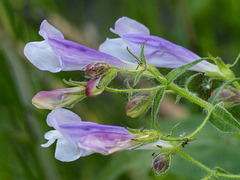
I'm not sure if this is Lyall's Penstemon / Penstemon lyallii. Seen on the first of three days in Waterton Lakes National Park. This was a new plant for me. Later: thanks for the correct ID, Sandy - Shrubby Penstemon / Penstemon fruticosus.
I was so lucky to be invited to join friends Sandy and Heide on a three-day trip to Waterton Lakes National Park, from 19-21 (inclusive) June 2015. We met up with other members of the Alberta Native Plant Council (ANPC) for their annual Botany Alberta weekend. Most people who attended stayed at the Crooked Creek Campground, a 5.6 km drive east of the Waterton Park Gate on Highway 5, but my friends and I stayed at the Crandell Mountain Lodge on the edge of Waterton town. The ANPC people had a list of species that they hoped to find, and they were very successful.
Our stay down south overlapped the annual Waterton Wildflower Festival, but we came across very few people on our various drives and hikes. Needless to say, I was extremely fortunate to spend three days with people who are very knowledgeable about plants and many other things. This meant that I got to see many wildflower species, including several that were new to me, such as the gorgeous Mariposa Lily. It was one of the flowers that was on my mental Wish List - and there were hundreds of them to be seen! I had also never seen the spectacular Bear Grass and I was so thrilled that there were still several plants in bloom. Absolutely made my day!
Our two main hikes of the weekend were the Bertha Lake Trail as far as the Bertha Falls (on 20 June), and the Crandell Lake Trail (on 21 June). Makes me smile when a described "short, easy hike" in a book or on the Internet turns into a full day of exploration along the trail, taking hours to reach the destination, though returning to the cars in a much shorter time. Our walks/hikes are very slow-paced with endless stops to look at/for plants and to take photos. This makes it possible for me to go along.
The wind made photographing plants a real challenge, including the beautiful Mariposa Lilies in the meadow along the Hay Barn road. Though I took plenty of photos, I wasn't sure that I would end up with any that were sharp enough. Trying to catch a quick shot when a flower is blowing in and out of the viewfinder is not easy! Unfortunately, I'm no longer able to get down and take macro shots (my lens needs to be about 4" away from the subject), so my photos have to be telemacro.
I've just been trying to find a list of plant species in Waterton Park, but have so far been out of luck. I do have the book, "Wildflowers of Waterton Park" by Jacinthe Lavoie and Ian Wilson, which has an Index of Plant names, but I was hoping to find a list that I could print out.
It's going to take me ages to type descriptions for the various photos I'll slowly be posting, and I will no doubt keep adding new bits and pieces over time. There is just so much information I want to add. Also, my photos of quite a few of the plants will be posted for the use of ANPC members and are, unfortunately, really poor images. Need them added to my Waterton Lakes album, so please bear with me : ) Luckily, you don't even need to look at them.
Thank you so much, Sandy and Heide, for a great three-day trip in such spectacular scenery, surrounded by amazing nature. The wildflowers were top priority, but I was so happy to also see insects, scenery and even a bit of wildlife that included the very distant female Grizzly with a cub from last year and two Black Bears, one of which was along the Crandell Lake trail at the same time we were there. This was my very first time ever seeing the wildflowers of Waterton - such a great experience.
Thanks, too, Sandy, for doing all the driving - so much appreciated by Heide and myself! Also have to thank you both for being so thoughtful as far as my limitations go and for your patience in allowing me to take lots of photos! Heide, thanks for all the reminders and insistence to keep hydrated while hiking.
Two other people to mention - Arnold, it was so good to see you at the meeting place on the one evening. Been a long time since our paths crossed. Jerry, good to bump into you in Waterton, and thanks so much for telling us about various sightings and even taking us to several of the locations, despite the fact that you had just returned from a major mountain hike that day. Loved seeing the distant Loon lying in the grass at the edge of one of the wetlands.
Great trip, great company! How lucky I am.
Three days in Waterton Lakes National Park
| 22 Jun 2015 |
|
"With its merging landforms, connected ecoregions and its mild, moist, windy climate, Waterton Lakes National Park is an amazing meeting place for an abundant and diverse collection of vegetation.
Despite it's small size (505 sq km) Waterton is graced with over 1000 species of vascular plants . Over half of Alberta's plant species are found in this tiny place. The park's four ecoregions - foothills parkland, montane, subalpine and alpine - embrace forty-five vegetation communities. Sixteen of these are considered significant because they are rare or fragile and threatened.
Waterton also has an unusually high number of rare plants - over 175 are provincially rare (e.g. mountain lady's-slipper, pygmy poppy, mountain hollyhock), and over twenty of these are found only in the Waterton area (e.g. western wakerobin, Lewis' mock-orange, white-veined wintergreen). Over 50 species are rare in Canada (e.g. Bolander's quillwort, Lyall's scorpionweed, Brewer's monkeyflower.)" From Parks Canada website.
www.pc.gc.ca/eng/pn-np/ab/waterton/natcul/natcul1/f.aspx
I was so lucky to be invited to join friends Sandy and Heide on a three-day trip to Waterton Lakes National Park, from 19-21 (inclusive) June 2015. We met up with other members of the Alberta Native Plant Council for their annual Botany Alberta weekend. Most people who attended stayed at the Crooked Creek Campground, a 5.6 km drive east of the Waterton Park Gate on Highway 5, but my friends and I stayed at the Crandell Mountain Lodge on the edge of Waterton town. The ANPC people had a list of species that they hoped to find, and they were very successful.
Our stay down south overlapped the annual Waterton Wildflower Festival, but we came across very few people on our various drives and hikes. Needless to say, I was extremely fortunate to spend three days with people who are very knowledgeable about plants and many other things. This meant that I got to see many wildflower species, including several that were new to me, such as the gorgeous Mariposa Lily. It was one of the flowers that was on my mental Wish List - and there were hundreds of them to be seen! I had also never seen the spectacular Bear Grass and I was so thrilled that there were still several plants in bloom. Absolutely made my day!
Our two main hikes of the weekend were the Bertha Lake Trail as far as the Bertha Falls (on 20 June), and the Crandell Lake Trail (on 21 June). Makes me smile when a described "short, easy hike" in a book or on the Internet turns into a full day of exploration along the trail, taking hours to reach the destination, though returning to the cars in a much shorter time.
The wind made photographing plants a real challenge, including the beautiful Mariposa Lilies in the meadow along the Hay Barn road. Though I took plenty of photos, I wasn't sure that I would end up with any that were sharp enough. Trying to catch a quick shot when a flower is blowing in and out of the viewfinder is not easy! Unfortunately, I'm no longer able to get down and take macro shots (my lens needs to be about 4" away from the subject), so my photos have to be telemacro.
I've just been trying to find a list of plant species in Waterton Park, but have so far been out of luck. I do have the book, "Wildflowers of Waterton Park" by Jacinthe Lavoie and Ian Wilson, which has an Index of Plant names, but I was hoping to find a list that I could print out.
It's going to take me ages to type descriptions for the various photos I'll slowly be posting, and I will no doubt keep adding new bits and pieces over time. There is just so much information I want to add. Also, my photos of quite a few of the plants will be posted for the use of ANPC members and are, unfortunately, really poor images. Need them added to my Waterton Lakes album, so please bear with me : ) Luckily, you don't even need to look at them.
Thank you so much, Sandy and Heide, for a great three-day trip in such spectacular scenery, surrounded by amazing nature. The wildflowers were top priority, but I was so happy to see insects, scenery and even a bit of wildlife that included a very distant female Grizzly with a cub from last year and two Black Bears, one of which was along the Crandell Lake trail at the same time we were there. This was my very first time ever seeing the wildflowers of Waterton - a great experience.
Thanks, too, Sandy, for doing all the driving - so much appreciated by Heide and myself! Also have to thank you both for being so thoughtful as far as my limitations go (lol, I can move much better than I was expecting today!) and for your patience in allowing me to take lots of photos! Heide, you'll be glad to know that I have a bottle of water sitting by my computer - thanks for all the reminders and insistence to keep hydrated while hiking.
Two other people to mention - Arnold, it was so good to see you at the meeting place. Been a long time since our paths crossed. Jerry (from Calgary), good to bump into you in Waterton, and thanks so much for telling us about various sightings and even taking us to several of the locations, despite the fact that you had just returned from a major mountain hike that day. Loved seeing the distant Loon lying in the grass at the edge of one of the wetlands.
Great trip, great company! How lucky I am.
Mariposa Lily / Calochortus apiculatus
| 22 Jun 2015 |
|
"With its merging landforms, connected ecoregions and its mild, moist, windy climate, Waterton Lakes National Park is an amazing meeting place for an abundant and diverse collection of vegetation.
Despite it's small size (505 sq km) Waterton is graced with over 1000 species of vascular plants . Over half of Alberta's plant species are found in this tiny place. The park's four ecoregions - foothills parkland, montane, subalpine and alpine - embrace forty-five vegetation communities. Sixteen of these are considered significant because they are rare or fragile and threatened.
Waterton also has an unusually high number of rare plants - over 175 are provincially rare (e.g. mountain lady's-slipper, pygmy poppy, mountain hollyhock), and over twenty of these are found only in the Waterton area (e.g. western wakerobin, Lewis' mock-orange, white-veined wintergreen). Over 50 species are rare in Canada (e.g. Bolander's quillwort, Lyall's scorpionweed, Brewer's monkeyflower.)" From Parks Canada website.
www.pc.gc.ca/eng/pn-np/ab/waterton/natcul/natcul1/f.aspx
I was so lucky to be invited to join friends Sandy and Heide on a three-day trip to Waterton Lakes National Park, from 19-21 (inclusive) June 2015. We met up with other members of the Alberta Native Plant Council for their annual Botany Alberta weekend. Most people who attended stayed at the Crooked Creek Campground, a 5.6 km drive east of the Waterton Park Gate on Highway 5, but my friends and I stayed at the Crandell Mountain Lodge on the edge of Waterton town. The ANPC people had a list of species that they hoped to find, and they were very successful.
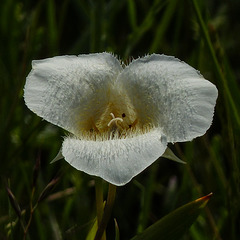
Our stay down south overlapped the annual Waterton Wildflower Festival, but we came across very few people on our various drives and hikes. Needless to say, I was extremely fortunate to spend three days with people who are very knowledgeable about plants and many other things. This meant that I got to see many wildflower species, including several that were new to me, such as this gorgeous Mariposa Lily. It was one of the flowers that was on my mental Wish List - and there were hundreds of them to be seen!
Our two main hikes of the weekend were the Bertha Lake Trail as far as the Bertha Falls (on 20 June), and the Crandell Lake Trail (on 21 June). Makes me smile when a described "short, easy hike" in a book or on the Internet turns into a full day of exploration along the trail, taking hours to reach the destination, though returning to the cars in a much shorter time.
The wind made photographing plants a real challenge, including the beautiful Mariposa Lilies in the meadow along the Hay Barn road. Though I took plenty of photos, I wasn't sure that I would end up with any that were sharp enough. Trying to catch a quick shot when a flower is blowing in and out of the viewfinder is not easy! Unfortunately, I'm no longer able to get down and take macro shots (my lens needs to be about 4" away from the subject), so my photos have to be telemacro.
I've just been trying to find a list of plant species in Waterton Park, but have so far been out of luck. I do have the book, "Wildflowers of Waterton Park" by Jacinthe Lavoie and Ian Wilson, which has an Index of Plant names, but I was hoping to find a list that I could print out.
It's going to take me ages to type descriptions for the various photos I'll slowly be posting, and I will no doubt keep adding new bits and pieces over time. There is just so much information I want to add. Also, my photos of quite a few of the plants will be posted for the use of ANPC members and are, unfortunately, really poor images. Need them added to my Waterton Lakes album, so please bear with me : ) Luckily, you don't even need to look at them.
Thank you so much, Sandy and Heide, for a great three-day trip in such spectacular scenery, surrounded by amazing nature. The wildflowers were top priority, but I was so happy to see insects, scenery and even a bit of wildlife that included a very distant female Grizzly with a cub from last year and two Black Bears, one of which was along the Crandell Lake trail at the same time we were there.
Thanks, too, Sandy, for doing all the driving - so much appreciated by Heide and myself! Also have to thank you both for being so thoughtful as far as my limitations go (lol, I can move much better than I was expecting today!) and for your patience in allowing me to take lots of photos! Heide, you'll be glad to know that I have a bottle of water sitting by my computer - thanks for all the reminders and insistence to keep hydrated while hiking.
Two other people to mention - Arnold, it was so good to see you at the meeting place. Been a long time since our paths crossed. Jerry (from Calgary), good to bump into you in Waterton, and thanks so much for telling us about various sightings and even taking us to several of the locations, despite the fact that you had just returned from a major mountain hike that day. Loved seeing the distant Loon lying in the grass at the edge of one of the wetlands.
Great trip, great company! How lucky I am.
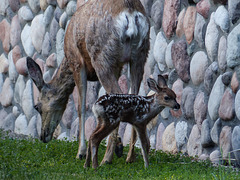
Very young Mule deer
| 22 Jun 2015 |
|
On the first day of three spent in Waterton Lakes National Park, my friends and I came across this beautiful sight along one of the roads in the small town of Waterton. This tiny baby Mule Deer could barely stand and kept falling down. It was trying to nurse - amazingly, its mother eventually lay down to make nursing easier for her new little one.
"With its merging landforms, connected ecoregions and its mild, moist, windy climate, Waterton Lakes National Park is an amazing meeting place for an abundant and diverse collection of vegetation.
Despite it's small size (505 sq km) Waterton is graced with over 1000 species of vascular plants . Over half of Alberta's plant species are found in this tiny place. The park's four ecoregions - foothills parkland, montane, subalpine and alpine - embrace forty-five vegetation communities. Sixteen of these are considered significant because they are rare or fragile and threatened.
Waterton also has an unusually high number of rare plants - over 175 are provincially rare (e.g. mountain lady's-slipper, pygmy poppy, mountain hollyhock), and over twenty of these are found only in the Waterton area (e.g. western wakerobin, Lewis' mock-orange, white-veined wintergreen). Over 50 species are rare in Canada (e.g. Bolander's quillwort, Lyall's scorpionweed, Brewer's monkeyflower.)" From Parks Canada website.
www.pc.gc.ca/eng/pn-np/ab/waterton/natcul/natcul1/f.aspx
I was so lucky to be invited to join friends Sandy and Heide on a three-day trip to Waterton Lakes National Park, from 19-21 (inclusive) June 2015. We met up with other members of the Alberta Native Plant Council for their annual Botany Alberta weekend. Most people who attended stayed at the Crooked Creek Campground, a 5.6 km drive east of the Waterton Park Gate on Highway 5, but my friends and I stayed at the Crandell Mountain Lodge on the edge of Waterton town. The ANPC people had a list of particular rare species that they hoped to find, and they were very successful.
Our stay down south overlapped the annual Waterton Wildflower Festival, but we came across very few people on our various drives and hikes. Needless to say, I was extremely fortunate to spend three days with people who are very knowledgeable about plants and many other things. This meant that I got to see many wildflower species, including several that were new to me, such as the gorgeous Mariposa Lily. It was one of the flowers that was on my mental Wish List - and there were hundreds of them to be seen! I had also never seen the spectacular Bear Grass and I was so thrilled that there were still several plants in bloom. Absolutely made my day!
Our two main hikes of the weekend were the Bertha Lake Trail as far as the Bertha Falls (on 20 June), and the Crandell Lake Trail (on 21 June). Makes me smile when a described "short, easy hike" in a book or on the Internet turns into a full day of exploration along the trail, taking hours to reach the destination, though returning to the cars in a much shorter time.
The wind made photographing plants a real challenge, including the beautiful Mariposa Lilies in the meadow along the Hay Barn road. Though I took plenty of photos, I wasn't sure that I would end up with any that were sharp enough. Trying to catch a quick shot when a flower is blowing in and out of the viewfinder is not easy! Unfortunately, I'm no longer able to get down and take macro shots (my lens needs to be about 4" away from the subject), so my photos have to be telemacro.
I've just been trying to find a list of plant species in Waterton Park, but have so far been out of luck. I do have the book, "Wildflowers of Waterton Park" by Jacinthe Lavoie and Ian Wilson, which has an Index of Plant names, but I was hoping to find a list that I could print out.
It's going to take me ages to type descriptions for the various photos I'll slowly be posting, and I will no doubt keep adding new bits and pieces over time. There is just so much information I want to add. Also, my photos of quite a few of the plants will be posted for the use of ANPC members and are, unfortunately, really poor images. Need them added to my Waterton Lakes album, so please bear with me : ) Luckily, you don't even need to look at them.
Thank you so much, Sandy and Heide, for a great three-day trip in such spectacular scenery, surrounded by amazing nature. The wildflowers were top priority, but I was so happy to see insects, scenery and even a bit of wildlife that included a very distant female Grizzly with a cub from last year and two Black Bears, one of which was along the Crandell Lake trail at the same time we were there.
Thanks, too, Sandy, for doing all the driving - so much appreciated by Heide and myself! Also have to thank you both for being so thoughtful as far as my limitations go (lol, I can move much better than I was expecting today!) and for your patience in allowing me to take lots of photos! Heide, you'll be glad to know that I have a bottle of water sitting by my computer - thanks for all the reminders to keep hydrated while hiking. Two other people to mention - Arnold, it was so good to see you at the meeting place. Been a long time since our paths crossed. Jerry (from Calgary), good to bump into you in Waterton, and thanks so much for telling us about various sightings and even taking us to several of the locations, despite the fact that you had just returned from a major mountain hike that day. Loved seeing the distant Loon lying in the grass at the edge of one of the wetlands.
Great trip, great company! How lucky I am.
Jump to top
RSS feed- Anne Elliott's latest photos with "19 June 2015" - Photos
- ipernity © 2007-2026
- Help & Contact
|
Club news
|
About ipernity
|
History |
ipernity Club & Prices |
Guide of good conduct
Donate | Group guidelines | Privacy policy | Terms of use | Statutes | In memoria -
Facebook
X
