

Kicha's photos with the keyword: Early black lawyer

John A. Moss
| 17 Oct 2023 |
|
John A. Moss (born circa 1853), was a well-known lawyer and civic leader in Anacostia. Enslaved, he escaped from a slave dealer to the Union lines as a young boy. He came to the District, where he worked in the U.S. Botanic Garden and was befriended by Senator Charles Sumner, an abolitionist and civil rights champion. With Sumner's help, Moss secured work at the Library of Congress and went on to study law. He graduated from Howard University Law School in 1873 and was admitted to the D.C. Bar that same year. For many years he was the only lawyer in the Anacostia neighborhood. Upon the recommendation of Frederick Douglass was appointed justice of the peace for Washington County in 1878 by President Rutherford B. Hayes, making Moss the first African American judicial officer in the District. Moss was reappointed by Presidents James Garfield and Grover Cleveland.
John A. Moss became known as common-law John because of his litigation skills and familiarity with legal principles in the Supreme Court of the District of Columbia. Moss, an 1873 graduate of Howard University's Law School, came to the attention of President Rutherford B. Hayes, who appointed him to the post of Justice of the Peace. As such, he became the District of Columbia's first black judicial officer. He was reappointed Justice of the Peace by presidents James A. Garfield and Grover Cleveland, and was the only "colored man" to ride in President Cleveland's inaugural procession in 1885. Moss gained further notoriety during his legal career when he defended a white policeman who had been charged with murdering a black man in Anacostia (a section of Washington, D. C.). This resulted in the policeman's acquittal, and he won the esteem of the police force.
His former home at 2541 Martin Luther King Jr. Avenue SE., in Ward 8 is listed on the African American Heritage Trail.
He died May 5, 1921 and is buried in Woodlawn Cemetery in the District. He was survived by four sons and two daughters.
Sources: Cultural Tourism DC; Washington Post; Race Relations in Washington, D.C., 1878-1955: A Photographic Essay by Fredric Miller and Howard Gillette (Nov. 1994); Emancipation: The Making of the Black Lawyer, 1844-1944 by J. Clay Smith, Jr

Fredrick McGhee
| 17 Oct 2023 |
|
Born during the Civil War to enslaved parents, destiny had great plans for Fredrick McGhee. Among many other accomplishments he became the first black lawyer admitted to the bar in Minnesota.
Fredrick McGhee could not have been born into more difficult circumstances: born on a fall day in late October 1861 in the shade of Mississippi slave quarters, he instantly became a child without a birthright in a nation caught in the grip of an expanding Civil War.
His father, Abraham, a McGhee family slave from Blount County, had been sold 13 years before and sent to the John Walker cotton plantation near Aberdeen, Mississippi. Fredrick's mother, Sarah, already a slave on the Walker plantation, was the daughter of a "full-blood African from the continent."
Prospects for the future were grim. The day Fredrick McGhee was born, the Civil War was six months old and the first Battle of Bull Run had been fought.
Fredrick McGhee's remarkable story unfolds in the biography, "Fredrick L. McGhee: A Life on the Color Line, 1861-1912" (Minnesota Historical Society Press).
McGhee lived through two historic episodes in U.S. annals - events that altered the political fabric of the entire nation and shaped its future forever - the Civil War and the Niagara Movement, which was the forerunner of the National Association for the Advancement of Colored People and provided the seed stock that grew into the Civil Rights Movement a century later. The movement that began as a reaction to the Jim Crow laws eventually reshaped the whole of 20th century America.
Fredrick McGhee rose to fame as Minnesota's first black lawyer and a respected social critic.
His journey is accentuated by drama, intrigue and mystery. And it was the divisive war that eventually provided him passage from the world of slavery in Mississippi to Knoxville, where his father grew up, and then on to freedom and the American dream.
Not much is known about Fredrick's father or mother, and piecing together Abraham's lineage from census and other records is also difficult.
One of the few details that has survived is a bill of sale for Abraham from Barclay McGhee, the son of Abraham's original owner, Dr. Alexander McGhee of Blount County, who died in 1842. Barclay sold Abraham to John Rorix, a slave trader.
The mystery begins with that sale. Why would a favored slave, who was taught to read and to write and the important skills of blacksmithing be sold? Especially in Tennessee, as slave chronicles say, where " there was never any pay day for the Negroes any more than for the horses and cows."
But Nelson, also an attorney, agrees with some historical sleuthing on the part of Steve Cotham, Knox County Historian and director of the McClung Historical Collection, that Abraham was sold for one of two reasons: either the McGhee family needed money, which was unlikely since they were wealthy landowners with enormous holdings in East Tennessee, or Abraham, for unknown reasons, had fallen from esteem.
Cotham believes Abraham was the son of two other slaves highly regarded by the McGhee family, James and Sally, who, along with their children, were eventually given their freedom. It is not clear from what is known about Abraham that he is the son of James and Sally, but that is the general belief by historians.
Once free, James and Sally moved to Monroe County. They took with them a son, Barclay, and a daughter they had named Sontafu. It is possible that Abraham was also their son, brother to Sontafu and Barclay, which is a significant McGhee family name.
How Abraham made it to the plantation in Prairie Station near Aberdeen, in Monroe County, Miss., in the mid-1840s is also somewhat speculative, Cotham says.
He believes that Abraham was sold in a round-about deal between Rorix and Lawson D. Franklin of Jefferson County, one of the largest slave traders not only in Tennessee, but the entire South. Franklin had many dealings with Mississippi landowners in and around the large plantation lands of Aberdeen.
Abraham and Sarah had sons Matthew, Barclay and Fredrick, all McGhee family names. By 1864, as the Confederacy was bending under the weight of the bitter onslaught of federal forces, fate moved to help Abraham and his family.
Union Gen. William Tecumseh Sherman devised a plan in which he and Gen. William Sooy Smith would merge forces in Meridian Miss., to take control of northern Mississippi.
Smith never made it to Meridian. He ran headlong into the hard-hitting Confederate cavalry under Gen. Nathan Bedford Forrest and suffered an embarrassing defeat at the battle of West Point, Miss.
When Smith retreated through Prairie Station on his flight to Memphis, many slaves, seeing a way out, joined the troops.
Nelson believes Abraham seized the opportunity to move his family in this risky trip, and then made his way back to Knoxville, a section of the South he knew, and where the McGhee family were still powerful landowners, despite the war.
By 1869, Abraham, no ordinary slave and now a free man with skills, had returned to a city emerging from war's rubble as Reconstruction gripped the South. But the blacksmith died one year after returning, leaving Sarah with three sons.
Doing her best to provide, Sarah, illiterate and alone in a new land, became a washerwoman. A couple of years later, she, too, died, leaving her sons orphans.
By this time, Barclay, the oldest, and Matthew were working in Knoxville hotels as waiters, prized jobs at the time, and probably a result of their being able to read and to write. And in 1880, an old Knoxville directory shows that Fredrick was also a laborer.
From this point, the fine details of Fredrick's life are murky. Somehow, he was able to attend Knoxville College, which had just gotten off the ground as a Normal School.
In the office of the clerk of the state supreme court, Fredrick McGhee signed a couple of papers, took an oath, and made history: He became "the first colored lawyer who has been admitted to practice by the supreme court of this state."
And that was only the beginning. Already, the first two decades of Fredrick McGhee's life had been remarkable. Nelson writes: "To have done this despite all of the barriers, race and class chief among them, required not only ability and drive but something still more miraculous: imagination."
Discussing the biography from his home in St. Paul, Nelson says that information about Fredrick McGhee came largely from old newspaper files. Precious few original records have been preserved of the attorney and his life.
"What drove me crazy in the beginning," says Nelson, who started working on the book in 1993, "is how and when did they get out of Mississippi? The John Walker plantation had thousands of acres, and was one of the biggest in Mississippi at the time."
Nelson says he spent hours trying to determine the route of the McGhees from Mississippi, but one thing is certain, had they stayed, there might not be a Fredrick McGhee.
"After Emancipation in the 1860s (Jan. 1, 1863,), a lot of outrages took place."
Nelson says many white vigilante groups set fire to the homes of former slaves and murdered them. These errant bands were especially upset that blacks now enjoyed the privilege of voting, and they didn't want them voting in those heavily populated black counties.
Nelson also says that had Fredrick McGhee lived (he died in 1912 a few weeks shy of his 51st birthday), he would have been a "big shot in the NAACP. Who knows where McGhee was going at that time in his life?"
What Fredrick McGhee was up to was about changing the world around him. With his dynamism and determination, he stunned such luminaries as W.E.B. DuBois, the Harvard-trained intellectual, and Booker T. Washington, a powerful and influential black leader whose life spanned both the 19th and 20th centuries.
In 1889, at the end of Reconstruction, the nation was undergoing vast changes. Civil rights laws had been repealed by the U.S. Supreme Court in 1883, reversing the rights of blacks under the Emancipation Proclamation. But by the early 1890s, the 14th and 15th Amendments had been bypassed and a series of racial laws known as Jim Crow were enacted both in the North and South. It was a time of racial unrest, and a time when Fredrick McGhee decided to act rather than sit on the safe sidelines.
He became involved immediately in the National Afro-American League formed by the extraordinary T. Thomas Fortune, also a former slave. And he began to challenge the Jim Crow laws in the courts.
"Fred McGhee was a race man," writes Nelson. "That is, one who devoted all the time and energy he could spare to the protection and advancement of his race."
In the wake of numerous black lynchings across the nation, McGhee, DuBois and others formed the Niagara Movement, the forerunner of the NAACP, in 1904.
It is that sort of courage that Dr. Barbara Hatton, president of Knoxville College, says is so striking, even today.
"I have been so inspired by this man who couldn't do enough for his race. And he was not looking for anything for himself.
"He was obviously recognized as a leader of black people. He associated with Booker T. Washington, and DuBois. He was in the league of learned men.
"We are always studying the wrong things about black people, and we sometimes have less interest in the extraordinarily good ones," says Hatton.
"We ought to celebrate those who go far beyond the expectations of their birth. Here is a man who was born into abject poverty, he comes out of this, and the best he could hope for was to survive, but he changes history.
"I would rank him with a DuBois or a Frederick Douglass (one of the foremost leaders of the abolitionist movement). His impact on history would be at that level," she says.
"He is among the unsung heroes that we must learn to lift up."
Sources: Knoxville News; NYPL Digital Gallery (1904)
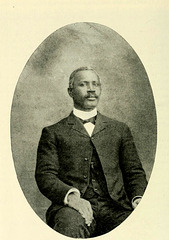
Julius Irwin Washington, Sr.
| 18 Oct 2023 |
|
Among what are known as the learned professions, the law has attracted, perhaps fewer colored men than any other. The position of the negro lawyer is widely different from that of the preacher or the teacher. They have an assured following, as there is no competition between the white churches and schools and the negro churches and schools. The negro lawyer, however, must not only build up a clientage in sharp competition with the white lawyer but must also overcome the custom of the colored man to go to a white lawyer when in need of legal advice or services. So when one finds a colored lawyer who has succeeded in building up a good practice, especially in the smaller places, one may be sure of exceptional ability.
As a lawyer, Julius Irwin Washington, of Beaufort, has won a measure of success which is at once a credit to him and to his race. What is more, he has not found it necessary to leave his home town in order to succeed but among the people who know his character and ability best has worked through the years.
He was born in Beaufort, December 12, 1860. His parents were Richard and Catherine Washington. Coming of school age, just after the war, young Washington attended the public schools and when ready for college entered South Carolina College, which was open to both races. Later he read law under General W.J. Whipper, and was admitted to the bar in December, 1887. It was necessary for Mr. Washington to make his own way in school. He taught school for a few terms.
He is Secretary of the Trustee Board of the Beaufort School. He believes that progress of his people depends on better school facilities, better wages and the ballot. He has property interests in Beaufort, Atlanta and in Aiken county.
In October, 1880, Mr. Washington was married to Miss Carrie Kinlaugh, of Beaufort. She bore him two children: Adell S. (Mrs. Fleming) and Thomas W. Washington. His wife passed away in 1885.
On June 4, 1890, Mr. Washington was married to Miss Eliza Middleton. Their children are Serg. J. I., Jr., Sadie (Mrs. Rice), Etta M. and Charles E. Washington.
Source: History of the American Negro and his Institutions (South Carolina)
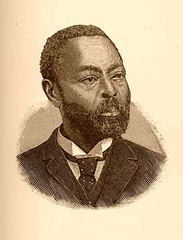
Samuel R. Lowery: First Black Lawyer to Argue a C…
| 16 Oct 2023 |
|
Samuel R. Lowery was born approximately thirty years before the outbreak of the Civil War, but, unlike many other blacks of his time, he was never enslaved. Lowery, though a free man at birth, did not fully escape the prejudice, discrimination, and neglect that most of his fellow blacks endured. In the 1884 World Exposition in New Orleans, for example, Lowery entered his mulberry leaves (food for silkworms) in the competition. His rival from France received $1,000 to produce an exhibit. Lowery, who received no such aid, had to pay for and construct his own exhibit. Despite this handicap, Lowery won the competition. His mulberry leaves were the largest. Not only that, they far surpassed the competition in usefulness, since they stimulated, on site, the growth of 100,000 worms and cocoons, while the competition failed to generate any. Not all Lowery's experiences of discrimination ended in triumph, however. After the Civil War, for example, the school he had established in Rutherford County, Tennessee, near where he had studied law, was completely destroyed by the Ku Klux Klan.
Although Lowery did suffer from discrimination because of his skin color, his mother, Ruth Mitchell, was actually a Cherokee Indian. She had purchased her formerly enslaved spouse Peter Lowery, Samuel's father, and was thus responsible for Samuel being born free. She had freed not one man, but two. Lowery was born on December 9, 1832 in Davidson County (near Nashville), Tennessee. Unfortunately, his mother died in 1840, when he was only eight. His father worked at various times as a hack driver, a farmer, a livery stable operator, and a janitor at Franklin College. It was at Franklin that Samuel was able to study for the ministry, in classes separate from the white students.
Lowery began his preaching career in 1849 at Nashville's Church of the Disciples, where he remained until 1857. At that time, prior to the Civil War, during Lincoln's 1856 election campaign, great unrest broke out over the issue of slavery, causing the less fortunate whites, especially, to resent the wealthier, free blacks and to attack their businesses and force the closing of free black schools. In Nashville, twenty-four free blacks were jailed, though they were later released. In 1856, both Lowery and his father decided to flee to the North.
Lowery married Adora Robinson in 1858. The couple had two children, Ruth and Annie. In 1859, Lowery moved to Canada, where he stayed for three years, avoiding the racial turbulence in the United States during that time. In Canada he established Christian Churches (Disciples of Christ). The Lowerys' flight North to free regions was part of that large and continuing pattern of migration by blacks seeking freedom. Many blacks felt that there was less racial prejudice in Canada.
Returning to the United States around 1862, Lowery and his family settled on a farm his father had given him in Fayette County, Ohio. In 1863, when Lincoln issued the Emancipation Proclamation, Lowery returned to Nashville, where he preached and attended to the spiritual needs of free men and the soldiers of the Fortieth U.S. Colored Troops under the command of Colonel R. K. Crawford. Later, after losing his bid to be chaplain to that unit, Lowery was attached to the Ninth U. S. Heavy Artillery as chaplain. He also taught basic educational skills to soldiers of the Second U. S. Colored Light Artillery.
After the war, Lowery settled with his family in Nashville, where he felt called to teach and preach—and to undertake a new career. He soon began to study law in Rutherford County with a white attorney, and subsequently he established his own practice. Lowery's interest in law may have begun much earlier, since an 1850 letter of legal advice from Abraham Lincoln, a lawyer then himself, is addressed to "Samuel R. Lowry." Lincoln's letter apparently advises Lowery on the lack of real estate rights by occupants being evicted from a residence. At the time Lowery himself began to practice law, he was also active in several organizations, such as the State Colored Men's Convention, the National Emigration Society, and the Tennessee State Equal Rights League. In 1875, after the closing of a school he ran in Nashville, he moved to Huntsville, Alabama, where he continued his law practice and his preaching. His eventual success as lawyer was such that on February 2, 1880, Lowery was nominated by Belva Ann Lockwood to practice law before the U. S. Supreme Court. Lowery has the distinction of being the first African American to earn this honor.
On December 10, 1867, prior to his Alabama move and long before the Supreme Court event, Lowery and his father had established the Tennessee Manual Labor University. The school was located on Murfreesboro Road in Smyrna, Tennessee, near the black settlement Ebenezor. Like the Franklin College where both Lowerys had studied, the newly founded school was designed to provide its students with basic knowledge in agriculture, mechanical arts, and Christian ethics, all practical knowledge that would allow the freedmen to thrive in their new and changing environment. To support the school, Lowery traveled frequently to raise funds in various communities. Unfortunately, a scandal arose concerning money related to a fundraising trip for the university, a trip undertaken by the Reverends Lowery and Wadkins. The fault in the scandal was not Lowery's, however. Wadkins raised $1,632, but appropriated all but $200 for expenses. Although Wadkins was the culprit, Lowery, head of the school, received the blame. The white Christian Church excommunicated Lowery and withheld crucial support, resulting in the school's closing in 1872.
After moving to Huntsville, Alabama in 1875, Lowery undertook several projects, including the establishment of a cooperative community, Loweryvale, in Jefferson County and the editing of the Southern Freeman. Most notably, he founded three new enterprises. One was Lowery's Industrial Academy, founded on the same principles as the earlier Nashville school and established to provide training in silk production. It was allied with the two other business enterprises, the Birmingham Silk Company (founded with the backing of several business leaders), and the S. R. and R. M. Lowery Silk Culture and Manufacturing Company. Lowery's daughter Ruth, who died in 1877, just two years after the company began, was the "R. M." of the company name. It was Ruth who first grew interested in silkworm culture, when she visited an exhibit dedicated to it. Her father bought her some worm eggs at the exhibit, which she carried home and fed on mulberry leaves. His daughter's project sparked Lowery's own interest in silkworm cultivation, and he began to see its business potential. Her interest in and expertise with silkworm growing had both inspired her father and provided him an outlet when he became discouraged with politics. The daughter's death did not dampen Lowery's devotion to her dream of silk production. In fact, following Ruth's death, Lowery visited two notable silkworm growers, John Kyle of New Jersey and Fred Cheney of Connecticut. Kyle was the first successful silk manufacturer in the United States, and Cheney was the biggest grower of silkworms in the country. Both urged Lowery to begin work in the business, and Cheney predicted he would succeed within ten years.
Lowery, because of his industry and knowledge, was given forty acres of land near Birmingham to develop the silkworm enterprise. After the meeting with Kyle and Cheney, he returned to Alabama, ordered French mulberry seeds, and started a hardy stand of trees, trees that produced the world's largest mulberry leaves. Lowery, carrying before him the vision of his daughter's work with silkworm cultivation and silk production, threw himself into the project. He viewed the silk industry as the successor to cotton for American blacks, offering a profitable income, better working conditions, and shorter hours. He envisioned that the new industry would provide more refined employment for black women and children. He died in Loweryvale, Alabama in 1900.
Though Lowery's career was quite varied, a consistent theme and preoccupation sustained him. As educator and editor, he aimed to elevate the abilities and aspirations of his race. As lawyer, he sought to defend their interests. As preacher, he ministered to their spirit. As entrepreneur, he worked to provide opportunity for a better economic future for them. At the core of Lowery's efforts was the deeply felt desire to improve conditions for Black Americans.
Sources: Childs, John Brown. The Political Black Minister: A Study in Afro-American Politics and Religion. Boston, Mass.: G. K. Hall & Co., 1980; Simmons, William J. Men of Mark: A Eminent, Progressive and Rising. Cleveland, Ohio: Geo. M. Rewell & Co., 1887; Notable Black American Men, Book II, Lois A. Peterson
Jump to top
RSS feed- Kicha's latest photos with "Early black lawyer" - Photos
- ipernity © 2007-2026
- Help & Contact
|
Club news
|
About ipernity
|
History |
ipernity Club & Prices |
Guide of good conduct
Donate | Group guidelines | Privacy policy | Terms of use | Statutes | In memoria -
Facebook
X
