

Kicha's photos with the keyword: Civil War

Jacob and Sophia Redder
| 18 Oct 2023 |
|
The couple's children listed in order: Mareda (born Nov. 6, 1830), Catharine (born Aug. 27, 1833), Robert (born Sept. 6, 1835), Charlotte M. (born Jan. 9, 1838), David (born March 3, 1842), Christina (born March 23, 1844), Sarah (born Nov. 22, 1847), Sophia E (born May 23, 1849), and Ariana (born Sept. 21, 1851).
Jacob Redder, a native of New Brunswick, New Jersey, was a farmer who enlisted in Company I, 14th Rhode Island Heavy Artillery (Colored) later the 11th Regiment of Artillery (Heavy) U. S. Colored Troops. Private Redder contracted small pox in New Orleans, and died at the Corps d'Afrique General Hospital on April 30, 1864. At the time of his death, he is listed on military paperwork as "free" and having no personal effects. His wife Sophia Elizabeth (Mills) Redder who he married February 19, 1830, was a native of Bath, New York, was able, with the help of a widow's pension, to support and take care of their nine children. She passed away in 1886.
Source: Skinner Auctions
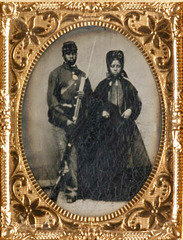
Mr. and Mrs. Keepson
| 17 Oct 2023 |
|
Union Army Private Moses Keepson, of Company F, Kentucky 108th Infantry, along with his wife.
This portrait comes from The Loewentheil Collection of African American Photographs a collection of photographs that date from the 1860s to the 1960s, an era when African Americans were emerging from the horrors of slavery and beginning to claim some of the freedoms white Americans have.
Stephan and Beth Loewentheil, who donated the archive, are collectors of rare books and photography. They own two branches of the 19th Century Rare Book and Photograph Shop – one in Baltimore and one in New York.
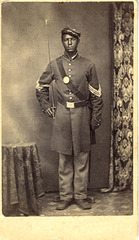
Andrew Jackson Smith
| 18 Oct 2023 |
|
Not all African American camp servants remained so. A perfect example is Kentuckian Andrew Jackson Smith. Smith was born in Lyon County the son of an enslaved mother and white owner father. When Smith learned that his owner-father had enlisted in the Confederate army and intended to take him along as a servant, Smith ran away. He along with another slave absconded to the nearest Union camp, which happened to be in Smithland, Kentucky and offered his services to Major John Warner of the 41st Illinois regiment. When the 41st received their marching orders, Smith went along.
Smith witnessed the battles of Fort Donelson in February 1862 and Shiloh two months later. At Shiloh Smith was in the heat of the action bringing horses to Warner as one and then another was shot out from under the major. During the battle Smith was hit in the temple with a spent bullet which coursed under the skin to the middle of his forehead. The bullet was removed and Smith was not severely hurt.
In the fall of 1862 Smith went to Illinois with Warner on leave where he learned about President Abraham Lincoln's Emancipation Proclamation and the opportunity to join the Union army as a fighting soldier. He first tried to enlist in the famous 54th Massachusetts, which had been recruited largely from free American Americans across the north. But, the 54th filled before he was able to enlist, so he signed up with the 55th Massachusetts, the sister unit of the 54th and the same unit in which Frederick Douglass' sons served. Smith traveled to Reidville, Massachusetts and joined up.
Recruited later than the 54th, the 55th trained while the 54th earned their glory at Battery Wagner, South Carolina. The 55th participated in the operations at Olustee, Florida in February 1864, but were not engaged. In July, 1864 they participated in the fight at Fort Lamar, on James Island, South Carolina. Although they did not capture the fort they did seize two Confederate cannons in a related action.
At the Battle of Honey Hill, South Carolina on November 30, 1864, the 55th fought desperately. During the action the color bearer was hit by an exploding artillery shell and Smith caught the flag and carried it through the battle although he received a wound himself. For his gallantry Smith was promoted to color sergeant. The commander of the 55th was wounded early in the Honey Hill fight and subsequently did not include Smith's heroism in the battle in his official report. But fortunately that was not the end of Smith's story.
Smith mustered out of the army in August 1865 and initially stayed in Illinois, but he soon purchased land and moved to Eddyville, Kentucky. The regimental surgeon of the 55th, Burt Wilder, attempted to nominate Smith for the Medal of Honor, but due to inaccuracies and the omission of Smith's efforts in the battle's official report, his efforts were turned down in 1916. Smith passed away in 1932 and was buried in the cemetery at Mt. Pleasant Baptist Church in Grand Rivers, Livingston County, Kentucky. Thankfully, and finally in 2001, Smith was awarded the Medal of Honor posthumously, which was received by his descendants.
Source: Tim Talbott's Blog randomthoughtsonhistoryblog
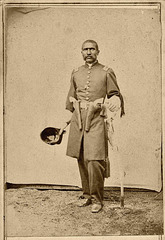
1st Lt. William Dominick Matthews
| 18 Oct 2023 |
|
Was a member of the Independent Battery, U.S. Colored Light Artillery, who served at Fort Leavenworth and helped protect eastern Kansas during Price's invasion in 1864. In addition, Matthews helped recruit many members of the First Colored Kansas Volunteer Infantry. Prior to the Civil War, Matthews ran a boarding house in Leavenworth, Kansas, that was used as part of the underground railroad. Assisted by Daniel R. Anthony, the brother of Susan B. Anthony, Matthews helped many Missouri slaves escape to Kansas and other "free" states.
William Matthews was so enthusiastic about the new First Kansas Colored Volunteer Infantry in 1862 that he was one of the first to volunteer. Matthews’ enthusiasm spread and he convinced a number of exslaves to enlist in the regiment. The Leavenworth businessman soon was appointed captain, the highest ranking African American officer in the regiment.
At the beginning of the Civil War, African Americans were not allowed to serve in the U.S. military. By the summer of 1862 it was clear that additional troops were needed. To meet the need, Congress passed two bills that allowed the participation of black soldiers in the Union Army. The measure lacked popular support and the U.S. Army did not begin recruiting black soldiers until 1863.
Ignoring the federal army regulations, U. S. Senator James H. Lane of Kansas quickly organized the First Kansas Colored. Recruiting began in mid-August with headquarters in Mound City. By October 1st, Kansas had six companies, around 600 men.
“An effort is being made in Leavenworth to raise a regiment of negroes. There are contrabands enough in Fort Scott to fill up two companies.” Fort Scott Bulletin.
“The blacks behaved nobly and have demonstrated that they can and will fight.” Lawrence Republican.
When President Abraham Lincoln issued the Emancipation Proclamation in January 1863, the Union Army began enlisting black soldiers. The First Kansas Colored was the first black regiment from a northern state.
“I never saw such fighting as was done by the negro regiment . . .they make better soldiers in every respect than any troops I have ever had under my command.” --Major General James Blunt
The federal army refused to allow black officers. Matthews and his commanding officers were unable to gain an exemption for his service.
The First Kansas Colored was assigned to escort Union supply trains south to Indian Territory (present-day Oklahoma). When a large force of Texans attacked their supply train at Cabin Creek, the unit successfully protected the train. This marked the first time that black and white troops fought together. Fifteen days later the First Kansas Colored held the Union line against Confederate advances at Honey Springs, Indian Territory. The battle also was significant because for the first time American Indian, African American, and white troops fought together. The First Kansas Colored captured the flags of the Texas regiment after only 20 minutes.
The regiment’s greatest test came at the battle of Poison Spring in April 1864. When the Confederates ambushed the Union supply train, the African American troops took the brunt of the attack and suffered great losses. Many of the black soldiers who were captured or wounded during the battle were executed. The sacrifice of the First Kansas Colored served as inspiration for other black troops, who used the battle cry, “Remember Poison Spring!”
The cost was high for the First Kansas Colored soldiers. Around 25 percent of the regiment was killed in action or died. They faced bigotry from some of the white soldiers and officers. They received less pay than their counterparts. Yet the black soldiers succeeded in proving their ability.
Matthews went on to serve as a first lieutenant in Douglas’ Independent Colored Kansas Battery. The First Kansas Colored served out the remaining years of the war in Arkansas. Its three regimental flags are preserved at the Kansas Museum of History.
Source: Kansas Historical Society
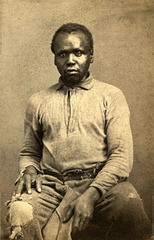
A Man Named Abraham
| 18 Oct 2023 |
|
One day while staff members were looking over a collection of carte-de-visites to be displayed at the National Portrait Gallery in the Nation's Capital, they came across an image of an African American man named Abraham. After some research here is what they found: It was discovered that he was a slave who was literally blown to freedom. Union soldiers tunneling below Confederate defenses in the siege of Vicksburg (1863) had detonated powerful explosives that buried in debris seven enslaved workers used by Confederates to dig counter shafts, but lofted an eighth—identified only as Abraham clear across the Union lines, where he recovered from his injuries and joined the Union war effort.
National Portrait Gallery, Smithsonian Institution, Photographer unknown . (1863)

1st Lt. William Dominick Matthews
| 17 Oct 2023 |
|
Carte-de-visite of First Lieutenant William Dominick Matthews. Matthews was a member of the Independent Battery, U.S. Colored Light Artillery, who served at Fort Leavenworth and helped protect eastern Kansas during Price's invasion (Price's Missouri Expedition, also known as Price's Raid, was an 1864 Confederate cavalry raid through the states of Missouri and Kansas during the American Civil War).
in 1864. In addition, Matthews helped recruit many members of the First Colored Kansas Volunteer Infantry. Prior to the Civil War, Matthews operated a boarding house in Leavenworth, Kansas that was used as part of the underground railroad. Assisted by Daniel R. Anthony, the brother of Susan B. Anthony, Matthews helped many Missouri slaves escape to Kansas and other "free" states. Photographed at A.C. Nichols Studio between 1861 and 1865, in Leavenworth, Kansas.
Source: kansasmemory.org

Isreal Crump, Sr.
| 17 Oct 2023 |
|
Israel Crump Sr., who lived in South Laurel, Maryland served with the U.S. Colored Troops in the Civil War.
In 2011, on a crisp Friday morning in November, fifteen descendants of Israel Crump Sr. proudly stood with their church community at the grave site of the former slave and Civil War veteran at Queen's Chapel United Methodist Church in South Laurel, Maryland.
Samuel Smith Jr., of Maryland City, Crump's great-great-grandson, officiated at the unveiling of the authentic Civil War headstone — a brief but fitting finish to the Veterans Day celebration that had begun inside the church before moving outside just moments before the unveiling.
The celebration honored many past and living heroes from the Queen's Chapel Church community but also included a tribute to the Civil War veteran, presented by Smith at the request of longtime church historian Marsha Brown.
On record at the U.S. Colored Troops Archives at the National Archives in Washington, Crump's pension deposition papers, filed in 1900, tell his life story in his own words. Smith retold that story in a powerful and eloquent first-person narrative.
"I will become Israel Crump and tell you his Civil War accounts," he said at the beginning of his presentation.
According to Smith, Crump was born into slavery in Virginia around 1847. He escaped with his mother, brother and uncle during the second Battle of Bull Run in 1862, worked for a time in the Quartermaster Unit in Alexandria, and then enlisted in the Union Army in 1863 as an 18 year old, though he was just 16. After fighting in Virginia and North Carolina, Crump was mustered out of the Company E 1st U.S. Colored Infantry in 1865.
Crump settled in the Muirkirk community that was then known as Rossville in 1870, and became a prominent member of the Queen's Chapel Church, teaching Sunday school classes and serving as a class leader and trustee.
As the cemetery caretaker, Smith walks the same hallowed ground that Crump did when he was a trustee caring for church grounds. And as a Vietnam Veteran himself, Smith said he feels a deep affinity for his ancestor. "This was a very humble man," he said.
Crump's name is inscribed on the African-American Civil War Memorial in the Shaw community in Washington DC. Brown encourages church members to visit the memorial every February during Black History Month, and she said she encouraged Smith to join in exploring his ancestor's history. "I had been trying to drag him, kicking and screaming," she said, "but once he saw the memorial, that just did it."
After visiting the memorial last February, Smith decided it was past time to contact the Veterans Administration to apply for a Civil War headstone. The old limestone marker on Crump's grave was deteriorating — the writing on its face barely legible — and Smith said he worried that precious history would be lost.
A postcard from the Veterans Administration in early summer promised delivery within six weeks. The upright granite headstone arrived in late August, but Brown convinced Smith to hold off on installing and unveiling it until Veterans Day. Daryl Smith, of Smith's Lawn Service in Laurel, set the stone as a favor to the church.
The pre-Civil War cemetery has been the mainstay of this church since 1868, when the first log structure known as Queen's Chapel was built at the existing burial site for slaves and free blacks in Rossville. In 1899, lightening destroyed the log structure, and the church elders replaced it with a white frame building in 1901. Ten years ago, the congregation moved its worship to Martin Luther King Jr. Middle School until a larger, modern facility could be envisioned and built.
This was the first Veterans Day service held at the new complex that opened last month, adjacent to the historic cemetery on Old Muirkirk Road.
Some members of Samuel Smith's family are aware of their rich heritage only because of Smith's passion.
Two of his sisters, Joyce Harrod and Pamela Smith-Oliphant, credit Smith as the force behind its preservation. "I hadn't focused much on my great-great-grandfather," said Harrod. "We were ecstatic to find out about the research on this. Sam and Marsha and the church together did an outstanding job and brought us together as a family."
"Sam's the one who gets us excited about it," added Smith-Oliphant. "At one time, we never knew we had someone in the Civil War. This has been very enriching."
Crump's 92-year-old granddaughter, Madeline Smith, lives in Laurel, Maryland and said she remembers Crump from when she was a very young girl.
Mary Elizabeth Smith — Crump's great-granddaughter and the organist at Queen's Chapel for more than 50 years — is too young to remember Crump, but she was still very excited. "I thought it was just great," she said. "I've been looking forward to this event that recognized my ancestry."
Sources: History of Civil War Veteran and Former Slave Unveiled at South Laurel Church Baltimore Sun by Patti Restivo; Queen's Chapel United (Nov. 2011)

Private Redder
| 17 Oct 2023 |
|
Jacob Redder, a native of New Brunswick, New Jersey, was a farmer who enlisted in Company I, 14th Rhode Island Heavy Artillery (Colored) later the 11th Regiment of Artillery (Heavy) U. S. Colored Troops. Private Redder contracted small pox in New Orleans, and died at the Corps d'Afrique General Hospital on April 30, 1864. At the time of his death, he is listed on military paperwork as "free" and having no personal effects. His wife Sophia Elizabeth (Mills) Redder who he married in 1830, was a native of Bath, New York, was able, with the help of a widow's pension, to support and take care of their nine children. She passed away in 1886.
Jacob Redder was a little older than Abraham Lincoln when he enlisted in the Union Army in Providence, Rhode Island on November 19, 1863. At fifty-four years old, he stood six feet tall.
He seems to have lied about his age, which is listed on military paperwork as thirty-nine. In fact, Redder was born in Brunswick, New Jersey on January 16, 1809.
Their children listed in order: Mareda (born Nov. 6, 1830), Catharine (born Aug. 27, 1833), Robert (born Sept. 6, 1835), Charlotte M. (born Jan. 9, 1838), David (born March 3, 1842), Christina (born March 23, 1844), Sarah (born Nov. 22, 1847), Sophia E (born May 23, 1849), and Ariana (born Sept. 21, 1851).
Skinner Auctions
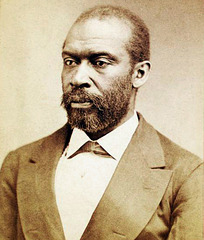
Thomas Morris Chester: The Lone Black Reporter of…
| 18 Oct 2023 |
|
Born 1834, Harrisburg, Pennsylvania. The son of an escaped slave and oyster salesman, Chester’s childhood was relatively secure and very progressive. Attending college in Pittsburgh, he first became interested in the concept of African colonization and traveled back and forth between Liberia and the U.S. after graduation in 1853. Liberia was actually where Chester got his first taste of journalism, writing and editing for the “Star of Liberia” in Monrovia, the nation’s capitol.
The escalation of the Civil War prompted Chester to move back and join the Union efforts; he helped recruit and raise the 54th and 55th Massachusetts Colored troops regiments. Later, he would lead two Black regiments into battle for the famous Gettysburg Campaign in 1863. This was the first time Pennsylvania issued weapons to African-Americans.
From August 1864 to the end of the Civil War, Chester worked as a war correspondent for the Philadelphia Press, becoming the first Black war correspondent working for a major daily paper.
After the end of the war, Chester moved to England to study law and went on to become England’s first Black barrister (lawyer). During the 1870s, Chester moved back to the U.S. and settled in Louisiana, working as the brigadier general of the militia and also the superintendent of schools in 1875.
In 1892 embittered by Jim Crow laws and in ill health, he returned to his hometown, where he died of a heart attack a year later. He was buried in a segregated cemetery in Harrisburg, Pennsylvania.
Newseum, Sharon Shahid
Image: Cheyney University of Pennsylvania
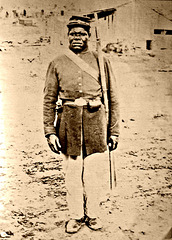
Freedom Fighter: Hubbard Pryor
| 18 Oct 2023 |
|
Hubbard Pryor fled slavery in Tennessee at age twenty-two and reached Union lines, enlisting in a black infantry regiment on April 7, 1864. This photograph was included in a report on black recruitment sent to the war department in Washington, DC, later in the year. “For raiders in the enemies country, these Colored Troops will prove superior,” wrote the white regimental captain; “they are good riders - have quick eyes at night . . . and know all the by-ways.” [Davis, p. 269]
The 44th U.S. Colored Infantry soon moved south to Georgia. Surrounded during a battle in Dalton, the regiment surrendered. The white officers were released by agreement but the African American soldiers were placed “under guard and lash,” forced to work rebuilding southern railroads and other facilities.
After the war Pryor stayed in Georgia his home state and married in 1870. In May 1890 he wrote the war department to learn if he had been listed as a prisoner or a deserter at war’s end. Listed as a prisoner, he was thus eligible for a pension. Before he could apply, however, he died in August 1890, in his mid forties.
Sources: National Archives & Lawrence E Walker Foundation Collection ; Robert Scott Davis, Jr., “A Soldier’s Story: The Records of Hubbard Pryor, 44th U.S. Colored Troops, (National Humanities Center)
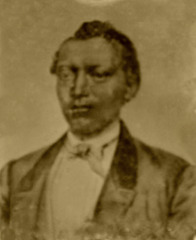
William Tillman
| 21 Feb 2016 |
|
William Tillman faced a brutal choice: slavery or death. He was a 27-year old African-American sailor born a free man in Delaware. He was steward and cook on board the merchant schooner S.J. Waring, about 300 tons, bound for Montevideo, Uruguay with an assorted cargo.
Tillman had been on the crew of the Yankee merchantman the S. J. Waring. On July 6 the 300-ton schooner, manned by a crew of eight under the command of Captain Francis Smith, had left New York bound for Montevideo, Uruguay. Three days into its voyage, the ship was captured by a Confederate privateer, named the Jefferson Davis. The Civil War was less than four months old.
The rebels ransacked the vessel and ordered Captain Smith, to haul down the Stars and Stripes. He was then taken to the privateer. Tillman was told that he, like the ship, was southern property and that he would be sold into bondage when the ship reached its new destination.
The confederates put a five man prize crew on Tillman’s ship and turned her south, toward Charleston. Now, each day at sea beat down on Tillman like a hammer. An overwhelming sense of dread, however, was gradually replaced by iron-willed resolve. Tillman, in concert, with a handful of passengers hatched a bold plan.
Tillman’s duties gave him the run of most of the vessel. The rebels were used to seeing him moving about. Moreover, while cautious around the handful of white crewmen and passengers, the prize crew did not consider Tillman capable of either bravery or treachery; it was to be their undoing. Tillman was key to the recapture of the S.J. Waring. And he struck in the middle of the night.
On the night of July 16, with the captured ship just 50 miles off Charleston and the captors asleep in their bunks, they sprung, “killing the three with a hatchet, and throwing the bodies overboard. It was all finished in five minutes,” Harper’s Weekly reported in an August 3, 1861 article.
In a few bloody minutes, William Tillman had forestalled his descent into slavery and retaken the Waring from the privateers. He now set about returning to New York, offering to unchain the two remaining members of the prize crew if they would help sail the ship and warning them, “If you cut up any antics overboard you go; recollect that I am captain of this ship now.” Hugging the coast, the Waring sailed north “with a fair wind." Bryce Mackinnon one of the passengers that day reported, “On Sunday morning July 21, 1861, at 9 o’clock we got a pilot off Sandy Hook and soon after hired a tug for $60 to tow us up to New York where we arrived at 4 o’clock truly thankful for our great deliverance. Tillman, the negro steward, became the lion of the day, and his history, character and personal appearance were minutely investigated.”
Tillman’s heroic action struck a responsive chord among a Northern population that was reeling from the news of the Union defeat at Bull Run on the same day the Waring arrived in New York. The New-York Tribune wrote, “To this colored man was the nation indebted for the first vindication of its honor on the sea.” Another publication reported that the achievement drew “unstinted praise from all parties, even those who are usually awkward in any other vernacular than derision of the colored man.” At Barnum’s Museum Tillman was the center of an “attractive gaze to daily increasing thousands” and “pictorials vied with each other in portraying his features, and in graphic delineations of the scene on board the brig.” Several months later the federal government awarded Tillman the sum of $6,000 (a hefty sum in those days) as prize-money for the capture of the schooner.
Sources: ‘The Lion of the Day’ by Rick Beard, NY Times (Aug. 2011) and 'A Story of High Seas Heroism' by C.R. Gibbs, Maritime Administration
Photo: Tintype of Mr. Tillman photographed by Abbott of NY was part of the Howard Wolverton Collection of Black American History which was up for auction at the Quinn's Auction House on February 11, 2016 in Falls Church, Virginia.
There is a biography by Brian McGinty )Aug. 2016), The Rest I Will Kill: William Tillman and the Unforgettable Story of How a Free Black Man Refused to Become a Slave
Jump to top
RSS feed- Kicha's latest photos with "Civil War" - Photos
- ipernity © 2007-2026
- Help & Contact
|
Club news
|
About ipernity
|
History |
ipernity Club & Prices |
Guide of good conduct
Donate | Group guidelines | Privacy policy | Terms of use | Statutes | In memoria -
Facebook
X
