

Kicha's photos with the keyword: Unstoppable
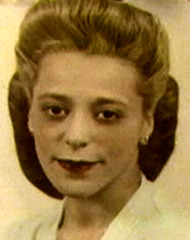
Viola Desmond
| 16 Oct 2023 |
|
Viola Desmond (1914 - 1965), was a successful 32 yr old Halifax entrepreneur when her car broke down in New Glasgow, Nova Scotia. She decided to go to a movie at the Roseland Theatre while her car was being serviced. It was November 8, 1946, and she was about to make history.
Desmond requested a ticket for the main floor of the theatre, paid for it, went in and sat down. Although it was not posted anywhere to see, the theatre’s policy was that persons of colour had to sit in the balcony.
When ordered to move, Desmond replied that she couldn’t see from the balcony, that she had paid to sit on the main floor, and that she would stay there. The manager ran out of the theatre and got a policeman. Together, the two men carried Viola Desmond into the street, injuring her knee and hip in the process.
She spent that night in the town jail. No one informed her of her rights, she was not allowed parole, and she was incarcerated in the same jail block as male prisoners. Determined to maintain her dignity, she sat bolt upright, wearing her white gloves, for the entire night.
In the morning – without representation, without understanding that she could question the witnesses against her, without even having been told that she could have a lawyer – she was tried and found guilty: tax evasion.
She had not paid the extra one cent tax on a ticket for a seat on the main floor of the theatre. She had paid for a less expensive seat in the balcony. That she had requested the floor seat, that she had no way to know that Blacks were restricted to the balcony, that she believed she had paid for the ticket on the first floor, that she offered to pay the difference, that she had been assaulted, injured, held then tried in irregular and perhaps illegal ways – it made no difference.
The sentence: 30 days in jail or a fine of $20, plus $6 to the manager of the theatre – one of the two men who had carried her out so roughly. She paid.
The doctor who treated her injuries recommended that Desmond get a lawyer. After discussing her arrest and trial with friends, she decided to challenge the verdict in the Supreme Court of Nova Scotia. In its decision, although one of the four judges, Justice Hall, referred in passing to the race issue, he agreed with the other three judges that no error in law had occurred in the original trial. The court unanimously upheld the verdict. The conviction stood.
The unspoken, unacknowledged truth: Viola Desmond was found guilty of being a Black person who had stepped out of her assigned place in society.
This resounding defeat in the courts left her discouraged. Her marriage – already strained by her business success – did not survive the trial. Desmond’s husband thought she was making a fuss over a matter that didn’t warrant it.
She did have significant supporters. And her stand had helped to build something much bigger.
The Nova Scotia Association for the Advancement of Coloured People (NSAACP) – aided by Viola’s friends, newspaper publisher Carrie Best and activist Pearleen Oliver campaigned to raise money. After the appeal, her lawyer, Frederick Bissett – a white man from Halifax – donated his fees back to the NSAACP.
With these funds, the fight Viola had started could continue. Vigorous further action by Best, Oliver, community members, and the NSAACP led finally to the repeal of segregation policies in Nova Scotia in 1954 – more than a year before Rosa Parks’s action in Montgomery, Alabama, helped bring the civil rights movement in the U.S. into sharp media focus.
Viola Desmond grew up in a prosperous family in Halifax. She decided early to be a hairdresser, one of the few professions open to an ambitious, independent-minded black woman. Unable to gain admission to a hairdressing school in Nova Scotia, she trained in Montreal, New York and Atlantic City.
Back in Halifax, Viola married and opened her first salon, where she specialized in hair styles and treatments tailored for her community. Beauty shops had become a major social gathering place in the 1930s, soon after salons first appeared. After a few years in business, she founded a school to train other beauticians. Her dream was to open a chain of salons across Canada – salons staffed by people she trained, specializing in Black women’s hair.
After the trial, Viola gave up her salon and her ambition of a chain of salons across the country. She went to Montreal to business school, then moved to New York to set up a new business, this time as an agent for performers. Very shortly after she arrived in New York, Viola Desmond died at the age of fifty.
Source: Viola Desmond Unintentional Revolutionary by Frances Rooney
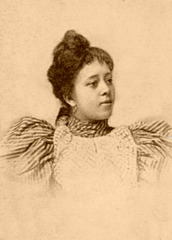
Lutie A Lytle: First African American to be admitt…
| 16 Oct 2023 |
|
In October 1897 Topekans were buzzing with the news that one of their own was a pioneer in her field. One of only two students in Central Tennessee law school's graduating class of 1897, Lutie A. Lytle was among the first African American woman to earn a law degree.
Lytle was born around 1875 in Murfreesboro, Tennessee, where her father's family had lived for some time. John R., Mary Ann "Mollie", the family's four children and Lutie's grandmother moved to Kansas around 1882, a time when many other African Americans were relocating from Tennessee to Kansas with the Exoduster movement.
The Lytle family lived at 1435 Monroe Street and Lutie and her brothers attended Topeka schools, including Topeka High School. John became active in the Populist Party and ran an unsuccessful campaign for city jailor. His involvement led to Lutie's appointment as the Populist's assistant enrolling clerk for the state legislature. She also worked for one of the African American newspapers in Topeka. It was in this position where she dreamt of higher pursuits.
"I conceived the idea of studying law in a printing office where I worked for years as a compositor," Lutie said during an interview 1897. "I read the newspaper exchanges a great deal and became impressed with the knowledge of the fact that my own people especially were the victims of legal ignorance. I resolved to fathom its depths and penetrate its mysteries and intricacies in hopes of being a benefit to my people."
At the age of 21, Lutie moved to Chattanooga, Tennessee. There she taught school to pay for her tuition at Central Tennessee College in Nashville. While in college, Lutie also became involved other social activities.
"There were a number of young men studying beside her, but she held her own with them all," stated a Nashville newspaper in 1897. "Though she studied hard, she did not shut herself out from the enjoyment of the society of her fellow students. She was a member of the college glee club, and at the numerous musical entertainments given by the students she was invariably relied upon to accompany on the piano."
In September 1897 Lytle was admitted to the Criminal Court in Memphis, Tennessee, after passing an oral exam. Newspaper accounts said that she was the first African American woman to be licensed to practice in Tennessee, and third in the United States. Later that month, after returning to Topeka, she became the first African American woman admitted to the Kansas bar.
Lutie continued to dream of helping other African Americans through the legal system, as she talked of establishing a practice in Chicago or New York. "I like constitutional law because the anchor of my race is grounded on the constitution," Lytle said. "It is the certificate of our liberty and our equality before the law. Our citizenship is based on it, and hence I love it."
"In connection with my law practice I intend to give occasional lectures, but not in any sense for personal benefit," Lytle said. "I shall talk to my own people and make a sincere and earnest effort to improve their condition as citizens. I believe in efficacy of reason to bring about the best results."
For the next year, Lutie lived in Topeka and became involved in the Interstate Literary Association with members from Kansas City, Missouri and Kansas communities. She was invited to lecture for women's groups and local colleges on law related to domestic issues.
"When I was graduated in June, I intended to commence practicing right away, but I found that a rest was what I needed," Lytle said. "Ever since a small girl in High school I have been interested in politics, and hoped some day to be able to take an active part in shaping the great questions of the day."
In fall 1898 Lytle announced that she would join the faculty at Central Tennessee. Newspaper accounts claimed that she was the only woman law instructor in the world. She served one session, 1898 - 1899, in that position.
In 1910 Lytle was living in Brooklyn, New York, with her husband, Alfred C. Cowan, also a lawyer. The couple attended the annual convention of what is now known as the Negro Bar Association in 1913. Media stories said she was the first African American female to become a member of a national bar organization and the first to participate with a spouse.
Lytle returned to Topeka in 1925 and addressed a large audience at St. John's A.M.E. Church, which she had attended in her youth. Lytle told her audience about the progress of African Americans in New York City. She shared examples of integration in the schools and government and told of the vision of Marcus Garvey, considered the father of contemporary Black Nationalism.
She died on November 12, 1955 in Brooklyn and is buried at Saint Charles Cemetery in Suffolk County, New York.
Others in the Lytle family also were well known in Topeka. Lutie's father, John, was a barber in downtown Topeka and also worked as a policeman. Lutie's brother, Charles, operated barbershops at 109 West Fifth and 326 Kansas Avenue. He later opened a drug store in 100 block of East Fourth. Charles had a lengthy career in law enforcement, which included police detective, chief of detectives, and deputy state fire marshal where he held a record for most convictions in arson cases at 236.
Source: Kansapedia: Kansas Historical Society
Jump to top
RSS feed- Kicha's latest photos with "Unstoppable" - Photos
- ipernity © 2007-2026
- Help & Contact
|
Club news
|
About ipernity
|
History |
ipernity Club & Prices |
Guide of good conduct
Donate | Group guidelines | Privacy policy | Terms of use | Statutes | In memoria -
Facebook
X
