

Kicha's photos with the keyword: Segregation
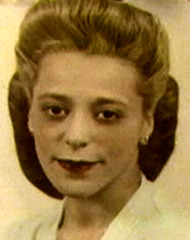
Viola Desmond
| 16 Oct 2023 |
|
Viola Desmond (1914 - 1965), was a successful 32 yr old Halifax entrepreneur when her car broke down in New Glasgow, Nova Scotia. She decided to go to a movie at the Roseland Theatre while her car was being serviced. It was November 8, 1946, and she was about to make history.
Desmond requested a ticket for the main floor of the theatre, paid for it, went in and sat down. Although it was not posted anywhere to see, the theatre’s policy was that persons of colour had to sit in the balcony.
When ordered to move, Desmond replied that she couldn’t see from the balcony, that she had paid to sit on the main floor, and that she would stay there. The manager ran out of the theatre and got a policeman. Together, the two men carried Viola Desmond into the street, injuring her knee and hip in the process.
She spent that night in the town jail. No one informed her of her rights, she was not allowed parole, and she was incarcerated in the same jail block as male prisoners. Determined to maintain her dignity, she sat bolt upright, wearing her white gloves, for the entire night.
In the morning – without representation, without understanding that she could question the witnesses against her, without even having been told that she could have a lawyer – she was tried and found guilty: tax evasion.
She had not paid the extra one cent tax on a ticket for a seat on the main floor of the theatre. She had paid for a less expensive seat in the balcony. That she had requested the floor seat, that she had no way to know that Blacks were restricted to the balcony, that she believed she had paid for the ticket on the first floor, that she offered to pay the difference, that she had been assaulted, injured, held then tried in irregular and perhaps illegal ways – it made no difference.
The sentence: 30 days in jail or a fine of $20, plus $6 to the manager of the theatre – one of the two men who had carried her out so roughly. She paid.
The doctor who treated her injuries recommended that Desmond get a lawyer. After discussing her arrest and trial with friends, she decided to challenge the verdict in the Supreme Court of Nova Scotia. In its decision, although one of the four judges, Justice Hall, referred in passing to the race issue, he agreed with the other three judges that no error in law had occurred in the original trial. The court unanimously upheld the verdict. The conviction stood.
The unspoken, unacknowledged truth: Viola Desmond was found guilty of being a Black person who had stepped out of her assigned place in society.
This resounding defeat in the courts left her discouraged. Her marriage – already strained by her business success – did not survive the trial. Desmond’s husband thought she was making a fuss over a matter that didn’t warrant it.
She did have significant supporters. And her stand had helped to build something much bigger.
The Nova Scotia Association for the Advancement of Coloured People (NSAACP) – aided by Viola’s friends, newspaper publisher Carrie Best and activist Pearleen Oliver campaigned to raise money. After the appeal, her lawyer, Frederick Bissett – a white man from Halifax – donated his fees back to the NSAACP.
With these funds, the fight Viola had started could continue. Vigorous further action by Best, Oliver, community members, and the NSAACP led finally to the repeal of segregation policies in Nova Scotia in 1954 – more than a year before Rosa Parks’s action in Montgomery, Alabama, helped bring the civil rights movement in the U.S. into sharp media focus.
Viola Desmond grew up in a prosperous family in Halifax. She decided early to be a hairdresser, one of the few professions open to an ambitious, independent-minded black woman. Unable to gain admission to a hairdressing school in Nova Scotia, she trained in Montreal, New York and Atlantic City.
Back in Halifax, Viola married and opened her first salon, where she specialized in hair styles and treatments tailored for her community. Beauty shops had become a major social gathering place in the 1930s, soon after salons first appeared. After a few years in business, she founded a school to train other beauticians. Her dream was to open a chain of salons across Canada – salons staffed by people she trained, specializing in Black women’s hair.
After the trial, Viola gave up her salon and her ambition of a chain of salons across the country. She went to Montreal to business school, then moved to New York to set up a new business, this time as an agent for performers. Very shortly after she arrived in New York, Viola Desmond died at the age of fifty.
Source: Viola Desmond Unintentional Revolutionary by Frances Rooney

Detroit's Wall of Shame
| 18 Oct 2023 |
|
Children standing in front of half a mile of concrete in Detroit. The wall was built with a simple aim: separate homes planned for middle-class whites from blacks who had already built small houses or owned land with plans to build in the neighborhood. It couldn’t separate people on its own, people and policies would see to that, but it was enough to satisfy the Federal Housing Administration to approve and back loans.
This 1941 photo shows a group of unknown children standing in front of half a mile of concrete in Detroit. The wall was built with a simple aim: separate homes planned for middle-class whites from blacks who had already built small houses or owned land with plans to build in the neighborhood. (Image: AP Photo/Library of Congress, John Vachon)
When Eva Nelson-McClendon first moved to Detroit’s Birwood Street in 1959, she didn’t know much about the wall across the street. At 6 feet tall and a foot thick, it wasn’t so imposing, running as it did between houses on her street and one over. Then she started to hear the talk. Neighbors told her the wall was built two decades earlier with a simple aim: to separate homes planned for middle-class whites from blacks who had already built small houses or owned land with plans to build.
“That was the division line,” Nelson-McClendon, now, 79, says from the kitchen of her tidy, one-story home on the city’s northwest side. “Blacks lived on this side, whites was living on the other side … that was the way it was.”
That’s not the way it is anymore. But the wall remains, a physical embodiment of racial attitudes that the country long ago started trying to move beyond. And slowly, in subtle ways, it is evolving into something else in its community, something unexpected: an inspiration.
To those in the know, it goes by different names. For some, it’s simply “The Wall.” Others call it “Detroit’s Wailing Wall.” Many like “Birwood Wall,” because it refers to the street and sounds like the “Berlin Wall.”
Aside from the mural that now appears at the wall’s midpoint, much of it is easy to miss. In fact, it’s impossible to follow it completely as the wall disappears behind homes and in spots is overgrown by vegetation. Where it’s exposed, it’s whitewashed or a drab earth tone — and sometimes marred by gang graffiti. On one corner it says, “Only 8 Mile,” referring to the divisive road just yards to the north.
The wall never fell, but it didn’t really have to. The area became primarily African-American in the decades to come, as most whites and some blacks left. The pattern was replicated across much of the 139-square-mile city that was built for two million people but fell to about 700,000 in the 2010 Census.
The story of the wall has been largely lost in larger narratives, such as the 1943 and 1967 race riots and Eight Mile Road. The wall ends, almost invisible, just shy of the thoroughfare that serves as the boundary between Detroit and its suburbs and symbolically represents the divide between black and white.
Still, the wall is not forgotten. An artist descended on it several years ago with an army of about 100 fellow artists and community volunteers to create a vast, eye-popping mural with images and messages of equality and justice on a section overlooking a playground. And now, a faith-based nonprofit is giving work to men who have struggled to keep a job or a home, having them make sets of coasters that incorporate images from the wall and use materials from abandoned homes that were razed in the city. Every sale of a $20 set of coasters helps to make something good out of something bad.
Tightly clustered one-story homes dominate the neighborhood around the wall, which still has well-kept houses like Nelson-McClendon’s but also suffers from a rising number of vacant, gutted structures. More tear-downs in the making. And, perhaps, more wood for the coasters.
Many blacks had moved into the area in the 1920s and 1930s because there was so much vacant land. By 1940, the gap had closed. A developer of a proposed all-white subdivision managed to hammer out a compromise with federal housing officials: The loans and mortgage guarantees would come in exchange for constructing a wall. It was the closest thing Detroit had to the segregated fountains or to the white-only swimming pools of the deep South.
Nobody had to tell Nelson-McClendon, who moved to Michigan from Alabama in 1951. “It was the same thing,” she says. “Separation.”
When it comes to the wall, Eva Nelson-McClendon knows about perseverance. For her, it was and remains the only option.
“Did it make me angry to see that wall up there? It was something you grow accustomed to seeing, you know, although you don’t like it. Getting angry over it is not going to solve anything,” McClendon says. “What was important to me was bringing up my kids and getting them to get an education so they wouldn’t have to be bothered with things like that in the future.”
She thinks about progress, and acknowledges some. But she knows there are still neighborhoods, mostly in the suburbs now, where African-Americans can move but they aren’t welcomed with open arms.
But on this day, she takes solace that people didn’t stay in place. Even if the wall did.
“It all depends on the people, the individual, the heart,” she says. “You’re not going to stop progress, don’t care how hard you try.”
Sources: AP Photo/Library of Congress, John Vachon; Detroit Associated Press

The Wait
| 17 Oct 2023 |
|
A teenager (name unknown) being educated via television during the period Little Rock, Arkansas schools were closed by whites to avoid integration.
Source: U.S. News & World Report Magazine Photograph Collection.

Sign of the Times
| 17 Oct 2023 |
|
Once upon a time hardworking Negroes who paid their taxes like everyone else, were not allowed to use public beaches. A group of organized protesters in south Florida decided that this unfair practice should stop. As a result of their civil protest they were given a "Colored Only" beach.
On August 1st 1945 a portion of Virginia Key was opened as a "Dade County Park for the exclusive use of Negroes." For decades Negro families flocked to this park where they enjoyed carousel ride, mini-train ride in addition to the pristine beach. The park also had a concession stand, a bathhouse and a dance floor in the form of a concrete circle.
After desegregation in the 1960s, less Negroes used this "Colored Only" beach since they had the option of using any public beach. The beach changed hands from the county to the City of Miami and was closed in 1982.
Source: Florida Memory State Archives of Florida

Colored Entrance
| 17 Oct 2023 |
|
An unknown black couple out on a date .... going to the movies in 1940's America.
After the Civil War, millions of formerly enslaved African Americans hoped to join the larger society as full and equal citizens. Although some white Americans welcomed them, others used people’s ignorance, racism, and self-interest to sustain and spread racial divisions. By 1900, new laws and old customs in the North and the South had created a segregated society that condemned Americans of color to second-class citizenship.
Sources: Freedom: A Photographic History of the African American Struggle by Phaidon; Separate Is Not Equal, Brown v. Board of Education, Smithsonian National Museum of American History

The Children of Little Rock
| 17 Oct 2023 |
|
Seated on the floor from left to right: Thelma Mothershed, Elizabeth Eckford, and Melba Pattilo; seated on the sofa from left to right: Jefferson Thomas, Ernest Green (my Mom knew him), Annie Jean Brown, Carlotta Walls, Terrence Roberts and Gloria Ray.
The Little Rock Nine was a group of African-American students who were enrolled in Little Rock Central High School in 1957. The ensuing Little Rock Crisis, in which the students were initially prevented from entering the racially segregated school by Arkansas Governor Orval Faubus, and then attended after the intervention of President Eisenhower, is considered to be one of the most important events in the African-American Civil Rights Movement.
The Little Rock Nine
They didn't start out being known as the Little Rock Nine but now they are in America's history books. Here is a brief glimpse at these former students and what they are doing today, 40 years after this momentus year.
These nine students are unanimous in proclaiming the true heroes of the crisis at Central High School were their parents, who supported them and kept the faith that the process was right and that what they endured would give them opportunities they deserved.
Ernest Green
In 1958, he became the first black student to graduate from Central High School. He graduated from Michigan State University and served as Assistant Secretary of Housing and Urban Affairs under President Jimmy Carter. He currently is a managing partner and vice president of Lehman Brothers in Washington, D.C.
Elizabeth Eckford
The only one of the nine still living in Little Rock, Elizabeth made a career of the U.S. Army that included work as a journalist. In 1974, she returned to the home in which she grew up and is now a part-time social worker and mother of two sons.
Jefferson Thomas
He graduated from Central in 1960, following a year in which Little Rock's public high schools were ordered closed by the legislature to prevent desegregation. Today, he is an accountant with the U.S. Department of Defense and lives in Anaheim, California. He died in 2010 of pancreatic cancer.
Dr. Terrence Roberts
Following the historic year at Central, his family moved to Los Angeles where he completed high school. He earned a doctorate degree and teaches at the University of California at Los Angeles and Antioc College. He also is a clinical psychologist.
Carlotta Walls Lanier
One of only three of the nine who eventually graduated from Central, she and Jefferson Thomas returned for their senior year in 1959. She graduated from Michigan State University and presently lives in Englewood, Colorado, where she is in real estate.
Minnijean Brown Trickey
She was expelled from Central High in February, 1958, after several incidents, including her dumping a bowl of chili on one of her antagonists in the school cafeteria. She moved with her husband to Canada during the Vietnam War protests of the 1960s and today is a writer and social worker in Ontario. Winterstar Productions is presently filming a documentary on her life.
Gloria Ray Karlmark
She graduated from Illinois Technical College and received a post-graduate degree in Stockholm, Sweden. She was a prolific computer science writer and at one time successfully published magazines in 39 countries. Now retired, she divides her time between homes in Amsterdam, The Netherlands, and Stockholm, where her husband's family lives.
Thelma Mothershed-Wair
She graduated from college, then made a career of teaching. She lives in Belleville, Illinois, where she is a volunteer in a program for abused women.
Melba Pattillo Beals
She is an author and former journalist for People magazine and NBC and lives in San Francisco.
Bio: CentralHigh57.org
'Freedom: A Photographic History of the African American Struggle.' by Phaidon

Undeterred
| 17 Oct 2023 |
|
The photo shows Charlayne Hunter leaving the University of Georgia campus after registering as a student.
She holds a place in Georgia civil rights history as one of the first two African American students ( the other student was Hamilton Holmes ) admitted to the University of Georgia. Also known for her career as an award-winning journalist, Hunter-Gault is respected for her work on television and in print.
Hunter and Holmes arrived on the University of Georgia in Athens, (UGA) campus on January 9, 1961, to register for classes. The new students were met with taunts and racial epithets. Two days later, after a basketball game, a crowd gathered outside Hunter's dormitory, smashing windows with bottles and bricks. The mob was finally dispersed by Athens police armed with tear gas. That night the Georgia State Patrol escorted the students back to their homes in Atlanta, and the University of Georgia suspended both Hunter and Holmes, supposedly for their own safety.
Days later, after a new court order was issued, the students returned to campus and resumed their classes. As the writer Calvin Trillin noted in his account of their experience, Hunter "attracted much more attention than Hamilton," who lived off campus and went home on weekends. Hunter was sometimes met with animosity from students who jeered at her while she crossed campus, but she formed several friendships, including one with Walter Stovall, a fellow journalism student. They married in 1961, had a daughter, and divorced a few years later.
Hunter graduated from UGA in 1963 and accepted her first job as an editorial assistant at the New Yorker magazine in New York City. After advancing to the position of staff writer, she left the magazine to accept a Russell Sage Fellowship for one year, then worked as a reporter and evening anchor for WRC-TV in Washington, D.C., for another year. Hunter returned to print journalism in 1968, joining the metropolitan staff of the New York Times and establishing the newspaper's Harlem bureau. While working at the paper, Hunter married Ronald Gault, a banker, and had a son.
Hunter-Gault left the New York Times in 1978 to join PBS's MacNeil/Lehrer Report, becoming national correspondent and filling in as anchor when the program expanded to become The MacNeil/Lehrer NewsHour (later The NewsHour with Jim Lehrer). Hunter-Gault left public television in 1997 to join her husband, who had been transferred to South Africa; she became the chief correspondent in Africa for National Public Radio (NPR). She departed NPR in 1999 to join CNN and currently serves as the network's Johannesburg, South Africa, bureau chief.
As a journalist Hunter-Gault has received numerous awards, including two National News and Documentary Emmy Awards as well as two Peabody Awards.
In 1992 Hunter-Gault published a memoir 'In My Place' of her childhood and her years at UGA, and together with Holmes, established an academic scholarship for African American students. In 2001 the Academic Building where Hunter-Gault and Holmes first registered for classes at UGA was named the Holmes-Hunter Academic Building to mark the fortieth anniversary of the school's desegregation.
Life Magazine
Joseph Scherschel, Photographer

An Invaluable Lesson Outside the Classroom
| 17 Oct 2023 |
|
African American students Jessalyn Gray & Steve Poster being confronted and taunted by an angry white mob when they attempted to enter Texarkana College. A day following the above incident a photograph was taken of a group of white students from the college reading the local paper Texarkana News, about how a mob of whites barred the two black students from entering the college. Everyone of them was smiling.
Life Magazine
Joseph Scherschel, Photographer

Unfair Grounds
| 16 Oct 2023 |
|
At the Greene County Fair in Greensboro, Georgia ... white school children were admitted free one day and black school children were allowed the next day.
Jack Delano, Photographer

More Than A Difference of Opinion
| 16 Oct 2023 |
|
Jim Crow
Was the name of the racial caste system which operated primarily, but not exclusively in southern and border states, between 1877 and the mid-1960s. Jim Crow was more than a series of rigid anti-Black laws. It was a way of life. Under Jim Crow, African Americans were relegated to the status of second class citizens. Jim Crow represented the legitimization of anti-Black racism. Many Christian ministers and theologians taught that Whites were the Chosen people, Blacks were cursed to be servants, and God supported racial segregation. Craniologists, eugenicists, phrenologists, and Social Darwinists, at every educational level, buttressed the belief that Blacks were innately intellectually and culturally inferior to Whites. Pro-segregation politicians gave eloquent speeches on the great danger of integration: the mongrelization of the White race. Newspaper and magazine writers routinely referred to Blacks as niggers, coons, and darkies; and worse, their articles reinforced anti-Black stereotypes. Even children's games portrayed Blacks as inferior beings. All major societal institutions reflected and supported the oppression of Blacks.
The Jim Crow system was undergirded by the following beliefs or rationalizations: Whites were superior to Blacks in all important ways, including but not limited to intelligence, morality, and civilized behavior; sexual relations between Blacks and Whites would produce a mongrel race which would destroy America; treating Blacks as equals would encourage interracial sexual unions; any activity which suggested social equality encouraged interracial sexual relations; if necessary, violence must be used to keep Blacks at the bottom of the racial hierarchy. The following Jim Crow etiquette norms show how inclusive and pervasive these norms were:
1. A Black male could not offer his hand (to shake hands) with a White male because it implied being socially equal. Obviously, a Black male could not offer his hand or any other part of his body to a White woman, because he risked being accused of rape.
2. Blacks and Whites were not supposed to eat together. If they did eat together, Whites were to be served first, and some sort of partition was to be placed between them.
3. Under no circumstance was a Black male to offer to light the cigarette of a White female that gesture implied intimacy.
4. Blacks were not allowed to show public affection toward one another in public, especially kissing, because it offended Whites.
5. Jim Crow etiquette prescribed that Blacks were introduced to Whites, never Whites to Blacks. For example: "Mr. Peters (the White person), this is Charlie (the Black person), that I spoke to you about."
6. Whites did not use courtesy titles of respect when referring to Blacks, for example, Mr., Mrs., Miss., Sir, or Ma'am. Instead, Blacks were called by their first names. Blacks had to use courtesy titles when referring to Whites, and were not allowed to call them by their first names.
7. If a Black person rode in a car driven by a White person, the Black person sat in the back seat, or the back of a truck.
8. White motorists had the right-of-way at all intersections.
Stetson Kennedy, the author of Jim Crow Guide , offered these simple rules that Blacks were supposed to observe in conversing with Whites:
1. Never assert or even intimate that a White person is lying.
2. Never impute dishonorable intentions to a White person.
3. Never suggest that a White person is from an inferior class.
4. Never lay claim to, or overly demonstrate, superior knowledge or intelligence.
5. Never curse a White person.
6. Never laugh derisively at a White person.
7. Never comment upon the appearance of a White female.
Jim Crow etiquette operated in conjunction with Jim Crow laws (black codes). When most people think of Jim Crow they think of laws (not the Jim Crow etiquette) which excluded Blacks from public transport and facilities, juries, jobs, and neighborhoods. The passage of the 13th, 14th, and 15th Amendments to the Constitution had granted Blacks the same legal protections as Whites. However, after 1877, and the election of Republican Rutherford B. Hayes, southern and border states began restricting the liberties of Blacks. Unfortunately for Blacks, the Supreme Court helped undermine the Constitutional protections of Blacks with the infamous Plessy v. Ferguson (1896) case, which legitimized Jim Crow laws and the Jim Crow way of life.
In 1890, Louisiana passed the "Separate Car Law," which purported to aid passenger comfort by creating "equal but separate" cars for Blacks and Whites. This was a ruse. No public accommodations, including railway travel, provided Blacks with equal facilities. The Louisiana law made it illegal for Blacks to sit in coach seats reserved for Whites, and Whites could not sit in seats reserved for Blacks. In 1891, a group of Blacks decided to test the Jim Crow law. They had Homer A. Plessy, who was seven-eights White and one-eighth Black (therefore, Black), sit in the White-only railroad coach. He was arrested. Plessy's lawyer argued that Louisiana did not have the right to label one citizen as White and another Black for the purposes of restricting their rights and privileges. In Plessy, the Supreme Court stated that so long as state governments provided legal process and legal freedoms for Blacks, equal to those of Whites, they could maintain separate institutions to facilitate these rights. The Court, by a 7-2 vote, upheld the Louisiana law, declaring that racial separation did not necessarily mean an abrogation of equality. In practice, Plessy represented the legitimization of two societies: one White, and advantaged; the other, Black, disadvantaged and despised.
Blacks were denied the right to vote by grandfather clauses (laws that restricted the right to vote to people whose ancestors had voted before the Civil War), poll taxes (fees charged to poor Blacks), white primaries (only Democrats could vote, only Whites could be Democrats), and literacy tests ("Name all the Vice Presidents and Supreme Court Justices throughout America's history"). Plessy sent this message to southern and border states: Discrimination against Blacks is acceptable.
Jim Crow states passed statutes severely regulating social interactions between the races. Jim Crow signs were placed above water fountains, door entrances and exits, and in front of public facilities. There were separate hospitals for Blacks and Whites, separate prisons, separate public and private schools, separate churches, separate cemeteries, separate public restrooms, and separate public accommodations. In most instances, the Black facilities were grossly inferior -- generally, older, less-well-kept. In other cases, there were no Black facilities -- no Colored public restroom, no public beach, no place to sit or eat. Plessy gave Jim Crow states a legal way to ignore their constitutional obligations to their Black citizens.
Jim Crow laws touched every aspect of everyday life. For example, in 1935, Oklahoma prohibited Blacks and Whites from boating together. Boating implied social equality. In 1905, Georgia established separate parks for Blacks and Whites. In 1930, Birmingham, Alabama, made it illegal for Blacks and Whites to play checkers or dominoes together. Here are some of the typical Jim Crow laws, as compiled by the Martin Luther King, Jr., National Historic Site Interpretive Staff:
* Barbers. No colored barber shall serve as a barber (to) white girls or women (Georgia).
* Blind Wards. The board of trustees shall...maintain a separate building...on separate ground for the admission, care, instruction, and support of all blind persons of the colored or black race (Louisiana).
* Burial. The officer in charge shall not bury, or allow to be buried, any colored persons upon ground set apart or used for the burial of white persons (Georgia).
* Buses. All passenger stations in this state operated by any motor transportation company shall have separate waiting rooms or space and separate ticket windows for the white and colored races (Alabama).
* Child Custody. It shall be unlawful for any parent, relative, or other white person in this State, having the control or custody of any white child, by right of guardianship, natural or acquired, or otherwise, to dispose of, give or surrender such white child permanently into the custody, control, maintenance, or support, of a negro (South Carolina).
* Education. The schools for white children and the schools for negro children shall be conducted separately (Florida).
* Libraries. The state librarian is directed to fit up and maintain a separate place for the use of the colored people who may come to the library for the purpose of reading books or periodicals (North Carolina).
* Mental Hospitals. The Board of Control shall see that proper and distinct apartments are arranged for said patients, so that in no case shall Negroes and white persons be together (Georgia).
* Militia. The white and colored militia shall be separately enrolled, and shall never be compelled to serve in the same organization. No organization of colored troops shall be permitted where white troops are available and where whites are permitted to be organized, colored troops shall be under the command of white officers (North Carolina).
* Nurses. No person or corporation shall require any White female nurse to nurse in wards or rooms in hospitals, either public or private, in which negro men are placed (Alabama).
* Prisons. The warden shall see that the white convicts shall have separate apartments for both eating and sleeping from the negro convicts (Mississippi).
* Reform Schools. The children of white and colored races committed to the houses of reform shall be kept entirely separate from each other (Kentucky).
* Teaching. Any instructor who shall teach in any school, college or institution where members of the white and colored race are received and enrolled as pupils for instruction shall be deemed guilty of a misdemeanor, and upon conviction thereof, shall be fined... (Oklahoma).
* Wine and Beer. All persons licensed to conduct the business of selling beer or wine...shall serve either white people exclusively or colored people exclusively and shall not sell to the two races within the same room at any time (Georgia).
The Jim Crow laws and system of etiquette were undergirded by violence, real and threatened. Blacks who violated Jim Crow norms, for example, drinking from the White water fountain or trying to vote, risked their homes, their jobs, even their lives. Whites could physically beat Blacks with impunity. Blacks had little legal recourse against these assaults because the Jim Crow criminal justice system was all-White: police, prosecutors, judges, juries, and prison officials. Violence was instrumental for Jim Crow. It was a method of social control. The most extreme forms of Jim Crow violence were lynchings.
Lynchings were public, often sadistic, murders carried out by mobs. Between 1882, when the first reliable data were collected, and 1968, when lynchings had become rare, there were 4,730 known lynchings, including 3,440 Black men and women. Most of the victims of Lynch-Law were hanged or shot, but some were burned at the stake, castrated, beaten with clubs, or dismembered. In the mid-1800s, Whites constituted the majority of victims (and perpetrators); however, by the period of Radical Reconstruction, Blacks became the most frequent lynching victims. This is an early indication that lynching was used as an intimidation tool to keep Blacks, in this case the newly-freedmen, "in their places." The great majority of lynchings occurred in southern and border states, where the resentment against Blacks ran deepest. According to the social economist Gunnar Myrdal: "The southern states account for nine-tenths of the lynchings. More than two thirds of the remaining one-tenth occurred in the six states which immediately border the South."
Many Whites claimed that although lynchings were distasteful, they were necessary supplements to the criminal justice system because Blacks were prone to violent crimes, especially the rapes of White women. Arthur Raper investigated nearly a century of lynchings and concluded that approximately one-third of all the victims were falsely accused.
Under Jim Crow any and all sexual interactions between Black men and White women was illegal, illicit, socially repugnant, and within the Jim Crow definition of rape. Although only 19.2 percent of the lynching victims between 1882 to 1951 were even accused of rape, Lynch law was often supported on the popular belief that lynchings were necessary to protect White women from Black rapists. Broad Southern definition of rape includes all sexual relations between Negro men and white women; and by the psychopathic fears of white women in their contacts with Negro men. Most Blacks were lynched for demanding civil rights, violating Jim Crow etiquette or laws, or in the aftermath of race riots.
Lynchings were most common in small and middle-sized towns where Blacks often were economic competitors to the local Whites. These Whites resented any economic and political gains made by Blacks. Lynchers were seldom arrested, and if arrested, rarely convicted. Raper estimated that "at least one-half of the lynchings are carried out with police officers participating, and that in nine-tenths of the others the officers either condone or wink at the mob action." Lynching served many purposes: it was cheap entertainment; it served as a rallying, uniting point for Whites; it functioned as an ego-massage for low-income, low-status Whites; it was a method of defending White domination and helped stop or retard the fledgling social equality movement.
Lynch mobs directed their hatred against one (sometimes several) victims. The victim was an example of what happened to a Black man who tried to vote, or who looked at a White woman, or who tried to get a White man's job. Unfortunately for Blacks, sometimes the mob was not satisfied to murder a single or several victims. Instead, in the spirit of pogroms, the mobs went into Black communities and destroyed additional lives and property. Their immediate goal was to drive out -- through death or expulsion -- all Blacks; the larger goal was to maintain, at all costs, White supremacy. These pogrom-like actions are often referred to as riots; however, Gunnar Myrdal was right when he described these "riots" as "a terrorization or massacre...a mass lynching." Interestingly, these mass lynchings were primarily urban phenomena, whereas the lynching of single victims was primarily a rural phenomena.
James Weldon Johnson, the famous Black writer, labeled 1919 as "The Red Summer." It was red from racial tension; it was red from bloodletting. During the summer of 1919, there were race riots in Chicago, Illinois; Knoxville and Nashville, Tennessee; Charleston, South Carolina; Omaha, Nebraska; and two dozen other cities. W.E.B. DuBois, the Black social scientist and civil rights activist, wrote: "During that year seventy-seven Negroes were lynched, of whom one was a woman and eleven were soldiers; of these, fourteen were publicly burned, eleven of them being burned alive. That year there were race riots large and small in twenty-six American cities including thirty-eight killed in a Chicago riot of August; from twenty-five to fifty in Phillips County, Arkansas; and six killed in Washington."
The riots of 1919 were not the first or last "mass lynchings" of Blacks, as evidenced by the race riots in Wilmington, North Carolina (1898); Atlanta, Georgia (1906); Springfield, Illinois (1908); East St. Louis, Illinois (1917); Tulsa, Oklahoma (1921); and Detroit, Michigan (1943). Joseph Boskin, author of Urban Racial Violence, claimed that the riots of the 1900s had the following traits:
1. In each of the race riots, with few exceptions, it was White people that sparked the incident by attacking Black people.
2. In the majority of the riots, some extraordinary social condition prevailed at the time of the riot: prewar social changes, wartime mobility, post-war adjustment, or economic depression.
3. The majority of the riots occurred during the hot summer months.
4. Rumor played an extremely important role in causing many riots. Rumors of some criminal activity by Blacks against Whites perpetuated the actions of the White mobs.
5. The police force, more than any other institution, was invariably involved as a precipitating cause or perpetuating factor in the riots. In almost every one of the riots, the police sided with the attackers, either by actually participating in, or by failing to quell the attack.
6. In almost every instance, the fighting occurred within the Black community.
Boskin omitted the following: the mass media, especially newspapers often published inflammatory articles about "Black criminals" immediately before the riots; Blacks were not only killed, but their homes and businesses were looted, and many who did not flee were left homeless; and, the goal of the White rioters, as was true of White lynchers of single victims, was to instill fear and terror into Blacks, thereby buttressing White domination. The Jim Crow hierarchy could not work without violence being used against those on the bottom rung. George Fredrickson, a historian, stated it this way: "Lynching represented...a way of using fear and terror to check 'dangerous' tendencies in a black community considered to be ineffectively regimented or supervised. As such it constituted a confession that the regular institutions of a segregated society provided an inadequate measure of day-to-day control."
Many Blacks resisted the indignities of Jim Crow, and, far too often, they paid for their bravery with their lives.
Sources: Donald Uhrbrock, Photographer; Article written by © Dr. David Pilgrim, Professor of Sociology, Ferris State University (Sept. 2000)

Platt Family
| 16 Oct 2023 |
|
Allen Platt photographed with his wife and children. His kids were forced out of public school because white parents felt threatened that they may in fact be black.
The Allen Platt Case:
This school segregation case, which received national media attention at the time, involved Allen Platt, who moved his family (including five children and a niece) from Holly Hill, South Carolina to Mount Dora (Lake County), Florida in October, 1954. Platt and his family considered themselves of Croatan Indian and Irish descent. The children began to attend White schools in Mount Dora (as they had in South Carolina), but some of their classmates commented to their parents about the Platt children’s dark skin. The sheriff of Lake County, Willis V. McCall, a White supremacist, visited the Platt home, rudely examined and photographed the children, and “deciding that they were Black” advised them to stay away from school until he could “investigate”. His action was supported by the principal, superintendent, and school board. Platt insisted that he was a blend of Irish and Native American descent and had absolutely no black blood. Platt also wrote the governor of Florida that “If the children never see the inside of another school, they will not go to a Negro school." The Platts’ landlord received a threat that their house might burn down if they were not evicted—so he asked the family to move.
The local newspaper, The Topic edited by Mable Norris Reese covered the story extensively and featured Platt’s side of the controversy, resulting in crosses burned on Reese’s lawn and subscriptions to her newspaper canceled. Some people, however, contributed to a legal fund for Platt, and three lawyers volunteered to handle the case. The lawyers filed suit in Circuit Court, requesting a declaratory judgment asserting that the Platt children could attend White schools. The attorneys for the school board were unable to get the case dismissed on technical grounds, and their appeal to the state Supreme Court was denied.
When the family moved to nearby Orange County, the White schools would not admit the children until the Lake County School Board had resolved its dispute with the family. The Mount Dora Christian Home and Bible School researched the family’s background and decided to admit the children. Sheriff McCall then wrote the governor of Florida protesting that “if the Platt children are taken into classes of Christian Home and Bible School, everyone connected with it could be sued and prosecuted.”
When the court case was tried, the school board’s attorneys’ and Sheriff McCall’s evidence that the Platts were Black was flimsy compared to the Platts’ lawyers’ evidence that they were not. The school board’s attorneys’ primary argument was that on some records the Platts were listed as Croatan Indians, and Webster’s Dictionary defined Croatans as people with mixed Indian, White, and Negro blood.
The court found (on October 18, 1955) that the Platt children could attend Mount Dora’s White schools. The school board first voted to appeal the decision to the Florida Supreme Court; but before doing so, it voted again and accepted the circuit court’s ruling. In the meantime, someone had set fire to the Platts’ cottage. The children finished school at the Mount Dora Christian Home and Bible School.
Sources: The Lumbee Indians: An Annotated Bibliography; Life Magazine, Photographer, Robert W. Kelley
Segregated to the Anteroom
| 16 Oct 2023 |
|
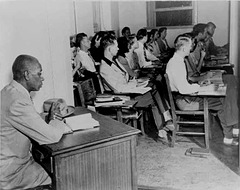
George W. McLaurin, a veteran school teacher living in Oklahoma applied to the all-white University of Oklahoma to pursue an advance degree in education in 1948. His application was rejected because Oklahoma statutes made it illegal for blacks and whites to attend the same school. McLaurin filed a complaint against the University on the state court level and won. And in 1950, McLaurin filed suit with the U.S. Supreme Court and won. The case paved the way for the Brown v. Board of Education cases. He was allowed to attend classes but not with his fellow students. This photograph shows how he was segregated to the anteroom of a classroom in 1948 after his admission.
Source: Oklahoma Historical Society
Separate But Equal
| 17 Oct 2023 |
|
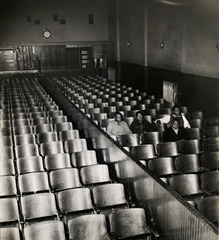
A partition separates white and black patrons at a movie theater in Washington DC.
History of Segregation in America
After the Civil War, millions of formerly enslaved African Americans hoped to join the larger society as full and equal citizens. Although some white Americans welcomed them, others used people’s ignorance, racism, and self-interest to sustain and spread racial divisions. By 1900, new laws and old customs in the North and the South had created a segregated society that condemned Americans of color to second-class citizenship.
Sources: Arthur Fellig (Weegee) Photographer, Weegee Collection
Jump to top
RSS feed- Kicha's latest photos with "Segregation" - Photos
- ipernity © 2007-2026
- Help & Contact
|
Club news
|
About ipernity
|
History |
ipernity Club & Prices |
Guide of good conduct
Donate | Group guidelines | Privacy policy | Terms of use | Statutes | In memoria -
Facebook
X
