

RHH's photos with the keyword: national wildlife refuge
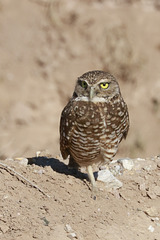
Burrowing Owl
| 09 Feb 2024 |
|
|
|
The Burrowing Owl, also known as the Shoco, is a small, long-legged owl that lives in burrows it either excavates itself or borrows.
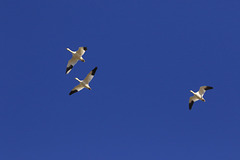
Snow Geese
| 09 Feb 2024 |
|
|
|
These Snow Geese were photographed in the Sonny Bono National Wildlife Refuge at the south end of the Salton Sea in California.
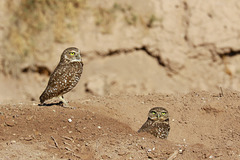
Burrowing Owls
| 16 Jan 2024 |
|
|
|
We re still traveling. We left Anza-Borrego Desert State Park last week Thursday and drove to the wildlife refuges on the south end of the Salton Sea. After some really good and authentic Mexican food and a visit to one of the refuges, we camped for night at Obsidian Butte, which more than lived up to its name, the butte formed almost entirely of obsidian, which, for those who do not know, is volcanic glass. The shoreline, which we explored, was littered with huge boulders of obsidian (inset). The high point of the two days, however, was the wildlife refuge, where we saw many different birds including huge flocks of Snow Geese and Pelicans. The stars were the Burrowing Owls. We saw quite a number of these small owls which live in burrows and are usually seen standing guard at the entrance, while driving around the area. We drove on to Joshua Tree National Park and are there now, though we drove out of the park briefly to collect emails. Tomorrow morning we are headed on to Sedona, Arizona, for more hiking and sightseeing.
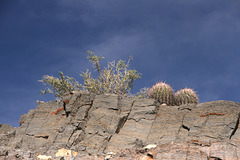
Point of Rocks Trail
| 16 Oct 2023 |
|
|
|
Taken in Nevada at Ash Meadows National Wildlife Refuge, near Point of Rocks where we climbed the cliffs to see the cacti and other plants.
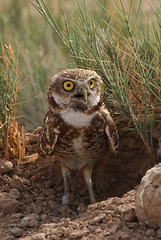
Burrowing Owl
| 14 Mar 2022 |
|
|
|
Photographed in the Sonny Bono National wildlife Refuge at the south end of the Salton Sea in California, these owls, sometimes known as "Howdy Birds," area feature of the refuge headquarters. We were at the refuge on a trip to California that took us around the Salton Sea and to many other places..
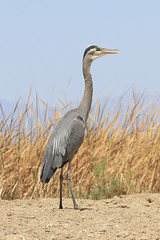
Great Blue Heron
| 14 Mar 2022 |
|
|
|
Photographed in the Sonny Bono National Wildlife Refuge in southern California on the shores of the Salton Sea.
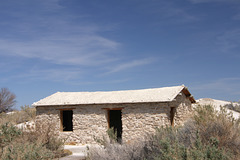
Jack Longstreet House
| 14 Jul 2021 |
|
|
|
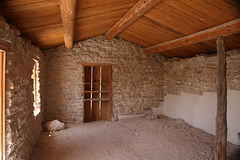
Jack Longstreet was an outlaw and gunfighter who had his ears cropped for cattle rustling in Texas and thereafter left for Nevada and the Amargosa Valley arriving there in the 1870's. He later built this house near a spring in what is now Ash Meadows National Wildlife Refuge and lived there until he died. He never changed his ways, was involved in several killings and gunfights and was hated but feared by those who lived in the area. He claimed to be a brother of the Confederate general, James Longstreet, but there is no evidence to back that claim.
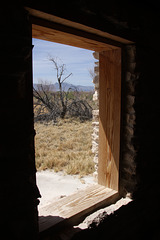
Jack Longstreet House
| 14 Jul 2021 |
|
|
|
Jack Longstreet was an outlaw and gunfighter who had his ears cropped for cattle rustling in Texas and thereafter left for Nevada and the Amargosa Valley arriving there in the 1870's. He later built this house near a spring in what is now Ash Meadows National Wildlife Refuge and lived there until he died. He never changed his ways, was involved in several killings and gunfights and was hated but feared by those who lived in the area. He claimed to be a brother of the Confederate general, James Longstreet, but there is no evidence to back that claim. This is view from one of the windows of his house and the insets show the outside and inside of the house. Here is a link to an old newspaper article about him: www.fws.gov/uploadedFiles/Region_8/NWRS/Zone_1/Desert_Complex/Ash_Meadows/Sections/History_of_Ash_Meadows/Jack%20Longstreet%20for%20website.pdf
I'll be away backpacking in the Colorado Rockies until 7/27.
Jack Longstreet House
| 14 Jul 2021 |
|
|
|
Jack Longstreet was an outlaw and gunfighter who had his ears cropped for cattle rustling in Texas and thereafter left for Nevada and the Amargosa Valley arriving there in the 1870's. He later built this house near a spring in what is now Ash Meadows National Wildlife Refuge and lived there until he died. He never changed his ways, was involved in several killings and gunfights and was hated but feared by those who lived in the area. He claimed to be a brother of the Confederate general, James Longstreet, but there is no evidence to back that claim.
Ash Meadows National Wildlife Refuge
| 10 May 2018 |
|
|
|
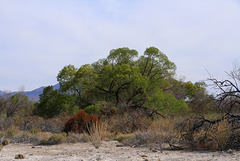
Ash Meadows was originally named for the abundance of Desert Ash Trees found there. There are still some left and the area is being restored but most of them were destroyed in attempts to turn the area in farmland. These are some of the trees still there on the southern end of the park. The photo was taken by my wife.
Mesquite Thicket
| 05 Apr 2018 |
|
|
|
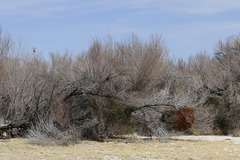
These are Screwbean Mesquite at Ash Meadows National Wildlife Refuge in Nevada. The orange clump on the right is Desert Mistletoe, very common on these trees.
Ash Meadows National Wildlife Refuge
| 09 May 2018 |
|
|
|
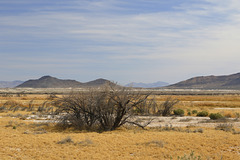
This is the area at the north of Ash Meadows and the trees are a species of Mesquite which in the wetter areas grows in dense thickets (see insets). The mountains are part of the Delamar Range.
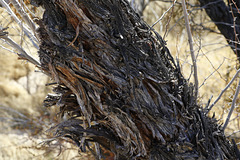
Mesquite
| 05 Apr 2018 |
|
|
This is the bark of a Mesquite species, I believe the Screwbean Mesquite, photographed at Ash Meadows National Wildlife Refuge in Nevada.
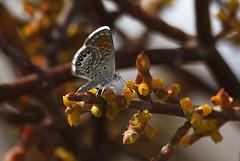
Western Pygmy Blue
| 08 May 2018 |
|
|
|
This tiny butterfly was photographed in Ash Meadows National Wildlife Refuge in Nevada. It is the tiniest butterfly in the world and a common insect in the western USA. It is expanding its range, too, reaching as far a Hawaii and the Persian Gulf. Here it is perched on the flowers of the Desert Mistletoe.
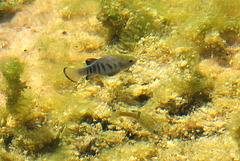
Amargosa Pupfish
| 05 Apr 2018 |
|
|
|
These are the Pupfish found in Longstreet Spring in Ash Meadows National Wildlife Refuge. Each spring has its own species of Pupfish, all tiny fish about 4 cm in length. The photo is not the best but trying to photograph these fish was a near impossible job.
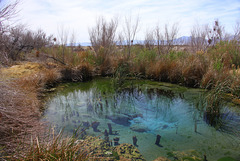
Ash Meadows National Wildlife Refuge
| 05 May 2018 |
|
|
|
Ash Meadows is the largest remaining oasis in the Mojave Desert. It is in Nevada east of Death Valley National Park in the Amargosa Valley and is home to many unique plants and animals. This is Longstreet Spring, one of the many springs in the area and home to one of the species of Pupfish that are found in the refuge's springs (see inset). What is especially interesting is that where Pupfish are found each area has its own species. Both photos were taken by my wife.
Jump to top
RSS feed- RHH's latest photos with "national wildlife refuge" - Photos
- ipernity © 2007-2026
- Help & Contact
|
Club news
|
About ipernity
|
History |
ipernity Club & Prices |
Guide of good conduct
Donate | Group guidelines | Privacy policy | Terms of use | Statutes | In memoria -
Facebook
X
