

Xata's photos
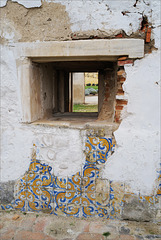
Moura, Alentejo, Castle’s chapel
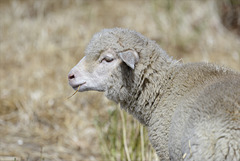
Penedos, Lamb
| |
|
|
|
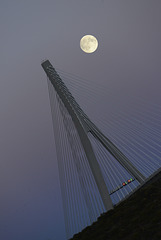
Ponte Internacional do Guadiana
| |
|
|
|
The Guadiana International Bridge (Spanish: Puente Internacional del Guadiana; Portuguese: Ponte Internacional do Guadiana) is a bridge that crosses the Guadiana River connecting southern Spain (town of Ayamonte) and Portugal (town of Castro Marim). It is the southernmost land crossing on the Portugal–Spain border. It is not split evenly between the two countries, a greater share of it situated in Portugal. Completed in 1991, its structural type is a cable-stayed bridge, with a deck of prestressed concrete. The bridge was designed by the Portuguese Structural Engineer Professor José Luis Câncio Martins on behalf of Huarte S.A. (now Obrascón Huarte Lain) and Teixeira Duarte. The bridge is open to vehicles only. It is the third longest bridge in Portugal and one of the longest in Spain.
The bridge is 666 metres long with the central span between the towers being 324 metres. The deck stands 20 metres above the river, allowing the navigation of ships of deep draft. The two towers of the bridge are 95 and 96 metres tall, respectively. The Spanish side tower rests on an artificial island built on the riverbed, while the pillar on the Portuguese side is on land.
The bridge connects the Via do Infante de Sagres A22 motorway (Portugal) to the Autopista del Quinto Centenario A-49 Motorway (Spain), and is part of the European route E1.
Source: en.wikipedia.org/wiki/Guadiana_International_Bridge
MAYBE BETTER VIEWED WIDE ON BLACK (PRESS "Z")
Odeleite reservoir, Blue hour
| |
|
|
|

Opitsaht Reserve, Canada, STOP HFF, see you next F…
| |
|
|
|
Opitsaht, spelled also as Opitsat and Opitsitah, is a community of the Tla-o-qui-aht people of the Nuu-chah-nulth nation, located at the SW end of Meares Island in Clayoquot Sound. During the era of the Maritime Fur Trade, Opitsaht was the seat of Wickaninnish, chief of the Tla-o-qui-aht, and contained 200 ornately carved buildings typical of Nuu-chah-nulth villages. This original village was destroyed by cannon fire by Captain Robert Gray of the Columbia Rediviva as part of a falling-out with the Tla-o-qui-aht when Gray evacuated his erstwhile "fort" nearby on Meares Island, known as Fort Defiance. Today Opitsaht is one of the main villages governed by the Tla-o-qui-aht First Nations, the band government of the Tla-o-qui-aht people.
The population of Opitsat Indian Reserve No. 1, which is named after the village and is an official land status used by Statistics Canada as a census area, was 174 at the Census of 2006.
Source: en.wikipedia.org/wiki/Opitsaht
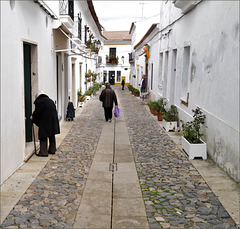
Moura, Alentejo, Street life
| |
|
|
|
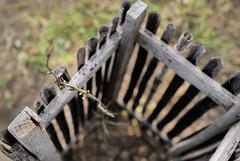
Protection for young almond tree, Penedos, HFF
| |
|
|
|
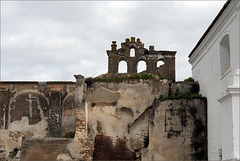
Moura, Alentejo, Castle
| |
|
|
|
Dominating the city with what remains of its towers and walls, the castle of Moura was built by the Portuguese in the early 14th century taking advantage of the fortifications left by the Arabs. In the second half of this century a second walled fence was added to house the increasing population.
In the 16th century, King Manuel I of Portugal commissioned the architect Francisco de Arruda to make some changes, probably including the clock tower, also dating from this period the female convent of S. Domingos, which is inside the fence, ordered by D. Ângela de Moura, in 1562, on the foundations of the old mosque. The convent church keeps the Manueline tomb of the brothers Pedro and Álvaro Rodrigues, presumed conquerors of Moura.
During the Restoration Wars, in the second half of the 17th century, the medieval fort was reinforced with a line of bastions and ravelins, according to the project of Nicolau de Langres, adapted to the new techniques of war with firearms.
The rectangular keep and a circular tower on which a clock was added in the 19th century stand out from the fortified ensemble.
Source: fortalezasdefronteira.turismodeportugal.pt/en/node/150
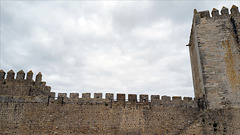
Moura, Alentejo, Castle, HWW
| |
|
|
|
Dominating the city with what remains of its towers and walls, the castle of Moura was built by the Portuguese in the early 14th century taking advantage of the fortifications left by the Arabs. In the second half of this century a second walled fence was added to house the increasing population.
In the 16th century, King Manuel I of Portugal commissioned the architect Francisco de Arruda to make some changes, probably including the clock tower, also dating from this period the female convent of S. Domingos, which is inside the fence, ordered by D. Ângela de Moura, in 1562, on the foundations of the old mosque. The convent church keeps the Manueline tomb of the brothers Pedro and Álvaro Rodrigues, presumed conquerors of Moura.
During the Restoration Wars, in the second half of the 17th century, the medieval fort was reinforced with a line of bastions and ravelins, according to the project of Nicolau de Langres, adapted to the new techniques of war with firearms.
The rectangular keep and a circular tower on which a clock was added in the 19th century stand out from the fortified ensemble.
Source: fortalezasdefronteira.turismodeportugal.pt/en/node/150

Moura, Alentejo, Castle
| |
|
|
|
Dominating the city with what remains of its towers and walls, the castle of Moura was built by the Portuguese in the early 14th century taking advantage of the fortifications left by the Arabs. In the second half of this century a second walled fence was added to house the increasing population.
In the 16th century, King Manuel I of Portugal commissioned the architect Francisco de Arruda to make some changes, probably including the clock tower, also dating from this period the female convent of S. Domingos, which is inside the fence, ordered by D. Ângela de Moura, in 1562, on the foundations of the old mosque. The convent church keeps the Manueline tomb of the brothers Pedro and Álvaro Rodrigues, presumed conquerors of Moura.
During the Restoration Wars, in the second half of the 17th century, the medieval fort was reinforced with a line of bastions and ravelins, according to the project of Nicolau de Langres, adapted to the new techniques of war with firearms.
The rectangular keep and a circular tower on which a clock was added in the 19th century stand out from the fortified ensemble.
Source: fortalezasdefronteira.turismodeportugal.pt/en/node/150

Schlumbergera truncata, Moura, Alentejo, Mouraria
| |
|
|
|
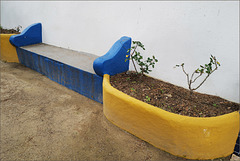
Moura, Alentejo, HBM
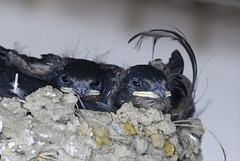
Punky swallow? Penedos
| |
|
|
|
NEST IN PIP
EVERY YEAR AT THE SAME PLACE THEY COME AND WE WELCOME THEM... BUT HAVE TO PROTECT THE FLOOR TILES WITH PLASTIC SHEETS !
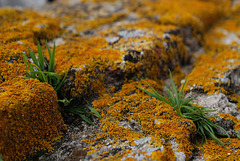
Xanthoria
| |
|
|
|
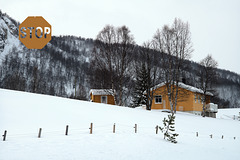
Tromsø area, Stop HFF, see you next Friday
| |
|
|
|
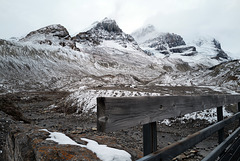
Columbia Icefield, HFF
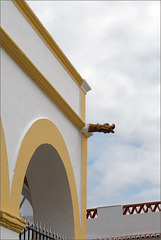
Moura, Alentejo, Termas
| |
|
|
|
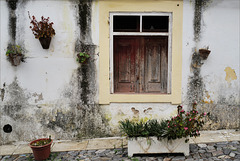
Moura, Alentejo, Window
| |
|
|
|
SAME HOUSE AS PREVIOUS PHOTO .... THINK SOME KIND PERSON KEEPS WATERING THE PLANTS.
