No século XVII, a posição estratégica do monte da Graça, ocupada por tropas espanholas no contexto da Guerra da Restauração da independência, muito caro custou a Portugal durante o cerco a Elvas (1658-1659).
Um século mais tarde, durante a Guerra dos Sete Anos (1756-1763), a cidade sofreu novo sítio (1762). Com esse fato em mente, sob o reinado de D. José I (1750-1777), tendo o Marquês de Pombal chamado o Marechal Wilhelm von Schaumburg-Lippe, conde de Lippe para reorganizar o Exército português, determinou-lhe traçar planos para a modernização daquela praça-forte.
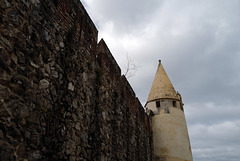
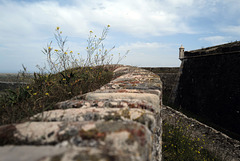
Os trabalhos do Forte da Graça iniciaram-se em 1763, estendendo-se até ao reinado de Dna. Maria I (1777-1816), que a inaugurou em 1792, com o nome de Forte Conde de Lippe, militar que havia proposto a sua construção e que comandou o Exército português entre 1762 e 1764. Em 1763 foram precisos quase 30 anos, seis mil homens, quatro mil animais e 120 mil moedas de ouro para a renovação.
O forte resistiu às tropas espanholas durante a chamada Guerra das Laranjas (1801) e, mais tarde, no contexto da Guerra Peninsular, às tropas do general Nicolas Jean de Dieu Soult, que a bombardearam (1811), não chegando a tomá-la.
Utilizado no passado como prisão militar, o conjunto encontrava-se até 2014 em condições próximas da ruína, aguardando a sua cedência à Câmara Municipal de Elvas para consolidação e restauro. Em Setembro de 2015 foram concluídas as obras de restauro nas infrastruturas, com o objectivo de transformar o forte num museu miltiar funcional.
Em 2015, foram precisos quase 11 meses, 220 trabalhadores a tempo inteiro e 6,1 milhões de euros para o restaurar e reabilitar a tempo de no dia 27 de novembro de 2015, reabrir as suas portas ao público.
++++++++
In the 17th century, the strategic position of the Graça hill, occupied by Spanish troops in the context of the War to Restore Independence, cost Portugal dearly during the siege of Elvas (1658-1659).
A century later, during the Seven Years' War (1756-1763), the city was sieged again (1762). With this fact in mind, under the reign of King José I (1750-1777), having the Marquis of Pombal called Marshal Wilhelm von Schaumburg-Lippe, Count of Lippe to reorganise the Portuguese Army, he ordered him to draw up plans for the modernisation of that fortress.
Work on Fort Graça began in 1763, extending until the reign of Queen Maria I (1777-1816), who inaugurated it in 1792, under the name of Fort Conde de Lippe, the military officer who had proposed its construction and commanded the Portuguese Army between 1762 and 1764. In 1763 it took almost 30 years, six thousand men, four thousand animals and 120 thousand gold coins to renovate it.
The fort resisted Spanish troops during the so-called War of the Oranges (1801) and, later, in the Peninsular War, troops of General Nicolas Jean de Dieu Soult, who bombarded it (1811), but never took it.
Used in the past as a military prison, the set was until 2014 in conditions close to ruin, awaiting its transfer to the Municipality of Elvas for consolidation and restoration. In September 2015, the restoration works on the infrastructures were completed, with the aim of transforming the fort into a functional miltiar museum.
In 2015, it took almost 11 months, 220 full-time workers and 6.1 million euros to restore and rehabilitate it in time to reopen its doors to the public on 27 November 2015.
Fonte:
pt.wikipedia.org/wiki/Forte_de_Nossa_Senhora_da_Graça