

Xata's photos
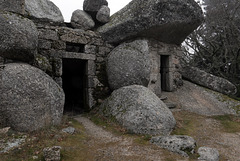
Serra da Estrela, Penhas Douradas
| |
|
|
|
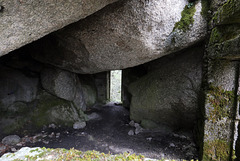
Serra da Estrela, Penhas Douradas L1000414
| |
|
|

Serra da Estrela BW L1006521
| |
|
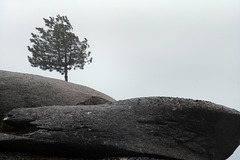
S. Bento de Sexta-Feira
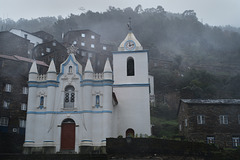
Piodão, Aldeia do Xisto L1006556
| |
|
|
|
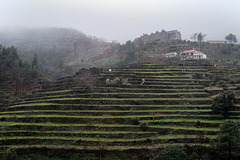
Piodão, Aldeia do Xisto L1006557
| |
|
|
|
Beautifully built upon the ledges which climb Serra do Açor, the village of Piódão is harmoniously craved into the nature that surrounds it and of which it seems to be a part.Its schist houses with slate roofs, which blend with the irregular pavement of the streets and with the colours of the mountain, are connected by stairs which overcome the unevenness of the ground.
In the early middle ages, the urban centre was at Casal de Piodam, in a valley located near the current village, but this settlement had to be moved because a Cistercian abbey, of which nothing remains, was built on that spot. Taken away from their land, the inhabitants settled in the southern slope of the mountain, probably around the 15th century. It was there that, over time, ledge by ledge, they built this incredibly beautiful mountain village.
The isolation to which difficult access routes have condemned Piódão throughout many centuries, has resulted in the medieval feeling of its streets, so you should take a walk through its steep streets, climb stairs and slopes while visiting the schist houses which are sometimes interrupted by a white church. When you go back, you should take a typical souvenir of this village: chestnut liqueur, honey spirits or a schist miniature of one of Piódão’s typical houses.
source: www.centerofportugal.com/piodao
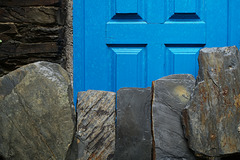
Piodão, Aldeia do Xisto L1006570
| |
|
|
Beautifully built upon the ledges which climb Serra do Açor, the village of Piódão is harmoniously craved into the nature that surrounds it and of which it seems to be a part.Its schist houses with slate roofs, which blend with the irregular pavement of the streets and with the colours of the mountain, are connected by stairs which overcome the unevenness of the ground.
In the early middle ages, the urban centre was at Casal de Piodam, in a valley located near the current village, but this settlement had to be moved because a Cistercian abbey, of which nothing remains, was built on that spot. Taken away from their land, the inhabitants settled in the southern slope of the mountain, probably around the 15th century. It was there that, over time, ledge by ledge, they built this incredibly beautiful mountain village.
The isolation to which difficult access routes have condemned Piódão throughout many centuries, has resulted in the medieval feeling of its streets, so you should take a walk through its steep streets, climb stairs and slopes while visiting the schist houses which are sometimes interrupted by a white church. When you go back, you should take a typical souvenir of this village: chestnut liqueur, honey spirits or a schist miniature of one of Piódão’s typical houses.
source: www.centerofportugal.com/piodao
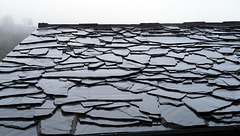
Piodão, Aldeia do Xisto L1006572
| |
|
|
Beautifully built upon the ledges which climb Serra do Açor, the village of Piódão is harmoniously craved into the nature that surrounds it and of which it seems to be a part.Its schist houses with slate roofs, which blend with the irregular pavement of the streets and with the colours of the mountain, are connected by stairs which overcome the unevenness of the ground.
In the early middle ages, the urban centre was at Casal de Piodam, in a valley located near the current village, but this settlement had to be moved because a Cistercian abbey, of which nothing remains, was built on that spot. Taken away from their land, the inhabitants settled in the southern slope of the mountain, probably around the 15th century. It was there that, over time, ledge by ledge, they built this incredibly beautiful mountain village.
The isolation to which difficult access routes have condemned Piódão throughout many centuries, has resulted in the medieval feeling of its streets, so you should take a walk through its steep streets, climb stairs and slopes while visiting the schist houses which are sometimes interrupted by a white church. When you go back, you should take a typical souvenir of this village: chestnut liqueur, honey spirits or a schist miniature of one of Piódão’s typical houses.
source: www.centerofportugal.com/piodao
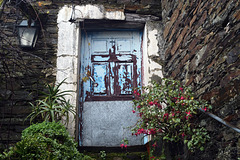
Piodão, Aldeia do Xisto L1006578
| |
|
|
|
Beautifully built upon the ledges which climb Serra do Açor, the village of Piódão is harmoniously craved into the nature that surrounds it and of which it seems to be a part.Its schist houses with slate roofs, which blend with the irregular pavement of the streets and with the colours of the mountain, are connected by stairs which overcome the unevenness of the ground.
In the early middle ages, the urban centre was at Casal de Piodam, in a valley located near the current village, but this settlement had to be moved because a Cistercian abbey, of which nothing remains, was built on that spot. Taken away from their land, the inhabitants settled in the southern slope of the mountain, probably around the 15th century. It was there that, over time, ledge by ledge, they built this incredibly beautiful mountain village.
The isolation to which difficult access routes have condemned Piódão throughout many centuries, has resulted in the medieval feeling of its streets, so you should take a walk through its steep streets, climb stairs and slopes while visiting the schist houses which are sometimes interrupted by a white church. When you go back, you should take a typical souvenir of this village: chestnut liqueur, honey spirits or a schist miniature of one of Piódão’s typical houses.
source: www.centerofportugal.com/piodao
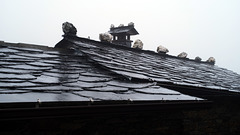
Piodão, Aldeia do Xisto L1006581
| |
|
Beautifully built upon the ledges which climb Serra do Açor, the village of Piódão is harmoniously craved into the nature that surrounds it and of which it seems to be a part.Its schist houses with slate roofs, which blend with the irregular pavement of the streets and with the colours of the mountain, are connected by stairs which overcome the unevenness of the ground.
In the early middle ages, the urban centre was at Casal de Piodam, in a valley located near the current village, but this settlement had to be moved because a Cistercian abbey, of which nothing remains, was built on that spot. Taken away from their land, the inhabitants settled in the southern slope of the mountain, probably around the 15th century. It was there that, over time, ledge by ledge, they built this incredibly beautiful mountain village.
The isolation to which difficult access routes have condemned Piódão throughout many centuries, has resulted in the medieval feeling of its streets, so you should take a walk through its steep streets, climb stairs and slopes while visiting the schist houses which are sometimes interrupted by a white church. When you go back, you should take a typical souvenir of this village: chestnut liqueur, honey spirits or a schist miniature of one of Piódão’s typical houses.
source: www.centerofportugal.com/piodao
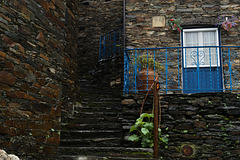
Piodão, Aldeia do Xisto, HFF L1006565
| |
|
|
Beautifully built upon the ledges which climb Serra do Açor, the village of Piódão is harmoniously craved into the nature that surrounds it and of which it seems to be a part.Its schist houses with slate roofs, which blend with the irregular pavement of the streets and with the colours of the mountain, are connected by stairs which overcome the unevenness of the ground.
In the early middle ages, the urban centre was at Casal de Piodam, in a valley located near the current village, but this settlement had to be moved because a Cistercian abbey, of which nothing remains, was built on that spot. Taken away from their land, the inhabitants settled in the southern slope of the mountain, probably around the 15th century. It was there that, over time, ledge by ledge, they built this incredibly beautiful mountain village.
The isolation to which difficult access routes have condemned Piódão throughout many centuries, has resulted in the medieval feeling of its streets, so you should take a walk through its steep streets, climb stairs and slopes while visiting the schist houses which are sometimes interrupted by a white church. When you go back, you should take a typical souvenir of this village: chestnut liqueur, honey spirits or a schist miniature of one of Piódão’s typical houses.
source: www.centerofportugal.com/piodao
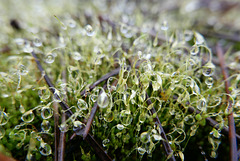
Serra da Estrela, Musgos L1000469
| |
|
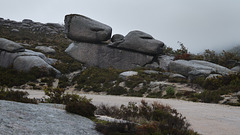
S. Bento de Sexta-Feira
| |
|
|
|

S. Bento de Sexta-Feira

S. Bento de Sexta-Feira
| |
|
|
|

Serra da Peneda, Senhora da Peneda
| |
|
|
|
Sanctuary of Senhora da Peneda
An enormous crag (the Meadinhas rock) dominates the site with its 300 metres of sheer height. In the pure air of the altitude, the Santuário de Peneda gives a holy feel to the mountain, creating a religious atmosphere.
Every year, in the first week of September, several hundred pilgrims from all over the region and from neighbouring Galicia flock to this place of pilgrimage. The dedication to Nossa Senhora das Neves (Our Lady of the Snows) originates from the Middle Ages, spreading the legend of her apparition at this site, where a small chapel has been built. The present Sanctuary, built in the nineteenth century, is topped by a church with a monumental flight of steps. At the front, there is a series of terraces and steps, lined on both sides by twenty little chapels comprising episodes in the life of Jesus, that go down the valley and finish in a square with an image of the Angel Gabriel on top of a column and a portico with a sculpture at the top representing Nossa Senhora da Encarnação.
Source: www.visitportugal.com/en/NR/exeres/C541CE73-8AEE-4FF8-9590-AD53D1EA44F9
PLS CLICK ON PHOTOS BELLOW TO GO TO THEIR PAGES
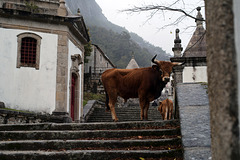
Serra da Peneda, Senhora da Peneda, Vacas barrosã
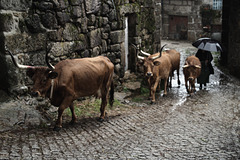
Fafião
| |
|
|
|
I DIDN'T HAVE TIME TO FOCUS PROPERLY... BUT I LOVED THIS SCENE SO MUCH THAT I KEPT THE PICTURE
