


Lake Mungo

Lake Mungo still is a lake, despite appearances - it's just that there's been no water to fill it for about 10,000 years! It is part of the World Heritage listed Willandra Lakes system in western New South Wales, Australia.
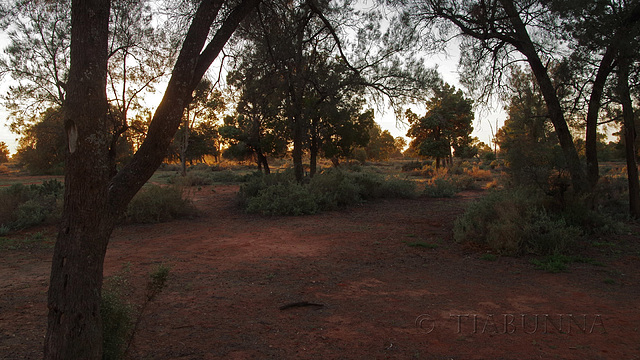

Mungo Dawn
Dawn breaking over the bush around the camping area at Lake Mungo National Park in western NSW, Australia.
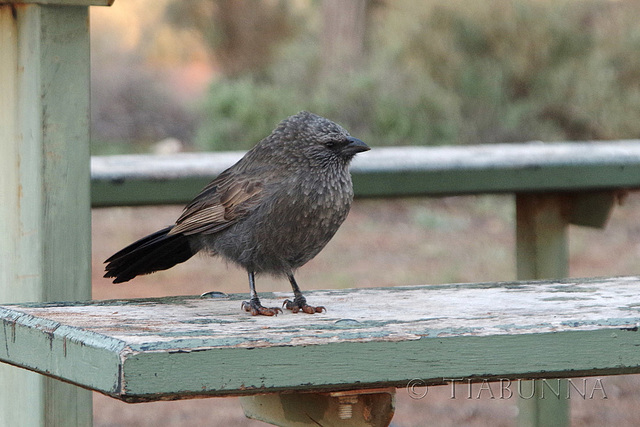
Apostlebird
Apostlebirds travel around in groups of (typically) ten or twelve, which explains their name. They are found through the eastern part of inland Australia and usually are confident to come around campsites seeking any food - as this one sitting on the bench seat at Lake Mungo National Park shows.
Explored.
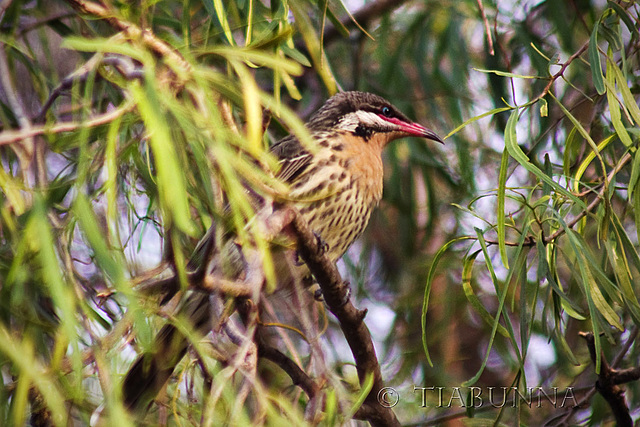
Spiny-cheeked Honeyeater
We saw a group of these Spiny-cheeked Honeyeaters in the trees near our camp site at Lake Mungo National Park. They range across inland Australia.
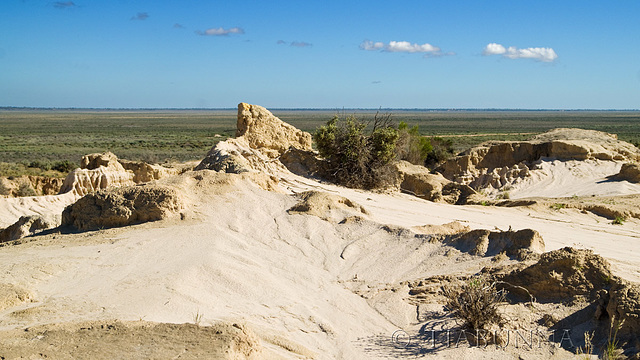
On the "Walls of China"
At the eastern side of Lake Mungo, millennia of westerly winds have created substantial layered dunes of clay (as dust) and sand. Loss of the covering vegetation, largely as a result of rabbit plagues early in the 20th century, has created erosion and dune mobility: that, in turn, has exposed the remains of long-extinct megafauna and the earliest dated human ritual cremation (at over 40,000 years). The scientific value of the area has resulted in World Heritage listing, but also means there is limited public access to the western side of the dunes, which are known as the "Walls of China". Second image in note. Best on black.
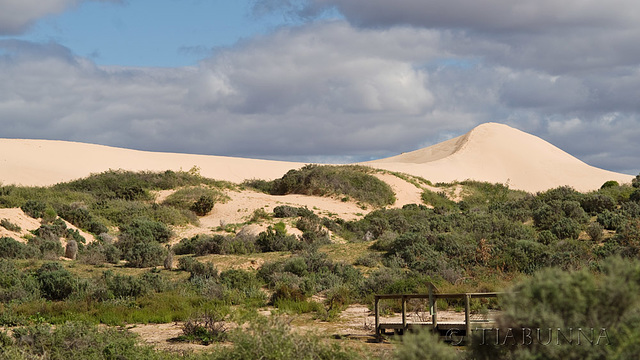
The Eastern Dunes
The eastern side of the dunes at Lake Mungo. Curiously, although the lake itself is dry there is a small natural seepage here. That spring has been opened out as a well with a small bridge.
Happy Fence Friday!
Best on black.
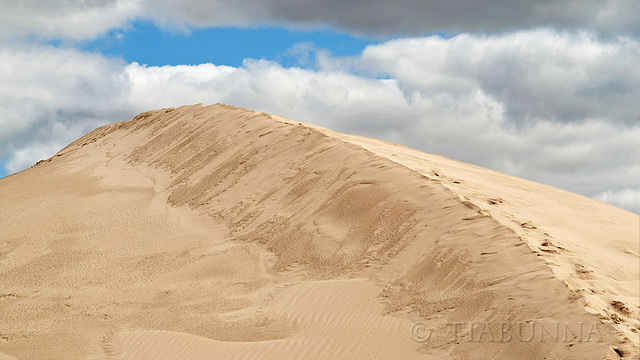
To the Dune Crest
Crest of the dunes at Lake Mungo National Park.
Explored Page 1.
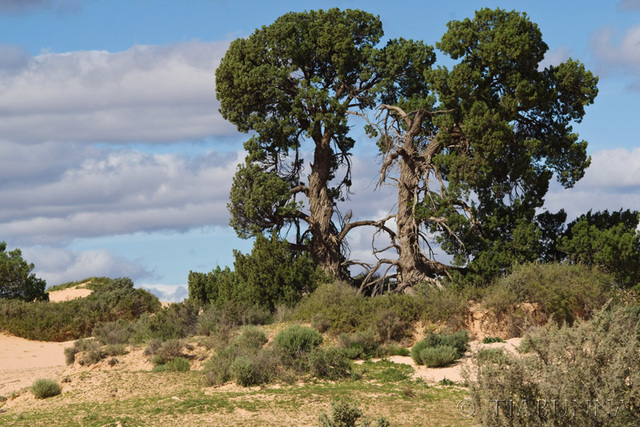
The two Cypress
Ancient Cypress pines near the natural soak at Lake Mungo.
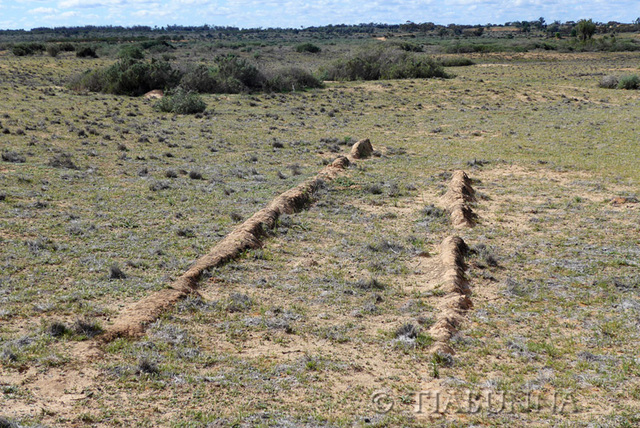
They Went That Way....
Back in the late 1800s and early 1900s, horse-drawn wagons, drays and even coaches would stop at the natural spring to the east of the Lake Mungo sand dunes. Sometimes a particularly heavily laden dray would compress moist sand and leave tracks - with time the uncompressed sand surrounding the tracks has eroded, leaving the century-plus wheel marks raised above the surrounding surface. I rather think these deserve to be preserved with some kind of covering structure.
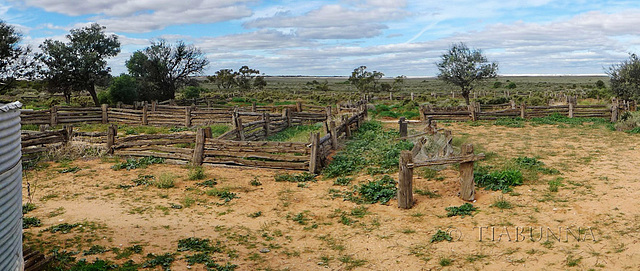
Bygone Days
Old sheep yards at the former 'Zanci' property, now part of Lake Mungo National Park. On the distant horizon, the "Wall of China" sand dunes. Taken as a panorama with the Lumix LF1. Happy Fence Friday!
Jump to top
RSS feed- Latest items - Subscribe to the latest items added to this album
- ipernity © 2007-2026
- Help & Contact
|
Club news
|
About ipernity
|
History |
ipernity Club & Prices |
Guide of good conduct
Donate | Group guidelines | Privacy policy | Terms of use | Statutes | In memoria -
Facebook
X
