

Stiffleaf's photos
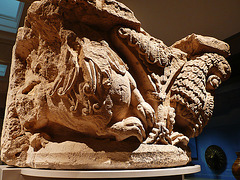
b.m. lewes priory capital
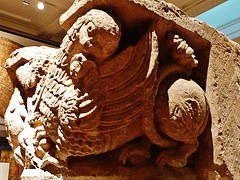
b.m. lewes priory capital
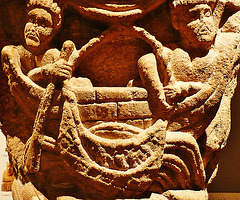
b.m., lewes priory capital
| |
|
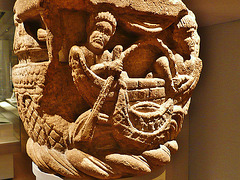
c.1120-30, from cluniac lewes priory, this face of the capital shows peter and andrew pulling a full net into their boat
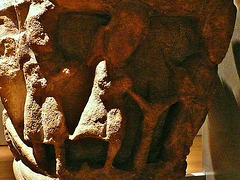
b.m., lewes priory capital
| |
|
c.1120-30, from cluniac lewes priory, this face of the capital shows christ calling peter and andrew, a broken tree between them. peter and andrew are the two figures to the left, wearing hoodies
b.m., lewes priory capital
| |
|
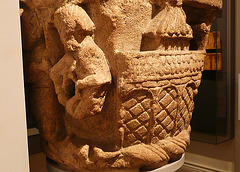
c.1120-30, from cluniac lewes priory, this face of the capital shows two men fishing from a boat, a catch in the net; probably peter and andrew
b.m., lewes priory capital
| |
|
c.1120-30, from cluniac lewes priory, these faces of the capital shows peter with a key healing a lame man with crutches to the left, and a church on the rock that is peter [matt. xvi.18]
b.m., wiltshire c12 head
| |
|
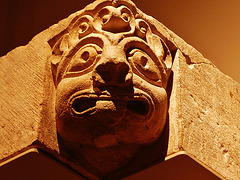
head with protruding tongue, related to work done under bishop roger of sarum, possibly from devizes or sarum, church or castle, date c.1135
b.m., bury st. edmunds abbey
| |
|
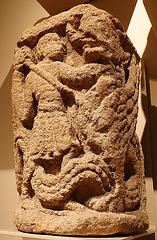
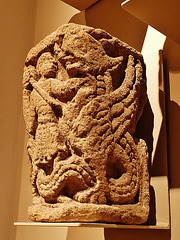
dragon slayer carving of c.1130 from bury st. edmunds abbey, probably a doorway capital. it shows italian influence; the abbot at the time was from italy
b.m., bury st. edmunds abbey
| |
|
dragon slayer carving of c.1130 from bury st. edmunds abbey, probably a capital from a doorway
b.m. killua sheela na gig
| |
|
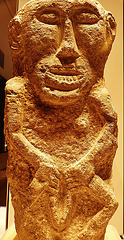
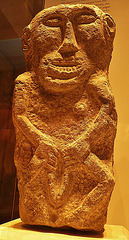
this sheela is from cloran, a type 3a from the north central area of ireland, near killua in westmeath. she came to the museum with the george witt collection in 1865, possibly from richard payne knight, and then was lost until 1972, and this is a big figure , about two foot high. it seems mid 12 century, and has a neatly cut void in the back. this may be from a later reuse, when reversed to hide it or support a screen. killua has an c18/19 castle, and a folly in a mediaeval churchyard, but no extant c12 buildings, nor does cloran.
b.m. killua sheela na gig
| |
|
this figure has been published under the name of chloran, but cloran is really the townland in westmeath, ireland where she was found, before going into the collection of sir ben chapman at the romantic folly castle of killua nearby. she was given to the british museum in 1865, lost for 90 years, and is now finally on show. mid c12, I guess
b.m. killua sheela na gig
| |
|
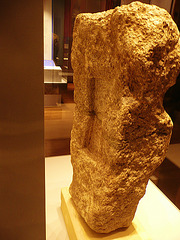
this is the back of the type 3a from the north central area of ireland, killua in westmeath. she came to the museum with the george witt collection in 1865, possibly from richard payne knight, then was lost until 1972. this is a big figure , about two foot high. it seems mid 12 century, and has a neatly cut void in the back. this may be from a later reuse, reversed to hide it or use it to support a screen. the sheela came from cloran, going to a collection in killua castle .there are no extant c12 buildings either in killua nor nearby cloran.
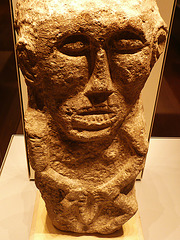
b.m. killua sheela na gig
| |
|
oh, I do like a good sheela! this is a type 3a from the north central area of ireland,cloran, near killua in westmeath. she came to the museum with the george witt collection in 1865, possibly from richard payne knight, definately from a c19 collection in the romantic c18/19 killua castle, and then was lost until 1972, and this is a big figure , about two foot high. it seems mid 12 century, and has a neatly cut void in the back. this may be from a later reuse, reversed to hide it or support a screen. killua has an c18/19 castle, and a folly in a mediaeval churchyard, but no extant c12 buildings there or in cloran nearby
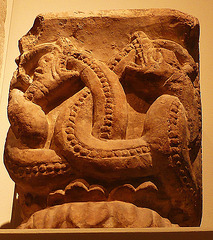
capital from all hallows honey lane, london
| |
|
a capital of intertwined serpents of c.1130, found in 1836 just off to the north of st. mary le bow in the city, probably from all hallows honey lane , destroyed in the great fire.
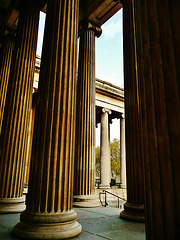
british museum
| |
|
built in sections between 1823-52 by robert smirke in a neo grecian style, with the colonnaded south front almost last in the 1840s. the design seems to have been conceived by smirke as a whole at the start, showing knowledge of schinkel's berlin altes museum ,also begun in 1823. the original drawings show more sculpture.
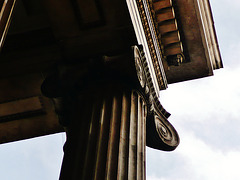
british museum
british museum
| |
|
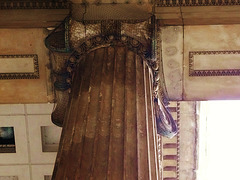
the capitals on the returns are an odd shape indeed seen from the colonnade. built 1823-52 by robert smirke.
british museum
| |
|
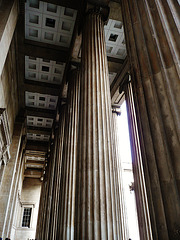
built in sections between 1823-52 by robert smirke in a neo grecian style, with the colonnaded south front almost last in the 1840s. the design seems to have been conceived by smirke as a whole at the start, showing knowledge of schinkel's berlin altes museum ,also begun in 1823. the original drawings show more sculpture. this is the view along the portico.
