

Au Cœur... diagonalhorizon's favorite photos


Small Carpathian Sentinel
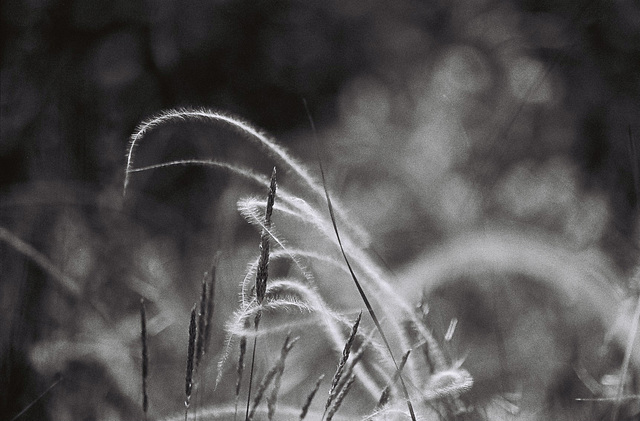
The Small Carpathians (Malé Karpaty) form the western boundary of the Carpathians, cloaked in extensive beech woodlands. Beech trees are remarkable architects — they create their own interior world with distinct light, temperature, and moisture that shapes all life within the forest.
The European beech (Fagus sylvatica) in the Carpathians holds exceptional global significance as a living record of post-glacial forest evolution. During Ice Ages, beech survived in small refuge areas in the southern and eastern parts of Europe, then began spreading northward and westward after the last glaciers retreated around 11,000 years ago — a colonisation process still continuing today.

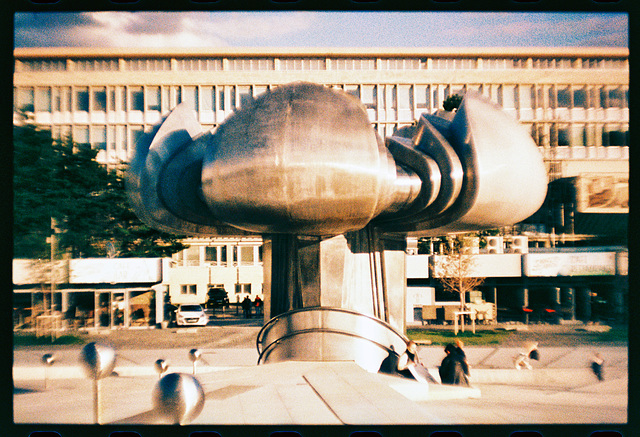
Monuments and Memory
Námestie slobody — Freedom Square — is where layers of history and memory meet in the heart of Bratislava. Back in the seventeenth century, this area was covered by vineyards, then later became home to the Summer Archbishop’s Palace, which now serves as a government building. Over time, bold landmarks like the vast Post Office Palace and the Slovak Technical University were built, turning the greenery into a dramatic urban stage.
The centerpiece of the square is the Fountain of Union ( fontána Družba ), completed in 1980 and renowned as the largest fountain in Bratislava and Slovakia. Its dramatic 9-meter-tall stainless steel linden flower sculpture, a symbol of Slavic heritage, was fully restored in 2023 after years of disrepair. Today, water flows again and the revitalized fountain stands as both a historical marker and a vibrant gathering point for the city.
This square has seen more than its share of drama. In 1948, after orchestrating a Communist coup that swept away Czechoslovakia’s democracy, Klement Gottwald had the square named after him, sealed with a towering statue — a very public sign of the Communist regime’s grip on the country for decades. Through years of shifting politics, the square was a stage for all manner of mass events, from grim fascist rallies to Commie-era parades, its modernist architecture reflecting each twist in the nation’s fate.
All of this changed with the Velvet Revolution ("Tender Revolution" in original) in 1989, when the square regained both its original name and its spirit. Today, the square hums with life once again. It plays host to democracy rallies and pride celebrations, surrounded by modernist shapes and open green spaces that invite both reflection and lively gatherings. It is much more than a relic of dictatorship; it stands as living proof of Bratislava’s commitment to memory, dialogue, and moving forward.
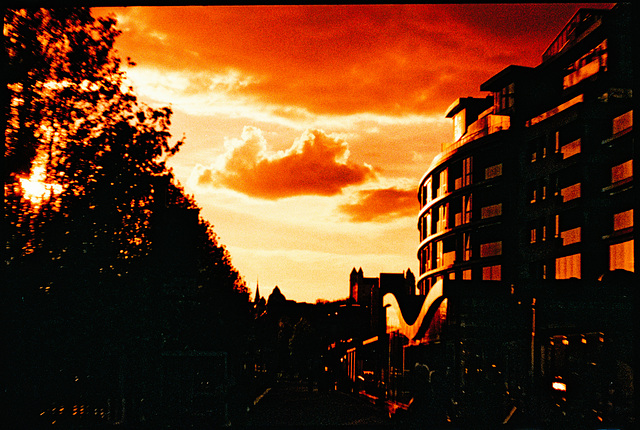
Under a Blood Red Sky
This is an interesting view of Bratislava Castle taken from the Danube riverbank, near a shopping centre. I’m not sure why the photo turned out so high in contrast — it wasn’t intentional, and there was no expired film involved. It’s probably just caused by the sunset light.
The name is dedicated to the "old" album by the Irish band U2 www.youtube.com/watch?v=Rnug2Qd_Ijs

Fix that car
What once were plain residential blocks are now an open-air museum bursting with colour — Lodhi Art District is Delhi’s answer to street art at its grandest. Since 2015, artists from both India and around the world have flocked here, using exhaustive imagination to paint over fifty massive murals.
Stroll through leafy avenues and you’ll encounter glowing abstractions, whimsical creatures and portraits with powerful social messages, each so different that every turn feels unexpected. There’s no set trail — exploration is the thrill, and new wall art appears often, changing the landscape each year. With its peaceful neighbourhood vibe and lack of crowds, visitors find not only dazzling visuals but also serene green streets perfect for reflection and photography.
Where Time Stands Still: The Log Cottages of Vlkolínec
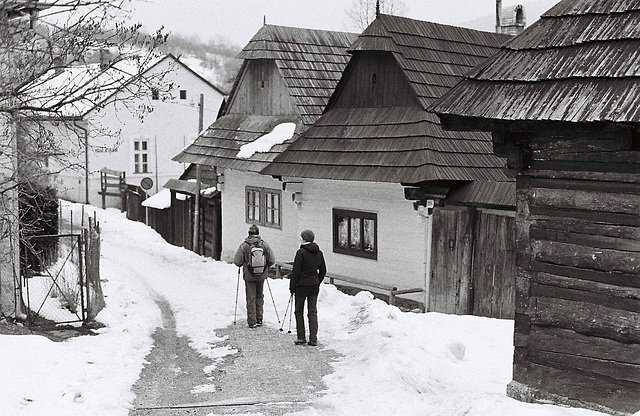
Vlkolínec is a well-preserved mountain village in central Slovakia, not far from Ružomberok, with origins going back to the fourteenth century, its name reflecting the wolves that once roamed the area. People living there were mainly loggers and farmers, earning their living from the land and their handiwork. The village is known for its many wooden cottages lined up along narrow lanes, all built in the traditional style, along with an old wooden bell tower which is a notable feature. Vlkolínec was declared a UNESCO World Heritage Site in 1993, mainly because isolation kept it looking much as it did centuries ago, free from modern changes. It is still a living village, where people keep up old customs and maintain cottages and gardens, offering visitors a look at genuine country life through small museums and folk events.
Jump to top
RSS feed- Latest favorites - Subscribe to the favorite docs of Au Cœur... diagonalhorizon
- ipernity © 2007-2025
- Help & Contact
|
Club news
|
About ipernity
|
History |
ipernity Club & Prices |
Guide of good conduct
Donate | Group guidelines | Privacy policy | Terms of use | Statutes | In memoria -
Facebook
X
