

Leo W's favorite photos
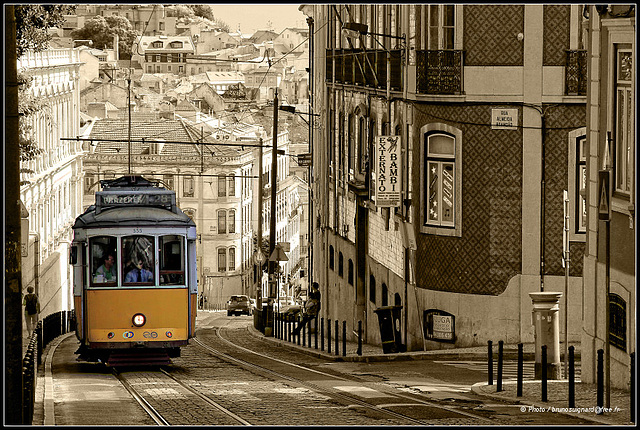

Tram 28 Lisboa
Details et en Grand en passant la souris
Le Tramway nº 28 est la ligne la plus pittoresque du réseau de Lisbonne. Elle part de la place Martim Moniz, passe par un labyrinthe de ruelles étroites et cachées, de côtes... Ce moyen de transport est devenu une véritable attraction touristique, pour le charme et la nostalgie qu'il dégage.
Vous pourrez vous arrêter à la Plaza de Graça et découvrir à pied le joli quartier de Mouraria. Pouquoi ne pas aller jusqu'au Mirador de Graça qui offre une belle vue sur la ville. En continuant un peu le trajet du Tramway 28, vous passerez par le Panthéon Royal, l'Eglise Sant Vincente de Fora et le célèbre Marché de Ladra, Feria da Ladra. Il se tient tous les jours du mardi au samedi et est un des plus typiques de Lisbonne. Le Tramway continue enfin son trajet vers le Mirador das Portas do Sol, dans le quartier d'Alfama. C'est un des meilleurs points de vue sur le dédalle de ruelles de la vieille ville de Lisbonne.
Ville construite sur sept collines, le Mirador de Santa Luzia est un des mieux décorés avec ses mosaïques traditionnelles. Enfin, vous terminerez votre trajet par le Château de San Jorge, terminus de la ligne 28.
........................................................................... ♫♪ MARIZA :Maria Lisboa
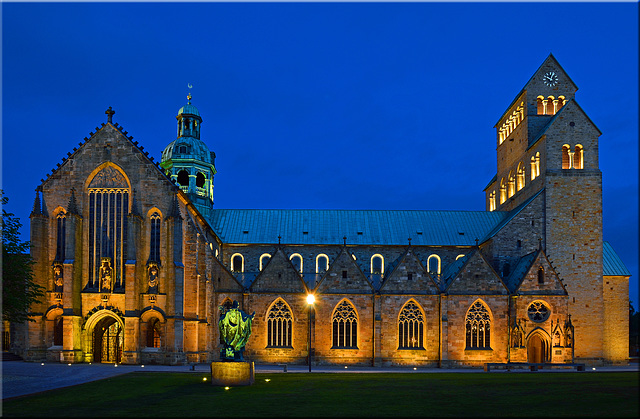
Dom St. Mariä Himmelfahrt
Gründungssage Hildesheim
Im Jahr 815 nahm Kaiser Ludwig der Fromme während einer Reise Quartier in einem Königshof in Aulica (Elze). Von dort brach er mit kleinem Gefolge zur Jagd auf. Plötzlich tauchte vor den Jägern ein weißer Hirsch auf. Ludwig gab seinem Pferd die Sporen und setzte ihm nach. Inmitten dichter Wälder ging es über Berg und Tal. Ein Flüsschen wurde gar überquert, dann brach das Pferd überanstrengt zusammen und der Hirsch entkam. Völlig erschöpft und nun mutterseelenallein stieß Ludwig in sein Jagdhorn, ohne ein rettendes Antwortsignal seiner Jagdgenossen zu vernehmen. Da nahm er schließlich sein Brustkreuz mit dem Heiligtum der Mutter Maria, das er ständig bei sich trug, hängte es an die Zweige eines Strauchs, kniete davor nieder, um inbrünstig zu beten. Ermattet schlief er daraufhin ein. Als er nach Stunden erwachte, sah er verwundert den Platz mit Schnee bedeckt, während sonst alles grünte. Sein Kreuz hing in den Zweigen eines blühenden Rosenstrauchs. Als er es an sich nehmen wollte, wurde es mit aller Kraft festgehalten. Ein Wunder war geschehen. Da gelobte der Kaiser, an dieser Stelle eine Kapelle zu errichten. Gleich darauf hörte er Jagdhörner, sein Gefolge fand ihn schließlich und hörte aus des Kaisers Munde erstaunt von dem Rosenwunder. Ludwig ließ schließlich an jener Stelle ein Kirchlein errichten. Daraus entstand der Hildesheimer Mariendom, an dessen Mauern noch immer der Rosenstrauch wächst.
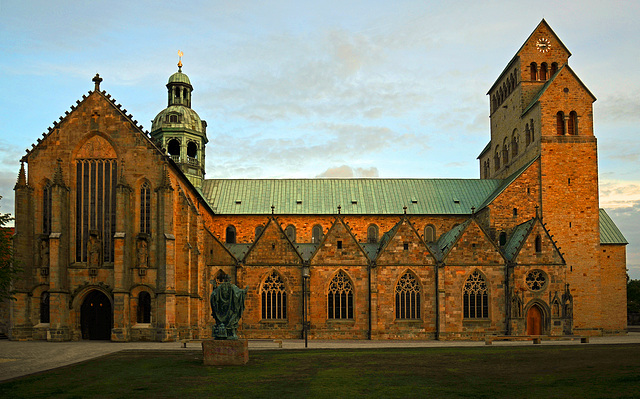
Im Abendrot
... präsentiert sich der Hildesheimer Dom in einem ganz besonderen Licht.
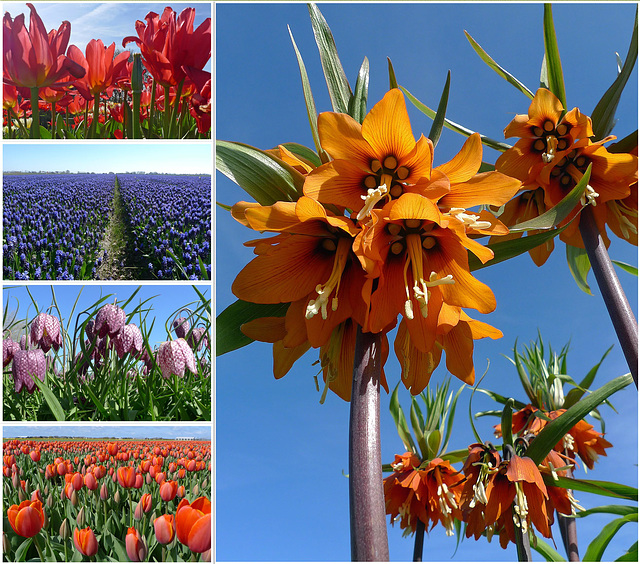
Nederland - Noord-Holland, bloeiende bollen
The so called ‘Top of North Holland (Kop van Noord-Holland) offers one of the largest areas of bulb flower fields in the world. During spring (mid April till mid May) tulips, narcissus, hyacinths and other bulbs show their amazing colours in blooming bulb fields.
This bulb growing area developed after World War I around the town of Anna Paulowna and after World War II there was even a huge expansion.
Main picture: Fritillaries imperialis/crown imperial/keizerskroon
Small pictures: tulips, hyachint field, Fritillaria meleagris/snake's head/kievietsbloem, tulip field
PiP: blooming bulbflower fields
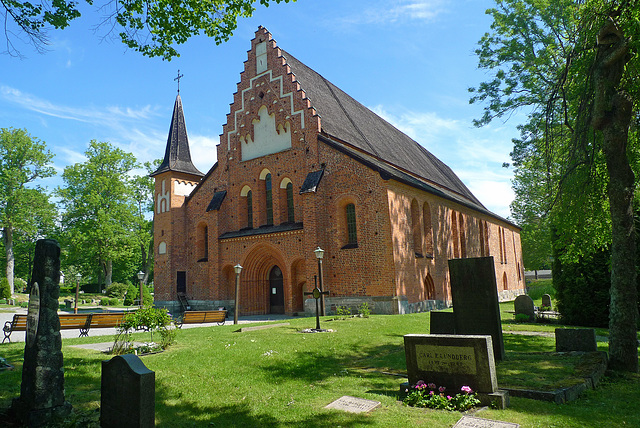
Sweden - Sigtuna, Mariakyrkan
The construction of the ‘Mariakyrkan’ (St. Mary’s Church) started in the year of 1230 and was inaugurated in 1247. It is the oldest stone building in the area around Lake Mälaren. The church was built even before Stockholm was founded. The beautiful brick exterior shows a style between Romanesque and Gothic.
The church originally belonged to a Dominican monastery, but was demolished after the Reformation in 1530 and the Mariakyrkan became the local parish church. The church is the only medieval church in Sigtuna to have survived the Reformation.
The interior houses a number of fine medieval artifacts and wall paintings. The altarpiece has sculpted figures of the 14th century (PiP 1) and beneath the beautiful stained-glass window is a magnificent altarpiece, which probably was made in Sigtuna (PiP 2).
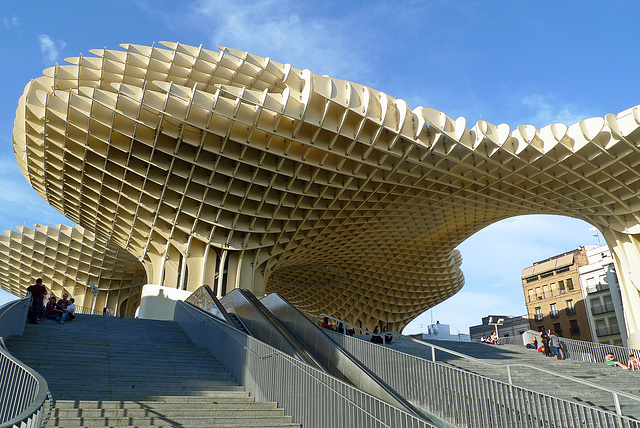
Spain - Sevilla, Metropol Parasol
Metropol Parasol is a wooden structure, designed by the German architect Jürgen Mayer-Hermann and was completed in April 2011. The innovative structure is made from bonded timber with a polyurethane coating.
With its dimensions of 150 by 70 metres and a height of 26 metres it is considered being the largest timber-framed structure in the world. The Metropol Parasol is popularly known as ‘Las Setas’ (the Mushrooms).
The structure consists of six parasols in the form of giant mushrooms. The panoramic terraces and a short rooftop promenade offer visitors one of the best views of Sevilla.
Jump to top
RSS feed- Latest favorites - Subscribe to the favorite docs of Leo W
- ipernity © 2007-2026
- Help & Contact
|
Club news
|
About ipernity
|
History |
ipernity Club & Prices |
Guide of good conduct
Donate | Group guidelines | Privacy policy | Terms of use | Statutes | In memoria -
Facebook
X
