

LaurieAnnie's photos

Statuette of Anhur in the Metropolitan Museum of A…
| |
|
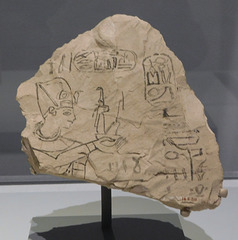
Ostracon Depicting Ramesses IX Offering in the Met…
| |
|
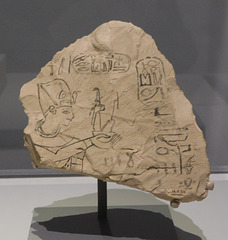
Ostracon Depicting Ramesses IX Offering in the Met…
| |
|

Fragment of a Protective Wand in the Metropolitan…
| |
|

Fragment of a Protective Wand in the Metropolitan…
| |
|

Fragment of a Protective Wand in the Metropolitan…
| |
|
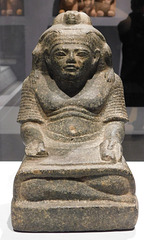
Statue of a Scribe with a Baboon in the Metropolit…
| |
|
Title: Statue of a scribe with a baboon
Period: New Kingdom, Ramesside Period
Date: ca. 1295–1070 BCE
Medium: Granodiorite
Dimensions: H. 22.3 × W. 13.2 × D. 15 cm, 5.4 kg (8 3/4 × 5 3/16 × 5 7/8 in., 12 lb.)
Credit Line: Rogers Fund, 1929
Object No.: 29.2.16
While Thoth’s ibis-headed form is often depicted writing with a pen and palette, his baboon form, which gained prominence in late Dynasty 18 and the Ramesside Period, is particularly closely associated with scribes. The motif of the baboon and scribe symbolizes divine protection and the god’s watchful eye over one’s work. Thoth also records the passage of time, and as such the baboon appears on water clocks and other measuring instruments.
See Also: Water clock decorated with a baboon
The Metropolitan Museum of Art, New York, Gift of J. Pierpont Morgan, 1917 (17.194.2341)
Figurine of a baboon on a basket and with a pillar (shebet offering, possibly a symbolic water clock)
The Metropolitan Museum of Art, New York, Rogers Fund, 1910 (10.176.45)
Figurine of a baboon
The Metropolitan Museum of Art, New York, Purchase, Edward S. Harkness Gift (26.7.874)
Text from: www.metmuseum.org/exhibitions/divine-egypt/exhibition-objects

Statue of a Scribe with a Baboon in the Metropolit…
| |
|
Title: Statue of a scribe with a baboon
Period: New Kingdom, Ramesside Period
Date: ca. 1295–1070 BCE
Medium: Granodiorite
Dimensions: H. 22.3 × W. 13.2 × D. 15 cm, 5.4 kg (8 3/4 × 5 3/16 × 5 7/8 in., 12 lb.)
Credit Line: Rogers Fund, 1929
Object No.: 29.2.16
While Thoth’s ibis-headed form is often depicted writing with a pen and palette, his baboon form, which gained prominence in late Dynasty 18 and the Ramesside Period, is particularly closely associated with scribes. The motif of the baboon and scribe symbolizes divine protection and the god’s watchful eye over one’s work. Thoth also records the passage of time, and as such the baboon appears on water clocks and other measuring instruments.
See Also: Water clock decorated with a baboon
The Metropolitan Museum of Art, New York, Gift of J. Pierpont Morgan, 1917 (17.194.2341)
Figurine of a baboon on a basket and with a pillar (shebet offering, possibly a symbolic water clock)
The Metropolitan Museum of Art, New York, Rogers Fund, 1910 (10.176.45)
Figurine of a baboon
The Metropolitan Museum of Art, New York, Purchase, Edward S. Harkness Gift (26.7.874)
Text from: www.metmuseum.org/exhibitions/divine-egypt/exhibition-objects

Stela of Amenemopet before the God Amun-Re in Diff…
| |
|

Stela of Amenemopet before the God Amun-Re in Diff…
| |
|

Stela of Amenemopet before the God Amun-Re in Diff…
| |
|
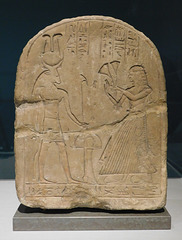
Stela with Bull-Headed Mnevis in the Metropolitan…
| |
|

Stela with Bull-Headed Mnevis in the Metropolitan…
| |
|

Stela with Bull-Headed Mnevis in the Metropolitan…
| |
|

Fragment of a Statue with Cartouches of the Full N…
| |
|

Fragment of a Statue with Cartouches of the Full N…
| |
|

Fragment of a Statue with Cartouches of the Full N…
| |
|

Magical Healing Stela with Horus the Child in the…
| |
|
