


New York, New York

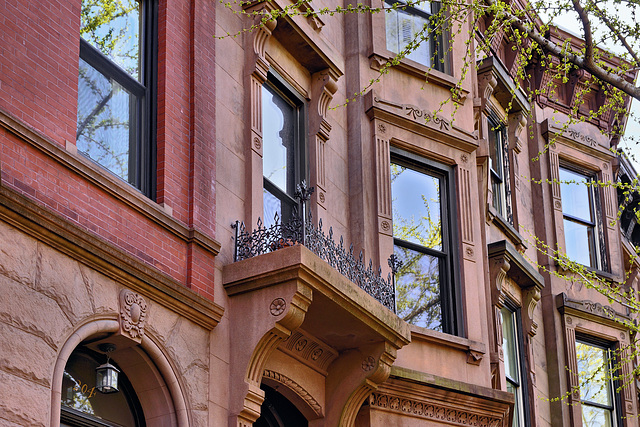

Berkeley Place – Near 7th Avenue, Brooklyn, New York
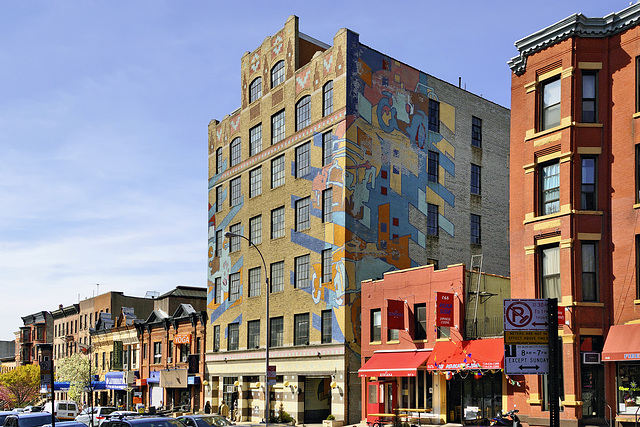
The Park Slope Garage Condominium – 841 Union Street, Brooklyn, New York
If you think that it costs a lot to park your car near where you live, consider that in July 2014 an unidentified buyer paid $80,000 for a mere 119 square feet, for a permanent garage parking spot at 841 Union Street in Park Slope. The address belongs to the 145-spot Garage Condominium, where four spots sold in 2013 for an average of $53,000. The mystery stall holder, who works in finance, bought a spot that had previously sold in 2003 for $32,000
The creator of the Garage Condominium, Howard Pronsky of Berman Realty, said that the most recent bidding wars began when it was announced that the 300-space Central Garage, located at 800 Union St., would soon be closing as part of plans to convert the building into a new 28-unit apartment complex. Pronsky said that since then patrons of the Central Garage, who have been renting spaces for $350 monthly, are now scrambling to find adequate alternative parking. "People come to inquire [from across the street] but we have no room. We have great demand and no supply, so the prices are going up," said Pronksy.
Pronky’s visionary Garage Condominium made national news back in the mid-80s when it first launched, causing double-takes with its eye-popping price tag of about $29,000 per space, but Pronsky has now seen a steady increase in sales prices this year with his three available spots fetching $50,000 in April, $62,000 in June, and July’s $80,000.
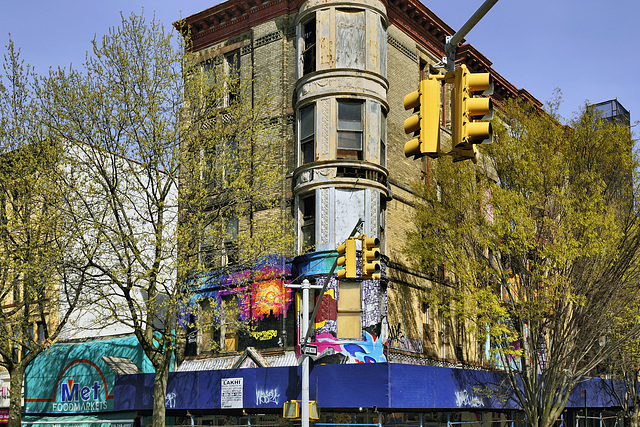
Luxury Condos Coming Soon – 7th Avenue, Brooklyn, New York
According to the New York Times (February 3, 2008), "At Seventh Avenue and Second Street, on a prime corner in the heart of Park Slope, stands an abandoned brownstone whose state of disrepair has been a source of local speculation for years. The peeling paint decorating the first story, on which mermaidlike women in rainbow-bright colors emerge from a yellow background, hints at the neighborhood’s vanishing bohemian past. But the building, at 187 Seventh Avenue, is bordered by a sidewalk shed, and windows visible overhead have been boarded up. The structure radiates a mysterious, haunted quality that encourages local residents to wonder why the place has fallen into such disrepair and what, if anything, is to come of the valuable property.
The owner, Dorothy Nash, a retired high school art teacher who still maintains a home in the neighborhood, used to live there with her family. Several decades ago, before Park Slope became fully gentrified, the building was home to tenants as well as several now-defunct businesses. On the Second Street side are three abandoned storefronts, one of which still bears a sign reading Baby Doll Boutique. It was there about a decade ago that Esther Nash, a daughter of the building’s owner, started a boutique when she was a student at Fashion Institute of Technology. Esther Nash went on to open a men’s boutique called Sugar Daddy next door. But it was the Landmark Pub, begun by Dorothy Nash about 30 years ago and operated until the late 1990s, that many longtime Park Slopers remember.
The bottom half of a sign from the long-shuttered pub bears the words "Live Music Live, Finest Beer, Wine and Liquors," though former patrons recall room-temperature beer that in their opinion probably came from a Key Food down the block. "There were very few bars in the area even in the ’80s," recalled Ryan Connor, 28, who grew up just a few blocks away and went to school with Esther Nash. "It wasn’t uncommon to see broken doll heads strewn across tables, or a homegrown folk singer playing to an empty bar, playing to the doll heads." According to Dorothy Nash, there was a reason the pub was littered with toys and doll heads. She was a divorced mother of two small children, and the playthings were both necessary diversions and a source of inspiration for her patrons. "When I opened the bar, I had two little girls," Ms. Nash said, "and I had to entertain them during the day while I was preparing for the evening. Then, when I took them home, the toys remained on the tables, and the people would come in and pick them up and they would play with them."
The Nashes say they are seeking investors to transform the building into an arts and media center, with galleries and showrooms for emerging designers. Whatever becomes of the property, Mr. Connor, for one, hopes that it will retain some vestige of its former self. "It’s a salute to the Park Slope of yesteryear," he said, adding, "It should be landmarked, as we probably won’t see the likes of it again."
Now fast forward to June 10, 2014. In the words of a local reporter, "A dilapidated, graffiti-covered Park Slope building is taking steps to be reborn as ultra-luxurious, massive full-floor residences – just like a building a block away where four-bedroom units were recently snatched up for more than $2.395 million apiece." Unfortunately, whatever the condos might look like on the inside, many of the decorative features (the scroll work ornamenting the stone turret) that gave the exterior of the original building its charm have disappeared from the renovated building. Just look at the developers’ promotional photo reproduced below:


Mr. Falafel and Mr. Pharaoh – 7th Avenue, Brooklyn, New York
The owner of the Mr. Falafel restaurant posing in front of his establishment.
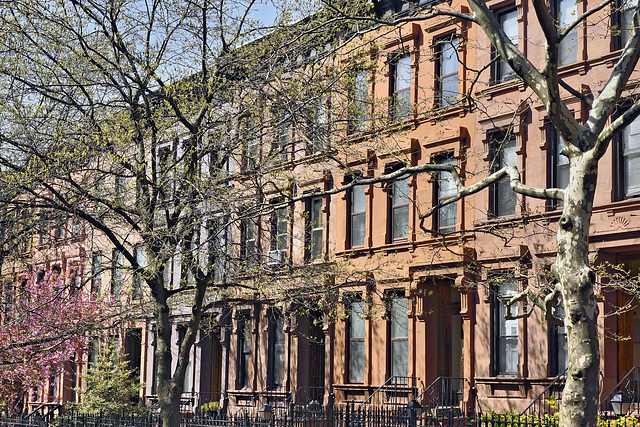
Park Slope Brownstones – 9th Street, Brooklyn, New York
Park Slope is a neighborhood in northwest Brooklyn, New York City. The neighbourhood takes its name from its location on the western slope of nearby Prospect Park. Fifth Avenue and Seventh Avenue are its primary commercial streets, while its east-west side streets are lined with brownstones and apartment buildings.
In the 1850s, a local lawyer and railroad developer named Edwin Clarke Litchfield (1815–1885) purchased large tracts of what was then farmland. Through the American Civil War era, he sold off much of his land to residential developers. With the opening of the Brooklyn Bridge in 1883, Park Slope continued to boom and subsequent brick and brownstone structures pushed the neighbourhood’s borders farther. The 1890 census showed Park Slope to be the richest community in the United States.
By the 1950s, many of the wealthy and middle-class families fled for the suburban life and Park Slope became a rougher, more working-class neighborhood. It was mostly Italian and Irish in the 1950s and 1960s, though this changed in the 1960s and 1970s as the black and Latino population of the Slope increased and many of the Italian and Irish population began to relocate. This white flight was epitomized in the 1970 film The Landlord. Gentrification began to take off throughout the 1970s. The area saw an influx of young professional couples. Gentrification accelerated during the 1980s and 1990s as working-class families were generally replaced by upper-middle-class people being priced out of Manhattan or Brooklyn Heights.
Park Slope is now considered one of New York City’s most desirable neighbourhoods. In 2010, it was ranked number 1 in New York by New York magazine. Park Slope features historic buildings, top-rated restaurants, bars, and shops, as well as proximity to Prospect Park, the Brooklyn Academy of Music, the Brooklyn Botanic Garden, the Brooklyn Museum, the Brooklyn Conservatory of Music, and the Central Library as well as the Park Slope branch of the Brooklyn Public Library system.
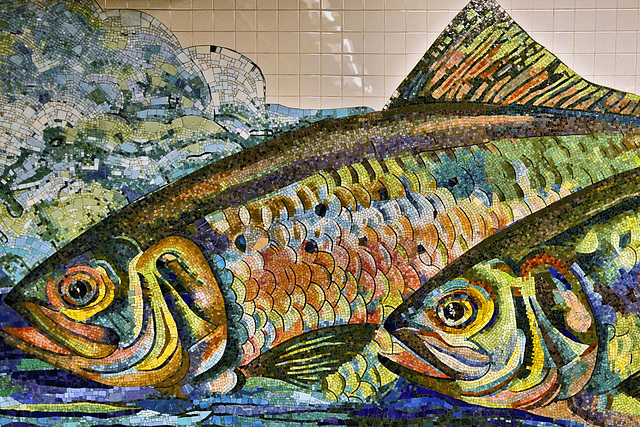
The Fish on the Subway Wall – Delancey Street Station, Lower East Side, New York, New York
The Delancey Street subway station houses two large wall-sized pieces of artwork, one on each wall where the staircase exits and transfers are located. Both glass mosaics are the work of artist Ming Fay. The artwork on the downtown side is titled Shad Crossing and details two giant shad fish swimming, along with another wall mosaic of blue waters. In the late 19th century, shad were found along the Hudson River when new immigrants came to New York, many of whom settled on the Lower East Side.
Ming Fay is a Shanghai-born and New York City-based sculptor and professor. His work focuses on the concept of the garden as a symbol of utopia and the relationship between man and nature. Drawing upon an extensive knowledge of plants both Eastern and Western, real and mythical, Fay creates his own calligraphic floating forest of reeds, branches and surreal species. Ming Fay was born in Shanghai in 1943 and raised in Hong Kong. His mother was an artist, and his father worked in the then-burgeoning Hong Kong movie industry as an art director. Both were students of Shanghai-based sculptor Zhang Chongren, who had studied Western sculpture in Europe. Ming came to the United States in 1961 to study at the Columbus College of Art and Design and later at the Kansas City Institute of Art. Subsequently, Fay earned a graduate degree in sculpture at the University of California, Santa Barbara in 1975. He currently teaches sculpture at William Paterson University in Wayne, New Jersey.
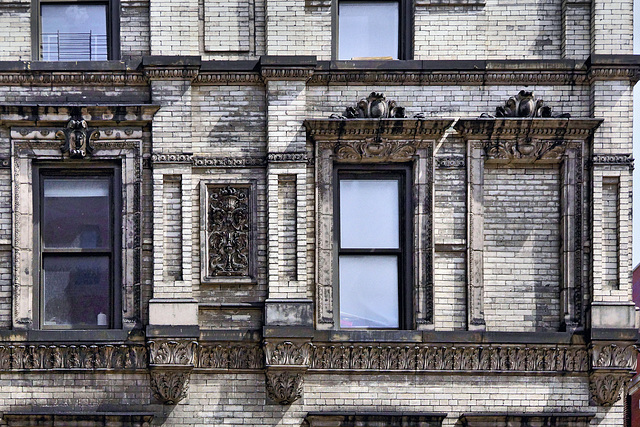
The Odd One Out – Orchard Street, Lower East Side, New York, New York
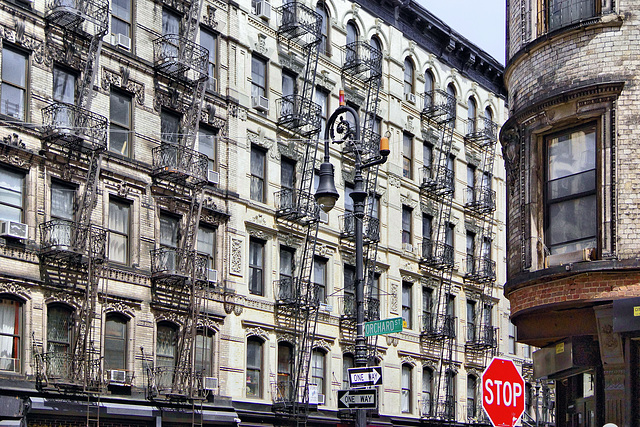
One Way; Full Stop – Orchard and Broome Streets, Lower East Side, New York, New York
Jump to top
RSS feed- Latest items - Subscribe to the latest items added to this album
- ipernity © 2007-2026
- Help & Contact
|
Club news
|
About ipernity
|
History |
ipernity Club & Prices |
Guide of good conduct
Donate | Group guidelines | Privacy policy | Terms of use | Statutes | In memoria -
Facebook
X
