


2011

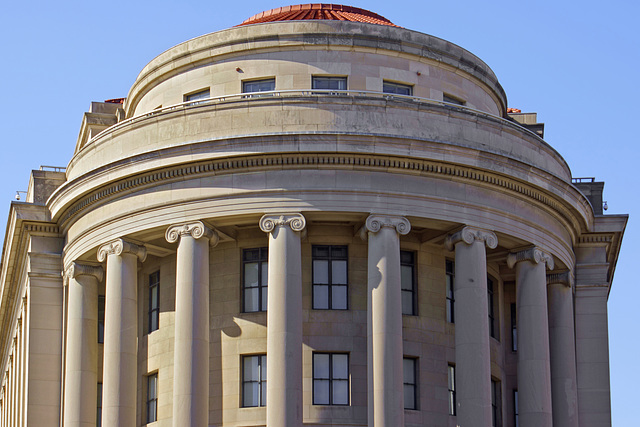

The Federal Trade Commission Building – Pennsylvania Avenue, Washington, D.C.
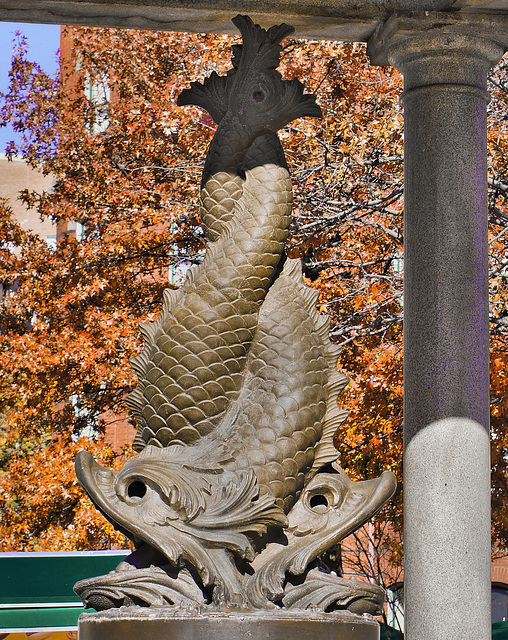
The Temperance Fountain – Indiana Avenue and 7th Street N.W. – Washington, D.C.
The Temperance Fountain stands at the corner of Seventh Street and Indiana Avenue NW, near the National Archives in Washington, D.C.
It was donated to the city in 1882 by Henry D. Cogswell, an eccentric dentist from San Francisco, California, who had made a fortune in real estate and mining stocks. He used his personal wealth to donate somewhere between 15 and 30 statues dedicated to the temperance movement. Only two of these statues stand today – one in D.C. and one in New York City.
The statue resembles a square temple that is open on all sides. It is held up by four columns on the corners. In the middle is an "altar" with two entwined dolphins (which look more like evil fish sent by Poseidon to swallow Odysseus) that have their tails in the air. On top of the temple sits a life-size heron. What any of this has to do with temperance is anyone’s guess. However, the words "Faith," "Hope," "Charity" and "Temperance" appear on the sides of the temple, which does give some indication of the statue’s meaning. Originally, visitors were supposed to freely drink ice water flowing from the dolphins’ snouts with a brass cup attached to the fountain. The overflow was collected by a trough for horses. But the city tired of having to replenish the ice in a reservoir underneath the base and disconnected the supply pipes.
The fountain is also the source of the name for the Cogswell Society, a small group of Washington professionals who have taken it upon themselves to take care of the fountain. The society, which meets monthly at various bars around the Washington, D.C. area, is dedicated to "the study of man’s excesses and the lack of temperance in past and present cultures." Members utter the society’s oath, "To temperance; I’ll drink to that," standing on one leg, in imitation of the heron that tops the temperance advocate’s fanciful fountain.
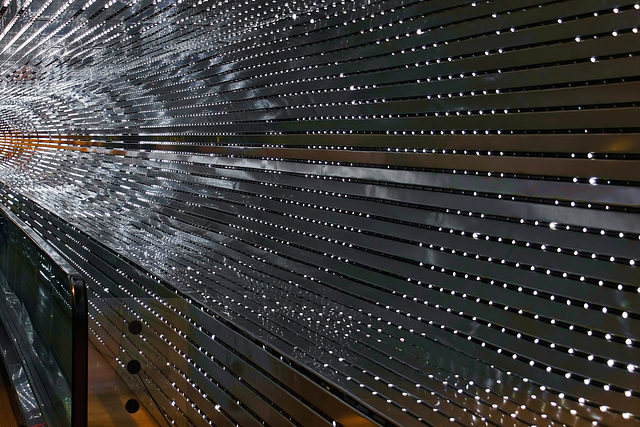
The Walkway to the East Wing – National Gallery of Art, Washington, D.C.
The moving walkway between the East and West Buildings has taken on a new dimension wih the addition of a site-specific LED sculpture by artist Leo Villareal. About 41000 LEDs were inserted in the vaulted architecture of the walkway. The artist then programmed the electronic circuitry to form kinetic configurations of white light conveying associations ranging from artificial life to organic form. The programming both instructs the lights and allows for an element of chance. While it is possible that a pattern will repeat during a viewer’s experience, it is unlikely.
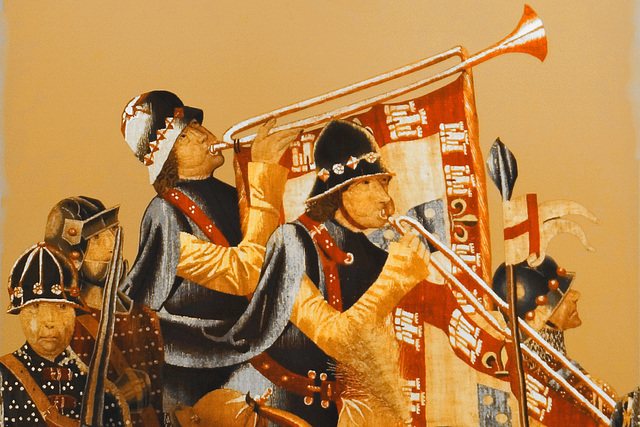
"The Invention of Glory" – Gift Shop, National Gallery of Art, Washington, D.C.
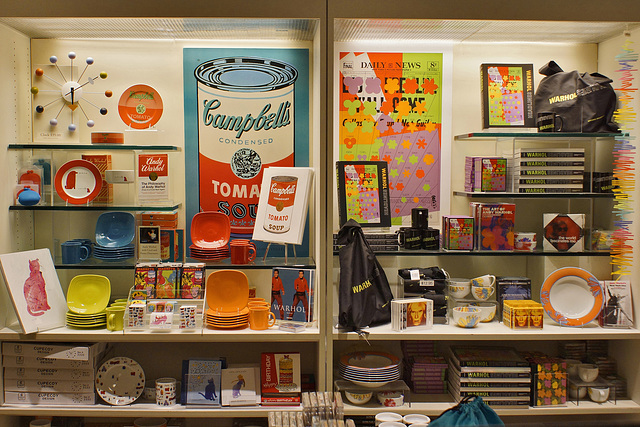
Warholiana – Gift Shop, National Gallery of Art, Washington, D.C.
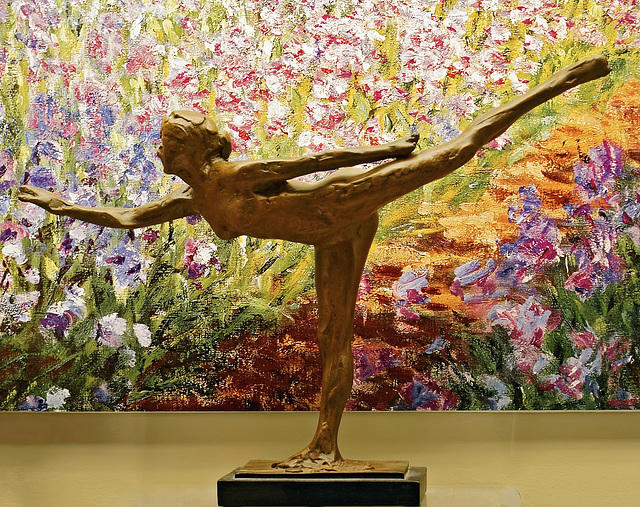
Impressions of the Gift Shop – National Gallery of Art, Washington, D.C.
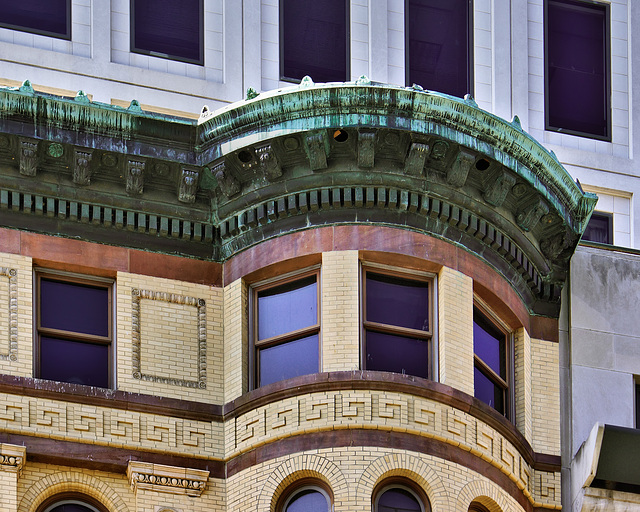
601 Pennsylvania Avenue N.W. – Washington, D.C.
On this site in 1814, "The Star-Spangled Banner" was first sung in public. The most famous of several hotels on this block was Brown’s Marble Hotel (1851-1935), an innovative Greek revival landmark, where John Tyler and Abraham Lincoln were guests. In the 1830s, Beverly Snow, a free black, operated the Epicurean restaurant on the corner of 6th Street. Designed by James G. Hill, the Atlantic Coast Line (railroad) Building on the northwest corner of 6th Street and Pennsylvania Avenue NW was constructed in 1893. It was dismantled brick by brick in 1985, and the façade was reconstructed as part of the modern and larger office building that appears to surround it.
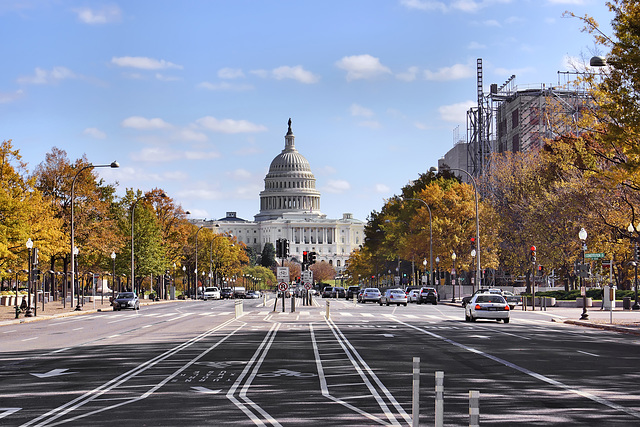
Looking Down Pennsylvania Avenue – Washington, D.C.
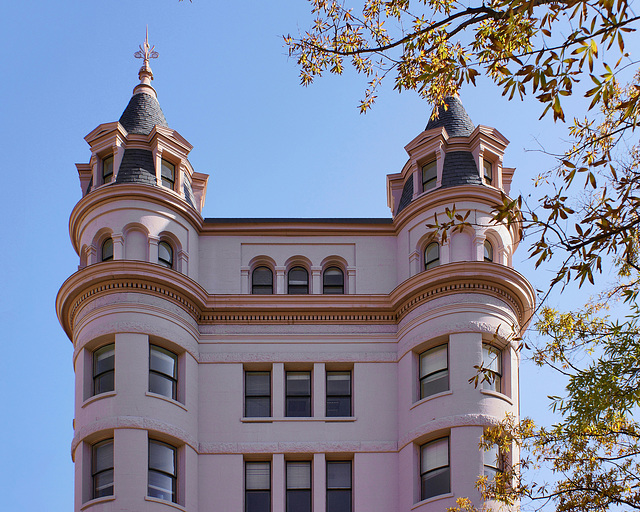
They Don't Build Hotels Like They Used To – 633 Pennsylvania Avenue N.W., Washington, D.C.
Built as the St. Marc Hotel in 1860. In 1887 the Central National Bank assumed ownership of the hotel and commissioned architect Alfred B. Mullett to design the addition on the west facade. The addition included the two corner towers. The St. Marc Hotel was established in 1855 by John H. Semmes. It became one of the foremost hotels in Washington. Under Semmes’ proprietorship, rooms at the St. Marc rented for $1-$2 per night for a single room and $2-$3 for a double room. H. C. Bowers secured a lease from Semmes in 1879 after which he completely remodeled and refurnished the building. John F. Fitzgerald became the proprietor of the hotel in 1885 and remained with it until the building was purchased by The Central National Bank in 1887. A commercial guide to Washington published in 1887 noted the St. Marc’s "... elegant apportionments, fine cuisine, and unsurpassed location, being in close proximity to several lines of streetcars and the center of the business part of the city."
After weathering the long decline of downtown Washington, the building was renovated in 1984 by Sears, Roebuck, and Co., as headquarters for its Sears World Trade arm. Sears added a story on top of the building but otherwise generally restored the exterior to its original appearance, with the exception that they decided to paint the brownstone an odd mocha color that it still retains today. The exterior bearing walls of the building and the vertical circulation shaft are structurally sound, as are the basement and first floors. All upper floors have major structural damage. Wall, ceiling and floor finishes become progressively more deteriorated as one reaches the upper floors of the building.
Jump to top
RSS feed- Latest items - Subscribe to the latest items added to this album
- ipernity © 2007-2026
- Help & Contact
|
Club news
|
About ipernity
|
History |
ipernity Club & Prices |
Guide of good conduct
Donate | Group guidelines | Privacy policy | Terms of use | Statutes | In memoria -
Facebook
X
