


Andalucia


27 Mar 2016
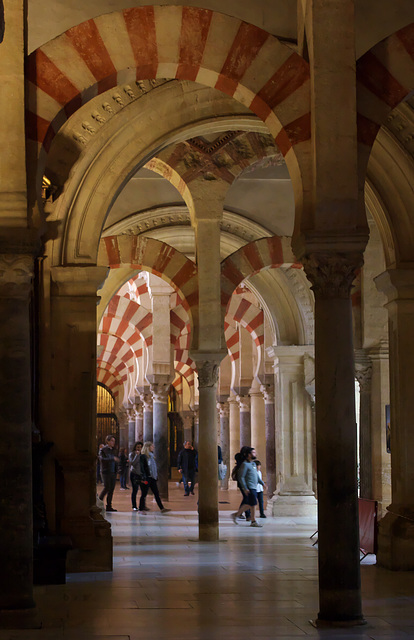
Archway arcades in Mezquita de Córdoba
The site was originally a small temple of Christian Visigoth origin. When Muslims conquered Spain in 711, the church was first divided into Muslim and Christian halves. This sharing arrangement of the site lasted until 784, when the Christian half was purchased by the Emir 'Abd al-Rahman I, who then proceeded to demolish the original structure and build the grand mosque of Cordoba on its ground. Córdoba returned to Christian rule in 1236 during the Reconquista, and the building was converted to a Roman Catholic church, culminating in the insertion of a Renaissance cathedral nave in the 16th century.
The structure is regarded as one of the most accomplished monuments of Moorish architecture. It is a World Heritage site and regarded (following a recent court case) as a wonder of architecture that 'belongs' to everyone in the world.
27 Mar 2016
1 favorite
2 comments
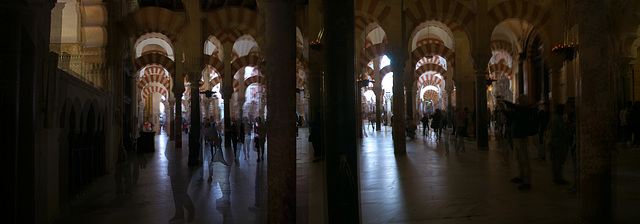
Inside Mezquita de Córdoba
Photo-montage using 4 frames. Must be viewed 'on black'.
The site was originally a small temple of Christian Visigoth origin. When Muslims conquered Spain in 711, the church was first divided into Muslim and Christian halves. This sharing arrangement of the site lasted until 784, when the Christian half was purchased by the Emir 'Abd al-Rahman I, who then proceeded to demolish the original structure and build the grand mosque of Cordoba on its ground. Córdoba returned to Christian rule in 1236 during the Reconquista, and the building was converted to a Roman Catholic church, culminating in the insertion of a Renaissance cathedral nave in the 16th century.
The structure is regarded as one of the most accomplished monuments of Moorish architecture. It is a World Heritage site and regarded (following a recent court case) as a wonder of architecture that 'belongs' to everyone in the world.

27 Mar 2016
Saint Teresa of Ávila at Córdoba Cathedral
An alcove statue of St. Theresa of Avila in the cathedral part of the Mosque–Cathedral of Córdoba.
27 Mar 2016
1 favorite
1 comment
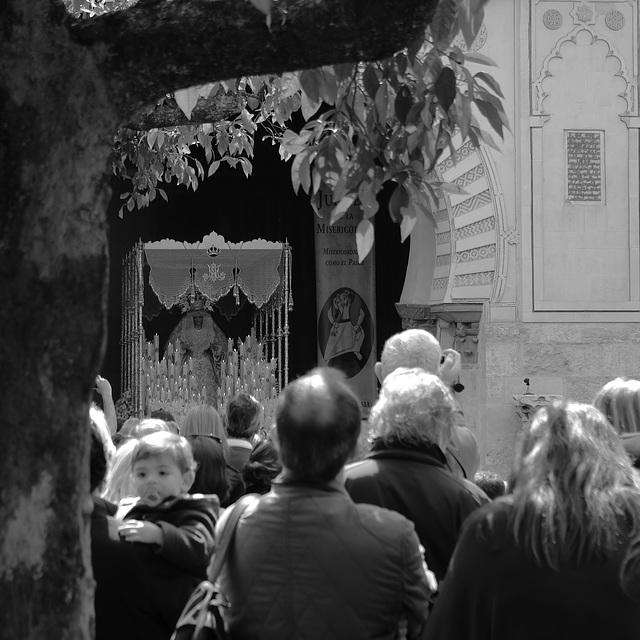
Easter Week procession at Cόrdoba
An Easter week procession emerges from the Mosque–Cathedral of Córdoba.
27 Mar 2016
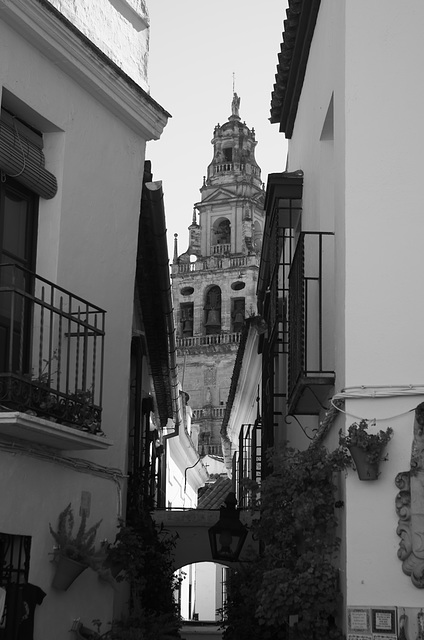
The Cathedral tower at Córdoba
Picture taken from Calleja de las Flores, Córdoba, Andalucia.
27 Mar 2016
1 favorite
1 comment
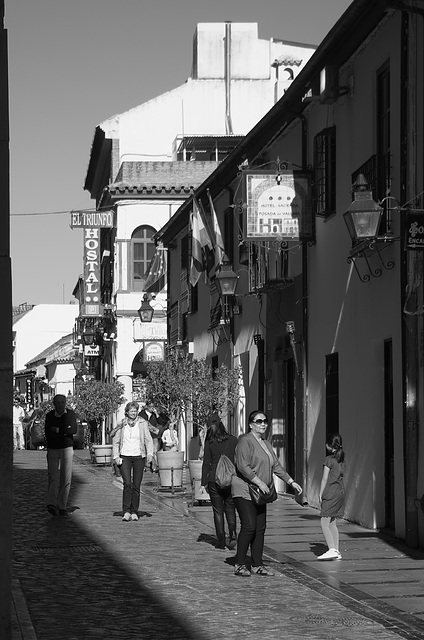
Street scene in Córdoba
Calle Cardenal Gonzalez in Córdoba.
27 Mar 2016
1 comment
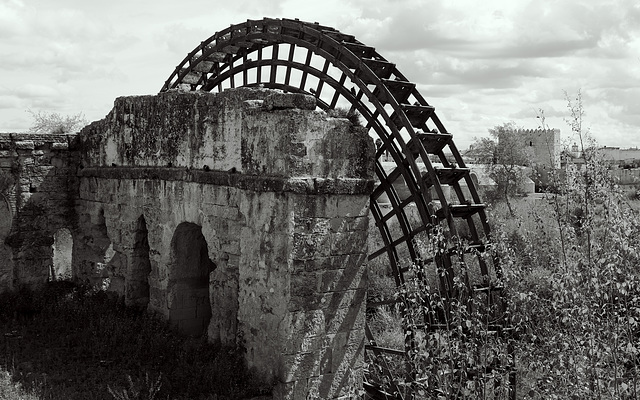
Molino de la Albolafia at Cόrdoba
The Guadalquivir river-bed is wide enough for small islands which today are only inhabited by birds. Long ago there used to be flour mills, of which some remains can still be seen to this day. The one near the north river bank was called Molino de la Albolafia. It was named after Abu-l-Afiya and the waterwheel (of which the original has been replaced with a replica) has appeared on Cordoban seals and other city emblems since the 13th century. It was actually built by the Romans and has also been identified as the site for an old Almohad Palace.
27 Mar 2016
2 favorites
1 comment
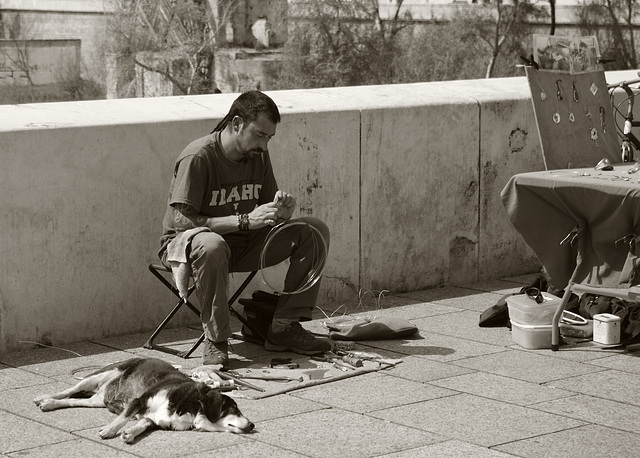
Metalworker with dog at Córdoba
On the Roman Bridge at Córdoba, which spans the river Guadalquivir.
27 Mar 2016
2 favorites
1 comment
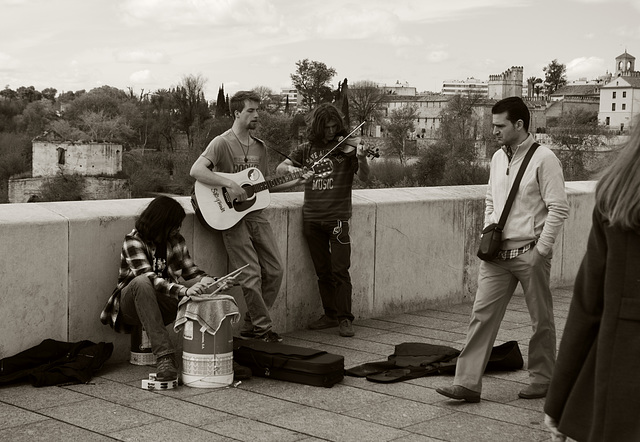
Musicians on the Roman Bridge at Córdoba.
"We passed by this music over the waters" - to seriously mis-quote Shakespeare.
On the Roman Bridge at Córdoba, which spans the river Guadalquivir.
Jump to top
RSS feed- Latest items - Subscribe to the latest items added to this album
- ipernity © 2007-2026
- Help & Contact
|
Club news
|
About ipernity
|
History |
ipernity Club & Prices |
Guide of good conduct
Donate | Group guidelines | Privacy policy | Terms of use | Statutes | In memoria -
Facebook
X
