


Indien 2014

Folder: Indien 2014
Höhlen von Ajanta
| |
|
|
|
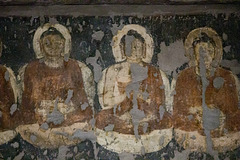
The Ajanta Caves are approximately 30 rock-cut Buddhist cave monuments which date from the 2nd century BCE to about 480 CE in Aurangabad district of Maharashtra state of India.[1][note 1] The caves include paintings and rock-cut sculptures described as among the finest surviving examples of ancient Indian art, particularly expressive paintings that present emotions through gesture, pose and form.[3][4][5]
They are universally regarded as masterpieces of Buddhist religious art.[6] The caves were built in two phases, the first starting around the 2nd century BCE and the second occurring from 400 to 650 CE, according to older accounts, or in a brief period of 460–480 CE according to later scholarship.[7] The site is a protected monument in the care of the Archaeological Survey of India,[8] and since 1983, the Ajanta Caves have been a UNESCO World Heritage Site.
en.wikipedia.org/wiki/Ajanta_Caves
Höhlen von Ajanta
| |
|
|
|
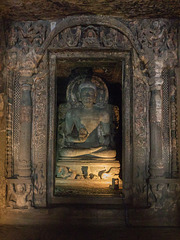
The Ajanta Caves are approximately 30 rock-cut Buddhist cave monuments which date from the 2nd century BCE to about 480 CE in Aurangabad district of Maharashtra state of India.[1][note 1] The caves include paintings and rock-cut sculptures described as among the finest surviving examples of ancient Indian art, particularly expressive paintings that present emotions through gesture, pose and form.[3][4][5]
They are universally regarded as masterpieces of Buddhist religious art.[6] The caves were built in two phases, the first starting around the 2nd century BCE and the second occurring from 400 to 650 CE, according to older accounts, or in a brief period of 460–480 CE according to later scholarship.[7] The site is a protected monument in the care of the Archaeological Survey of India,[8] and since 1983, the Ajanta Caves have been a UNESCO World Heritage Site.
en.wikipedia.org/wiki/Ajanta_Caves
Höhlen von Ajanta
| |
|
|
|
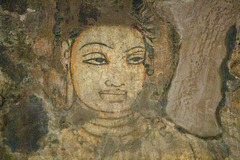
The Ajanta Caves are approximately 30 rock-cut Buddhist cave monuments which date from the 2nd century BCE to about 480 CE in Aurangabad district of Maharashtra state of India.[1][note 1] The caves include paintings and rock-cut sculptures described as among the finest surviving examples of ancient Indian art, particularly expressive paintings that present emotions through gesture, pose and form.[3][4][5]
They are universally regarded as masterpieces of Buddhist religious art.[6] The caves were built in two phases, the first starting around the 2nd century BCE and the second occurring from 400 to 650 CE, according to older accounts, or in a brief period of 460–480 CE according to later scholarship.[7] The site is a protected monument in the care of the Archaeological Survey of India,[8] and since 1983, the Ajanta Caves have been a UNESCO World Heritage Site.
en.wikipedia.org/wiki/Ajanta_Caves
Höhlen von Ajanta
| |
|
|
|
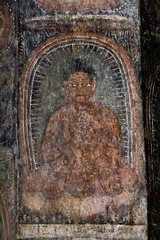
The Ajanta Caves are approximately 30 rock-cut Buddhist cave monuments which date from the 2nd century BCE to about 480 CE in Aurangabad district of Maharashtra state of India.[1][note 1] The caves include paintings and rock-cut sculptures described as among the finest surviving examples of ancient Indian art, particularly expressive paintings that present emotions through gesture, pose and form.[3][4][5]
They are universally regarded as masterpieces of Buddhist religious art.[6] The caves were built in two phases, the first starting around the 2nd century BCE and the second occurring from 400 to 650 CE, according to older accounts, or in a brief period of 460–480 CE according to later scholarship.[7] The site is a protected monument in the care of the Archaeological Survey of India,[8] and since 1983, the Ajanta Caves have been a UNESCO World Heritage Site.
en.wikipedia.org/wiki/Ajanta_Caves
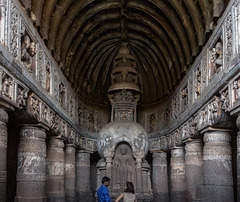
Höhlen von Ajanta
| |
|
|
The Ajanta Caves are approximately 30 rock-cut Buddhist cave monuments which date from the 2nd century BCE to about 480 CE in Aurangabad district of Maharashtra state of India.[1][note 1] The caves include paintings and rock-cut sculptures described as among the finest surviving examples of ancient Indian art, particularly expressive paintings that present emotions through gesture, pose and form.[3][4][5]
They are universally regarded as masterpieces of Buddhist religious art.[6] The caves were built in two phases, the first starting around the 2nd century BCE and the second occurring from 400 to 650 CE, according to older accounts, or in a brief period of 460–480 CE according to later scholarship.[7] The site is a protected monument in the care of the Archaeological Survey of India,[8] and since 1983, the Ajanta Caves have been a UNESCO World Heritage Site.
en.wikipedia.org/wiki/Ajanta_Caves
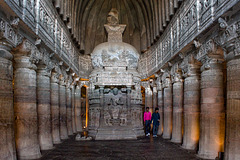
Höhlen von Ajanta
| |
|
|
|
The Ajanta Caves are approximately 30 rock-cut Buddhist cave monuments which date from the 2nd century BCE to about 480 CE in Aurangabad district of Maharashtra state of India.[1][note 1] The caves include paintings and rock-cut sculptures described as among the finest surviving examples of ancient Indian art, particularly expressive paintings that present emotions through gesture, pose and form.[3][4][5]
They are universally regarded as masterpieces of Buddhist religious art.[6] The caves were built in two phases, the first starting around the 2nd century BCE and the second occurring from 400 to 650 CE, according to older accounts, or in a brief period of 460–480 CE according to later scholarship.[7] The site is a protected monument in the care of the Archaeological Survey of India,[8] and since 1983, the Ajanta Caves have been a UNESCO World Heritage Site.
en.wikipedia.org/wiki/Ajanta_Caves
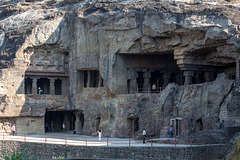
Ellora
| |
|
|
|
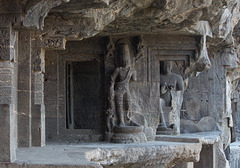
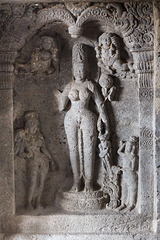
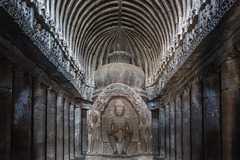
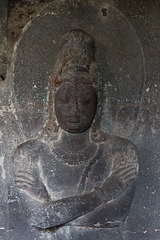
Ellora (\e-ˈlȯr-ə\, IAST: Vērūḷ) (Marathi: वेरूळ) is a UNESCO World Heritage Site located in the Aurangabad district of Maharashtra, India. It is one of the largest rock-cut Hindu temple cave complexes in the world, featuring Hinduism in particular and few Buddhist and Jain monuments with Artwork dating from the 600–1000 CE period.[1][2] Cave 16 features the largest single monolithic rock excavation in the world, the Kailash temple, a chariot shaped monument dedicated to Lord Shiva. The Kailash temple excavation also features sculptures depicting the gods, goddesses found in Hinduism as well as relief panels summarizing the two major Hindu Epics.[3][4][5] Wikipedia.
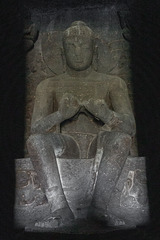
Ellora
| |
|
|
Ellora (\e-ˈlȯr-ə\, IAST: Vērūḷ) (Marathi: वेरूळ) is a UNESCO World Heritage Site located in the Aurangabad district of Maharashtra, India. It is one of the largest rock-cut Hindu temple cave complexes in the world, featuring Hinduism in particular and few Buddhist and Jain monuments with Artwork dating from the 600–1000 CE period.[1][2] Cave 16 features the largest single monolithic rock excavation in the world, the Kailash temple, a chariot shaped monument dedicated to Lord Shiva. The Kailash temple excavation also features sculptures depicting the gods, goddesses found in Hinduism as well as relief panels summarizing the two major Hindu Epics.[3][4][5] Wikipedia.
Ellora
| |
|
|
Ellora (\e-ˈlȯr-ə\, IAST: Vērūḷ) (Marathi: वेरूळ) is a UNESCO World Heritage Site located in the Aurangabad district of Maharashtra, India. It is one of the largest rock-cut Hindu temple cave complexes in the world, featuring Hinduism in particular and few Buddhist and Jain monuments with Artwork dating from the 600–1000 CE period.[1][2] Cave 16 features the largest single monolithic rock excavation in the world, the Kailash temple, a chariot shaped monument dedicated to Lord Shiva. The Kailash temple excavation also features sculptures depicting the gods, goddesses found in Hinduism as well as relief panels summarizing the two major Hindu Epics.[3][4][5] Wikipedia.
Ellora
| |
|
|
Ellora (\e-ˈlȯr-ə\, IAST: Vērūḷ) (Marathi: वेरूळ) is a UNESCO World Heritage Site located in the Aurangabad district of Maharashtra, India. It is one of the largest rock-cut Hindu temple cave complexes in the world, featuring Hinduism in particular and few Buddhist and Jain monuments with Artwork dating from the 600–1000 CE period.[1][2] Cave 16 features the largest single monolithic rock excavation in the world, the Kailash temple, a chariot shaped monument dedicated to Lord Shiva. The Kailash temple excavation also features sculptures depicting the gods, goddesses found in Hinduism as well as relief panels summarizing the two major Hindu Epics.[3][4][5] Wikipedia.
Ellora
| |
|
|
|
Ellora (\e-ˈlȯr-ə\, IAST: Vērūḷ) (Marathi: वेरूळ) is a UNESCO World Heritage Site located in the Aurangabad district of Maharashtra, India. It is one of the largest rock-cut Hindu temple cave complexes in the world, featuring Hinduism in particular and few Buddhist and Jain monuments with Artwork dating from the 600–1000 CE period.[1][2] Cave 16 features the largest single monolithic rock excavation in the world, the Kailash temple, a chariot shaped monument dedicated to Lord Shiva. The Kailash temple excavation also features sculptures depicting the gods, goddesses found in Hinduism as well as relief panels summarizing the two major Hindu Epics.[3][4][5] Wikipedia.
Ellora
| |
|
|
Ellora (\e-ˈlȯr-ə\, IAST: Vērūḷ) (Marathi: वेरूळ) is a UNESCO World Heritage Site located in the Aurangabad district of Maharashtra, India. It is one of the largest rock-cut Hindu temple cave complexes in the world, featuring Hinduism in particular and few Buddhist and Jain monuments with Artwork dating from the 600–1000 CE period.[1][2] Cave 16 features the largest single monolithic rock excavation in the world, the Kailash temple, a chariot shaped monument dedicated to Lord Shiva. The Kailash temple excavation also features sculptures depicting the gods, goddesses found in Hinduism as well as relief panels summarizing the two major Hindu Epics.[3][4][5] Wikipedia.
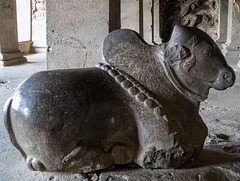
Ellora
| |
|
|
Ellora (\e-ˈlȯr-ə\, IAST: Vērūḷ) (Marathi: वेरूळ) is a UNESCO World Heritage Site located in the Aurangabad district of Maharashtra, India. It is one of the largest rock-cut Hindu temple cave complexes in the world, featuring Hinduism in particular and few Buddhist and Jain monuments with Artwork dating from the 600–1000 CE period.[1][2] Cave 16 features the largest single monolithic rock excavation in the world, the Kailash temple, a chariot shaped monument dedicated to Lord Shiva. The Kailash temple excavation also features sculptures depicting the gods, goddesses found in Hinduism as well as relief panels summarizing the two major Hindu Epics.[3][4][5] Wikipedia.
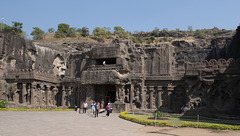
Ellora
| |
|
|
|
Ellora (\e-ˈlȯr-ə\, IAST: Vērūḷ) (Marathi: वेरूळ) is a UNESCO World Heritage Site located in the Aurangabad district of Maharashtra, India. It is one of the largest rock-cut Hindu temple cave complexes in the world, featuring Hinduism in particular and few Buddhist and Jain monuments with Artwork dating from the 600–1000 CE period.[1][2] Cave 16 features the largest single monolithic rock excavation in the world, the Kailash temple, a chariot shaped monument dedicated to Lord Shiva. The Kailash temple excavation also features sculptures depicting the gods, goddesses found in Hinduism as well as relief panels summarizing the two major Hindu Epics.[3][4][5] Wikipedia.
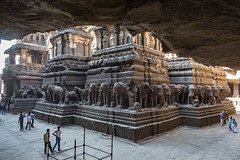
Ellora
| |
|
|
|
Ellora (\e-ˈlȯr-ə\, IAST: Vērūḷ) (Marathi: वेरूळ) is a UNESCO World Heritage Site located in the Aurangabad district of Maharashtra, India. It is one of the largest rock-cut Hindu temple cave complexes in the world, featuring Hinduism in particular and few Buddhist and Jain monuments with Artwork dating from the 600–1000 CE period.[1][2] Cave 16 features the largest single monolithic rock excavation in the world, the Kailash temple, a chariot shaped monument dedicated to Lord Shiva. The Kailash temple excavation also features sculptures depicting the gods, goddesses found in Hinduism as well as relief panels summarizing the two major Hindu Epics.[3][4][5] Wikipedia.

Alltagsszene in Aurangabad
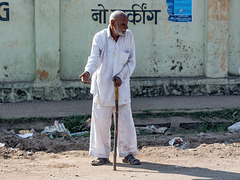
Alltagsszene in Aurangabad
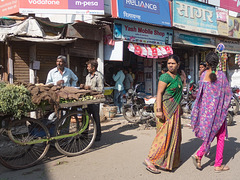
Alltagsszene in Aurangabad
Jump to top
RSS feed- Latest items - Subscribe to the latest items added to this album
- ipernity © 2007-2026
- Help & Contact
|
Club news
|
About ipernity
|
History |
ipernity Club & Prices |
Guide of good conduct
Donate | Group guidelines | Privacy policy | Terms of use | Statutes | In memoria -
Facebook
X
