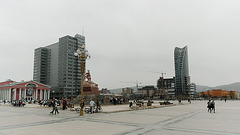
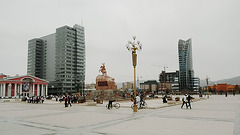
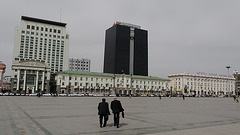
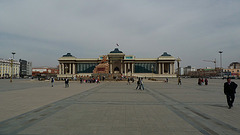
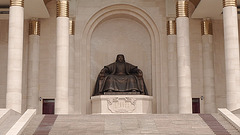
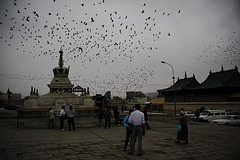
Ulan Bator, or Ulaanbaatar (Mongolian: Улаанбаатар), is the capital and largest city of Mongolia. The city is an independent municipality not part of any province, and its population as of 2008 is just over 1 million
Ulan Bator, or Ulaanbaatar (Mongolian: Улаанбаатар), is the capital and largest city of Mongolia. The city is an independent municipality not part of any province, and its population as of 2008 is just over 1 million
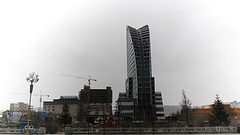
In the heart of Ulaanbaatar, Mongolia’s bustling capital, rises a gleaming symbol of modern ambition: the Blue Sky Tower. Completed in 2009, this 105-meter skyscraper quickly became the tallest building in the country, standing proudly against Mongolia’s vast blue skies—hence its name.
Designed to resemble a sail or a fin, the tower’s striking blue glass curtain wall earned it nicknames like “the meat cleaver” among locals—showing that even in its modern form, it’s a building with character. Its glass reflects the endless blue above, a tribute to Mongolia’s nickname, “the land of the eternal blue sky.”
Inside, the tower is a hive of activity—luxury apartments, a 200-room hotel with panoramic views, conference halls, and stylish restaurants. It’s a hub for business travelers and tourists alike, bringing a splash of cosmopolitan flair to the city’s traditional heart.
Did you know? The construction faced delays due to political unrest in 2008, but it was finally completed in 2009, symbolizing Mongolia’s rapid growth and openness to the world. Today, the Blue Sky Tower isn’t just a building—it’s a story of Mongolia’s leap into modernity, blending tradition with ambition under the endless blue sky.
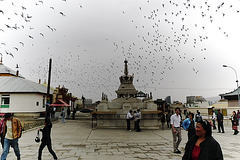
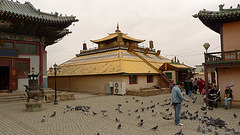
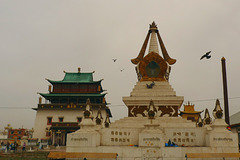
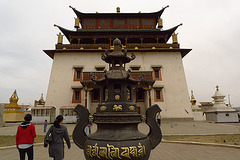
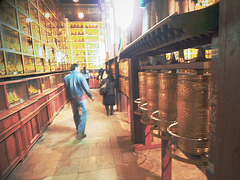
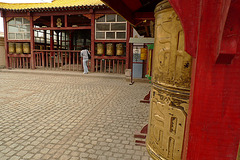
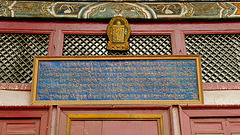
Gandan Monastery, also known as The Gandantegchinlen Khiid Monastery, is one of the most important attractions of Ulaanbaatar. Originally situated in the center of Ulaanbaatar, Gandan Monastery was moved to its present location by the 5th Bogd Jebzundamba in 1838. Over the next century the Monastery grew to include nine dastans or institutes, a library and housed a community of around 5000 monks. Gandan became an important center for learning and practicing Buddha's teachings, hot only in Mongolia but for the entire Mahayana Buddhist community.
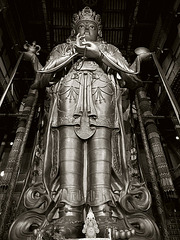
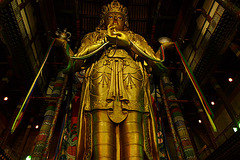
In the 1930s, the Communist government of Mongolia ordered the destruction of around 700 Buddhist monasteries, however, the Gandan Monastery was spared. In 1938, it was closed down only to be reopened in 1944. When the Communist goverenment lost power in 1990s, Gandan Monastery was thrown open for public worship. Today, the monastery houses around 150 monks and has 26 meter high 20 ton gilded statue of Migjid Janraisig (Avalokitesvara), decorated with jewels as its prime highlight.
Since 1992, the Supreme Leader of the Centre of All Mongolian Buddhists and Abbot of Gandantegchinlen Monastery has been Lama Gabju Choijamts Demberel.
The monastery is surrounded by the Gandan ger suburb.
The original statue, made of copper, was built after appeals to the Mongolian public; its intent was to restore the sight of Bogd Javzandamba (or the eighth Jebtsundamba, also known as Bogd Khan), who had claimed the title of Emperor of Mongolia. The statue was built by Bogd Javzandamba's principal minister, Chin Wan Khanddorj. Russian troops dismantled the original statue in 1938. After the end of the Soviet era, the statue of Migjid Janraisig was rebuilt in 1996, funded by donations by the Mongolian people. It features 2,286 precious stones and is gilded with gold leaf.
The original statue, made of copper, was built after appeals to the Mongolian public; its intent was to restore the sight of Bogd Javzandamba (or the eighth Jebtsundamba, also known as Bogd Khan), who had claimed the title of Emperor of Mongolia. The statue was built by Bogd Javzandamba's principal minister, Chin Wan Khanddorj. Russian troops dismantled the original statue in 1938. After the end of the Soviet era, the statue of Migjid Janraisig was rebuilt in 1996, funded by donations by the Mongolian people. It features 2,286 precious stones and is gilded with gold leaf.
Help & Contact|Club news|About ipernity|History|ipernity Club & Prices|Guide of good conduct Donate|Group guidelines|Privacy policy|Terms of use|Statutes|In memoria