


Hefei 合肥市

Folder: China

China, where tourists do not go
| |
|
|
|
Gotion High-Tech's headquarters sits in Hefei's Baohe District, right in the heart of Anhui Province — a city that's become China's answer to battery manufacturing dominance. The campus itself is impressive in scale: sprawling facilities that blend R&D labs directly with gigafactory production halls, all tied together with modern touches like green roofs, solar panels, and sustainable landscaping meant to showcase their commitment to clean energy. The design is deliberately tight-knit, placing research scientists and assembly engineers practically side by side so new battery formulas can move from lab bench to pilot production line in record time.
What makes the location particularly strategic is its proximity to universities and tech parks, which gives Gotion an endless pipeline of engineering talent while keeping them plugged into China's broader push to own the global battery market. The headquarters even includes dedicated battery recycling facilities aimed at creating what they call a "closed-loop" energy system.
Now for the irony: a number of companies and government initiatives in Slovakia proudly promise green transformation and resilience, but when ambitious renewable energy or battery projects meet local realities, progress often stalls amid complicated regulations, shifting political priorities, and skeptical communities — turning generous subsidies into headlines about delayed construction and cancelled contracts, and proving that “best-laid plans” for exporting success are rarely as smooth as the slogans suggest.
On the critical side, the headquarters represents more than just corporate ambition — it's a calculated bet by both Gotion and the Chinese state to lock down battery supply chains. The heavy reliance on government subsidies and the concentration of so much economic weight in one region leaves Anhui vulnerable if market conditions shift or demand softens. Environmental claims about recycling and net-zero impact remain difficult to independently verify, and the company's track record with transparency — both at home and abroad — raises legitimate questions about what's really happening behind those sleek green facades.
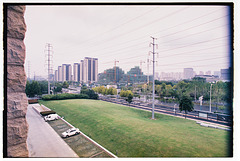
Tomorrow’s Batteries, Yesterday’s Dreams
| |
|
|
|
The scene around Gotion’s headquarters in Hefei’s Baohe District offers a study in contrasts: new tech labs and clean, futuristic facades abruptly give way to bleak neighborhoods shaped by decades of utilitarian planning. While nothing here is outright catastrophic or desperately poor — in fact, the city’s intense development and investments in resilience mean it’s far from forgotten — there’s a stark, almost clinical emptiness to the place that makes it feel suspended in time.
The main roads are oversized and strangely quiet, lined with concrete apartment blocks that have lost any hint of warmth, their original purpose now half-erased as people drift to other parts of the city. Early socialist ideals promised community and equality, but the result looks more like mass production for people, with space for everything but daily life. Even the green spaces serve as reminders of what’s missing: carefully maintained, yes, but often without anyone to enjoy them for more than a few minutes.
In international urban studies, Hefei’s model is sometimes praised for transforming risk into resilience and tripling economic output, yet local and foreign researchers alike acknowledge the human cost of such progress — whole communities relocated, the old fabric of street life replaced by order and efficiency. Around Gotion, the future seems built atop the silences of the past: not ruined, but quietly, steadily, drained of vitality.
Jump to top
RSS feed- Latest items - Subscribe to the latest items added to this album
- ipernity © 2007-2026
- Help & Contact
|
Club news
|
About ipernity
|
History |
ipernity Club & Prices |
Guide of good conduct
Donate | Group guidelines | Privacy policy | Terms of use | Statutes | In memoria -
Facebook
X
