


Impressions of Nature [colour]

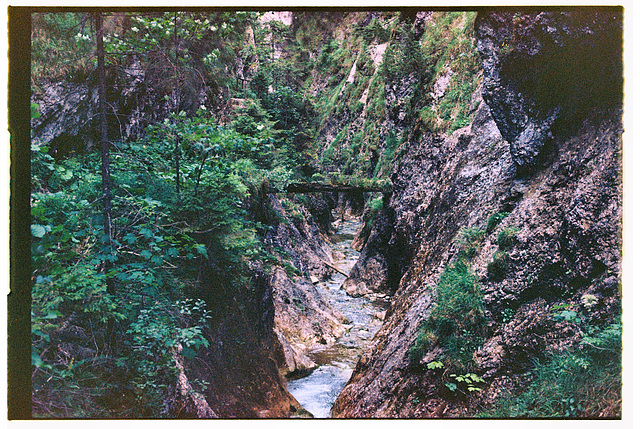

Tranquility of the Western Tatras
Juranova dolina, a renowned gorge near the village of Oravice, nestled on the northern slopes of Slovakia’s Western Tatras. Famous for its dramatic limestone and dolomite rock walls, the area features the Juráňov stream winding through the narrow canyon, surrounded by lush greenery and alpine flora, even at lower elevations. The spot is popular for its scenic nature trail, wooden bridges spanning the rocky stream, and panoramic autumn or winter atmospheres that highlight the natural tranquility of this preserved region.
Juranova dolina’s history includes 19th-century wooden walkways—traceable remnants can still be seen today—originally built to facilitate timber transport through the gorge. The valley bursts with unique plant species, seasonal colors, and a sense of seclusion, making it a treasured destination for hikers and photographers seeking to capture the softly lit magic of the changing seasons. The area’s natural beauty is most accessible from the thermal spa in Oravice, blending opportunities for active exploration with peaceful relaxation.


06 Jan 2013
9 favorites
5 comments
A lattice of branches adorned with liquid pearls draws the eye into a miniature cosmos concealed within each droplet

Winter Branches and Dewdrops: Carpathian Morning Bokeh
02 Apr 2011
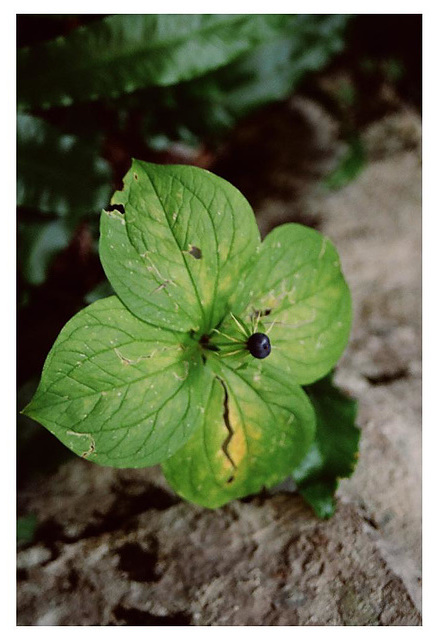
Crow's eye plant
A model of perfect plant symmetry, the four-leaved true lover's knot, in Slovak and Czech known under a popular name crow's eye, inhabits moist shady places, especially in deciduous forests. The plant catches the eye with its delicate, unusually symmetrical yellow-green flowers, which reign over a quartet of broad leaves placed at the top of the stem.
Paris quadrifolia, the herb-paris or true lover's knot, is a species of flowering plant in the family Melanthiaceae. It occurs in temperate and cool areas throughout Eurasia, from Spain to Yakutia, and from Iceland to Mongolia. The plant flowers during the months of June and July. It has a solitary flower with four narrow greenish filiform (threadlike) petals, four green petaloid sepals, eight golden yellow stamens, and a round purple to red ovary. The flower is borne above a single whorl of four leaves. Each plant produces at most one blueberry-like berry, which is poisonous, as are other plant tissues.
Poisonings are rare because the plant's solitary berry has a repulsive taste that makes it difficult to mistake for a bilberry. In such cases, narrow pupils, diarrhea, irritation of the kidneys are typical. The main poisonous substances of the plant are the saponins paridin and paristyphnine - violent poisons that are poorly absorbed in the digestive system.
The medical uses of true lover's knot are already mentioned by the Italian botanist Matthioli in his commentaries on De Materia Medica, a 5-volume work on Dioscorides, a treatise on plants and the medicines that can be obtained from them. The plant is also mentioned in the work of the English botanist and healer John Gerard as an antidote for arsenic and mercury poisoning. This plant has also been used in the past as an anti-inflammatory (e.g. for inflamed wounds) and for headaches. It is now part of many homeopathic remedies.
02 Apr 2011
1 favorite
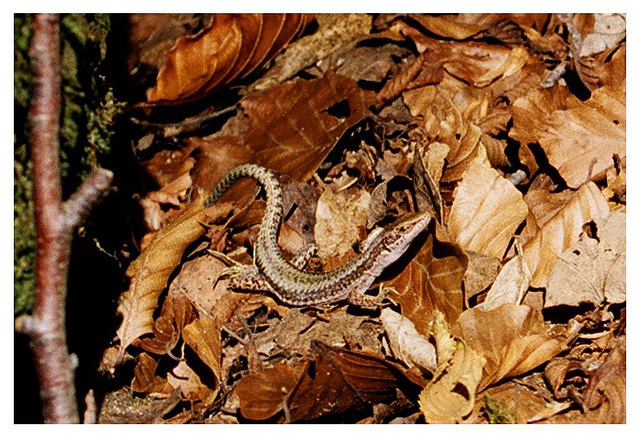
Find the lizard
02 Apr 2011
2 favorites
54370025
02 Apr 2011
54370027
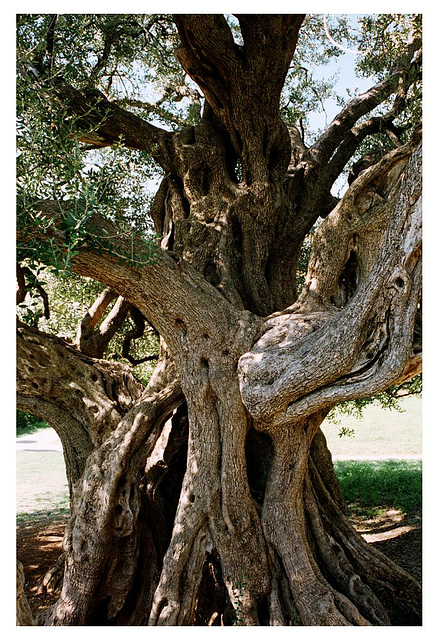
1500 y.o.olive tree in Kaštel Štafilić, Croatia
Olive tree is a symbol of Dalmatia, it’s hard working people and the land which only the toughest people can cultivate and live from the fruits of their hard work. You can say that olive cultivation and oil production are a big part of rich heritage of this area.
The Olive tree in Kastel Stafilić was planted during Roman times inside the villa rusticae, and today stands as a real testimony of those times. Since ancient times, the technology used for olive cultivation in this area – planting, harvesting and refining – had hardly changed and was used until quite recently. The older residents of Kastela still remember the technique for crushing the olive fruits when the olives were ground manually, by pushing a wooden beam around a stone mill.
This 1,500 year old olive tree was declared a natural heritage monument in 1990, so you can be sure it will still be there when you come to enjoy in it’s ancient beauty.
Jump to top
RSS feed- Latest items - Subscribe to the latest items added to this album
- ipernity © 2007-2026
- Help & Contact
|
Club news
|
About ipernity
|
History |
ipernity Club & Prices |
Guide of good conduct
Donate | Group guidelines | Privacy policy | Terms of use | Statutes | In memoria -
Facebook
X
