

m̌ ḫ's photos

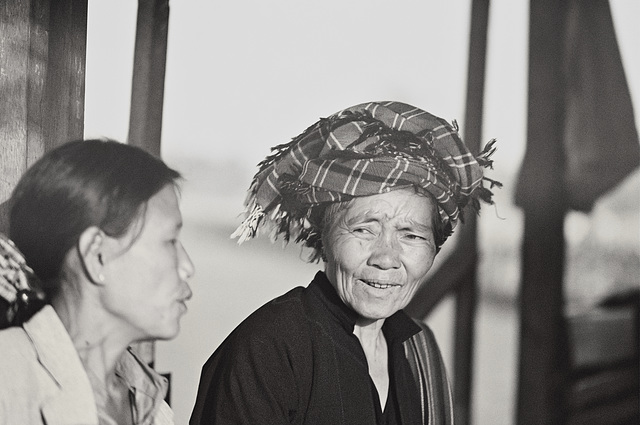

Snapshot of an Elderly lady
Just a click on a sympathetic local lady, enjoying her time on the bridge

Veľký Choč
A short, easy hike with a lively seven‑year‑old along the southern slopes of Kubínska hoľa, one of the most visited ski resorts in the Orava region, leads across open meadows before returning gently through the forest. Even outside the snowy season, these sunny slopes in the Oravská Magura mountains are known for wide panoramas of the surrounding landscape. On a clear day, the horizon opens toward the Western Tatras and the distant Low Tatras, while the dominant landmark of Orava, Veľký Choč (1,611 m), rises proudly above the divide between Orava and Liptov, famous for its almost circular panoramic views of many Slovak mountain ranges.

Modern Bratislava
This view from Nivy Tower captures Bratislava’s transformation in one frame. The tall glass tower on the right is Eurovea Tower at 168 meters — when it opened in 2023, Bratislava became the 201st city worldwide to have a true skyscraper. What was an industrial wasteland is now a cluster of high-rises that changed the city’s entire profile. The Mlynské nivy port district had been devastated since 1944, when Allied bombers targeted the Apollo refinery supplying Nazi fuel — 370 tons of bombs killed hundreds as burning oil engulfed their shelters. The contaminated ruins sat abandoned for decades until the 2000s redevelopment finally erased that wartime scar.

Evening Tennis with the India Habitat Centre architecture
Air Force Bal Bharati School is in a small institutional pocket of central Delhi where embassies, colleges and cultural centres sit close together. In the evenings its courts often fill with the sound of tennis balls from outside coaching groups, especially Team Tennis India on Lodhi Road, which runs organised sessions here for different ages and levels.
Right next door is the India Habitat Centre, the main cultural hub of the area, easy to spot with its red‑brick buildings. It was planned in the late 1980s and finished in the early 1990s as a modern complex designed to stay cooler, with shaded walkways, courtyards and terraces that still offer some relief in Delhi’s heat. Some parts now look a bit shabby and worn, but that also shows how much people actually use the place: posters on the boards, busy cafés, and regulars who seem to treat it almost like a second home.

Candy Bomber (on smartphone)
The airplane mounted on the roof of the Deutsches Technikmuseum in Berlin is a Douglas C‑47, the military transport version of the Douglas DC‑3. It is dramatically fixed above the entrance on a steel structure, so it appears to be flying over the city. This placement turns the aircraft into a striking landmark and an immediate visual link to Berlin’s aviation past.
The C‑47 recalls the Berlin Airlift of 1948–1949, when such planes — nicknamed “Raisin Bombers” or “Candy Bombers” — flew supplies into blockaded West Berlin and sometimes dropped sweets for children. As an exhibit, it represents both technological progress and the political history of the Cold War, symbolizing international solidarity during the blockade and the vital role of air transport in sustaining the city.

Candy Bomber (on film)
The airplane mounted on the roof of the Deutsches Technikmuseum in Berlin is a Douglas C‑47, the military transport version of the Douglas DC‑3. It is dramatically fixed above the entrance on a steel structure, so it appears to be flying over the city. This placement turns the aircraft into a striking landmark and an immediate visual link to Berlin’s aviation past.
The C‑47 recalls the Berlin Airlift of 1948–1949, when such planes — nicknamed “Raisin Bombers” or “Candy Bombers” — flew supplies into blockaded West Berlin and sometimes dropped sweets for children. As an exhibit, it represents both technological progress and the political history of the Cold War, symbolizing international solidarity during the blockade and the vital role of air transport in sustaining the city.
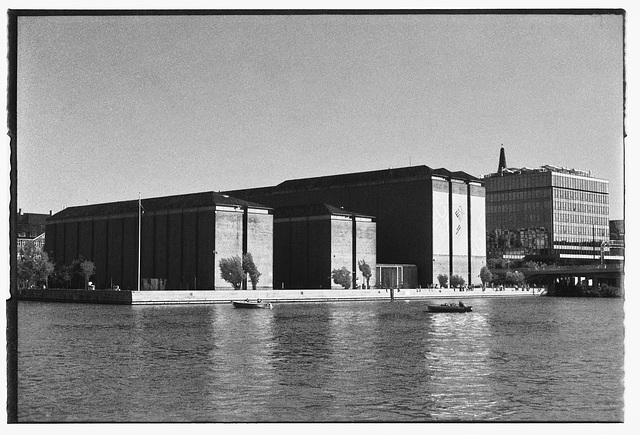
Spicy ministry
If you've purchased a city card, it buys you a free hour on the canals – and not just for the postcard stuff. As the boat slides past Christianshavn, the guide might not even mention this long, quiet wall of brick, but it is one of the most global pieces of waterfront in Copenhagen. In the 1750s Eigtveds Pakhus was the high‑security warehouse of the Danish Asiatic Company, stacked with tea, pepper, silk and porcelain unloaded from Asia right where your boat now passes. Today the same quay is home to the Ministry of Foreign Affairs, and in those former store rooms and new glass offices above them, Denmark’s ministers and diplomats negotiate climate deals, development aid and EU policy with partners from around the world. One short stretch of harbour, two and a half centuries apart: first spices and silk, now summits and strategy.

A Local and the tourists
I’ve written about this famous teak bridge before, but rather than simply showcasing the structure, I wanted to capture close-up portraits of the people who use it daily. To me, it is a living walkway for the local community, not just a scenic landmark.
In 2012, as Myanmar began to emerge from years of isolation, the bridge became a vibrant, sometimes chaotic meeting point where monks, farmers, and vendors mingled with the first wave of foreign tourists. Photographing it then allowed me to capture that unique energy of different worlds colliding on a narrow strip of wood.
Looking back, those crowded scenes feel almost surreal. Since the 2021 military coup, tourism has collapsed and the international crowds have vanished. While travel to the area may be slowly returning, the atmosphere is fundamentally different. Back then, the country was fueled by the hope of democratic change; today, the people face a bleak future under a military junta that has left them isolated and grappling with a dire human rights crisis.
