

Vedľa opony
Príbeh
Zv ierací príbeh
Žeriav
Pohľad povedľa oponu
Hudobníci
Vyšiel žeriav na vychádzku
Tieňové divadlo
Bábkari
P1020337
Mnisi
Mudry muzik
Bird prison
P1020341
Levík
Packa
Lev odzadu
Buddha goes Fat
Yunnanská reštaurácia
A čo si dáte?
Lacné a dobré
Nudle
Čína ako má byť
Čajový obrad [茶道]
Echo Wall
Gate
Vlajky
Novorocne vlajky
Vlajky
Chram Nebies
Vlajka
Vlajka
Vlajka
Vlajka
Vlajka
Vlajka
Vlajka
Vlajky
Vlajky
Vlajky
Lanterns on Pine
Saddam or Beckham?
Luck
Toys
Crowd
Location
Lat, Lng:
You can copy the above to your favourite mapping app.
Address: unknown
You can copy the above to your favourite mapping app.
Address: unknown
See also...
See more...
Keywords
Authorizations, license
-
Visible by: Everyone -
All rights reserved
-
568 visits
Way of Tea 茶道
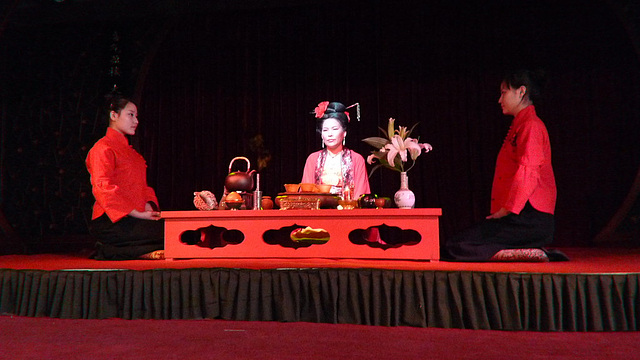

Chinese tea ceremony, as evoked by this stage performance, is less a fixed “ritual code” than a theatrical distillation of values that evolved around gongfu cha in South China from the late Ming, and especially the Qing, period. At its core lies the idea that tea reveals character: historically, southern literati used meticulous brewing and tasting sessions to judge not only the leaves but also a host’s refinement, self‑control, and sensitivity to timing, temperature, and social nuance.
Modern tea‑art performances (茶艺表演) turn this ethos into choreography, with schools systematising gestures, cup arrangements, and even hand positions to visually embody harmony, respect, purity, and tranquillity in a way an audience can read at a glance. The music, costume, and stylised slowness are less survivals of a single dynasty than contemporary inventions that compress centuries of practice into a few minutes on stage, making the “Way of Tea” intelligible to tourists, students, and urban Chinese who seldom drink tea this way at home.
In doing so, this performative branch has helped propel gongfu cha into the realm of “intangible cultural heritage” and onto the global stage, turning what began as a regional oolong‑brewing method into a widely recognised emblem of Chinese elegance, often contrasted with the more codified, Zen‑inflected Japanese tea ceremony.
Modern tea‑art performances (茶艺表演) turn this ethos into choreography, with schools systematising gestures, cup arrangements, and even hand positions to visually embody harmony, respect, purity, and tranquillity in a way an audience can read at a glance. The music, costume, and stylised slowness are less survivals of a single dynasty than contemporary inventions that compress centuries of practice into a few minutes on stage, making the “Way of Tea” intelligible to tourists, students, and urban Chinese who seldom drink tea this way at home.
In doing so, this performative branch has helped propel gongfu cha into the realm of “intangible cultural heritage” and onto the global stage, turning what began as a regional oolong‑brewing method into a widely recognised emblem of Chinese elegance, often contrasted with the more codified, Zen‑inflected Japanese tea ceremony.
- Keyboard shortcuts:
Jump to top
RSS feed- Latest comments - Subscribe to the comment feeds of this photo
- ipernity © 2007-2026
- Help & Contact
|
Club news
|
About ipernity
|
History |
ipernity Club & Prices |
Guide of good conduct
Donate | Group guidelines | Privacy policy | Terms of use | Statutes | In memoria -
Facebook
X

Sign-in to write a comment.