


Belgium: De Lijn (own fleet)

Folder: Continental Europe buses and coaches
De Lijn is the national bus and tram company in northern Belgium. In addition to operating its own bus and tram fleet there are numerous contracted bus operators providing bus services. De Lijn's own fleet is numbered with four digit fleet numbers whereas the contractors buses have six digit fleet numbers (the first four digits identify the contract and the last two the contractor's own fleet numb…
(read more)
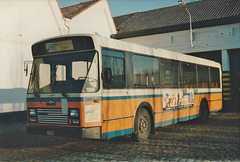
De Lijn 2035 (1596 P) at Diksmuide garage - 5 Feb…
| |
|
Monday 5 February 1996 (approx. 1000) – De Lijn (Vlaamse Vervoersmaatschappij De Lijn) 2035 (1866 P), a DAF powered Van Hool A120 integral new to NMVB in November 1982, seen at the company garage at Diksmuide. The bus still carries NMVB livery.
The destination display shows details for the Poperinge-Krombeke-Oostvleteren-Reninge-Merkem-Diksmuide service 755. It had possibly worked the 0712 service from Poperinge earlier in the day.
Service 755 operated on schooldays only and the pattern of services had changed little for many years (and basically remains so in 2018 as service 24). Taking around one hour the schedule featured departures from both Poperinge and Diksmuide just after 0700 (Monday to Friday), 1220 (Wednesdays only) and 1720 (Mondays, Tuesdays, Thursdays and Fridays). There was also a 1908 journey on those four days from Poperinge to Reninge. The trips passed at Oostvleteren and in most cases they met the up with the buses operating on the Ieper to Veurne/Veurne to Ieper service 772. Thus four buses could be seen in the village at the same time.
Services 755 and 772 closely follow the routes of the NMVB tramways opened in the 1900s as part of the Belgian Government’s policy of providing transport in rural communities. The NMVB trams have long gone being replaced by buses – and NMVB has in turn been replaced by ‘De Lijn’.
De Lijn was created in 1991 from the northern part of NMVB (Nationale Maatschappij van Buurtspoorwegen).
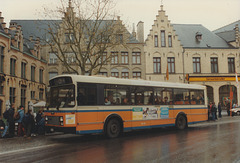
De Lijn 2036 (1868 P) at Poperinge – 25 Apr 1997
| |
|
Friday 25 April 1997 (1710) - De Lijn (Vlaamse Vervoersmaatschappij De Lijn) 2036 (1868 P), a DAF powered Van Hool A120 integral new to NMVB in November 1982, seen in Grote Markt, Poperinge when working the 1630 Ieper-Poperinge-Roesbrugge-Beveren IJzer-Hoogstade Linde service 744. This trip runs Mondays to Fridays between Ieper and Beveren IJzer extending to Hoogstade Linde on schooldays only.
Belgian schools work quite late compared with those in England. Even at this hour there are still quite a number of scholars waiting their transport home. Service 744 closely follows the route of the former Poperinge to Veurne tramway opened in the 1900s as part of the Belgian Government’s policy of providing transport in rural communities. The NMVB trams have long gone being replaced by buses – and NMVB has in turn been replaced by ‘De Lijn’.
De Lijn was created in 1991 from the northern part of NMVB (Nationale Maatschappij van Buurtspoorwegen) and both buses had been new to NMVB.
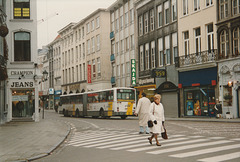
De Lijn 2106 (1976 P) in Mechelen - 1 Feb 1993
| |
|
Monday 1 February 1993 (0959) – De Lijn 2106 (1976 P) seen in Guldenstraat, Mechelen nearing the end of its trip as he 0845 service 50 from Antwerp. It was a DAF powered Van Hool AG280/3 articulated model new to NMVB in January 1986.
De Lijn (Vlaamse Vervoersmaatschappij De Lijn) was created in 1991 from the northern part of NMVB (Nationale Maatschappij van Buurtspoorwegen).
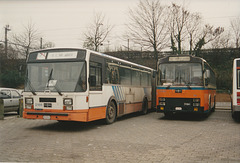
De Lijn 2186 (0555 P) and De Lijn contractor Deba-…
| |
|
Monday 1 February 1993 (approx. 1040) – De Lijn (Vlaamse Vervoersmaatschappij De Lijn) was created in 1991 from the northern part of NMVB (Nationale Maatschappij van Buurtspoorwegen).
In addition to operating its own vehicles both NMVB and De Lijn have employed numerous outside companies as contractors.
In this photograph taken at Mechelen the bus on the left is De Lijn’s own 2186 (0555 P), a DAF powered Van Hool AG280/4 articulated model new to NMVB in June 1988, which carried the final NMVB livery. The destination blind features an abbreviated form for the village of ‘Onze Lieve Vrouw Waver’. Onze Lieve Vrouw is the Flemish for ‘Our Lady’ in this predominantly Roman Catholic area.
The bus on the right is 151178 (987 P9) in the fleet of a De Lijn contractor Deba-Mebo. It is a Gardner engined Pegaso with a Van Hool bodywork new in May 1976. The livery is an earlier NMVB layout. Buses of contractors carry six digit fleet numbers – the first four are the De Lijn contract number and the remaining two are the operators own fleet number.
De Lijn 2187 (1985 P) in Mechelen – 1 Feb 1993
| |
|
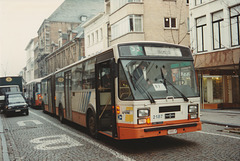
Monday 1 February 1993 – De Lijn 2187 (1985 P) seen in Bruul one of Mechelen’s town centre shopping streets working service 53 to or from Tremelo where I believe this bus was based. It was a DAF powered Van Hool AG280/4 articulated model new to NMVB in June 1988 that carried the final NMVB livery.
De Lijn (Vlaamse Vervoersmaatschappij De Lijn) was created in 1991 from the northern part of NMVB (Nationale Maatschappij van Buurtspoorwegen).
The bus behind is one of the 115 short length Van Hool AU124 buses added to the NMVB fleet to operate local services in various towns and cities. It carries a colourful livery for the Mechelen town network branded ‘Die Mechelbus’.
De Lijn 2188 and 2170 at Heist-op-den-Berg garage…
| |
|
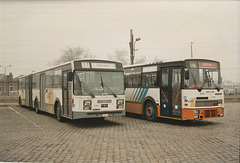
Monday 1 February 1993 (approx. 1200) – The temperature was just around freezing when I called at the De Lijn garage in Heist-op-den-Berg. These three buses were connected to air lines and possibly heating cables to keep them readily available for service.
On the left is 2188 (0842 P), a DAF powered Van Hool articulated new to NMVB in July 1988, in De Lijn livery and on the right is 2170, a Jonckheere Trans City bodied Volvo B10MA-55 articulated that had been new to NMVB in October 1988, in the final NMVB livery (A third bus was parked by the side of 2170 and was 5927 (1576 P), a Van Hool A120/31 new to NMVB in March 1982, in the penultimate NMVB livery.
I believe the property had its origins with De Lijn’s predecessor NMVB (Nationale Maatschappij van Buurtspoorwegen) and is accessed via Halfstraat. The mainline railway runs across the background of the photograph.
The national bus and tram company of Belgium was formally titled Nationale Maatschappij van Buurtspoorwegen (NMVB) in Flemish and Société nationale des chemins de fer vicinaux (SNCV) in French.
De Lijn 2188, 2170 and 5927 at Heist-op-den-Berg g…
| |
|
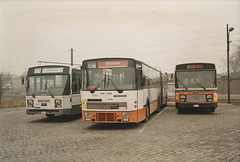
Monday 1 February 1993 (approx. 1200) – The temperature was just around freezing when I called at the De Lijn garage in Heist-op-den-Berg. These three buses were connected to air lines and possibly heating cables to keep them readily available for service.
Left to right they are
2188 (0842 P), a DAF powered Van Hool articulated new to NMVB in July 1988, in De Lijn livery
2170 (1918 P), a Jonckheere Trans City bodied Volvo B10MA-55 articulated that had been new to NMVB in October 1988, in the final NMVB livery
5927 (1576 P), a Van Hool A120/31 new to NMVB in March 1982, in the penultimate NMVB livery
I believe the property had its origins with De Lijn’s predecessor NMVB (Nationale Maatschappij van Buurtspoorwegen) and is accessed via Halfstraat. The mainline railway runs across the background of the photograph
.
The national bus and tram company of Belgium was formally titled Nationale Maatschappij van Buurtspoorwegen (NMVB) in Flemish and Société nationale des chemins de fer vicinaux (SNCV) in French.
De Lijn 5927, 2170 and 2188 at Heist-op-den-Berg g…
| |
|
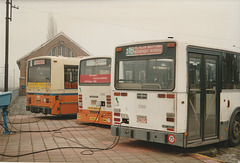
Monday 1 February 1993 (approx. 1200) – The temperature was just around freezing when I called at the De Lijn garage in Heist-op-den-Berg. I recall shivering a lot as I later waited for the bus back to Mechelen. These three buses were connected to air lines and possibly heating cables to keep them readily available for service.
Left to right they are
5927 (1576 P), a Van Hool A120/31 new to NMVB in March 1982, in the penultimate NMVB livery
2170 (1918 P), a Jonckheere Trans City bodied Volvo B10MA-55 articulated that had been new to NMVB in October 1988, in the final NMVB livery
2188 (0842 P), a DAF powered Van Hool articulated new to NMVB in July 1988, in De Lijn livery
The roof of the garage building can be seen in the background. I believe the property had its origins with De Lijn’s predecessor NMVB (Nationale Maatschappij van Buurtspoorwegen) and is accessed via Halfstraat. The mainline railway runs alongside on the left.
The national bus and tram company of Belgium was formally titled Nationale Maatschappij van Buurtspoorwegen (NMVB) in Flemish and Société nationale des chemins de fer vicinaux (SNCV) in French.
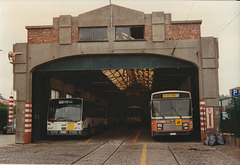
De Lijn 2431 and 5884 at the garage in De Panne -…
| |
|
Wednesday 7 August 1996 – De Lijn (Vlaamse Vervoersmaatschappij De Lijn) buses at the garage in De Panne (Belgium). De Lijn was created in 1991 from the northern part of NMVB (Nationale Maatschappij van Buurtspoorwegen).
In the doorway were 2431 (HVB 001), a Van Hool A600 new in November 1990 now carrying De Lijn livery and 5884 (ETE 012), a Van Hool A120 new in January 1982 that remained in an older version of the NMVB livery.Both had been new to NMVB.
De Panne is at the westernmost end of the coastal tramway line and was the base for both buses and trams. This garage was located alongside the road named Loskaai and accessed from Koninklijke Baan. It was subsequently replaced with a new modern parking facility for the buses and trams adjacent to De Panne mainline railway station (about 3km south of the town centre and closer to Adinkerke than De Panne in reality). The original tramway service between De Panne and Adinkerke opened in 1932 but was replaced with buses in September 1954. De Lijn re-established a tramway link in July 1998 and, in addition to the new depot, the line also serves the railway station, a theme park and a park and ride site.
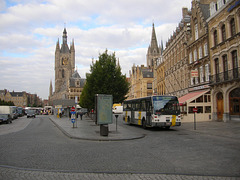
DSCN0926 De Lijn 2628 (ABB 165) in Ieper - 1 Sep 2…
| |
|
Sat 1 Sept 2007 (approx 0910) – De Lijn 2628 (ABB 165) Van Hool A600 integral bus seen at Grote Markt in Ieper (Belgium) when working the 0950 service 50 (not 56) to Veurne. Saturday is market day in Ieper and the market stalls occupy just about every part of the market square.
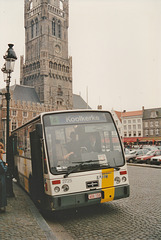
De Lijn 2725 (ABB 150) in Brugge - 4 Mar 1993
| |
|
Thursday 4 March 1993 - De Lijn (Vlaamse Vervoersmaatschappij De Lijn) 2725 (ABB 150) seen in Markt, Brugge with the Belfry (Belfort) dominating the background. The bus is a Cummins engine van Hool A508 integral midibus new in October 1991. A short length model for local city and town service operation.
De Lijn, the national bus and tramway company of northern Belgium, was created in 1991 from the northern part of NMVB (Nationale Maatschappij van Buurtspoorwegen). In addition to operating their own fleets numerous contractors operate services. Those vehicles carry six digit fleet numbers – the first four being the contract number and the remaining two are the operators own fleet number.
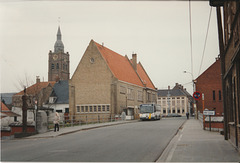
De Lijn 2887 (0822 P) at Roesbrugge - 25 Mar 1996
| |
|
Monday 25 March 1996 (1742) - De Lijn is the national bus and tram company of northern Belgium. In addition to employing numerous contractors to provide buses for its network, it also runs its own fleet.
This Van Hool A600 integral bus was seen in Roesbrugge when working the 1630 Ieper-Poperinge-Roesbrugge- Beveren-IJzer -Hoogstade Linde service 744. This trip runs Mondays to Fridays between Ieper and Beveren-IJzer extending to Hoogstade Linde on schooldays only. I believe the bus was number 2887 (0822 P) in De Lijn's own fleet that was new in January 1993.
Service 744 closely follows the route of the former Poperinge to Veurne tramway opened in the 1900s as part of the Belgian Government’s policy of providing transport in rural communities. The NMVB trams have long gone being replaced by buses – and NMVB has in turn was replaced by ‘De Lijn’ in 1991.
It is De Lijn practice to display details of the complete route for the relevant service, in this case Ieper-Poperinge-Roesbrugge-Veurne. But this 744 trip was not going to Veurne and the diagonal line through the service number tells that this is a short working. The ultimate destination is shown on a display close to the entrance door.
Between the camera and the bus is the bridge which spans the River IJzer (note the sign on the right). The river starts as l’Yser within France and enters Belgium flowing to the North Sea at Nieuwpoort. The river became the frontline during the First World War Battle of the Yser in October 1914 preventing German advancement.
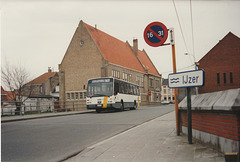
De Lijn 2887 (0822 P) at Roesbrugge - 25 Mar 1996
| |
|
Monday 25 March 1996 (1742) - De Lijn is the national bus and tram company of northern Belgium. In addition to employing numerous contractors to provide buses for its network, it also runs its own fleet.
This Van Hool A600 integral bus was seen in Roesbrugge when working the 1630 Ieper-Poperinge-Roesbrugge- Beveren-IJzer -Hoogstade Linde service 744. This trip runs Mondays to Fridays between Ieper and Beveren-IJzer extending to Hoogstade Linde on schooldays only. I believe the bus was number 2887 (0822 P) in De Lijn's own fleet that was new in January 1993.
Service 744 closely follows the route of the former Poperinge to Veurne tramway opened in the 1900s as part of the Belgian Government’s policy of providing transport in rural communities. The NMVB trams have long gone being replaced by buses – and NMVB has in turn was replaced by ‘De Lijn’ in 1991.
It is De Lijn practice to display details of the complete route for the relevant service, in this case Ieper-Poperinge-Roesbrugge-Veurne. But this 744 trip was not going to Veurne and the diagonal line through the service number tells that this is a short working. The ultimate destination is shown on a display close to the entrance door.
Between the camera and the bus is the bridge which spans the River IJzer (note the sign on the right). The river starts as l’Yser within France and enters Belgium flowing to the North Sea at Nieuwpoort. The river became the frontline during the First World War Battle of the Yser in October 1914 preventing German advancement.
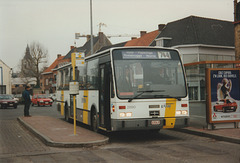
De Lijn 2890 (0354 P) at Poperinge railway station…
| |
|
Monday 17 March 1997 - De Lijn is the national bus and tram company of northern Belgium. In addition to employing numerous contractors to provide buses for its network, it also runs its own fleet. Bus 2890 (0354 P), a DAF powered Van Hool A600 integral new in January 1993, seen at Poperinge railway station when working the 1630 Ieper-Poperinge-Roesbrugge-Beveren-IJzer-Hoogstade Linde service 744. This trip runs Mondays to Fridays between Ieper and Beveren-IJzer extending to Hoogstade Linde on schooldays only.
Service 744 closely follows the route of the former Poperinge to Veurne tramway opened in the 1900s as part of the Belgian Government’s policy of providing transport in rural communities. The NMVB trams have long gone being replaced by buses – and NMVB has in turn was replaced by ‘De Lijn’ in 1991.
It is De Lijn practice to display details of the complete route for the relevant service, in this case Ieper-Poperinge-Roesbrugge-Veurne. But this 744 trip was not going to Veurne and the diagonal line through the service number tells that this is a short working. The ultimate destination is shown on a display close to the entrance door.
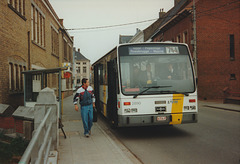
De Lijn 2890 (0354 P) at Roesbrugge - 17 Mar 1997
| |
|
Monday 17 March 1997 - De Lijn is the national bus and tram company of northern Belgium. In addition to employing numerous contractors to provide buses for its network, it also runs its own fleet. Bus 2890 (0354 P), a DAF powered Van Hool A600 integral new in January 1993, setting down at Roesbrugge when working the 1630 Ieper-Poperinge-Roesbrugge-Beveren-IJzer-Hoogstade Linde service 744. This trip runs Mondays to Fridays between Ieper and Beveren-IJzer extending to Hoogstade Linde on schooldays only.
Service 744 closely follows the route of the former Poperinge to Veurne tramway opened in the 1900s as part of the Belgian Government’s policy of providing transport in rural communities. The NMVB trams have long gone being replaced by buses – and NMVB has in turn was replaced by ‘De Lijn’ in 1991.
It is De Lijn practice to display details of the complete route for the relevant service, in this case Ieper-Poperinge-Roesbrugge-Veurne. But this 744 trip was not going to Veurne and the diagonal line through the service number tells that this is a short working. The ultimate destination is shown on a display close to the entrance door.
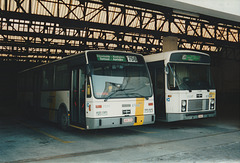
De Lijn 2891 (ABB 226) and 5534 (1596 P) at Diksmu…
| |
|
Monday 5 February 1996 (approx. 1000) – Seen in the Diksmuide garage of De Lijn (Vlaamse Vervoersmaatschappij De Lijn) are two different DAF powered Van Hool integral buses.
Left is 2891 (ABB 226), an A600 new in January 1993 and right is 5534 (1596 P), an A120 model new to NMVB in September 1979.
They both show destination displays for service 756 and they had more than likely worked services into Diksmuide earlier in the day, one on the 0740 service from Torhout and one on the 0756 service from Aartrijke via Torhout.
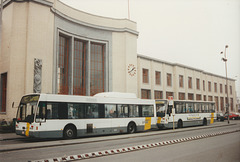
De Lijn 3237 (1239 P) in Kortrijk – 31 Oct 1995
| |
|
Tuesday 31 October 1995 (approx. 1339) – De Lijn (Vlaamse Vervoersmaatschappij De Lijn) 3237 (1239 P), a MAN compressed natural gas powered Van Hool A300 integral new in May 1995, seen at Kortrijk Railway Station. I think the bus behind is a Van Hool A600 integral.
De Lijn (Vlaamse Vervoersmaatschappij De Lijn) was created in 1991 from the northern part of NMVB (Nationale Maatschappij van Buurtspoorwegen). De Lijn employs numerous contractors and whilst their own buses and trams fleet carry four digit fleet numbers the buses operated by contractors carry six digit fleet numbers – the first four digits relating to the De Lijn contract number the final two digits are the operators own fleet number.
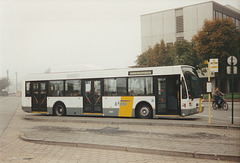
De Lijn 3241 (0323 P) in Kortrijk – 31 Oct 1995
| |
|
Tuesday 31 October 1995 (approx. 1400) – De Lijn (Vlaamse Vervoersmaatschappij De Lijn) 3241 (0323 P), a MAN compressed natural gas powered Van Hool A300 integral new in May 1995, seen at Kortrijk Railway/Bus Station working the service to Moeskroen.
De Lijn (Vlaamse Vervoersmaatschappij De Lijn) was created in 1991 from the northern part of NMVB (Nationale Maatschappij van Buurtspoorwegen). De Lijn employs numerous contractors and whilst their own buses and trams fleet carry four digit fleet numbers the buses operated by contractors carry six digit fleet numbers – the first four digits relating to the De Lijn contract number the final two digits are the operators own fleet number.
Jump to top
RSS feed- Latest items - Subscribe to the latest items added to this album
- ipernity © 2007-2026
- Help & Contact
|
Club news
|
About ipernity
|
History |
ipernity Club & Prices |
Guide of good conduct
Donate | Group guidelines | Privacy policy | Terms of use | Statutes | In memoria -
Facebook
X
