

aNNa schramm's photos
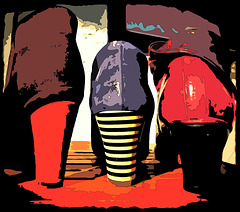
My Pop-Art-shoes
| |
|
|
|

Schach - scacchi
| |
|
|
|
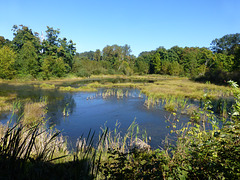
find me - find us ... (2 PiP)
| |
|
|
|
Fauna und flora im Nisqually River Delta in der Nähe vom Puget Sound im nordöstlichen Thurston County, Washington und dem nordwestlichen Pierce County, WA, USA.
Nisqually National Wildlife Refuge, WA, USA.
The Pacific tree frog (Pseudacris regilla), also known as the Pacific chorus frog, has a range from the West Coast of the United States (from Northern California, Oregon, and Washington) to British Columbia in Canada and extreme southern Alaska. They live from sea level to more than 10,000 feet in many types of habitats, reproducing in aquatic settings. They occur in shades of greens or browns and can change colors over periods of hours and weeks.
The Pacific tree frog grows up to 2 inches from snout to urostyle. The males are usually smaller than the females and have a dark patch on their throats. The dark patch is the vocal sac, which stretches out when the male is calling. Pacific tree frogs can be a number of different colors, including green, tan, reddish, gray, brown, cream, and black, but most are a shade of green or brown, with pale or white bellies. They have a variety of dark and spotty markings on their backs and sides and can be identified by a black or dark brown eye stripe that stretches from the nose, across the eye, and back to the shoulder. They can change color seasonally to better match their environments..
(Wiki)
_______________________
and see here IMA >>> www.ipernity.com/group/2260604/discuss/186918
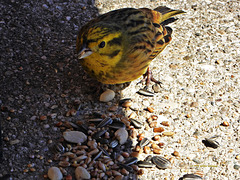
Goldammer (Emberiza citrinella)
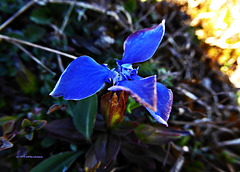
Schusternagel
| |
|
|
|
Schusternagel
- Frühlings-Enzian (Gentiana verna) -
ist eine der kleinsten Pflanzenarten der Gattung Enziane (Gentiana).
Der Frühlings-Enzian steht, wie alle anderen Enzianarten, in Deutschland unter Naturschutz und steht auf der Roten Liste.
Er kommt in Höhenlagen von bis zu 2600 Metern vor.

HFF ... alles durcheinander ...
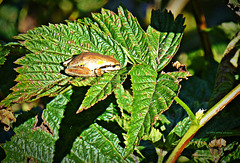
Pacific Tree Frog var. (PiP)
| |
|
|
|
Pacific Tree Frog var. (Pseudacris regilla)
Fauna im Nisqually River Delta in der Nähe vom Puget Sound im nordöstlichen Thurston County, Washington und dem nordwestlichen Pierce County, WA, USA.
Nisqually National Wildlife Refuge, WA, USA.
The Pacific tree frog (Pseudacris regilla), also known as the Pacific chorus frog, has a range from the West Coast of the United States (from Northern California, Oregon, and Washington) to British Columbia in Canada and extreme southern Alaska. They live from sea level to more than 10,000 feet in many types of habitats, reproducing in aquatic settings. They occur in shades of greens or browns and can change colors over periods of hours and weeks.
The Pacific tree frog grows up to 2 inches from snout to urostyle. The males are usually smaller than the females and have a dark patch on their throats. The dark patch is the vocal sac, which stretches out when the male is calling. Pacific tree frogs can be a number of different colors, including green, tan, reddish, gray, brown, cream, and black, but most are a shade of green or brown, with pale or white bellies. They have a variety of dark and spotty markings on their backs and sides and can be identified by a black or dark brown eye stripe that stretches from the nose, across the eye, and back to the shoulder. They can change color seasonally to better match their environments..
(Wiki)
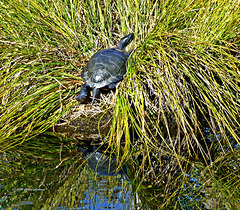
Pazifische Sumpfschildkröte (Actinemys marmorata)
| |
|
|
|
Fauna im Nisqually River Delta in der Nähe vom Puget Sound im nordöstlichen Thurston County, Washington und dem nordwestlichen Pierce County, WA, USA.
Nisqually National Wildlife Refuge, WA, USA.
Die Pazifische Sumpfschildkröte (Actinemys marmorata) ist eine Art der Neuwelt-Sumpfschildkröten. Sie zählt mit einer Carapaxlänge (bei Schildkröten heißt der Carapax gemeinsprachlich Rückenschild oder Rückenpanzer), von bis zu 20 Zentimeter zu den kleinen bis mittelgroßen Schildkröten. Ihre Verbreitung ist auf die Westküste der USA und Mexikos beschränkt und reicht vom Westen des US-Bundesstaates Washington bis in den Norden von Baja California. Seit Mai 2002 gilt die Pazifische Schildkröte in Kanada als offiziell ausgestorben. Seit 2007 fehlen sie auch im Puget Sound.
Das Verbreitungsgebiet der Pazifischen Sumpfschildkröte ist mittlerweile disjunkt (Die Disjunktion ist in der Ökologie ein Teilareal (Exklave), das vom übrigen Verbreitungsgebiet einer Pflanzen- oder Tierart räumlich getrennt wurde und mit den üblichen Verbreitungsmitteln dieser Art nicht überbrückt werden kann, aber noch ein Habitat darstellt. - Disjunktion ist beispielsweise Folge von Bestands- und Arealverlusten.). In Süden des US-Bundesstaates Washington gibt es nur noch einige wenige nicht zusammenhängende Populationen.
Die Pazifische Sumpfschildkröte lebt in schlammigen, vegetationsreichen Seen und Teichen, in Brackwasser sowie in schnell fließenden Bächen und Flüssen bis 2000 Meter über NN. Im Wesentlichen verlassen lediglich die Weibchen das Wasser, um ihre Eier abzulegen.
(Wiki)
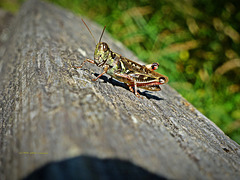
Rotbeinige Heuschrecke, Red-legged Grasshopper (Me…
| |
|
|
|
Fauna im Nisqually River Delta in der Nähe vom Puget Sound im nordöstlichen Thurston County, Washington und dem nordwestlichen Pierce County, WA, USA.
Nisqually National Wildlife Refuge, WA, USA.
Melanoplus femurrubrum kommt in weiten Teilen von Nordamerika vor und fehlt nur in den hohen Berglagen und dem äußersten Norden. Die Art zählt zu den am meisten verbreitetste Heuschreckenarten in Nordamerika. Besiedelt werden unter anderem die hohe Vegetation von Grasland, Wiesen sowie Feld- und Wegränder. Bevorzugt werden dabei wenig feuchte, krautige Bereiche, die mit ihren Nahrungspflanzen bewachsen sind. (Wiki)
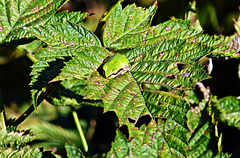
Pacific Tree Frog (PiP)
| |
|
|
|
Fauna im Nisqually River Delta in der Nähe vom Puget Sound im nordöstlichen Thurston County, Washington und dem nordwestlichen Pierce County, WA, USA.
Nisqually National Wildlife Refuge, WA, USA.
The Pacific tree frog (Pseudacris regilla), also known as the Pacific chorus frog, has a range from the West Coast of the United States (from Northern California, Oregon, and Washington) to British Columbia in Canada and extreme southern Alaska. They live from sea level to more than 10,000 feet in many types of habitats, reproducing in aquatic settings. They occur in shades of greens or browns and can change colors over periods of hours and weeks.
The Pacific tree frog grows up to 2 inches from snout to urostyle. The males are usually smaller than the females and have a dark patch on their throats. The dark patch is the vocal sac, which stretches out when the male is calling. Pacific tree frogs can be a number of different colors, including green, tan, reddish, gray, brown, cream, and black, but most are a shade of green or brown, with pale or white bellies. They have a variety of dark and spotty markings on their backs and sides and can be identified by a black or dark brown eye stripe that stretches from the nose, across the eye, and back to the shoulder. They can change color seasonally to better match their environments..
(Wiki)

...wir wollen zu IMA*
| |
|
|
|
Musik: Eléni Karaïndrou ... Bilder: Illustration de Michael Sowa
www.youtube.com/watch?v=SJn1JGub-L4
Fauna im Nisqually River Delta in der Nähe vom Puget Sound im nordöstlichen Thurston County, Washington und dem nordwestlichen Pierce County, WA, USA.
Nisqually National Wildlife Refuge, WA, USA.
Almost all these animals I saw and besides
Pacific Tree Frog (Pseudacris regilla) https://www.ipernity.com/doc/anna.schramm/44540406 ,
Red-legged Grasshopper (Melanoplus femurrubrum) https://www.ipernity.com/doc/anna.schramm/44540420
and
Pazifische Sumpfschildkröte (Actinemys marmorata) https://www.ipernity.com/doc/anna.schramm/44540492
aNNa*
P.S.
"Walk to Save the Delta" poster, Olympia, September 2011
Drawing by Tom Ingham, Courtesy Nisqually Delta Association
Schneckenfraß ... für Bk*...
| |
|
|
|
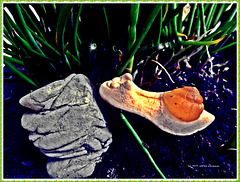
... und schon sind sie da ! die Schnecken ... wenn das erste Grün sich zeigt - dann kommen sie und fressen alles weg - auch meinen Schnittlauch wie man unschwer erkennen kann.
... auch der Wollsack kann sie nicht aufhalten ...
three thinks: Wollsack* - Schnecke - Schnittlauch
*Wollsack = Durch das Zusammenwirken von physikalischen und chemischen Prozessen entstehen bei der Wollsackverwitterung kantengerundete Gesteinsblöcke, die wie Kissen, Matratzen oder eben wie Wollsäcke übereinander gestapelt liegen :-))
Wollsackverwitterung >> de.wikipedia.org/wiki/Wollsackverwitterung
Weiß-Blau
| |
|
|
|
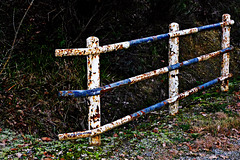
HFF 24.03.2017
Happy day to everyone, and if you find any excess money in your pocket to donate for IMA, then please do =)
www.generosity.com/community-fundraising/ipernity-members-association-a-non-profit-entity
The crowdfunding continues till the next Monday.
TODAY 29.3.2017:https://www.generosity.com/community-fundraising/ipernity-members-association-a-non-profit-entity/x/16255529
Poesie
| |
|
|
|
www.youtube.com/watch?v=Krah3CULNuw
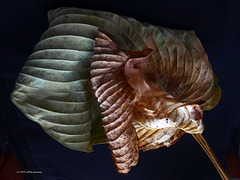
Funkie (Hosta Tratt., Syn.: Funkia Spreng.)
getrocknete Blätter - Leaves dried - feuilles séchées

auf dem Weg zum Hinteren Sonnwendjoch
| |
|
|
|
Schnittlauch-Streifen (PiP)
| |
|
|
|
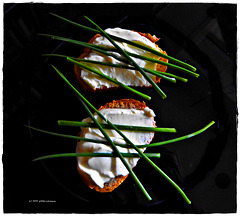
Drei Dinge im Frühjahr um glücklich zu sein :-))
... frischer Schnittlauch auf Quark und Brot
______________________________________
Der Schnittlauch wächst jetzt auf meinem Balkon.
Ursprünglich habe ich Pflanzen von der Schnittlauch-Alm ca. 1.900m mitgebracht und bei mir eingepflanzt. Der Aufstieg ging zum Hinteren Sonnwendjoch 1.986m über die Schnittlauch-Alm.
PiP : Wegweiser: die Überquerung - und ein Blick zurück woher wir kamen, die Schnittlauch-Alm, Schnittlauch, aNNa* am Ziel 1.986m.
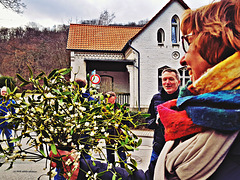
ein Strauss Misteln ... (PIP)
| |
|
|
|
Kuck-kuck
| |
|
|
|
