

Traktor 49's favorite photos
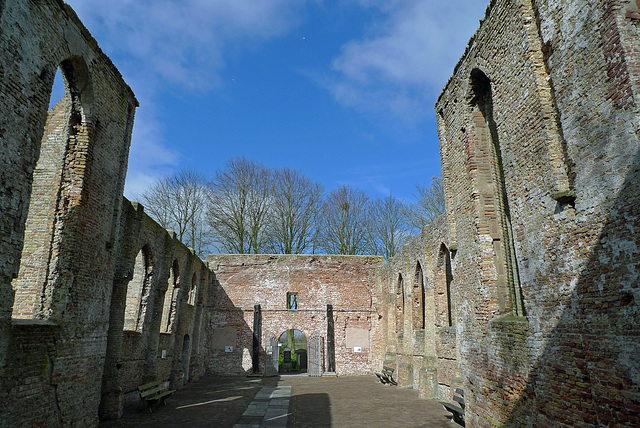

Nederland - Oude Niedorp, ruïnekerk
The first stone church in Oude Niedorp was built on a mound around 1250. The church had to be demolished in the 14th century due to subsidence of the peat soil. The 'present' church was built against the tower, which had remained. The church was dedicated to St. Werenfridus until the time of the Reformation. At the end of the 15th century two naves were added to the ship, which were pulled down again in the 18th century. After the stone tower was demolished and rebuilt twice due to subsidence, a wooden tower was added to the church in 1814.
After restoration of the church in the 16th and 17th centuries, a last general restoration followed in 1953/54. On 3 April 1977, the church was destroyed by lightning. The walls - dating from the year 1648 - were retained, which the municipality - the current owner - is trying to preserve as a monument from the past after a renovation in 2011/2013.
The ruined church in Oude Niedorp is one of the four ruined churches in the Netherlands.

34 favorites
Petit miroir d'étang...
... merci de votre présence sur ma galerie, que votre journée soit aussi agréable que possible mes Amis.
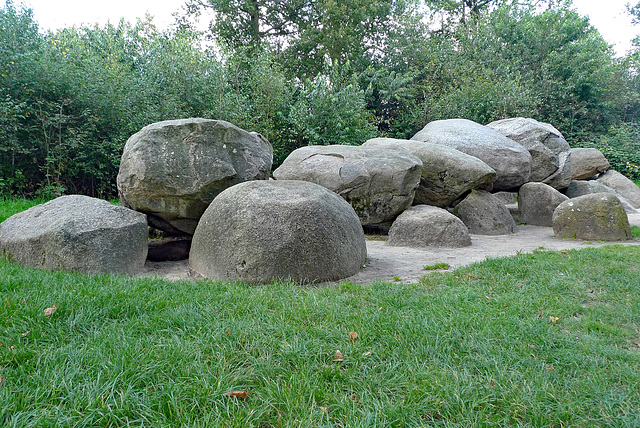
Nederland - Diever, hunebed D52
Dolmen D52 - just outside the village of Diever - is a medium-sized dolmen. It has fourteen sidestones and two closing endstones. From the original seven capstones six are still present. One is missing and of the remaing six, three still supported on their sidestones, the other three having slipped between theirs.
Dolmen D52 is 14.5 meters long and 4.8 meters wide.
Dolmen D52 is already mentioned in the 17th century and is depicted on the French maps. At the time of a big survey by Prof. Van Giffen (1918) the dolmen was a total ruin. Under his supervision this hunebed has been thoroughly restored in 1953/54. In 1995 restoration works were still performed to this dolmen.
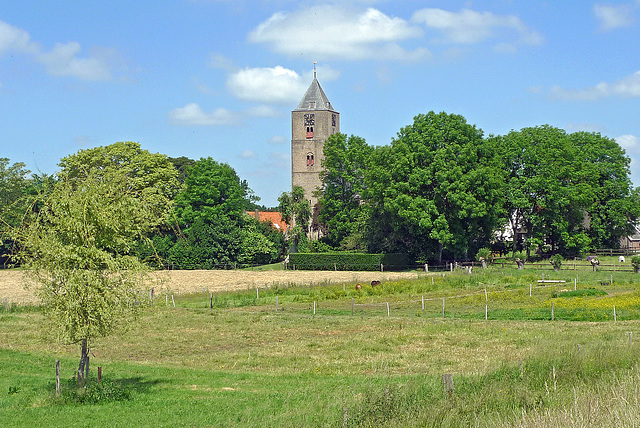
Nederland - Zalk, Sint Nicolaaskerk
Sint Nicolaaskerk (St. Nicholas Church) is an old church whose Romanesque tower dates from 1220. The rest of the church was built in Gothic style against the existing tower around 1400, partly with material - mostly tuff - from a previous smaller church.
The church was founded by the Lords of Buckhorst who owned a castle in this area. This castle was demolished in 1841, but the church still contains, among other things, Buckhorst pews and a family tomb. The church was maintained by the descendants of the Buckhorst family until 1838.
Over the centuries, the church fell into disrepair. That is why work began on restoring the exterior of the church in 1991. Services are still held in the Sint Nicolaaskerk by the Reformed Congregation Zalk en Veecaten .
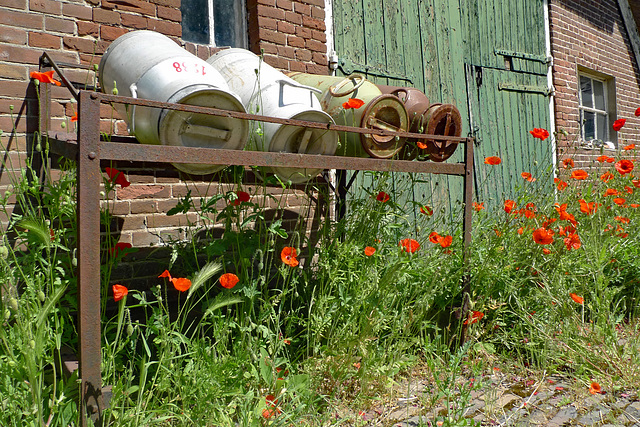
Nederland - Zalk
Zalk is a small rural village with less than 800 inhabitants, situated between the towns of Kampen and Zwolle along the river IJssel.
The village was part of the heerlijkheid (fiefdom) “Zalk en Veecaten”. After the creation of municipalities in 1813 the fiefdom was transformed to the municipality of “Zalk en Veecaten”. Nowadays Zalk belongs to the municipality of Kampen.
The most important building in the village is the Sint Nicolaaskerk (St. Nicholas Church) with a Romanesque tower dating back to 1220. In addition, the village has a flour mill dating back to 1860. Zalk became well-known in the Netherlands as the home of the kruidenvrouwtje Klazien ("herb woman klazien").
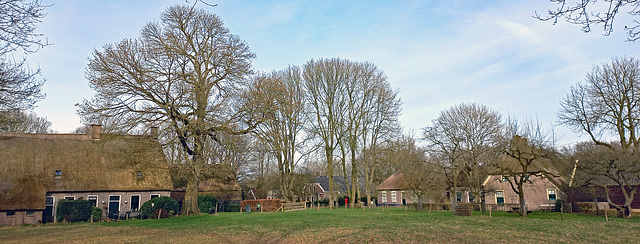
Nederland - Orvelte
The village of Orvelte probably originated between the 11th and 13th century. In a charter from 1362 the village is referred to as “Oervelde”. This oldest notation indicates the origin of the place name: the village Over het veld (Across the field).
The village with its cobbled streets is made up of a collection of thatched Saxon farmhouses and other heritage buildings. The oldest farm in Central Drenthe - built between 1560 and 1650 - is also located in Orvelte after a relocation. The car-free village still exudes the atmosphere of a 19th century village in Drenthe. In 1967 Orvelte received the status of protected village-scape.
Nowadays Orvelte presents itself as a monument village. In addition to the normal daily activity and residential function, many of the farms are equipped to display old crafts and are used by shops, which mainly sell nostalgic and/or vintage items. There are also several small museums; one shows the period rooms of the family who lived there in the 19th century.
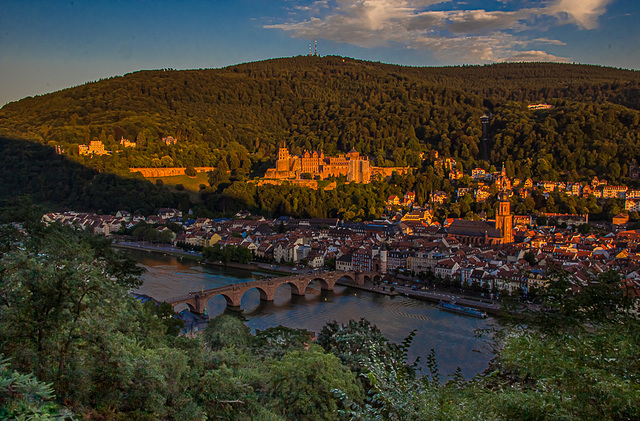
Heidelberg vor Sonnenuntergang / ...before Sundown (165°)
best on full screen
Jump to top
RSS feed- Latest favorites - Subscribe to the favorite docs of Traktor 49
- ipernity © 2007-2026
- Help & Contact
|
Club news
|
About ipernity
|
History |
ipernity Club & Prices |
Guide of good conduct
Donate | Group guidelines | Privacy policy | Terms of use | Statutes | In memoria -
Facebook
X
